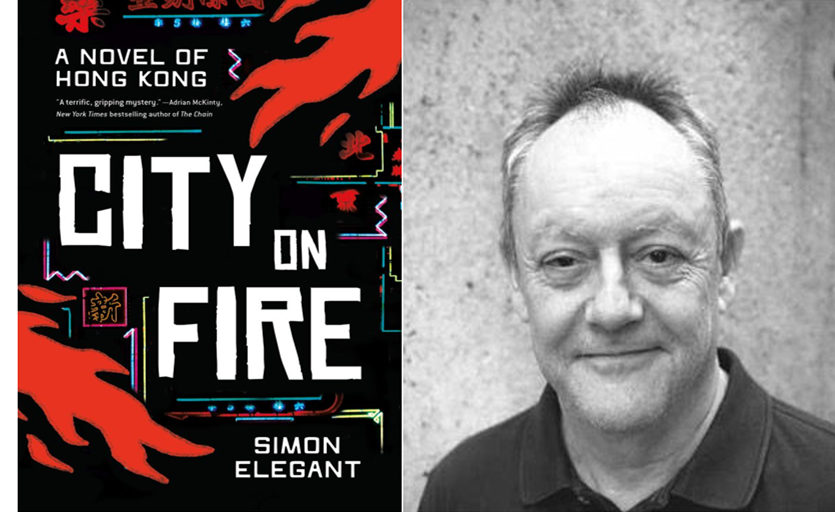
Hong Kong and mainland China share a border and a complicated political history, but they remain profoundly different in character. The city has a mix of identities, predominantly built on a rich Cantonese culture and a British colonial legacy. Its once-celebrated legal system and press freedoms set it apart in ways that matter enormously to the people who live there.
Few Western journalists have covered that divide with more sustained attention than Simon Elegant. Elegant was born in Hong Kong and spent decades reporting from the region. “City on Fire” is his third novel but the first to center on his hometown.
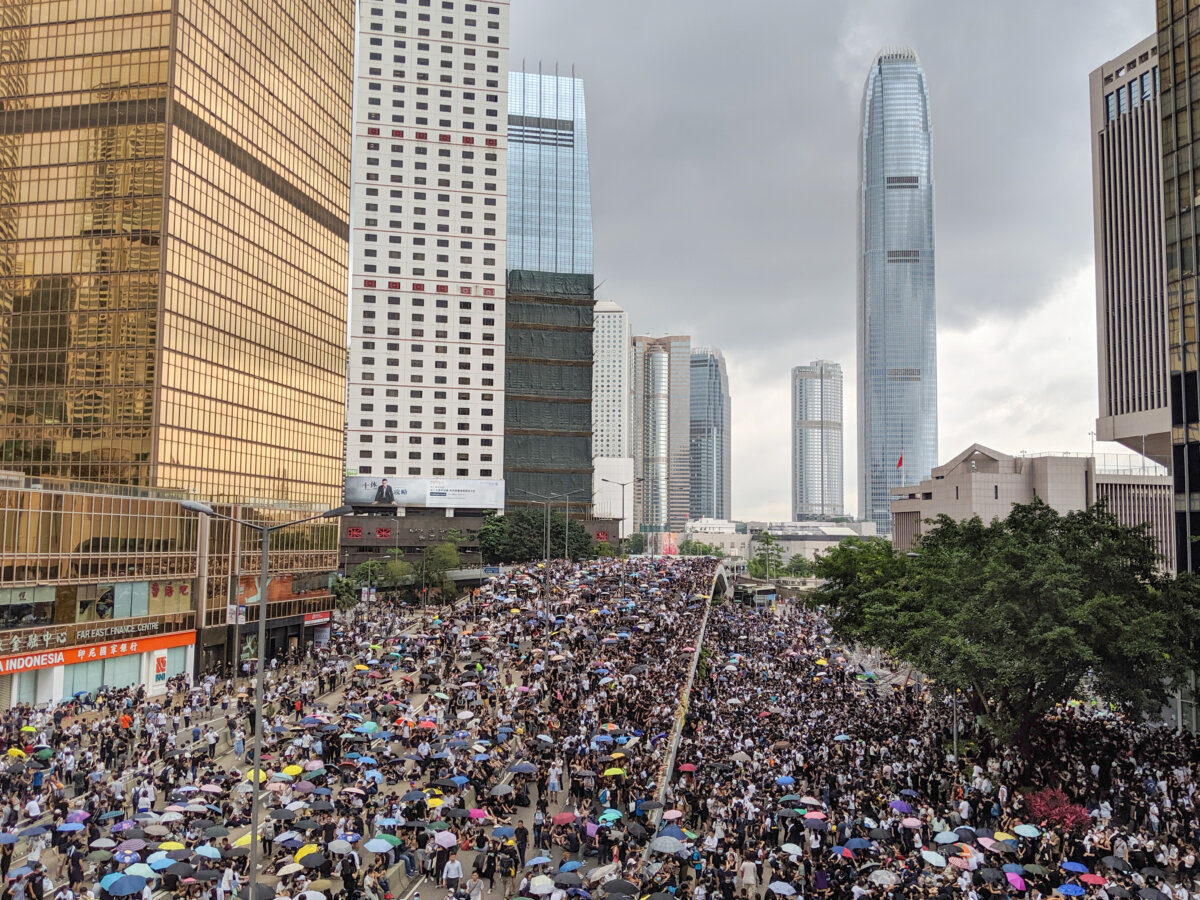
During a break from journalism in 2019, he witnessed firsthand the protests against a proposed CCP security law, which became the inspiration for his story.
The title echoes Ringo Lam’s 1987 film of the same name. This seminal piece of Hong Kong action cinema is a gritty, morally complicated thriller anchored by one of Chow Yun-fat’s finest performances. Judging by the storyline in Elegant’s “City on Fire,” the author is also a big fan of the genre.
Grim Findings
Like the film, the novel stars an alienated, lone-wolf police officer who’s being pushed to the edge by the job, the city he still loves, and even his own family. That man is Killian Tong, a police superintendent exiled to a former border security station overlooking Deep Bay.
Tong’s on restricted duty pending an inquiry into an accidental shooting during one of the many protests raging in the city. He’s haunted by the incident, plagued by recurring nightmares featuring the young man who was seriously injured. Currently, Tong’s only ally is his dog, Gau, which he describes as a creature with “no canine eagerness to please … more like a cat than a dog.”
Tong describes himself as “one of the few gweilo [Cantonese slang for white] Brits left on the Force,” as the reddish-brown hair he inherited from his Irish mother flags him as a “leftover from colonial England.” However, he also thinks of himself as “a real heunggong jai … [a] Hong Kong boy, born and bred.”
His situation becomes more precarious when he’s assigned a case nobody else wants. A male torso was discovered wrapped in black plastic at a New Territories landfill, limbs and head removed. Tong is assigned to investigate alongside Chief Inspector Choi, known as Blue, a sharp and composed young officer on her first homicide.
The pathologist’s findings are deeply unsettling. The victim, a Chinese man in his 60s, was subjected to extreme violence before death, the injuries inflicted with deliberate, methodical brutality.
The case quickly threatens to become politically explosive. Mainland China’s Ministry of State Security liaisons attend the briefing and seize on flimsy circumstantial evidence of anti-Beijing sentiment found near the body.
Tong’s superiors order a media blackout ahead of an unspecified political announcement. They also assign a parallel team to shadow the investigation, led by Superintendent Kwok, who carries a personal grudge against Tong.
Then there’s Jun, his younger half-sister, dressed in protesters’ black and smelling of makeshift petrol bombs, who’s stopped speaking to him entirely. She recently made contact with a charismatic frontline organizer and appears to be moving deeper into the protest movement’s inner circle.
Civil Disobedience
Witnessing the civil unrest in 2019 firsthand would undoubtedly have an impact on anyone, especially someone who was raised in Hong Kong. Though Elegant is widely known for his journalism, it’s not surprising that he’d try to convey the vast complexity of the city’s character and culture through the lens of fiction.
Like many excellent novels, “City of Fire” successfully captures the moments and spirit of actual events while delivering a solid story that grips the reader. Elegant’s considerable expertise paints a vivid vision of a city under siege from within.
“City on Fire” is relentless in its gritty atmosphere and its labyrinthine morals. The grisly details of the body alone are haunting. But, it’s the culture within the police department itself that generates a large part of its “noir” atmosphere and its starkness.
Tong is fully dedicated to his role in bringing justice to the city he loves, but he’s constantly hampered by the growing political decay that’s infesting the force. Indeed, later plotlines supercharge the grim atmosphere. This is great for those who enjoy their hard-boiled thrillers extra bleak, although more sensitive types might wince at the grim developments.
Regardless of your tolerance for dark details, “City on Fire” is a superlative thriller from a highly skilled writer. Elegant has a keen sense of storytelling and a passion for his subject. It’s hard to go wrong with that combination.
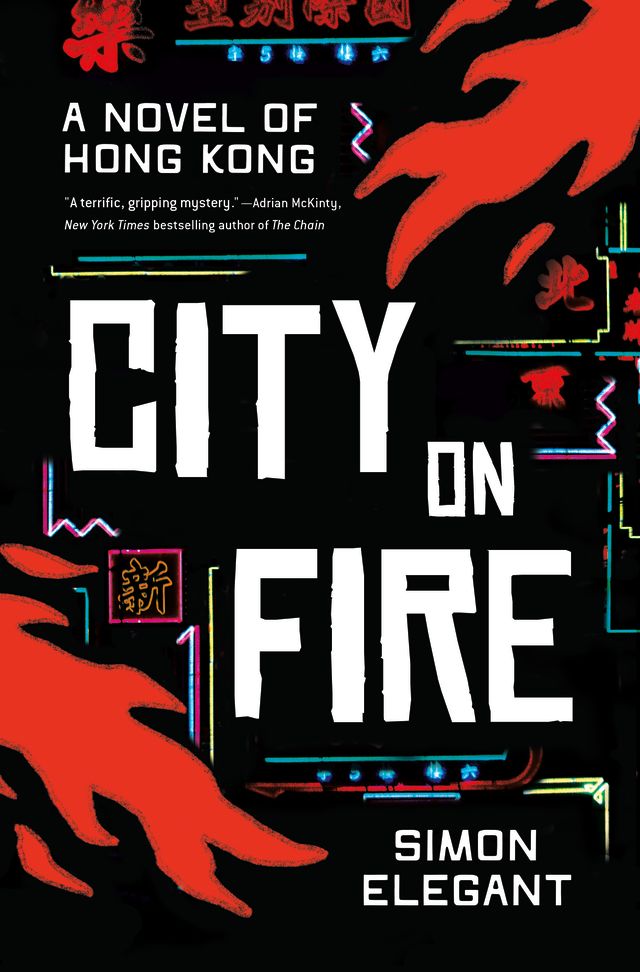
‘City on Fire: A Novel of Hong Kong’
By Simon Elegant
Pegasus Crime: May 5, 2026
Hardcover, 288 pages
What arts and culture topics would you like us to cover? Please email ideas or feedback to features@epochtimes.nyc