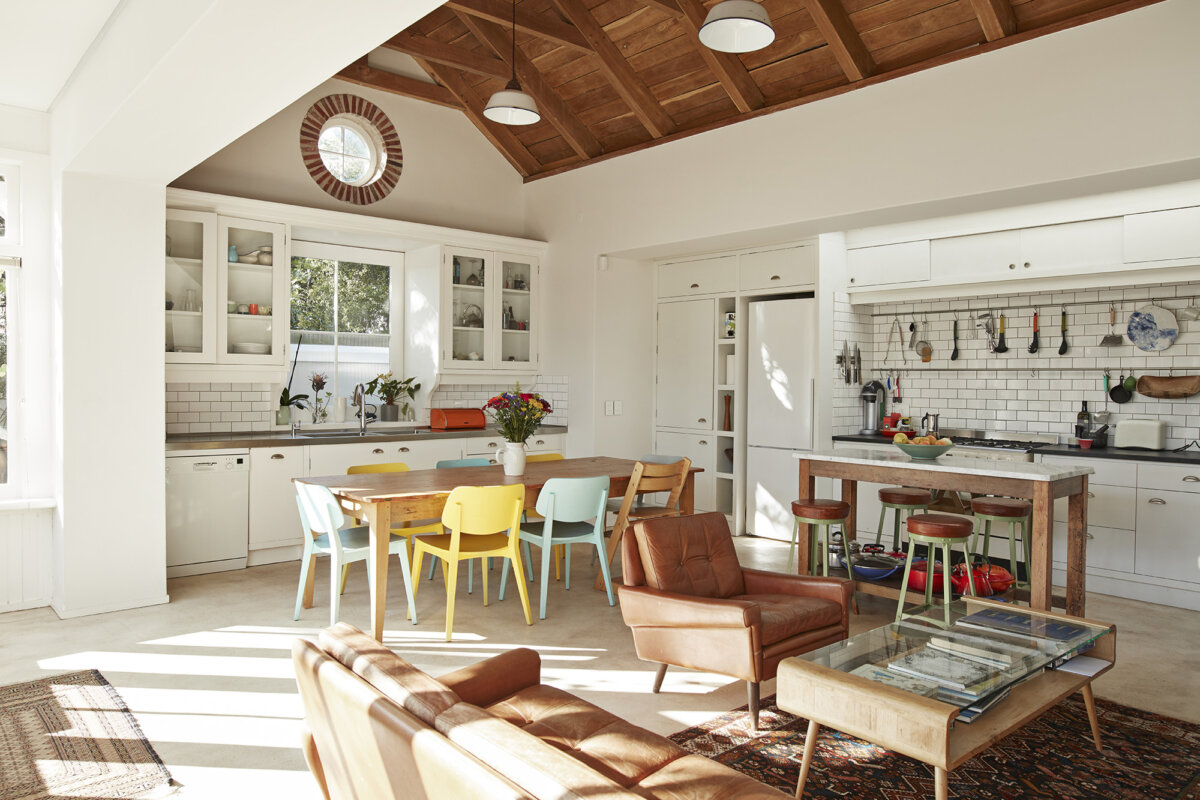
Since the 1990s, open floor plans have been popular with Americans. In these plans, a “great room” combines the kitchen and living room into a single expansive area, allowing the entire family to be together. These designs were originally seen as maximizing light and space in smaller homes.
However, the honeymoon phase may be over with open floor plans. Lately, there’s been a shift toward homes with more defined, separate rooms that give homeowners the freedom to adapt their spaces to their lifestyle.
Losing Appeal
Greg Field, a Realtor from Home Smart, told The Epoch Times about the change in demand for open floor plans.
“It’s not about how it looks; it’s the acoustics,” he said. It’s hard to have a Zoom call with dogs barking and kids playing in the same room. His company is seeing a demand for real home offices, not a nook or a desk in the hallway.
Messy kitchens are another concern. Open floor plans make it difficult to hide messes such as kitchen clutter from the rest of the home. This has led to a call for more separated, tidy living areas.
One residual effect of the COVID-19 pandemic is an increased desire for privacy. Expansive, open rooms don’t allow space in which to retreat from everyday home life. Humans may be social beings, but there are just times when they want alone time. This is difficult with an open floor plan.
Energy Considerations
Beyond livability, there’s the practical reason: energy consumption. Heating or cooling large, open areas can be less efficient and more costly than heating or cooling closed rooms.
Although some airflow is good, open floor plans often struggle to maintain consistent temperatures. This causes the HVAC system to work harder to overcome uneven cooling or heating. The larger volume of an open space might demand more energy than heating or cooling smaller, closed rooms individually.
According to LaFollette Custom Homes, homes with more walls or divisions have more thermal mass. The materials in the extra walls absorb, store, and slowly release heat, which helps to stabilize the home’s temperature. Since an open floor plan lacks those extra walls, it can result in faster temperature fluctuations.
According to Heat Squad, a company specializing in energy audits, 25 percent of heat escapes through your roof. Because warm air rises, this percentage could be higher if your open floor plan has vaulted ceilings. And although that may work to your advantage in the summer, it could lead to some chilly winters or high energy bills.
Large open spaces also usually feature numerous windows. This can cause overheating in the summer or allow heat to escape in the winter.
Design Options With Separate Spaces
Practicality isn’t the only consideration with sectioned-off spaces; they also have design perks. Separate rooms give you the opportunity to add diversity to your home and take more risks. You might want to use wallpaper with a wild design in the dining room but not want to be so bold in a larger, multi-use room. Having sectioned-off rooms gives you more options.
Hybrid Designs Are the Trend
Alexei Morgado, Realtor and CEO at Lexawise, told The Epoch Times that people are leaning toward hybrid designs.
“From what I’ve seen lately, I would say that there is now a certain trend toward hybrid designs,” he said. “That is, open spaces in family areas and separate spaces where people need peace, quiet, and concentration.”
He said that although open plan designs are here to stay, they’re evolving.
“There are more areas and features that offer privacy, like semi-open spaces, partial walls, and sliding doors,” he said. These options offer flexibility and adaptability.
Morgado said he often hears from buyers who want at least one room closed. They may like an open main area, but they want a real office, a flexible room, or a studio with a door. This is especially important for remote workers.
“I also hear buyers ask for more specific rooms and cozier areas, rather than one large space that has to serve every purpose,” he said.
Reselling Open Floor Plan Homes
Options are everything, according to Morgado.
“In the case of resales, I believe the winning strategy right now is not to close everything off but to offer buyers options,” he said.
For anyone building a home, he suggests that you opt for an open layout for everyday living but include at least one closed-off room for work or privacy. This will not only give you more flexibility, but also make your home easier to sell in the future.
“Homes with flexible space tend to generate more confidence in buyers, as they can imagine living in them without the need for urgent renovations,” Morgado said.
Morgado said he expects contractors to build smarter open floor plans with hybrid designs, such as larger pantries or auxiliary kitchens. Look for doors or sliding doors that allow spaces to be separated when necessary.
Separate Your Open Floor Plan Without Renovating
If you’re rethinking your home’s open floor plan, you don’t need a large budget to section off rooms. You can fake the look.
Separate the living area from the kitchen or dining room by using bookshelves or folding screens. Be inventive with your furniture layout by placing sofas or chairs as dividers. This will create smaller, cozier spaces even in a large room.