Beronica, a middle-aged Ecuadorian woman, couldn’t tell the American doctor her birthday or her age. She and her 12 siblings grew up in such poverty that her parents could not afford birthday presents or celebrations for any of the children. Nor could they send them to school. In order to avoid the shame and heartache of being unable to provide any festivities, Beronica’s parents simply said nothing about family birthdays.
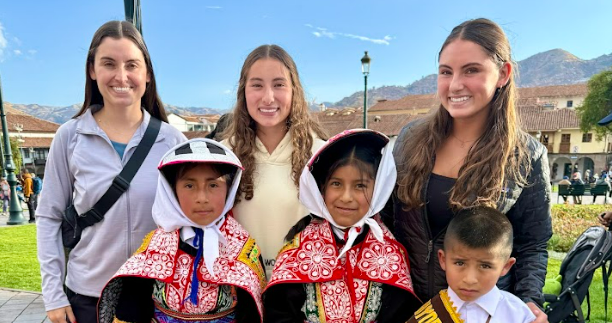
Listening to the conversation between Beronica and the doctor were the doctor’s three daughters: Cassie, Jessie, and Alexis Ross. The girls blinked away tears as they grappled with the depth of hardship to which Beronica—and millions like her—had been reduced. In their comfortable Huntington Beach life in California, the idea of never having a birthday party—and, more, not even knowing the day you were born—was unthinkable.
But Cassie, Jessie, and Alexis wanted to bring whatever consolation they could to Beronica, so they decided to provide her with the staple of childhood she’d never experienced: a birthday party. The girls gathered some gifts for South American children that they’d collected as donations from their schoolmates back in the United States, brought in some doctors, nurses, and other volunteers, and sang Beronica “Happy Birthday” as they presented her with her first birthday presents: a Barbie doll, coloring book, and stuffed animal.
Overwhelmed by the kindness, Beronica wept and embraced each of the girls—who promptly promised to celebrate another birthday party with her when they returned the following year. These two birthday celebrations so delighted and enlivened Beronica that her young adult son was inspired to help his mother travel to the national hall of records in Quito, Ecuador, and uncover her birth certificate. At last, she knew her true birthday.
Helping in the Field
This is but one of many life-changing experiences the Ross girls and their father, an orthopedic surgeon, have accumulated over the course of many medical mission trips to Mexico, Guatemala, Ecuador, and Peru. These missions have led them to remote mountain villages, orphanages, and seminaries. Incredibly, each of the girls—now aged 28, 17, and 16, respectively—began assisting their father on these trips at the age of about eight.
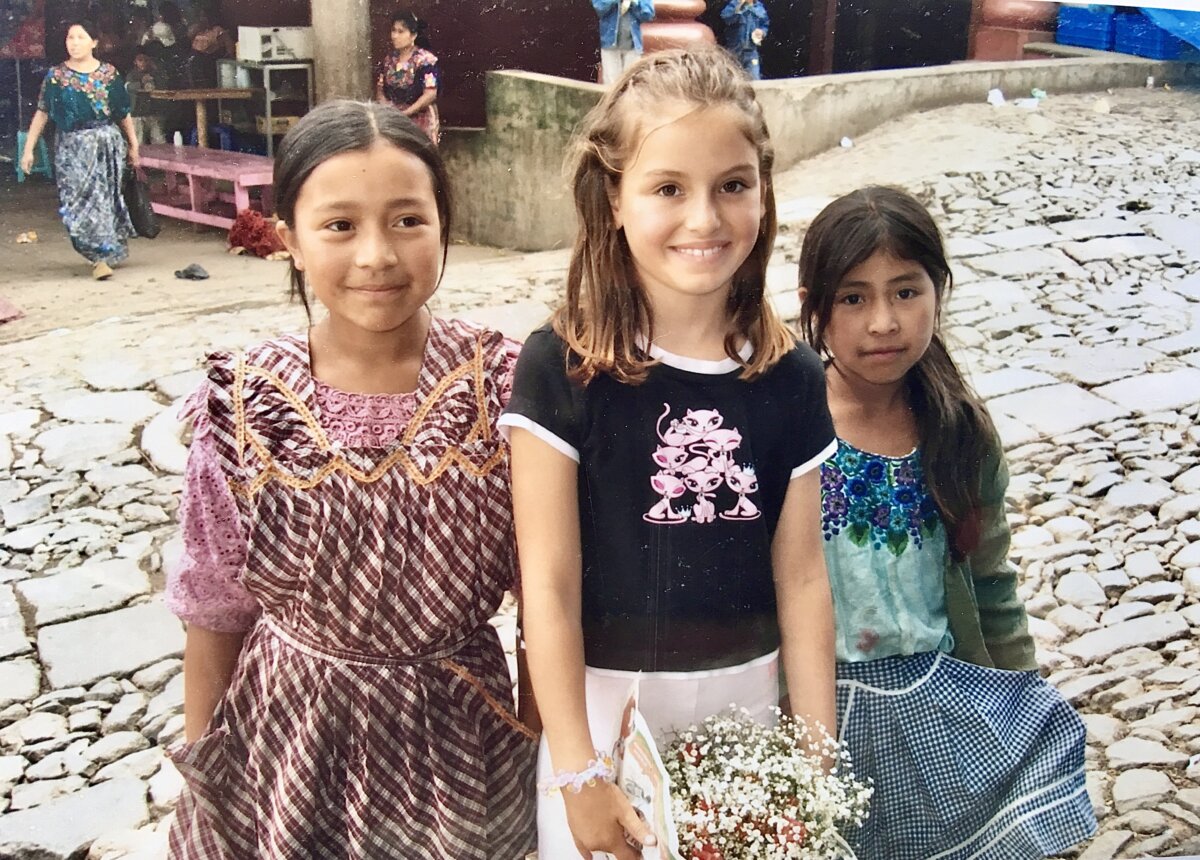
The Ross sisters have become a key ingredient in the success of these missions as they buoy the spirits of patients and medical workers alike through their energy, kindness, joy, and musical talent—in addition to the medical assistance and critical translation services they provide. Seventeen-year-old Jessie explained to The Epoch Times the value of the girls’ presence on these trips: “It may not be medical care or specific actions that someone needs; it’s just care in general. Whether it be love or attention, anything along those lines, [it] could be life-changing for an individual.” The mission organizers recognize this truth too and have come to count on the Ross sisters’ participation.
The girls assist with minor surgeries, give injections, help transport patients, comfort children, and generally provide warm smiles, energetic games, and lively songs and dances to the suffering people they encounter (and their fellow volunteers). As their proud father told The Epoch Times, “Their hugs, gifts, companionship, and occasional post-trip communications have lasting effects, as does improved health status from medical care received.”
One example of the life-changing medical care provided by the girls, despite their lack of formal medical training, involved a miscarriage case identified by Jessie. When a woman came to the medical team having experienced consistent bleeding for some time, Jessie was the one to identify the likely cause and provide the woman with a pregnancy test. Because of this, the team realized the woman was having a miscarriage and transported her to the hospital, where she received crucial medical care. The hospital staff said that if Jessie hadn’t caught this case, the woman would likely have died within a few days.
Where It All Started
This life-saving Ross family tradition began not with bandages but with baseball. The Rosses have always loved America’s favorite pastime, and one day, when Dr. Ross was in his late 30s, he called up a friend—who was also a doctor—and invited him to go watch the World Series. Dr. Ross told the Epoch Times what happened next:
“He said he couldn’t go. And he said, ‘You know who else can’t go? That’s you.’ And I was like, ‘What do you mean by that?’ And he said, ‘Because I have started a medical mission in Guatemala. Now that I know you have free time and you have no way to get out of this, I need you to get a sleeping bag, and you’re going to be spending the next week in Guatemala on a medical mission.’ “
And that’s just what Dr. Ross did. After a few other trips, Dr. Ross asked the organizers if he could bring his eldest daughter, Cassandra, who was 8 at the time. The organizers agreed, and Cassie turned out to be a big help, despite her youth. As the years passed, she continued to trek along with her father across South America on various missions, and they were eventually joined by Jessie and then Alexis.
Lessons Learned
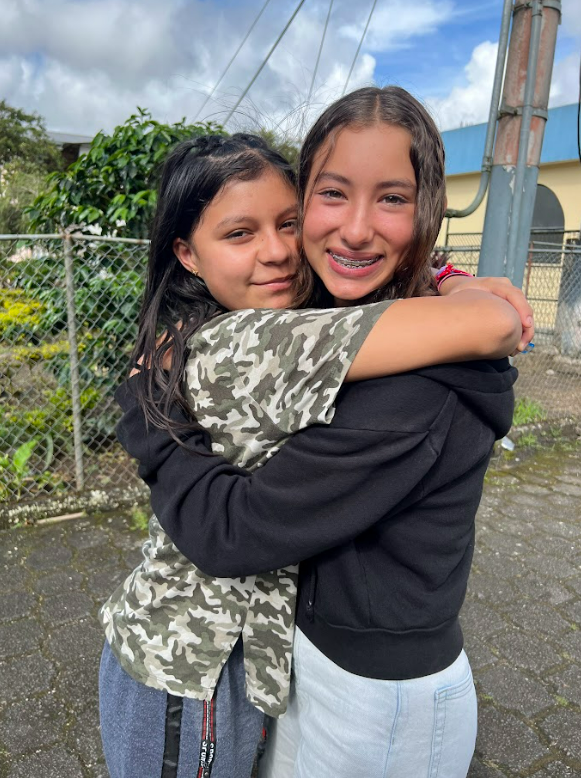
The girls were shocked when they first encountered the poverty and deprivation of the communities they visited. They saw houses formed of adobe and a few pitiful sheets of plywood, with a tarp for a roof. They saw people suffering from malnutrition and experienced the simple diet of local people consisting largely of rice and, with a bit of luck, some chicken, carrots, or potatoes. They met and comforted paraplegics, amputees, and people with cerebral palsy, many of whom utilized homemade, jerry-rigged wheelchairs and canes and walkers—if they were lucky enough to have any such devices at all. They saw the rough, sandpaper-y hands of men and women who’d lived lives of hard labor and sun exposure. They shuddered themselves to sleep under piles of alpaca blankets that couldn’t keep out the freezing temperatures, and they thought of their heated showers and carpeted floors and indoor plumbing back home.
These experiences taught the girls important lessons about empathy and humility. Alexis told The Epoch Times, “It’s important to be aware of other people and what they have. Because when you go to these places that don’t have many resources or many things, such as toys. … So I feel like a big one for me is just not bragging or being self-entitled or just having a big ego.”
“I feel like because we take things for granted, we don’t realize how many resources that we overuse,” she added.
The girls’ journeys to remote places have instilled in them a sense of compassion for the plight of others and gratitude for their own comfortable lives. As Jessie put it, “When we’re there, it really is just kind of an eye-opening experience for us to bring home to our communities here in California and also tell people, we really shouldn’t be taking these things for granted. Having the ability to brush your teeth in sink water and drink the sink water, or being able to shower in warm water, or even just being able to breathe with oxygen rates above 92 is such a blessing, and we really don’t understand how good we have it here.”
A Life of Service
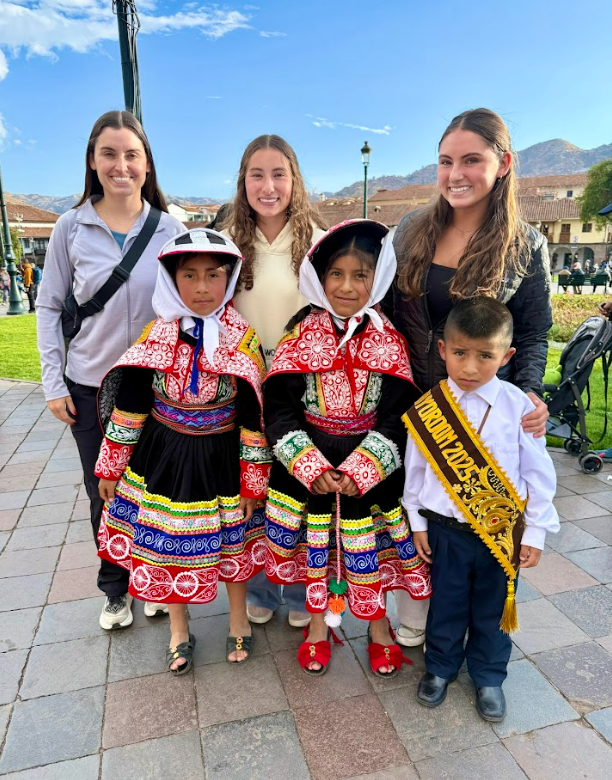
The Ross sisters try to counteract the hardship and poverty by bringing healing for bodies and hearts. One of their primary works of mercy on these trips is to bring donated toys from the United States and distribute them to children—and even some adults, who’ve never seen a toy before—in the mission areas. Jessie launched the initiative when she was struck by the kids’ lack of toys, and it’s become a major success. The girls collect donations and tag each one with the donor information. They then video themselves delivering the toy (often a stuffed animal) to an overjoyed child or adult who has never possessed such a thing and then send the videos and pictures back to the donor so that the donor can see the look of elation spreading over the features of the person receiving their gift. In the poignant video clips, children and adults, often of small stature and dressed in traditional garb, suddenly break into smiles and tears when they receive the toys. They often smother the sisters in hugs.
Yet, despite the material impoverishment the Ross sisters encounter and seek to counteract, they’ve also observed that, sometimes, the poor people in the mission areas possess greater spiritual riches than their wealthy American counterparts. Contrasting Americans—who take for granted internet access, smartphones, cars, heated homes, and a cornucopia of food options—with impoverished families in South America, Jessie noted, “When we’re here in the United States, these earthly things seem to mean a lot more to us. We get road rage, and we are more easily [frustrated]. Let’s say we more often have short fuses than in those communities, because they learn patience. We learn aggressiveness.”
Similarly, the Rosses see individualism as more prevalent among Americans, whereas the peoples of South America are more willing to help one another, rely on one another, and cooperate. “Communities down there are much more tightly knit than here in the United States,” Jessie said.
The girls say that they have learned about humility, patience, cooperation, and faith from the example of the local people they go to serve. “Now that I experience these missions, I feel that I have grown every single time, more increasingly patient, or I also have grown more faithful, anything along those lines,” Jessie told The Epoch Times, and her sister nodded in agreement.
The mission trips have also taught the sisters the joy of helping others. The girls intend to carry forward their servant-mindedness into careers. Cassie already works as a lawyer, Alexis plans to work in a medical field, and Jessie is wavering between the two. What seems clear is that their missionary experiences have shaped the trajectory of their future endeavors.
In the meantime, the family continues to make their yearly trips to assist the forgotten and the neglected. From remote mountaintop villages to dense jungles to arid regions where no trees grow, the father and his daughters trudge on, the girls’ voices lifted in song, driven on by a deep love for those less fortunate than themselves.