When we look at the great mythologies and religions of the world, and when we ask ourselves what symbol—out of all the possible symbols that there are—is the greatest, most ubiquitous, and certainly the most accessible and easy to understand, which one would it be? The answer, unequivocally, I think, is light.
Light features in all religions and mythologies; indeed, often the sun is worshipped as a god. But if we take the two religions closest to us in the West, Judaism and Christianity, we find at the very start of the Hebrew scriptures that it is light that God first creates—light that shines in the darkness (Genesis 1). And if we go to the Christian scriptures, we find its embodiment saying, “While I am in the world, I am the light of the world.” (John 9:5). Christ identifies himself not merely as light, but as the light.
In a way, this should not surprise us, because light is even more essential to living and to life than something that apparently seems even more immediately basic: water. And the notion of living without light has all sorts of connotations and repercussions. We can be literally blind, and we can be metaphorically blind. Being blind is not a good thing; it is to walk in darkness, and in Gnostic thought, it specifically means being ignorant.
That said, however, when we examine some myths more closely, we find that there is a sense in which, at a deep, archetypal level, literal blinding is necessary if we are to have spiritual insight. To take two stories, for which, in strict scholarly terms, there is no clear evidence that they come from a shared tradition: the Egyptian story of Horus and the Norse story of Odin. The Horus myth belongs to ancient Egypt, and the Odin myth belongs to much later Norse-Germanic cultures, recorded around the early medieval period. Both, though, involve “blindings” that are instructive.
Wounded Sight, Deeper Vision
The story of Horus tells us that in his struggle with Set, the god of disorder and the desert, Horus loses an eye. Yet this eye is later restored, and in its restored form, becomes one of the most powerful symbols in Egyptian religion: the Eye of Horus, signifying healing, wholeness, and protection. The loss, in other words, is not merely damage; it is the precondition of a deeper completeness. The eye must be wounded before it can be made whole.
In the Norse tradition, Odin goes further. He does not lose his eye in battle; he gives it up willingly, casting it into Mimir’s well in exchange for wisdom. Here, the pattern is sharpened into something more deliberate: Sight is not simply lost—it is sacrificed. And what is gained is not restoration, but insight. Odin sees less of the visible world but more of what lies beneath it. The price of knowledge is limitation.
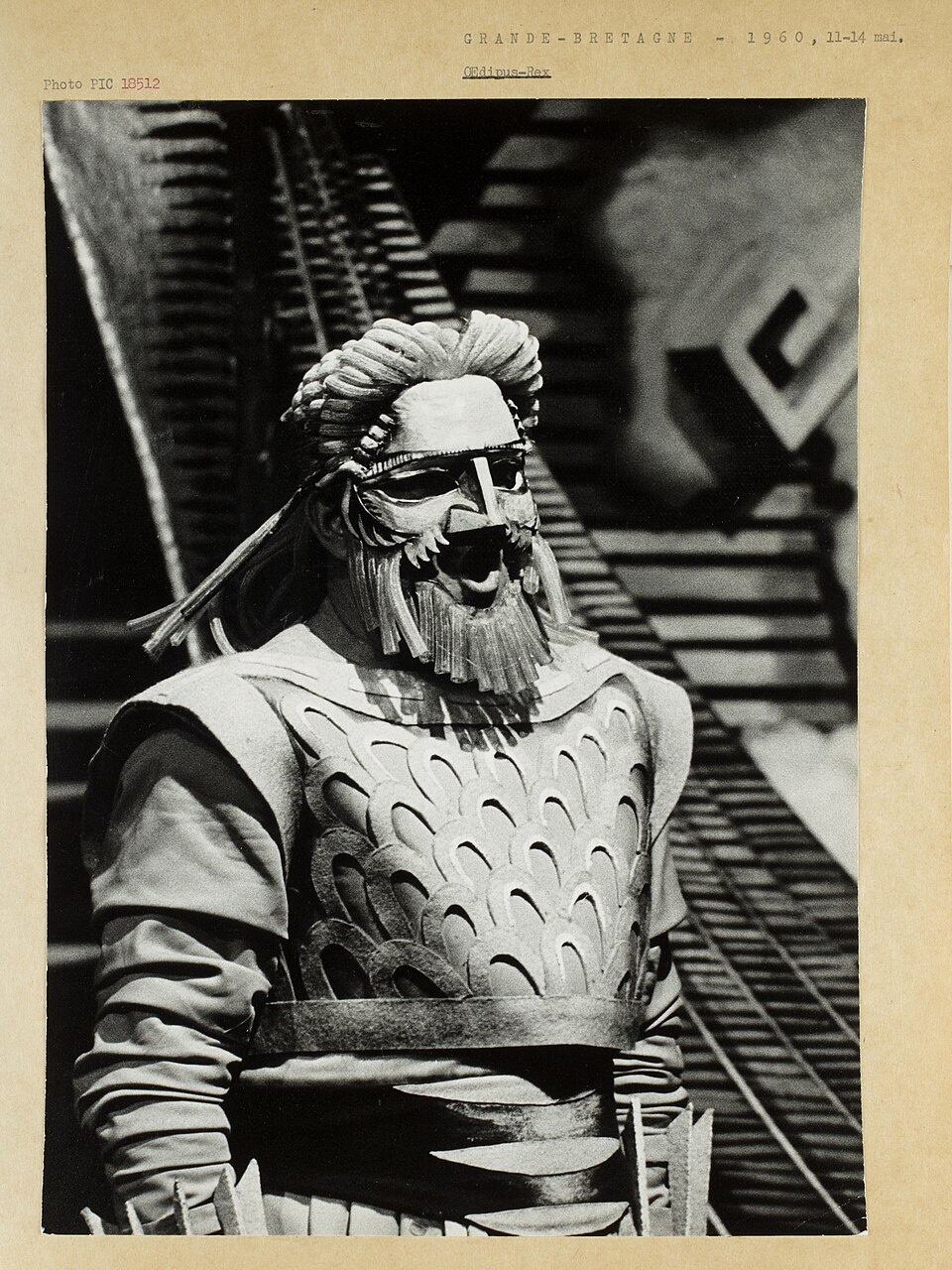
The Greeks, ever acute observers of the human condition, develop the idea still further. In the figure of Tiresias, blindness becomes the very condition of prophecy. Deprived of physical sight, he alone truly sees. And in Oedipus, the movement is reversed but intensified: He possesses sight, yet lives in ignorance; only when he blinds himself does he come to knowledge. The implication is unmistakable—human beings are not merely lacking sight; they are, in some sense, mis-seeing.
Scripture and the Paradox of Seeing
The biblical tradition does not contradict this pattern but transforms it. Paul the Apostle is struck blind on the road to Damascus. Only after three days, when his sight is restored, does he truly begin to see. And the words of Jesus Christ repeatedly return to this paradox: “Seeing they do not see.” Physical sight, it seems, is no guarantee of truth; indeed, it may conceal it. We see what we expect to see, what we desire to see, what we are conditioned to see—and call it reality.
All of this finds its most sustained poetic expression in “The Divine Comedy.” Dante’s journey is, among other things, an education in vision. In Hell, he learns to see sin clearly; in Purgatory, his sight is purified; and in Paradise, the light becomes so intense that his vision fails altogether. At the highest level, it is not that we see more—it is that our ordinary way of seeing breaks down. The eye itself must be remade.
Sterility and the Nature of Evil
But there is another strand to this story, one that complements the loss of sight with something equally telling: the loss of generative power. Returning to Set, in his struggle with Horus, he is not only defeated but rendered sterile. Horus loses his eye, but Set is emasculated. As lord of the desert, this is entirely fitting. The desert, vast though it is, produces nothing. It‘s been estimated that Set’s kingdom—the desert—occupies some 96 percent of the land area of Egypt, but it is the 4 percent of land aligned to the Nile where life abounds and where Horus reigns. The desert is a place of absence, not of growth.
Here we touch upon a profound metaphysical intuition: Evil does not create. It diminishes, distorts, and ultimately empties. This is precisely the insight captured in the remark by critic John Freccero in his “Dante: The Poetics of Conversion,” that sin is “the incarnation of nothingness.” In Dante’s Hell, nothing grows; nothing develops; nothing begins. The deeper one descends, the less movement, warmth, and being one finds. Evil, for all its apparent power, is sterile—a kind of desert.
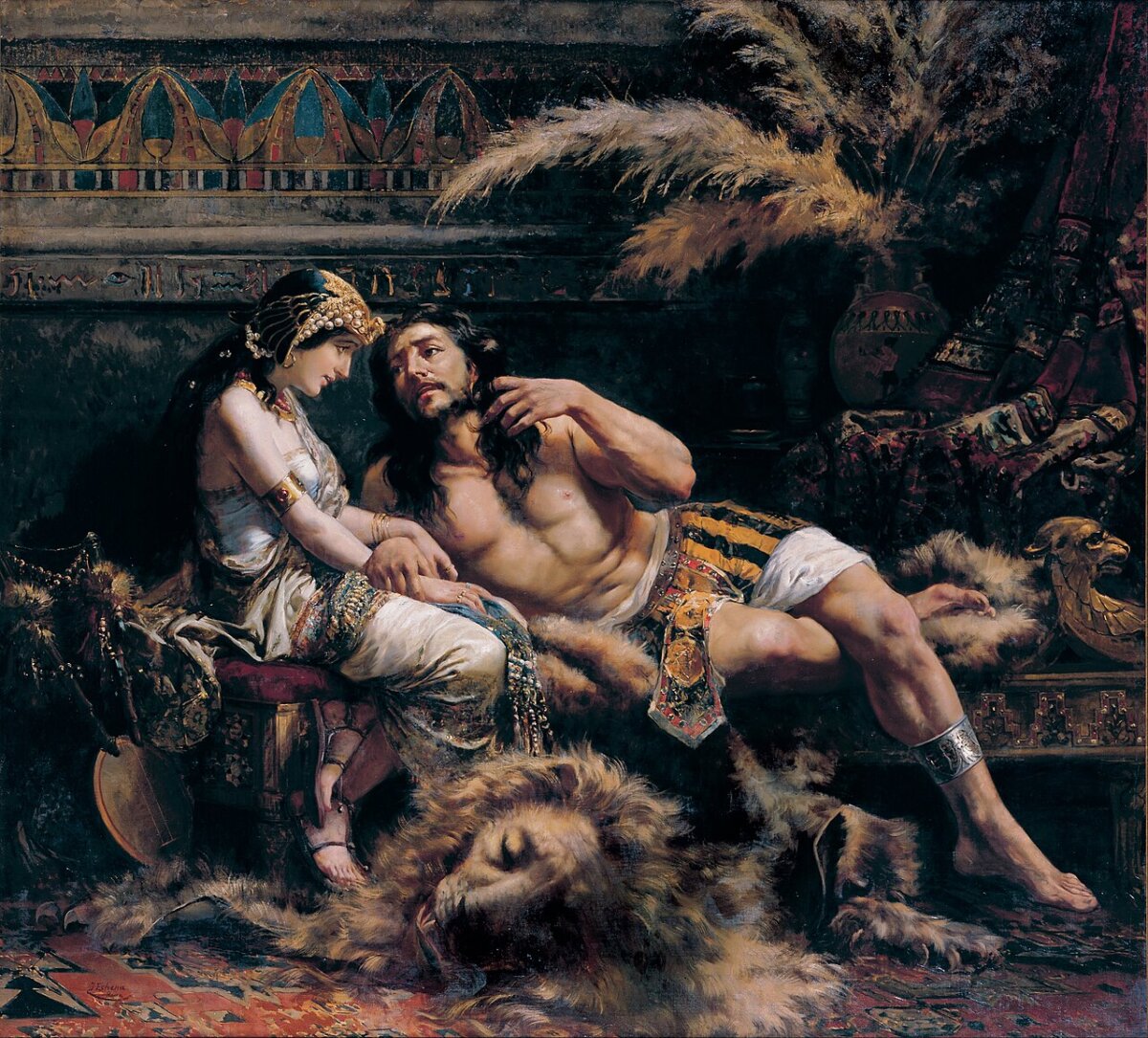
Seen in this light, the two archetypes—blindness and sterility—belong together. To see truly, which is to see spiritually, something in us must be relinquished: illusion, pride, false certainty. Samson in the Old Testament provides a striking example of this. When blinded and brought low, and when he prays to Yahweh, he destroys more of the Philistines than in all his earlier exploits when he could literally see. But when truth is rejected altogether, when vision is not purified but corrupted, the result is not insight but barrenness. There is no fruit, because there is no participation in reality.
Thus, the paradox resolves itself. Light remains the supreme symbol—not because it flatters our natural sight, but because it exposes its limitations. We do not begin in darkness simply because we cannot see. We begin in darkness because we think we can. And so, across myth and scripture alike, the lesson is consistent: Only when our ordinary vision is humbled, wounded, or surrendered, do we begin, at last, to see—that is, to really see.
What arts and culture topics would you like us to cover? Please email ideas or feedback to features@epochtimes.nyc