



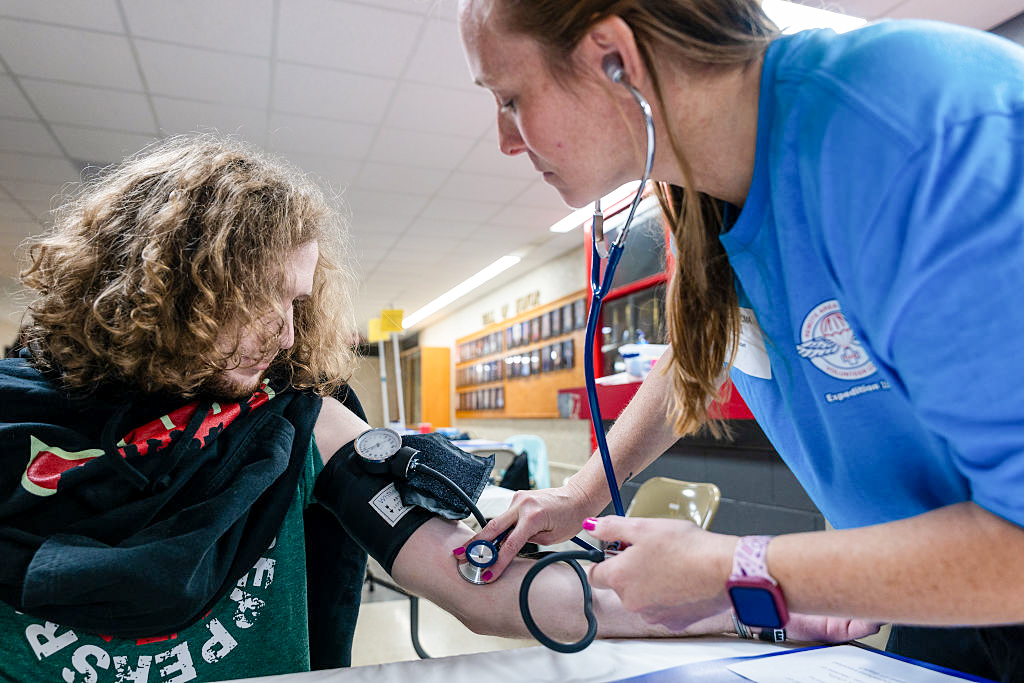
In September 2025, all 50 states were invited to apply to benefit from a $50 billion federal program to strengthen beleaguered healthcare systems serving a fifth of America’s population, its rural heartland. Of the states who bid before Nov. 5, awardees will be announced by Dec 31, 2025.
A new documentary depicts how timely this unprecedented investment in rural healthcare is. The film opens with words of warning: Since 2010, more than 140 of America’s rural hospitals have closed, leaving just one doctor for every 2,500 people.
That’s a worse doctor-to-population ratio than in some large developing countries. The film closes with the equally sobering words that over 600 more hospitals risk closure because they’re under-resourced.
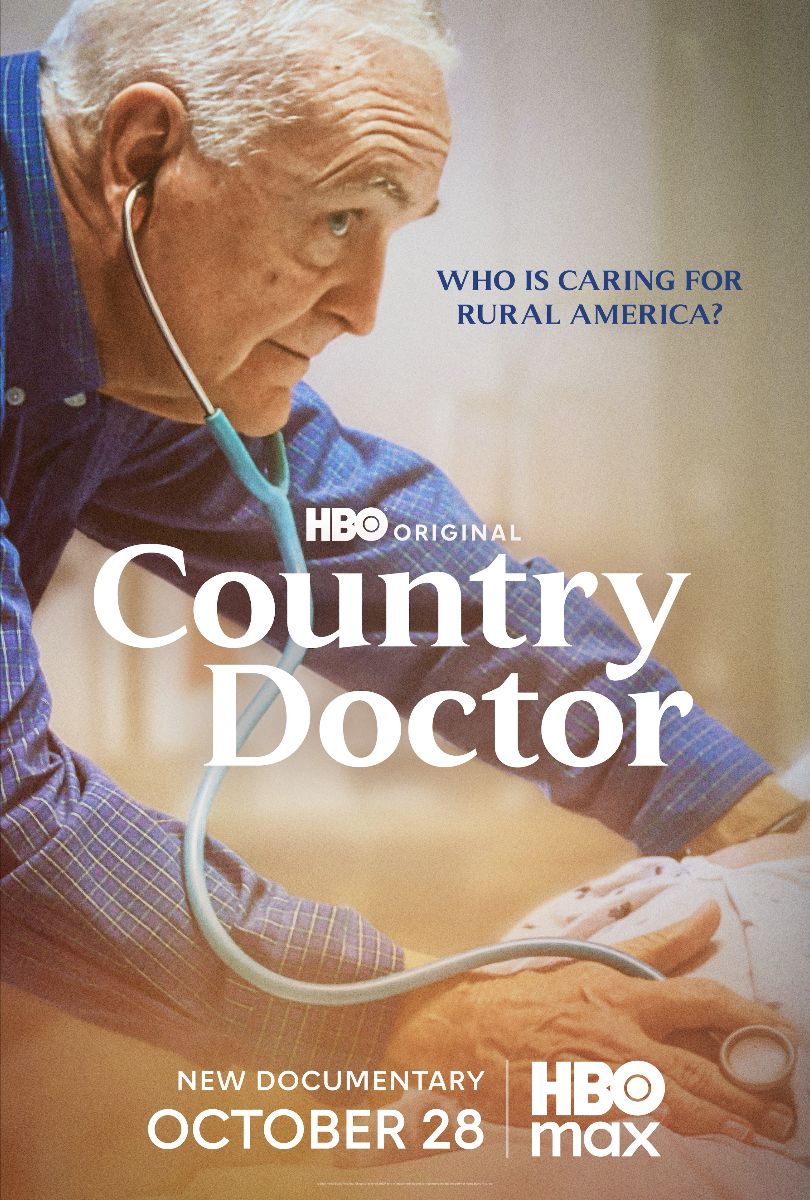
Filmed over three years, “Country Doctor” follows one such doctor in Fairfax, Oklahoma, an aging Dr. James Graham. Serving the town’s population of about 1,200, he’s spent over four decades diagnosing, treating, and comforting his patients, largely through the centuries-old tradition of house calls. He’s one of only two doctors at the 15-bed Fairfax Community Hospital. He’s also the only one at its nursing home and three clinics, traveling as far as 60 miles to one clinic that serves three counties.
Husband-wife filmmaking duo Charlton McMillan and Shari Cookson, and Cookson’s long-time collaborator Nick Doob, deliver a disarmingly authentic “fly-on-the-wall” narrative, shorn of narrators or interviewers, and center on real people. McMillan’s father was a doctor.
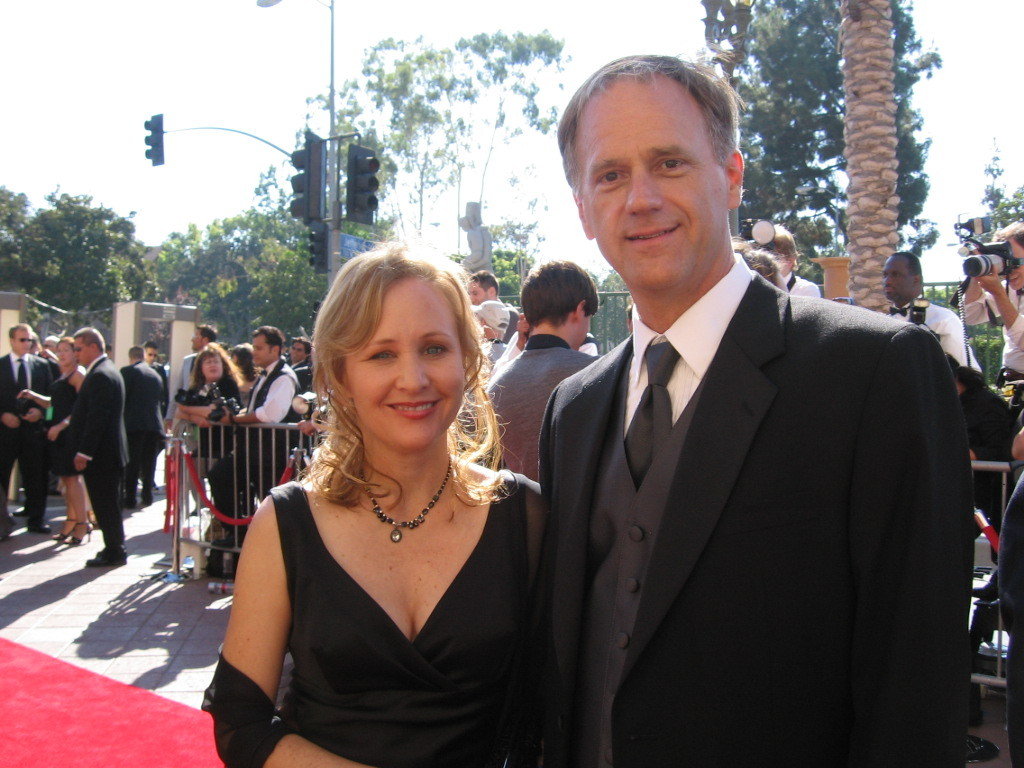
Directors-producers Cookson and Doob pack a more profound sense of meaning and purpose for audiences into their little 38-minute film than the slickest streaming shows do in an entire season.
Like a priest who perceives his parishioners as a shepherd might his beloved flock, Graham revives the humanity in the pain-wrecked families he counsels and comforts. He also keeps it alive in himself, against crushing odds.
Watch patients hug him with a “Love ya.” Too old or too poor to pay their way, many don’t have medical coverage; they often need, at their own cost, specialist care elsewhere, even as far as Tulsa. Still, they’re grateful enough to repay him in any way they can. Sometimes they leave homegrown vegetables or fruits in the back of his pickup. Graham’s wife, Darlene, laughingly brandishes a bunch: “See, this is his salary for the month.”
A customer at a local cafe who adores Graham’s selflessness, lightens the somber mood with a joke: A nurse tells the doctor that there’s a patient who thinks he’s invisible. The doctor replies, “Well, tell him I can’t see him today.”
More seriously though, Graham does see every patient, even those who feel their pain has become invisible to others. Saint-like, his sensitivity heals as much as his skill. One patient gently pats Graham’s shoulder with typical rural understatement, saying, “You’re a good man.” Watch. You’ll realize how idiotic it’d be to argue with her.
Compassionate Care
To patients in agony who long for death or toy with suicide, Graham advocates guts and gratitude. If they treat life as a gift, and suffering, sickness and death as a given, they’re more likely to make the best of every moment.
At the bedside of dying patient George Weston, Graham says seemingly counter-intuitively, “I appreciate his life.” He adds, “The Lord’s gonna be proud to welcome him home.” George’s wife, Jan, summons up gratitude, too, rendering her grief, however bruising, more bearable. To Graham, each patient’s death leaves “a little hole” in his heart.
Growing up, Graham’s alcoholic father was horrifyingly abusive to his mother, his sisters, and him. While still in high school, he’d travel to Oklahoma City to master dialysis; it was the only way he could care for his mother’s failing kidneys, doing it at home. His mother trusted him because, although he was too young and inexperienced, she knew he acted only out of love.
Looking back, Graham says, “It made me stronger … the negative things in life; you gotta take it and learn from it. I learned from being poor … hungry … sick.” Graham had two kidney transplants himself. Supported by Darlene, he shrugged off enfeebled immunity to continue serving at the forefront even during the worst of COVID.
Against this backdrop of sincere, generous local doctors and nurses, lies a tale of deceit in others. Under-resourced and mismanaged, Fairfax Community Hospital, was nearly shuttered several times. Eventually bankrupt, it was put up for auction after investors-owners were charged with fraud: Jorge Perez and his brother Ricardo Perez, and Nestor Rojas, among others.
Unbowed, locals rallied round the flailing hospital after staff strength plummeted from 60 to 8. Heroically, some toiled for months without pay just to keep the hospital running.
Funding
Graham knows that tiny towns do get sandwiched between state and federal funding. Still, he lobbies legislators for help, including Oklahoma State Senator Bill Coleman, Rep. Lundy Kiger, House Speaker Harold Wright, and Rep. Ty Burns.
Neighborhood newspaper publisher Joe Conner and his editor Carol Conner fear that auctions render rural hospitals vulnerable to “predatory financing.” They use their clout to keep bidding as fair and as transparent as possible.
Graham, for his part, can’t fathom how the care sector can ever be beholden to “the love of money,” which he calls the “root of all evil.” Heart-wrenchingly, he says, “Sometimes it’s about getting back to principles … to being Americans, trying to help each other. And we … have lost that.”
As if he hasn’t done enough in over 40 years, Graham tells an audience who are mourning COVID deaths and comforting new patients, “I don’t know if I can do enough, but I assure you I’ll spend the rest of my life trying to take care of these folks. And when they come through these doors, they will have the compassion and love that all of us want.”
Notice, he barely mentions diagnostics or treatment tech. To him, at least, unlike the paraphernalia of healthcare, its core of care is indispensable.
The auction over, new investor Dr. Elizabeth Pusey takes charge under a pall of suspicion over her motives. She exhibits a still untested commitment to community welfare. Reassuringly, she muses that it’s now fashionable to talk of “holistic” care as if it’s some esoteric new trend.
She insists, hinting at Graham’s spectacular record, that “the country doctor has always done that. He was holistic before there was ‘holistic’.” Like Graham, she too speaks of retaining the dignity of patients at the times and in the places they feel stripped of it.
With the benefit of hindsight, having witnessed the turnaround Pusey pulls off, Graham acknowledges that healthcare takes more than heart. It takes money and expertise to deliver sustainably at scale. The quality of healthcare in a small town dictates how well it does elsewhere: education, employment, and housing.
Like early 20th- and late 20th-century films about doctors, this 21st-century documentary suggests that healthcare can be both a profession and a vocation.
No, profitable and patient-centered care aren’t mutually exclusive. Folks at Fairfax just showed how. America’s rural healthcare is in crisis, but it needn’t stay in it.
You can watch “Country Doctor” on HBO and HBO Max.
‘Country Doctor’
Documentary
Directors: Shari Cookson, Nick Doob
Running Time: 38 minutes
Release Date: Oct. 28, 2025
Rated: 5 stars out of 5
What arts and culture topics would you like us to cover? Please email ideas or feedback to features@epochtimes.nyc
