NR | 1h 45m | Drama | 1954
Courtroom dramas feed on the architecture of the gasp. Fans of the genre typically expect the broken witness, the sudden confession, or the prosecutor’s fist coming down on the table as the room freezes around him. The court becomes a little theater of accusation, all polished wood and public ruin, with the audience waiting for someone to crack badly enough to make the ticket worthwhile.
Anthony Asquith’s 1950s film “Court Martial” (originally released in Britain as “Carrington V.C.”) refuses that easy pleasure, since its pace has the patience of slow paperwork. Nobody twirls a mustache under cross-examination or storms in with the missing letter at the exact second required by both Heaven and screenwriting.
The story focuses on a rather dry military matter: A British army major (David Niven), admits to embezzling funds. From there, the film asks whether a man can be technically guilty and still morally wounded by the institution judging him.
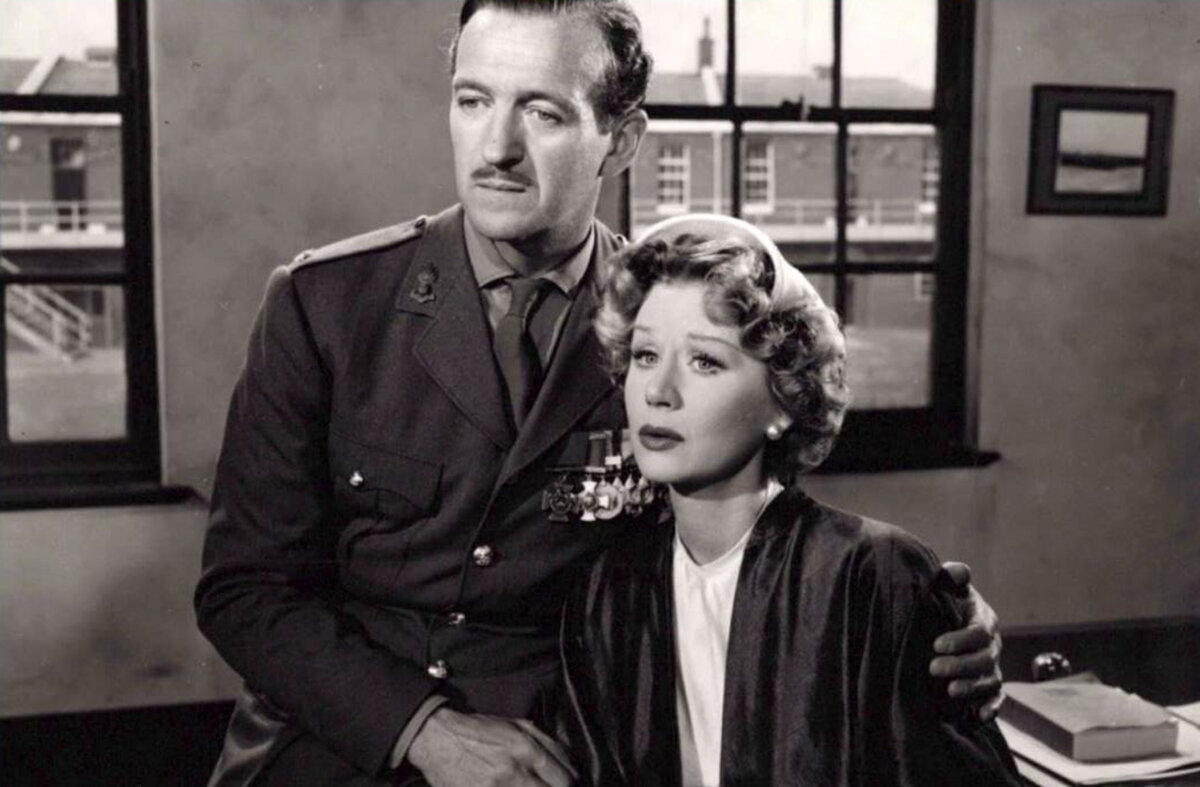
The basic idea is strong enough to survive that dry treatment: A decorated officer has to defend his name in a military courtroom crowded with reputation, rules, and resentment. Director Anthony Asquith lets the hearing creep forward through procedure, denial, rank, and the polite cruelty of men who can damage lives without raising their voices.
Niven gives that setup extra force because the uniform actually carries some personal history for him. When World War II began, he left Hollywood and returned to Britain to serve, ignoring advice that would’ve let him stay in America and keep working. He reached Normandy a bit after D-Day and finished the war as a lieutenant colonel. Thus, he knows the posture, manners, and peculiar humiliation of being judged by one’s own kind.
That may be why this film keeps working even when its story seems almost perversely modest. A flashier movie would turn the trial into a prizefight, but Asquith gives us something colder and meaner. Here’s a decorated man trying to preserve his name while everyone around him behaves as though honor can be audited like petty cash.
The Medal and the Missing Money
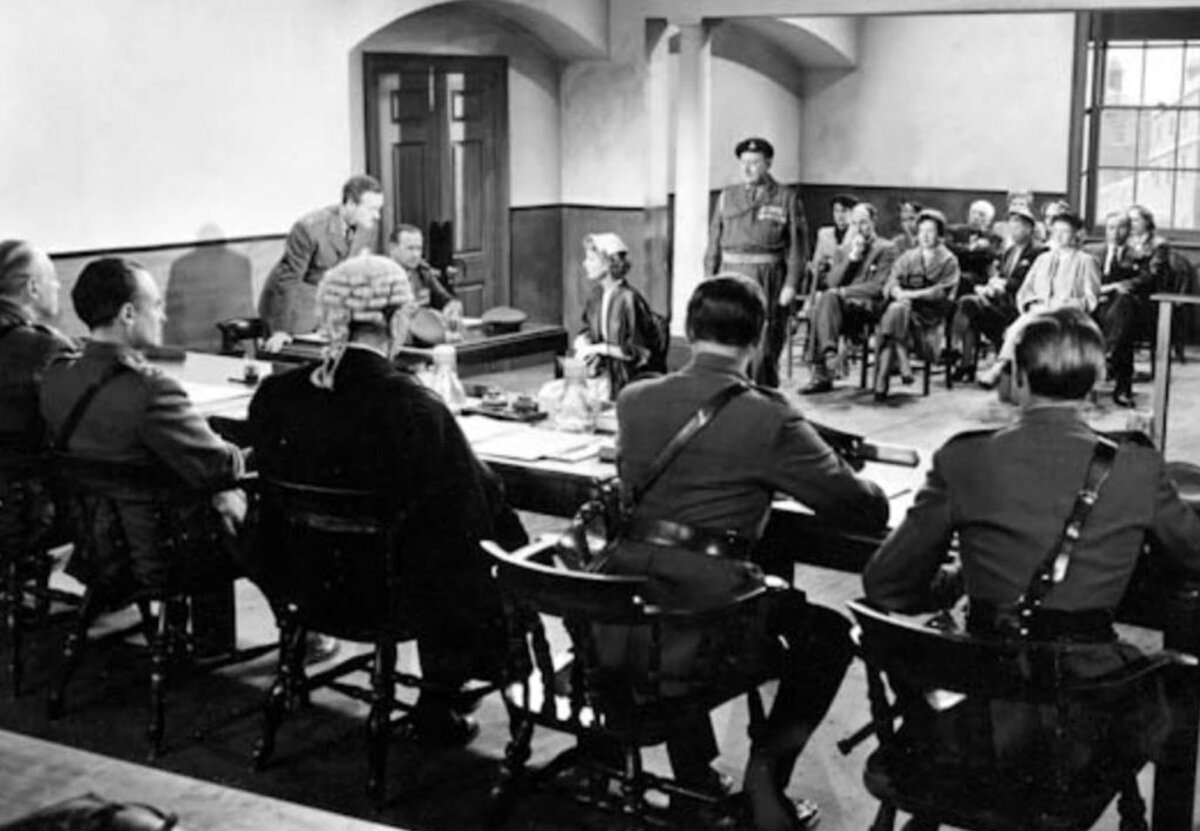
Maj. Charles Carrington VC (Niven), is a decorated British officer facing court-martial inside the world he once served with distinction. The charges are almost embarrassing in their pettiness: He’s accused of taking 125 pounds from the unit safe and going absent without leave.
There’s also a regulation violation involving Capt. Alison Graham (Noelle Middleton), a female officer who visited his quarters. Carrington doesn’t deny taking the money. He says that the government owed him back pay and that his family needed cash. He’d already told Lt. Col. Henniker (Allan Cuthbertson) what he intended to do before touching the safe.
Henniker denies that conversation, and the trial becomes a contest over memory, class, resentment, and military face-saving. Carrington’s defense depends on a thin trail of proof. That proof is Graham’s testimony and the painful presence of Valerie Carrington (Margaret Leighton), his troubled wife.
The court starts with missing money. Then, it wanders into matters of marriage, reputation, jealousy, and every private bruise that military decorum tries to hide under medals and polished boots.
Courtroom Drama Without the Fireworks
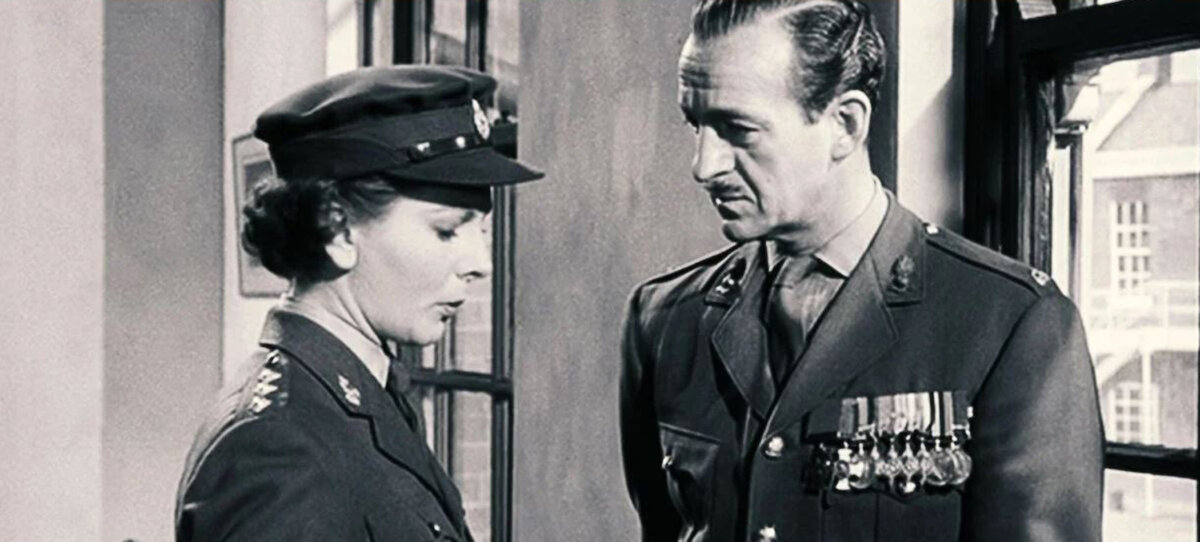
The production has that postwar British neatness where every chair, uniform, and doorway seems ready to report a man for improper conduct. The setting of the barracks matters because Carrington isn’t being judged by outsiders. He’s being examined by his own caste under its own codes. Rooms in the barracks are designed to make marital wreckage, debt, and bad judgment look like administrative problems.
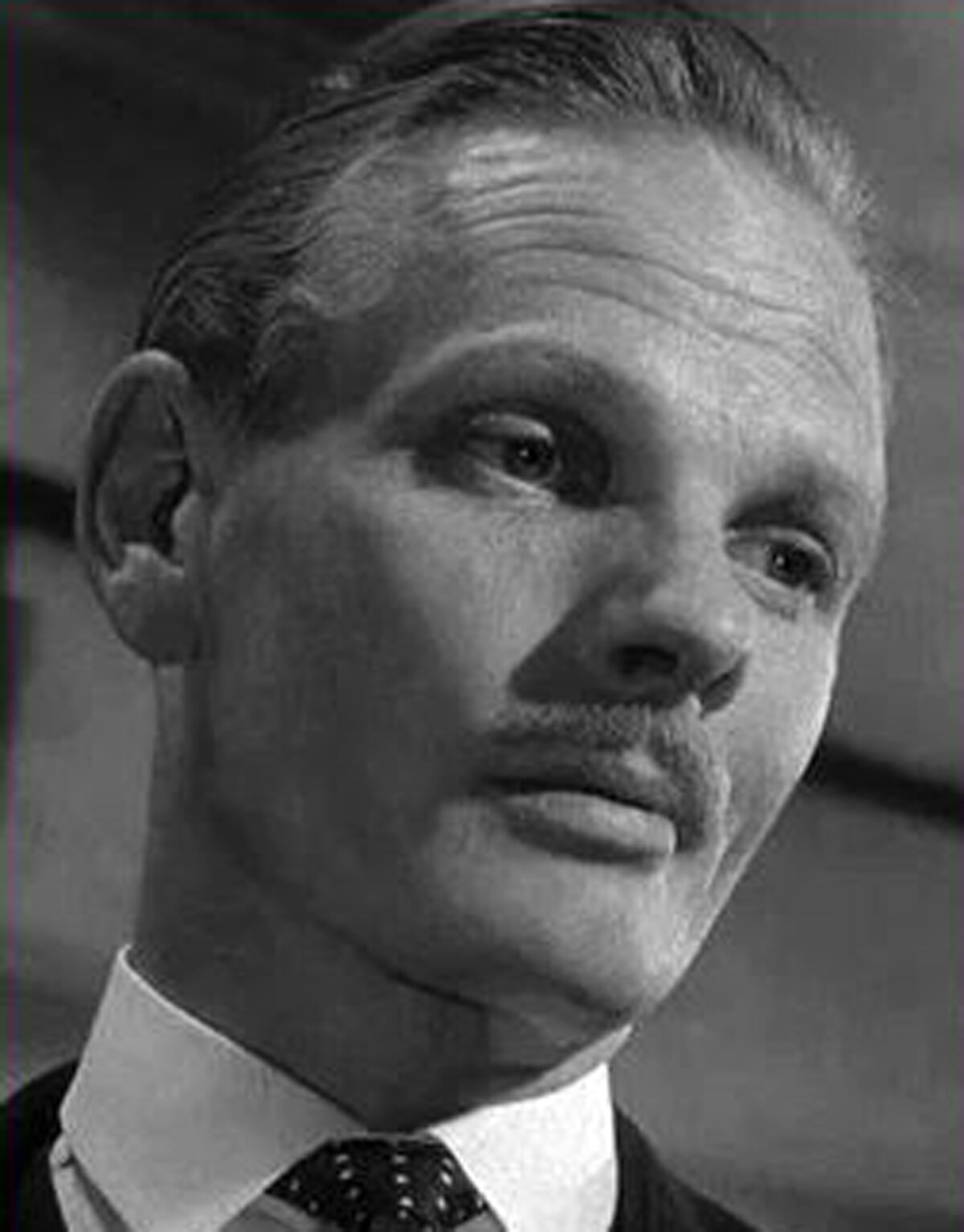
Cuthbertson’s Lt. Col. Henniker adds the right poison, a man who appears to have discovered spite in the rulebook and mistaken it for duty. Leighton’s Valerie brings sour domestic ruin into the courtroom, while Middleton’s Capt. Graham gives the case the scent of scandal.
They all press in against Carrington’s defense from different sides. Soon, the trial starts looking less like a legal matter and more like the bill coming for every foolish choice he’s made.
Indeed, Carrington isn’t spotless, which keeps “Court Martial” from becoming a simple persecution story. His grievance over unpaid expenses may have merit, but taking money from a safe is still wrong; his encounter with Graham makes his appeal to honor harder to accept.
The court may be petty, but Carrington has given it real ammunition. In the end, Asquith leaves viewers with a bitterly funny picture of official men sorting debt, adultery, pride, and reputation into paperwork, then calling the whole thing justice.
“Court Martial” is available on Apple TV and ok.ru.
‘Court Martial’
Director: Anthony Asquith
Starring: David Niven, Margaret Leighton, Noelle Middleton
Not Rated
Running time: 1 hour, 45 minutes
Release Date: Aug. 1, 1955
Rated: 3 1/2 stars out of 5
What arts and culture topics would you like us to cover? Please email ideas or feedback to features@epochtimes.nyc