



NEW YORK CITY—Coping with family childhood trauma can often feel unbearable. One young girl’s desperate effort to navigate this situation is the focus for the sobering drama, “Crazy Mama: A True Story of Love and Madness.” Presented by Rubicon Theatre Company, the production makes its New York City debut at 59E59 Theaters.
Leaving Normality
Sharon (Linda Purl) is a typical 8-year-old in 1950s Virginia. She loves her parents, tolerates her older brother, and has a daily routine that includes going to school, doing her homework, and having as much fun as she possibly can. This all changes when she arrives home one afternoon to the sound of breaking glass. Sharon finds her mother in the grip of a psychotic episode, threatening her with a kitchen knife.
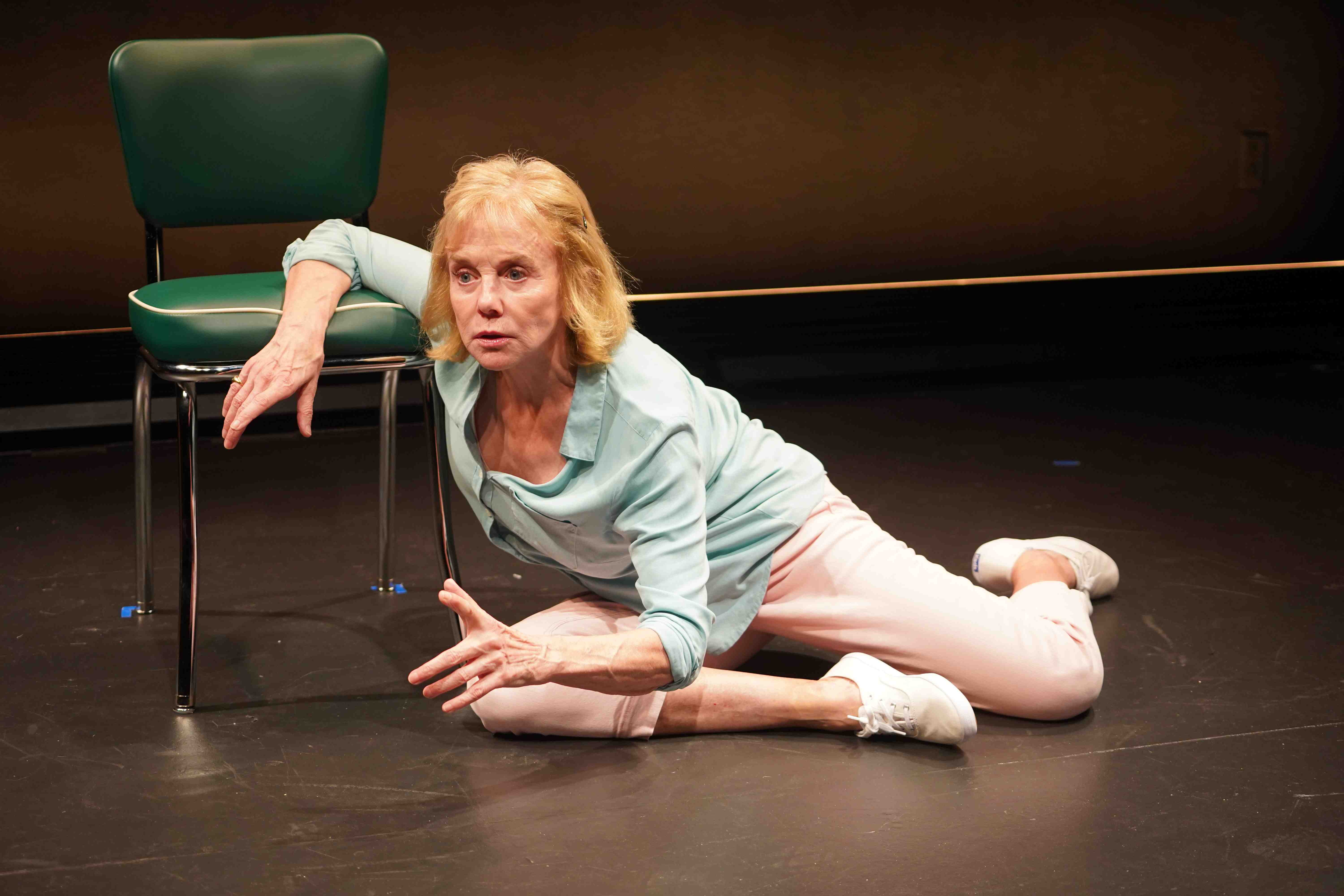 Linda Purl plays a gamut of characters in “Crazy Mama.” (Carol Rosegg)
Playwright Sharon Scott Williams presents this tale not as a retrospective, but rather with the character trying to understand what happened as she had experienced it. As a result, the audience initially learns few of the clinical details about her mother’s condition. Instead, Sharon’s father struggles to explain it in a way he believes someone her age can understand.
As the days, weeks, and months pass, Sharon creates a scenario in her head (one that calls to mind the protagonist in Carson McCullers’s “The Member of the Wedding”) in which she believes everything will return to normal once her mother returns from the hospital. This desperate magical thinking is also apparent when her father finally lets her accompany him to see her mother. The journey takes on aspects of a great adventure, only for Sharon to face disappointing reality when she arrives.
Even as Sharon clings to the belief that everything will eventually return to normal, she’s forced to face the repercussions of her mother’s absence. She receives endless pitying looks and hears gossip about what has happened. She must deal with relatives she hates, causing her to emotionally lash out.
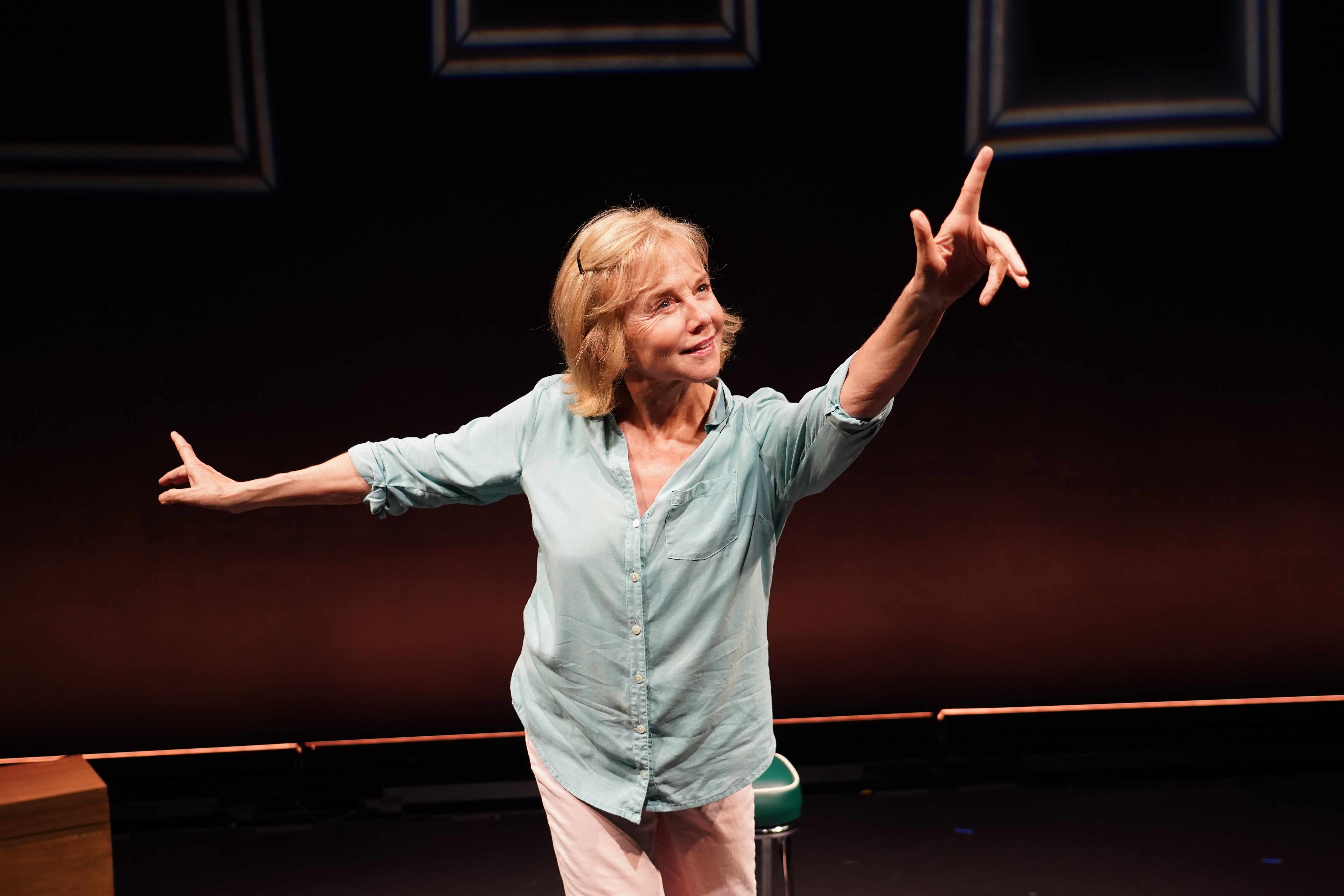 Through mannerisms and dialogue Linda Purl plays an 8-year-old girl, a young woman, and an adult, as well as other characters, in “Crazy Mama.” (Carol Rosegg)
Out of ever-increasing desperation, Sharon makes bargains with herself in an attempt to fix things. She promises to be extra good when her mother does return and makes sure not to do anything that might drive her away again. She grows increasingly frustrated that her mother never seems to try to get better. In that, her mother seems to sabotage her chances of recovery. It’s a sobering reminder of how one family member’s illness ultimately affects everyone in his or her orbit.
The Performances
Purl, who assumes approximately 15 roles during the play, gives a wonderful performance, including playing the girl’s mother. In particular, she perfectly embodies the 8-year-old Sharon with appropriate mannerisms as she struggles to understand what is happening to her mother. The audience sees Sharon transform from a young girl who loves her mother unconditionally to a young woman who slowly questions what she believes when her mother makes false accusations. Only when the scenes shift and Sharon becomes an adult does she finally move on from the burdens she unfairly placed on herself.
The play takes place on a mostly bare stage, but Purl and director Anson Williams conjure all the necessary feelings and emotions necessary to allow the audience to fill in the blanks and complete the various scenes. The audience sees Sharon going through a drawer and closet of a somewhat overbearing relative, a risky car ride in a blinding snowstorm, and her coming home from school to find her entire life has irrevocably changed.
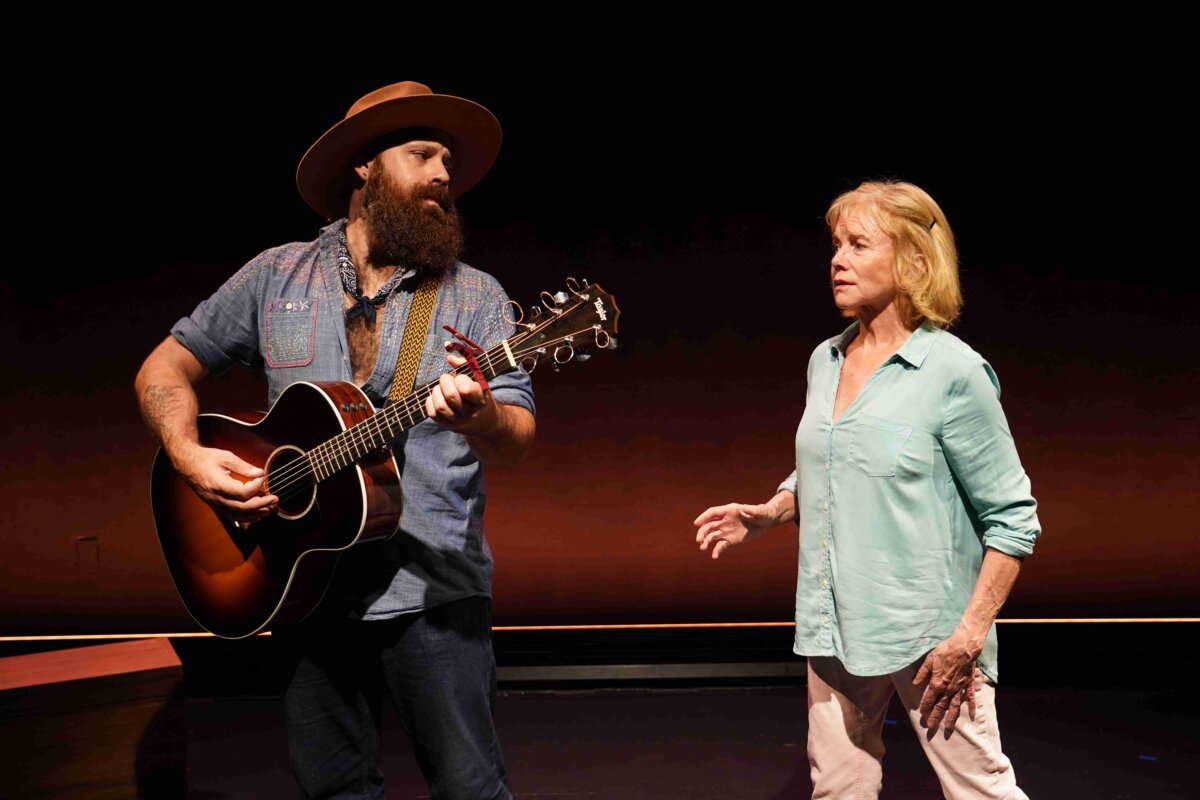
 Will Huse is The Blues Man in “Crazy Mama.” (Carol Rosegg)
The overall story arc is quite powerful, but not always as complete as it could be. While Sharon is clearly the central character, it would have been nice to learn more about her older brother or what happened to her father. Sharon recalls a few comebacks from her dad in regard to how their closed-minded neighbors reacted to her mom’s illness.
The only other person onstage is musician Will Huse, who plays the role of “The Blues Man.” He treats the audience to several recitations of the song “Crazy Mama.” A mournful tune that acts as a transition for the various scenes, the piece is nice enough. Whether it’s actually needed is a matter of opinion, as it starts to feel tedious by the play’s end.
“Crazy Mama” tells about a girl forced to grow up far too early. Only through distance and the understanding that comes with adulthood is she able to truly move on and embrace her mother once again.
‘Crazy Mama: A True Story of Love and Madness’
Presented by Rubicon Theatre Company
59 E 59 Theaters
59 E. 59th St., New York City
Tickets: 59e59.org
Running Time: 2 hours, 10 minutes (one intermission)
Closes: Oct. 18, 2026
What arts and culture topics would you like us to cover? Please email ideas or feedback to features@epochtimes.nyc.
