



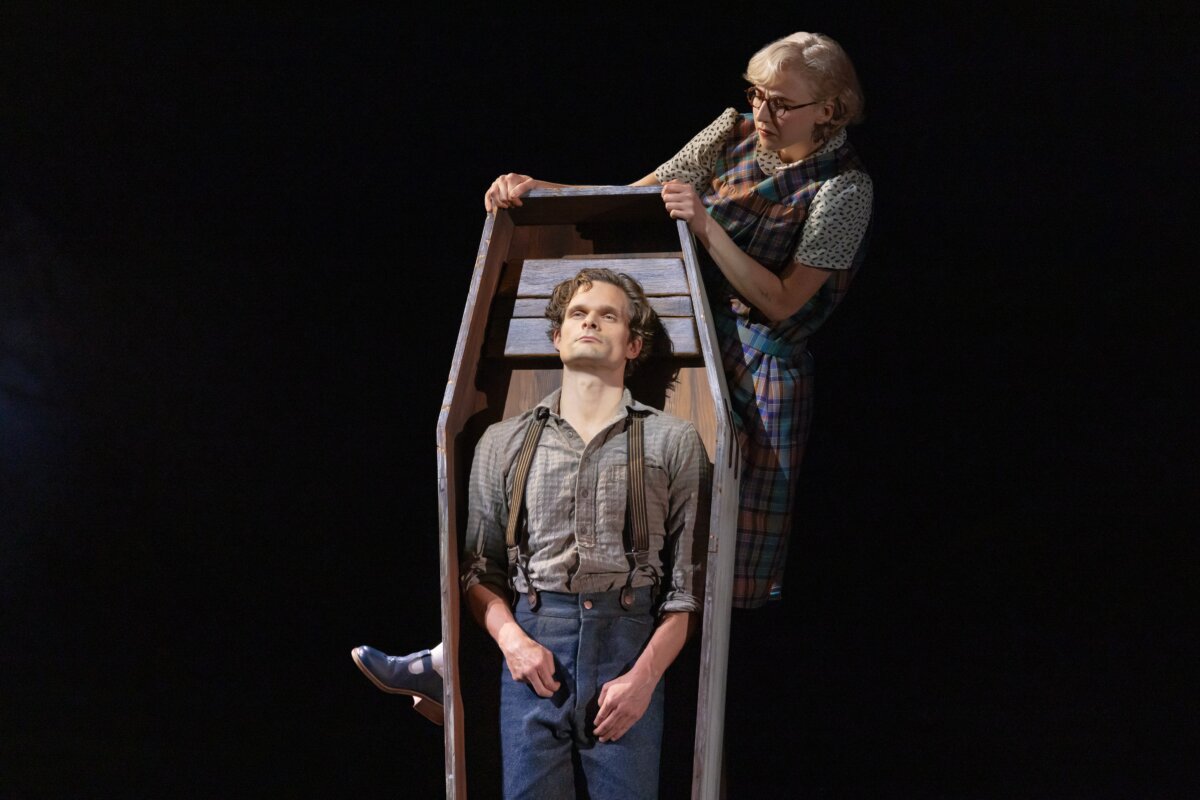
NEW YORK—The desperate need to find one’s place in the world is the driving force in the deliciously ironic Broadway musical “Dead Outlaw.” Based on the life and death of Elmer McCurdy (1880–1911), with admitted embellishments along the way, the show made a triumphant splash when it opened off-Broadway last season and is doing so again on the Great White Way.
Born in Maine, Elmer (Andrew Durand) was fascinated by tales of the Wild West as a child, particularly with stories about outlaws like Jessie James. As he grew up, saddled with an unhappy family life, he formed a deep anger that began festering; it was tied, at least in part, to his feeling of not belonging anywhere. Added to that, his turning to drink to temporarily silence these demons led to more than one scrape with the law.
Elmer was also afflicted with wanderlust. Starting in his late teens he traveled the country by rail, often in the company of hobos and tramps as he searched for a place to start anew. But no matter how he tried, he could never permanently shake the anger he carried. He eventually drifted into a life of crime, only to meet his end following a failed train robbery.
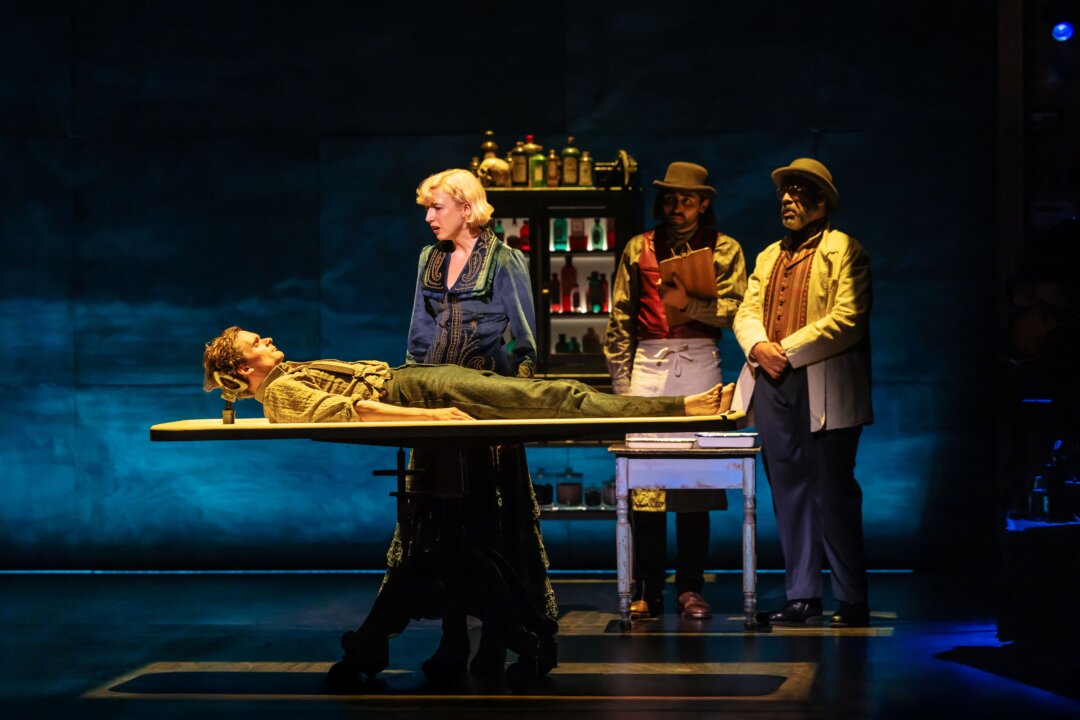 The cast of “Dead Outlaw.” (Matthew Murphy)
A Different Direction
While this is where such a story would normally end, Itamar Moses’s book makes clear that the tale isn’t even half over. Over the next six decades, Elmer’s mummified body became a prop in other people’s lives. First displayed with a rifle in his hands for curiosity seekers eager to pay a few coins to see the famous outlaw, Elmer became part of several traveling sideshows, then a figure in early exploitation and horror films, and finally an attraction at an amusement area in Long Beach, California. There, in 1976, he was discovered by a crew member of the television series “The Six Million Dollar Man,” which was preparing to film there.
As the musical unfurls, the contradictions that marked Elmer’s life are revealed. He tried to tread the straight and narrow—he was a plumber’s assistant, coal miner, and even did a three-year stint in the Army. Had he continued on any of these paths, he might have had the life he wanted. He might have even had a love to go with it, as demonstrated by his relationship with Maggie Johnson (Julie Knitel).
Elmer’s attempts at crime are shown to be more comical than anything else—such as when he failed to properly blow open a safe or robbed the wrong train—all reported with perfect deadpan resignation by the show’s narrator, Jeb Brown.
In death, Elmer’s body serves as a stark warning of the dangers of exploitation: Others find ways to use you until there is nothing left. This is related in the song “Andy Payne,” which features Elmer as an exhibition attraction accompanying the transcontinental foot race of 1928.
Elmer’s body also “hears” the confessions of a film producer’s daughter as she relates her hopes and dreams to this silent listener in between his celluloid assignments in exploitation films.
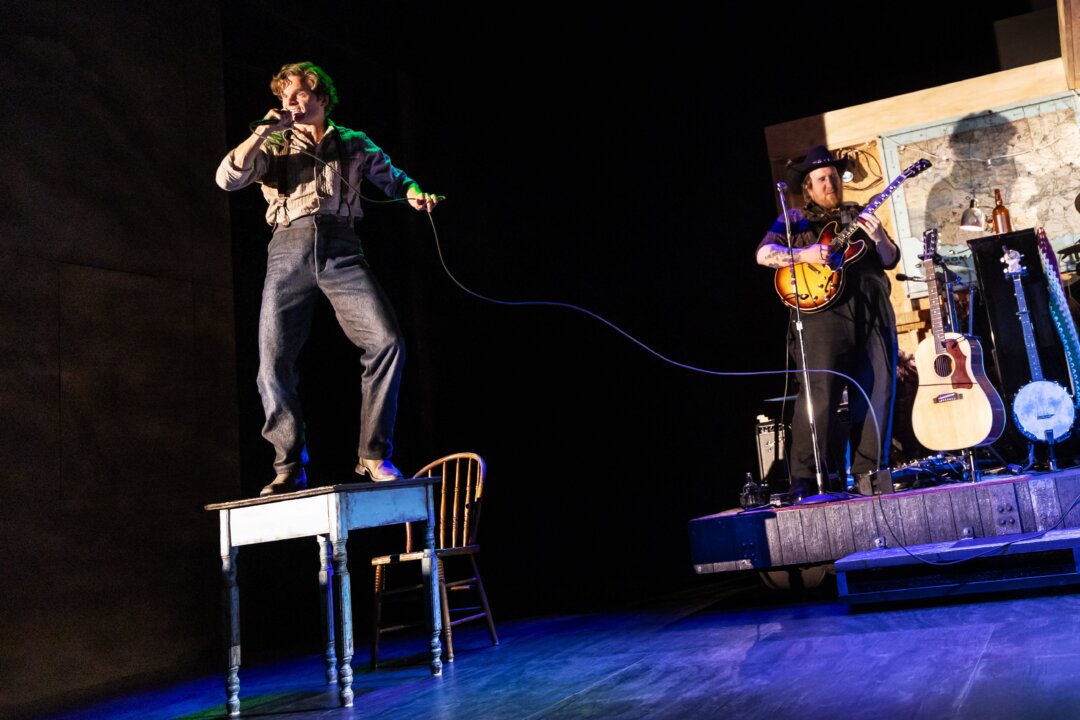 The cast of “Dead Outlaw.” (Matthew Murphy)
Durand, who spends a good part of the show upright with his eyes closed in an open wooden box, perfectly embodies Elmer in all stages of existence, be it an angry young man hoping to find his place in the world or as a mummified corpse. It’s in this second phase that Elmer becomes more sympathetic. His body continues to be used in situations where it has no control. One can’t help wonder if his mortal remains will ever be treated with at least a modicum of dignity.
Jeb Brown, also a character in the show and a member of the onstage band, is excellent as he effortlessly slips from one role to the next. The rest of the cast, most of whom play multiple characters, have their parts down pat. Standouts are Knitel, who helps add a bit of heartbreak to the story; Eddie Cooper as the coroner who first examines Elmer; and Tom Sesma as, years later, Thomas Noguchi, the final medical examiner, trying to determine who this mummy was in life.
David Cromer’s direction keeps the tempo of the story fluid while making sure what happens on stage never become clichéd, stilted, or grotesque.
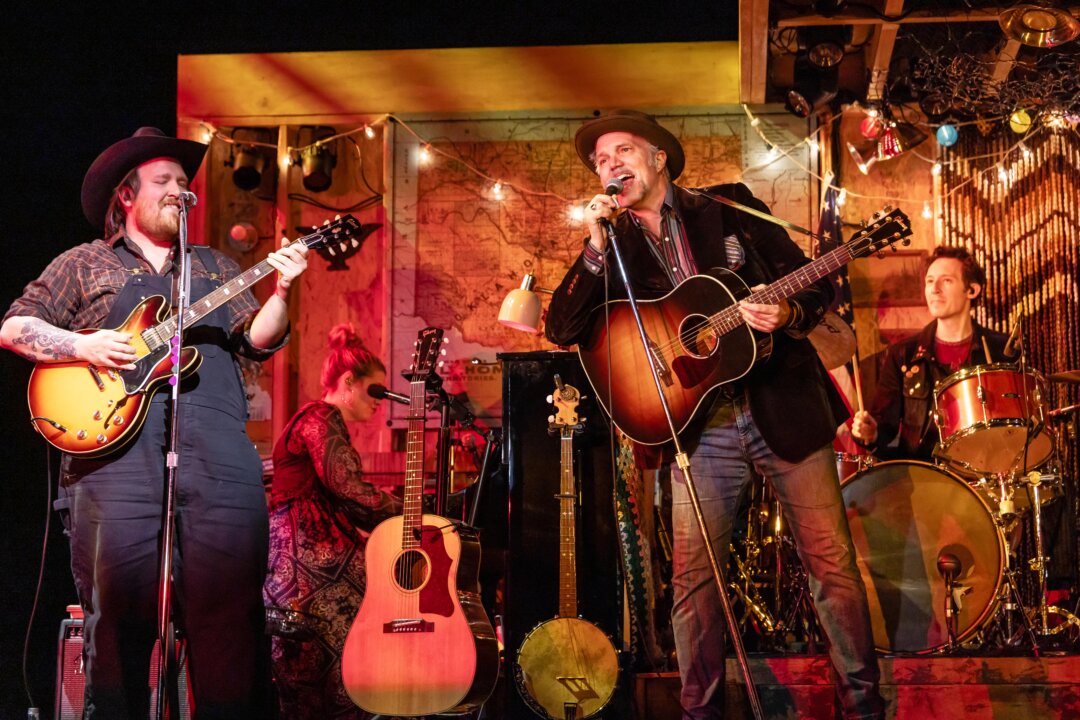 Acting and singing combine in “Dead Outlaw.” (Matthew Murphy)
The score by David Yazbek and Erik Della Penna is delightful, containing tunes in the style of ballads, gospel, hard rock, and easy listening. The latter is embodied by Sesma in his role as Noguchi, who happily croons about the many deceased celebrities who have visited his examination table.
At times comic, at times touching, “Dead Outlaw” shows how one man’s life, and death, didn’t quite turn out quite like he expected.
‘Dead Outlaw’
Longacre Theatre
230 W. 48th St., New York
Tickets: 212-249-6200 or DeadOutlawMusical.com
Running Time: 1 hour, 40 minutes (no intermission)
Open Run
What arts and culture topics would you like us to cover? Please email ideas or feedback to features@epochtimes.nyc
