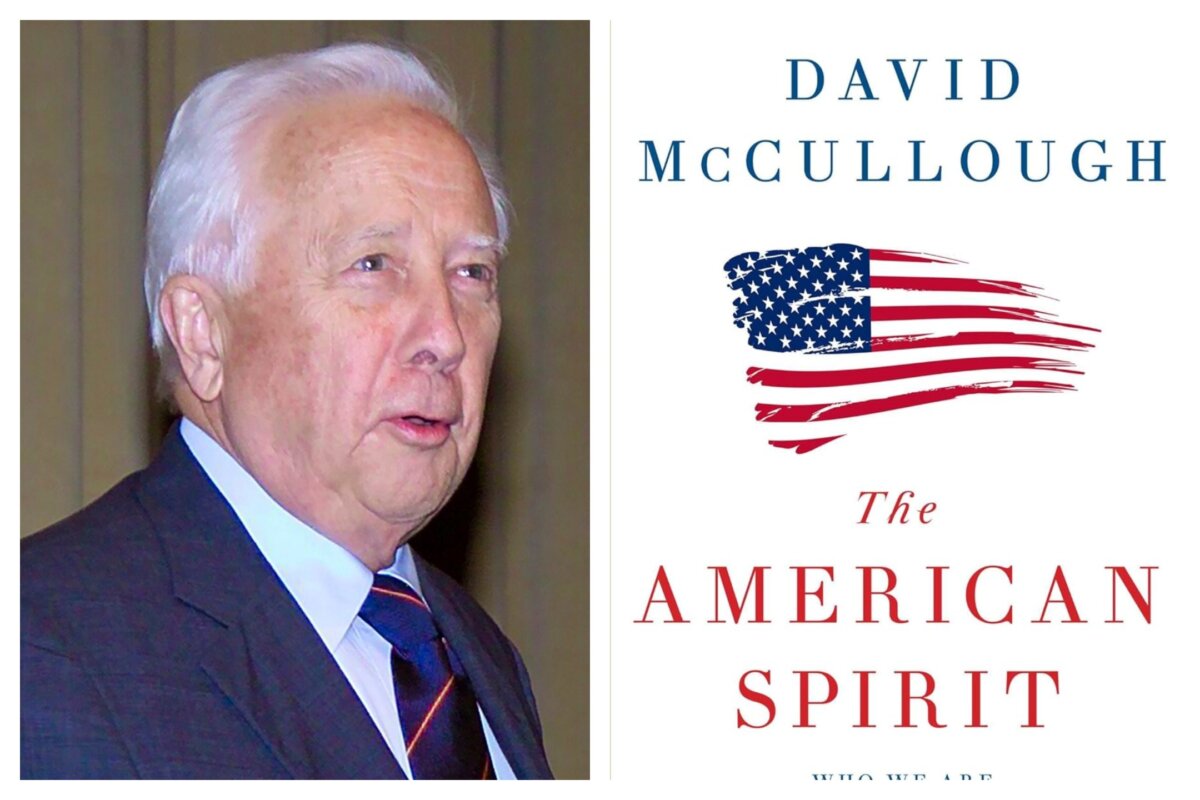
In his inspirational book “The American Spirit: Who We Are and What We Stand For,” the late historian David McCullough often stressed that, in intemperate times, there is more that unites us than divides us. Over the course of his storied career, McCullough gave countless speeches at university graduations, historical societies, national anniversaries, and to Congress. He handpicked this collection of 15 of his speeches given between 1989 and 2016.
Not surprisingly, McCullough emphasizes why history is important and how it helps us understand our here and now and our future. “History, I like to think, is a larger way of looking at life. It is a source of strength, of inspiration. It is about who we are and what we stand for and is essential to our understanding of what our own role should be in our time,” he wrote.
Back to the Future
Who better to give commencement speeches to America’s future generations than a scholar renowned for promoting the importance of the past?
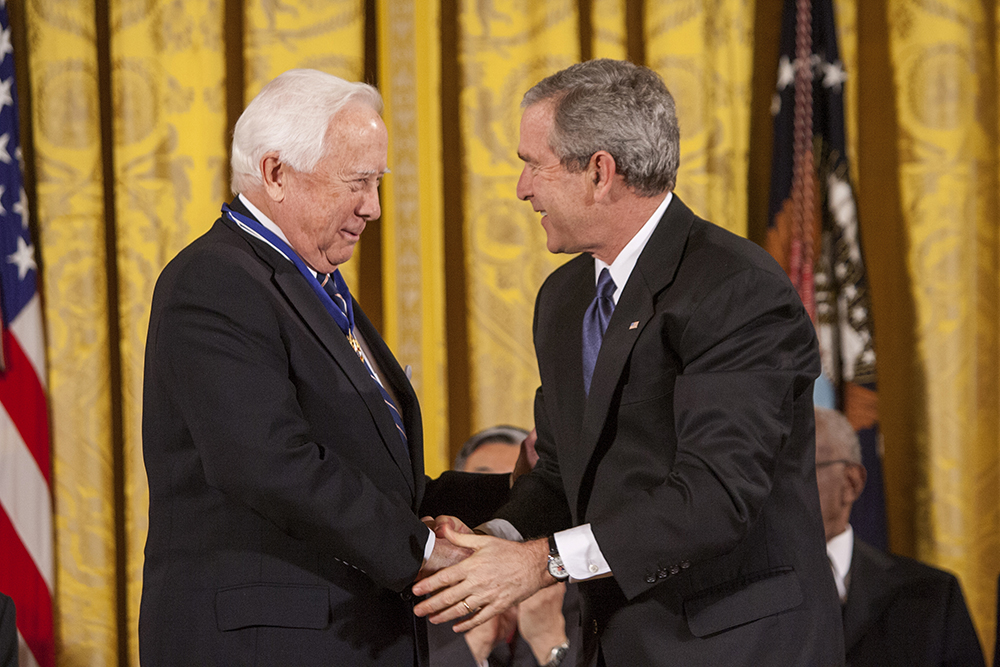
In addition to receiving more than 50 honorary degrees from American universities, McCullough also won two Pulitzer Prizes (1993 and 2002), two National Book Awards (1978 and 1982) and the Presidential Medal of Freedom in December 2006. In addition to stressing the importance of history, the Pittsburgh native also emphasized the importance of character.
In 15 thought-provoking chapters, McCullough cited the character and courage of some of those signing the Declaration of Independence, the genius of Thomas Jefferson, the brilliance of Dr. Benjamin Rush, and the patriotic ardor of America’s second president, John Adams.
He also shares the story of Adams’s son and our sixth president, John Quincy Adams, who McCullough describes as “the most superbly educated and maybe the most brilliant human being who ever occupied the executive office.” A superb storyteller, McCullough reveals how the younger Adams is the only president to serve in Congress after being president (17 years in the House of Representatives) and that his personal diary of 65 years remains a treasure for historians.
Therein lies the brilliance of how McCullough shared history. He personalized his subjects, breathing life into them with rich anecdotes, astute observations and perceptive analysis of the times and circumstances in which they lived. He believed history was about people and how historical figures still speak to us today. His consummate skills as a storyteller serve as a torch to illuminate historical people and places.
One such person was Simon Willard, an early 19th-century Massachusetts clockmaker. Around 1837, he made a clock whose inner mechanisms he cut freehand that still tells time today. The clock’s face is a chariot wheel for a marble statue of Clio, the muse of history, which resides in the National Statuary Hall, the former site of the House of Representatives. McCullough recalls how Willard’s historic clock has ticked off the minutes and hours of congressional debate during historic episodes, such as the annexation of Texas, the establishment of the Naval Academy, and California’s intent to ban slavery when it became a state.
Another little-known American who left a giant-size footprint in history is the Rev. Manasseh Cutler. Rev. Cutler helped found Ohio University in 1804, the first university west of the Alleghenies. More importantly, he was instrumental in lobbying Congress for the passage of the Northwest Ordinance of 1787 that gave the country Ohio, Indiana, Illinois, Michigan and Wisconsin; prohibited slavery in those areas; and encouraged public education.
Keeping History Alive
McCullough’s passion and enthusiasm for history and American greatness shines through in every speech the book includes. Whether it’s sharing the ebullience and vision of Teddy Roosevelt, describing the country’s outpouring of goodwill and gratitude for Marquis de Lafayette on his return to America in 1824, or recalling the eloquence of John F. Kennedy, McCullough reminds readers that the ties that bind us together are stronger and more durable than the volcanic emotion and temporary fissures of our political debates.
The author asked rhetorically, how can we know who we are and where we are headed if we don’t know our origins. He believed America needs to develop historians who have heart and empathy and can help students understand that those who came before us were just as real and human as we are. McCullough admired Margaret McFarland, a University of Pittsburgh child psychology professor. She said that attitudes aren’t taught, they’re caught. “Show them what you love,” McCullough quotes.
In his uplifting book and by his lifelong personal example, David McCullough showed us what he loved. His devotion and respect for American history reminds us that all of us are history participants now, plus the history we have yet to make.
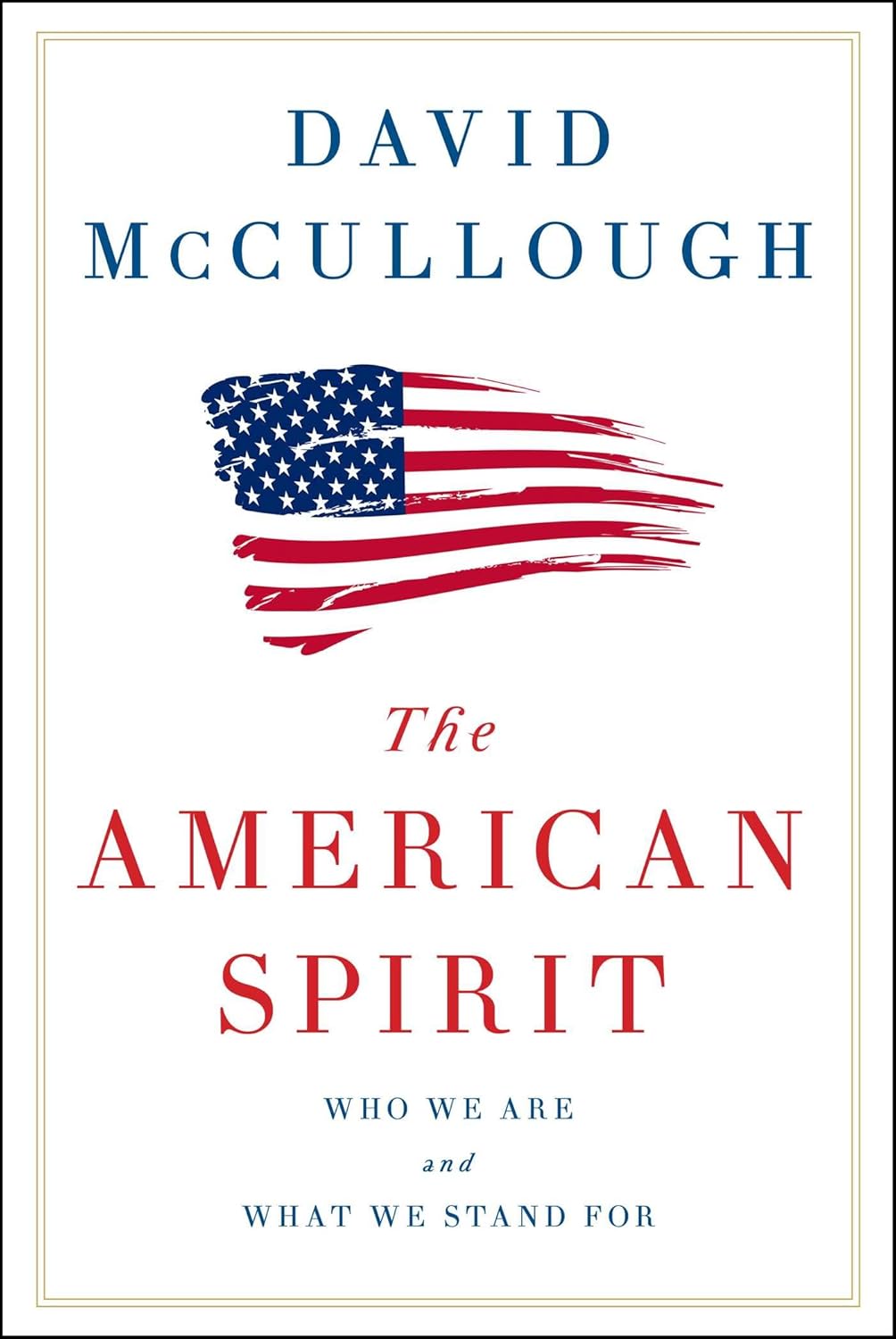
‘The American Spirit: Who We Are and What We Stand For‘
By David McCullough
Simon & Schuster: April 18, 2017
Hardcover, 192 pages
What arts and culture topics would you like us to cover? Please email ideas or feedback to features@epochtimes.nyc