



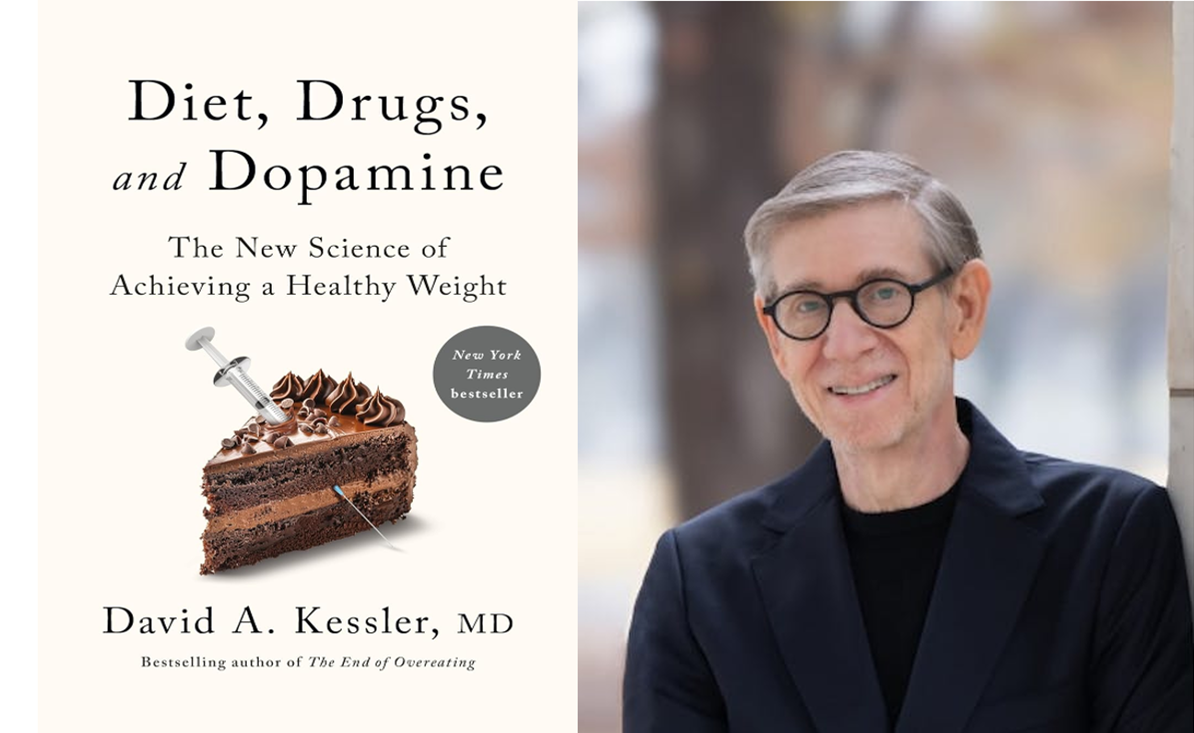
There’s much for readers to digest in “Diet, Drugs, and Dopamine: The New Science of Achieving a Healthy Weight” to understand dieting, food addictions, and GLP-1 weight loss medications.
Former commissioner of the U.S. Food and Drug Administration (FDA), David A. Kessler, M.D., paints a somber picture of the state of our food. Rich in sugar, salt, and fat, plus the ultra-formulated way our food is created, are taking over the reward centers of our brains and taking a toll on our health. They are, in effect, creating a society of food addicts.
The author’s medical expertise, combined with formidable credentials and public health policy experience, makes him uniquely qualified in taking readers on a deep dive into food addictions and obesity.
Kessler considers the complicated and technical details these subjects require. He expertly breaks down medical jargon and provides relatable examples that should keep readers engaged and well informed.

‘Ultraformulated’ Food
At the heart of the book is the role the food industry plays in creating “food addicts” from childhood. The daily consumption of foods that were first called “processed” have now been upgraded to the heightened term “ultraformulated.”
Kessler defines it as food processing “deliberately engineered to manipulate our brain’s reward systems.” He doesn’t pull any punches when he says these foods are “the new cigarette.”
In an interview for the book, Dr. Erin McArthur commented on the eating habits of kids today, as well as her own food addiction. She notes there’s little real food in children’s diets. Their diet typically consists of cereal, fast-food lunches, and pizza for dinner.
“We are laying down these pathways of dopamine reward and deficit,” she says, “in these kids early and often.” From this and other examples, there’s persuasive argument that the brain is being trained to desire these foods like a smoker craves nicotine.
Not a weight-loss guide, the book is more of an overview of the obesity issue. It lays out with clear reasoning why the remedies of the past, including strict dieting, calorie counting, and following a specialized program are not the whole story.
The reward system in our brain is a powerful force, one that operates in most cases, under our radar. That reward system, Dr. Kessler says, “prompts us to eat beyond our hunger and energy needs.” Although there are many moving parts going on in the body when we eat, the work of “dopamine is the most critical.”
Personal Addiction Battle
Giving credence to his assertions, Dr. Kessler shares his personal battle with weight loss, including his experience with a GLP-1 drug. By disclosing these details, he is transparent about his own food addiction. He goes so far as to say that, although possessing the discipline and determination needed to stick to a program, it was to no avail. When the opponent is a food addiction, accompanied with powerful highs and lows, he says, weight loss is not easy.
With all the attention these new weight-loss drugs have been given, it’s fascinating to learn how they function in the body. They mirror the effects of a high-protein diet and delay “gastric emptying,” which means the user feels full longer; there’s also a glucose-lowering component which reduces inflammation and insulin secretion.
It sounds miraculous. However, Dr. Kessler adds a note of caution. He cites research results saying that GLP-1 “seems to work directly by affecting the brain. [Scientists] still don’t fully understand how these drugs do what they do.”
The bottom line from the author: “Nobody should go on such a powerful medication without knowing all the details of how it might impact your health.” It is highly advised to work closely with a qualified physician experienced in the treatment.
Sounding the Alarm
Dr. Kessler is sounding a much-needed alarm in this in-depth compilation of convincing evidence, studies, and research results. With quotes from other physicians in the field, and those continuing to research these drugs and the dopamine connection, readers will no doubt come away with a new understanding of their food cravings.
Once food cravings have been given a thorough presentation in Part I, the author then continues with Parts II and III. He lays out ways to determine healthy weight, how to use the anti-obesity drugs, and an appeal to make these drugs affordable so they’re available to everyone.
In the chapter “A New Way of Viewing Behavioral Therapy,” Dr. Kessler shares the need to approach behavior therapy differently. Though it’s been at the center of weight-loss programs, it was not designed to “address the neurobiology of food addiction.”
The shared belief among the physicians is that an honest appraisal be made of our cravings, such as when they occur and what sets them off. Only by becoming aware of these details can we figure out strategies to fight the cravings.
A Healthier Society
In the final chapters, the author takes on the real foe in the battle: the food industry. “It may seem absurd,” he writes, “to have one industry make us sick only to have another industry develop drugs to treat that sickness.”
It won’t be easy to see any changes soon. Food manufacturers still need to profit in the face of challenges. They face increased floods and droughts, viruses that affect chicken and dairy markets, and international events that create upheavals in food production.
In addition to his work with the FDA, Dr. Kessler has authored a variety of books on health and weight loss; he was also dean of two medical schools: Yale and the University of California in San Francisco. His understanding of the brain-body connection urges readers to look at weight loss with a new perspective. With over 100 pages of referenced works, citations, and notes, it’s hard to fathom any stone was left unturned.
“I wrote this book,” he writes, “in part to give individuals clear and concrete guidance on how to free themselves from addiction to ultra formulated foods.”
In the Epilogue, Dr. Kessler takes on a positive tone, believing a healthy society is possible, and considers this book his “call to collective action.”
‘Diets, Drugs, and Dopamine: The New Science of Achieving a Healthy Weight’
By David A. Kessler, M.D.
Flatiron Books: May 13, 2025
Hardcover, 400 Pages
What arts and culture topics would you like us to cover? Please email ideas or feedback to features@epochtimes.nyc
