The Dutch painter Carel Fabritius (1622–1654) was Rembrandt’s greatest student. Whether his mature work would have equaled or even excelled his master is a lingering art history question. Alas, the world will never know. Fabritius died at 32 from injuries sustained due to a gunpowder warehouse explosion near his studio. This disaster decimated almost a third of the city of Delft. Given that Fabritius’s career lasted only from circa 1641 to 1654 and some of his art was destroyed in the tragedy, existing works by him are rare. The total number of paintings had been estimated at 13.
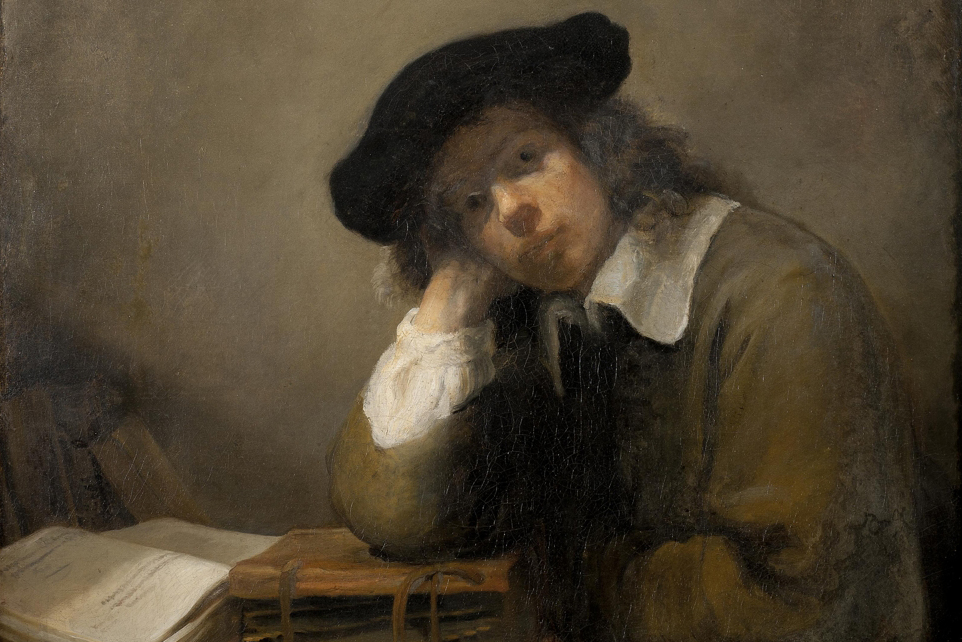
However, exciting news was announced in May 2024 by curator Dr. Carina Fryklund at the Nationalmuseum, Stockholm: A painting already in the museum’s collection, “A Young Student at His Desk,” was attributed to Fabritius.
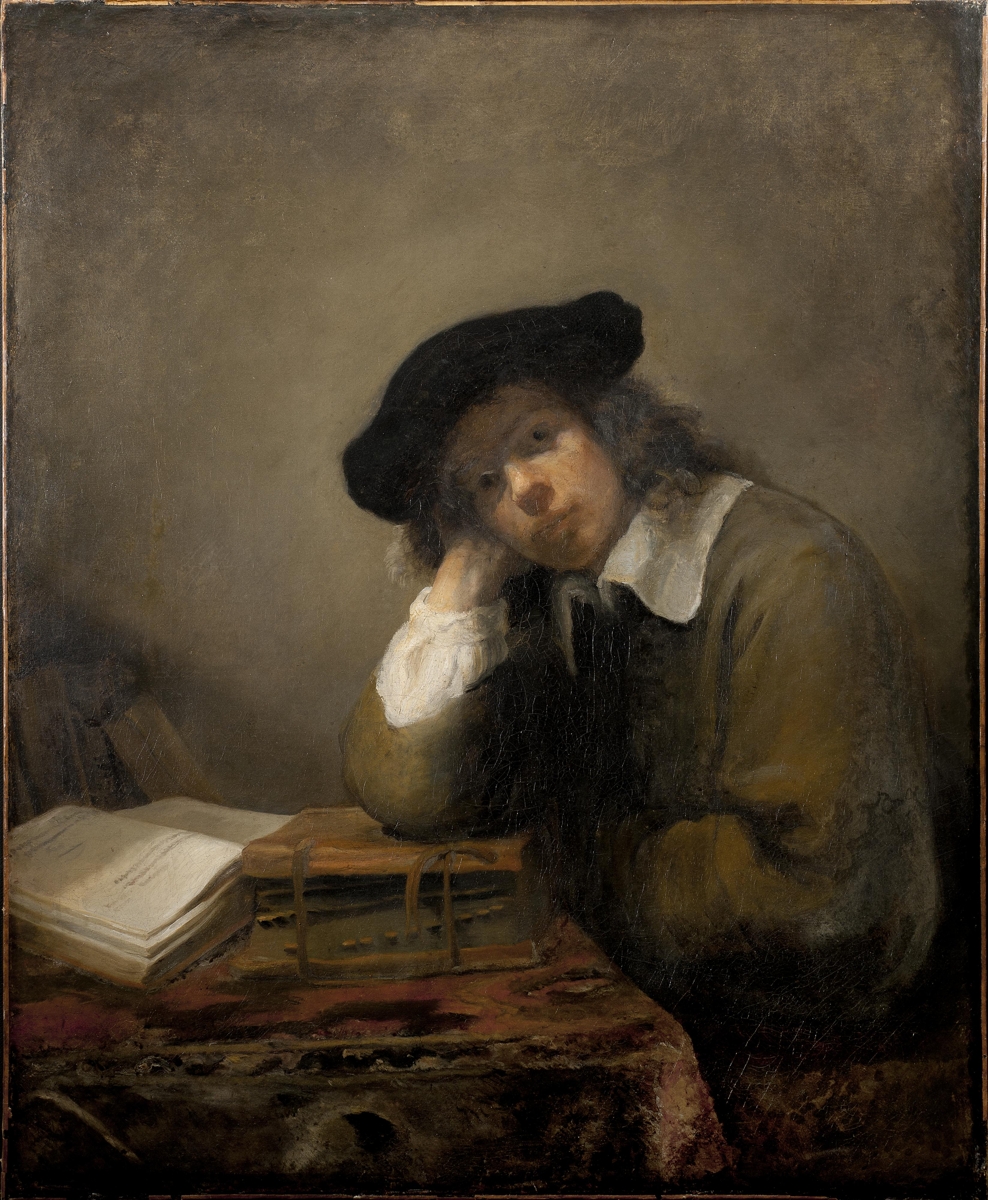
This oil on canvas is dated from 1642 to 1643, making it an early example of Fabritius’s work. It depicts a young man wearing a beret seated at a table set with books. He looks away from his studies, as if daydreaming. The museum explains, “The expressive use of light, dark-toned palette, and impasto brushwork suggests the painting was made in Rembrandt’s studio, inspired by the master’s fanciful role portraits and studies of the illumination of faces.”
Rembrandt’s Disciple
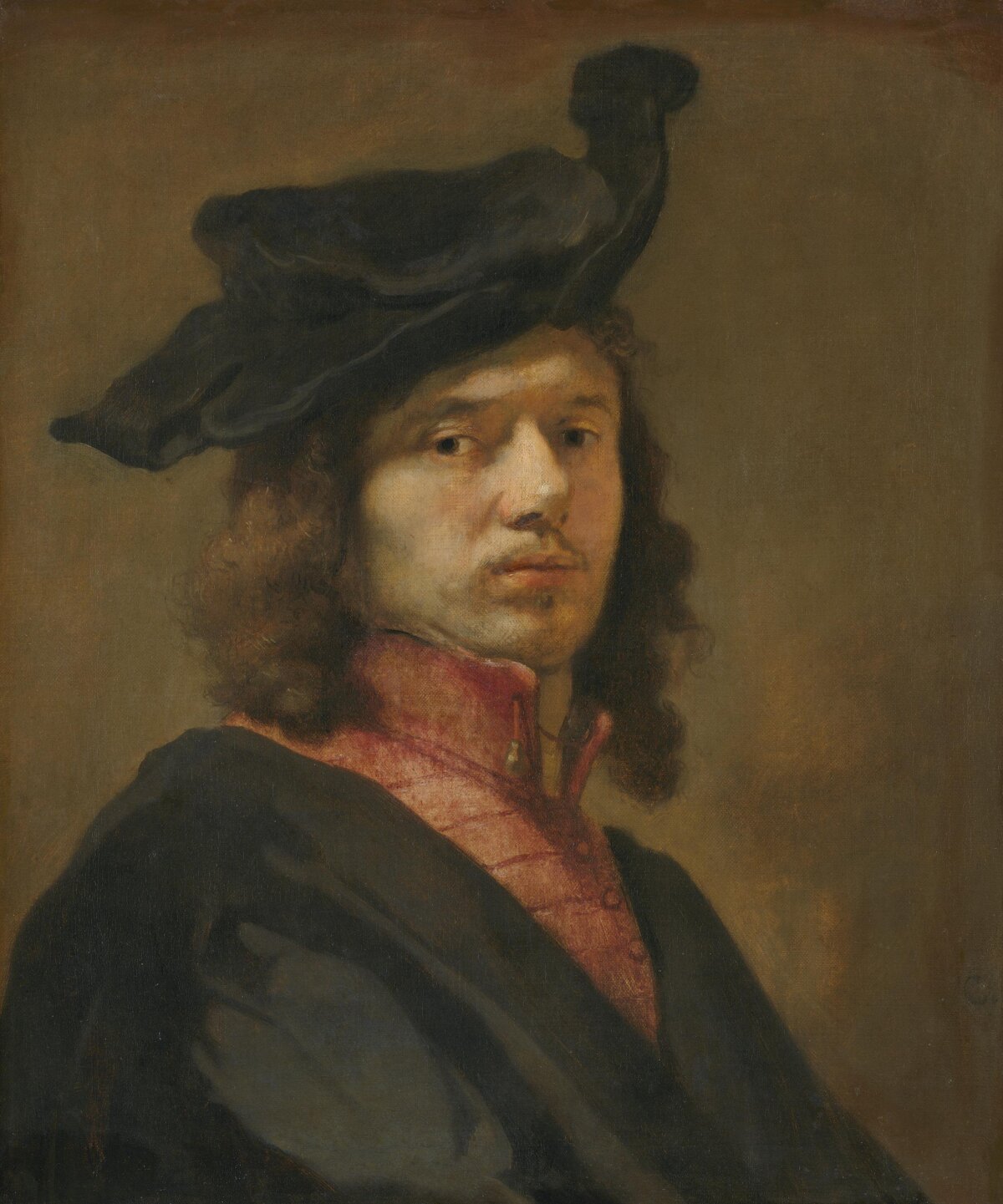
Fabritius, who was born in Middenbeemster, moved to Amsterdam when he was 19 and studied there with Rembrandt. While Fabritius received his earliest artistic instruction likely from his father, his most profound education came from the Dutch Golden Age titan.
Originally ascribed to an anonymous artist, the reattribution of “A Young Student at His Desk” to Fabritius drew in part on stylistic comparisons. It has similarities to other portraits definitively by the artist, including a circa 1645 self-portrait at the Alte Pinakothek, Munich.
Technical examination carried out by Nationalmuseum paintings conservator Lena Dahlén, in collaboration with Fryklund, revealed that the composition of the ground of “A Young Student at His Desk” corresponds to what may be Fabritus’s earliest extant work, “The Raising of Lazarus.” This canvas at the National Museum of Warsaw is dated to circa 1643. It could have been painted while the artist was in Amsterdam working with Rembrandt, whose style it resembles, or upon Fabritius’s return to his hometown, where he was living again by June 1643.
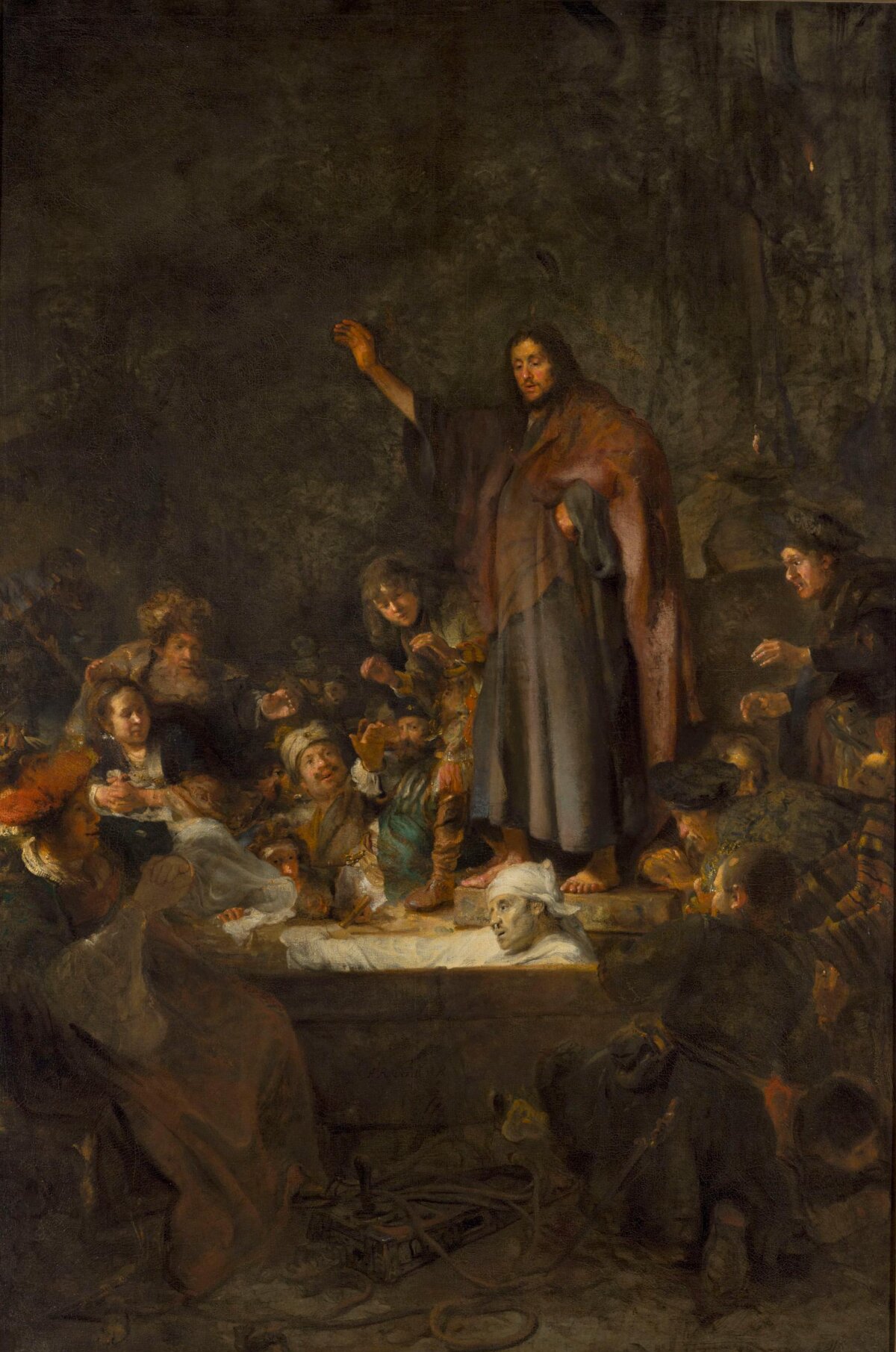
National Museum in Warsaw. (Public Domain)
Rembrandt’s influence on Fabritius’s early work is visible in Fabritius’s use of dramatic lighting, a dark and warm palette, and broad brushstrokes. Indeed, before scholars “rediscovered” Fabritius in the mid-19th century, his paintings had been typically attributed to Rembrandt; some even were signed with false signatures. Further into his career, Fabritius developed his own style marked by brighter, lighter colors and techniques that played with perspective.
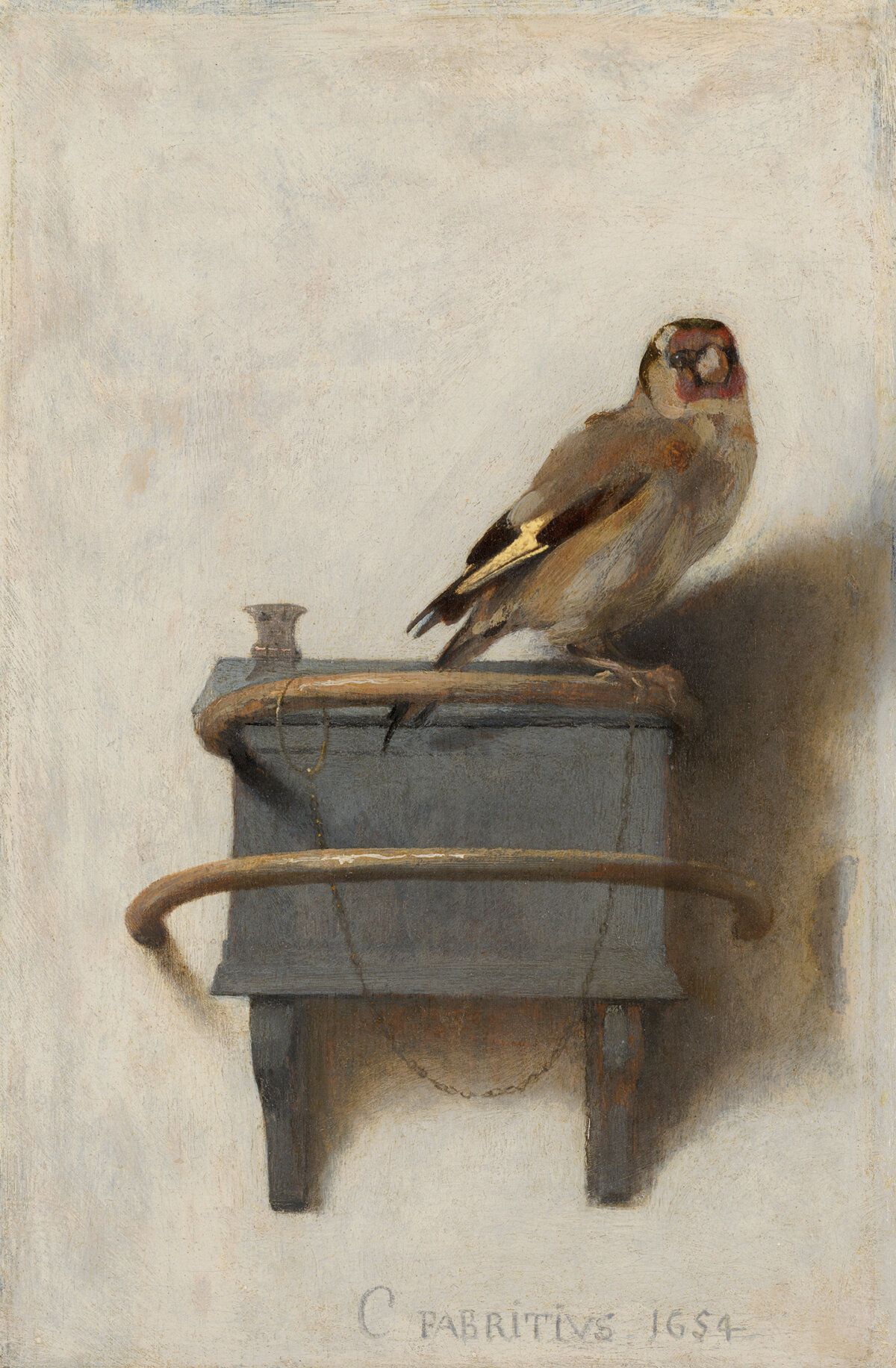
His unique aesthetic is clearly visible in the four surviving paintings that he made in Delft (he moved there in 1650). Fabritius’s masterpiece, dated to the year of his death, is the trompe-l’œil “The Goldfinch,” now part of the collection of Mauritshuis, The Hague, The Netherlands
The full provenance of the genre painting “A Young Student at His Desk” is unknown. It was first recorded in the collection of the Swedish painter Par Ulmgren (1767–1846). The Nationalmuseum acquired it in 2012 on the merit of its fine artistic quality. After its reattribution, the canvas underwent conservation treatment and is now on display.
One hopes that more paintings by the talented Carel Fabritius will be discovered and shared with the public.
What arts and culture topics would you like us to cover? Please email ideas or feedback to features@epochtimes.nyc.