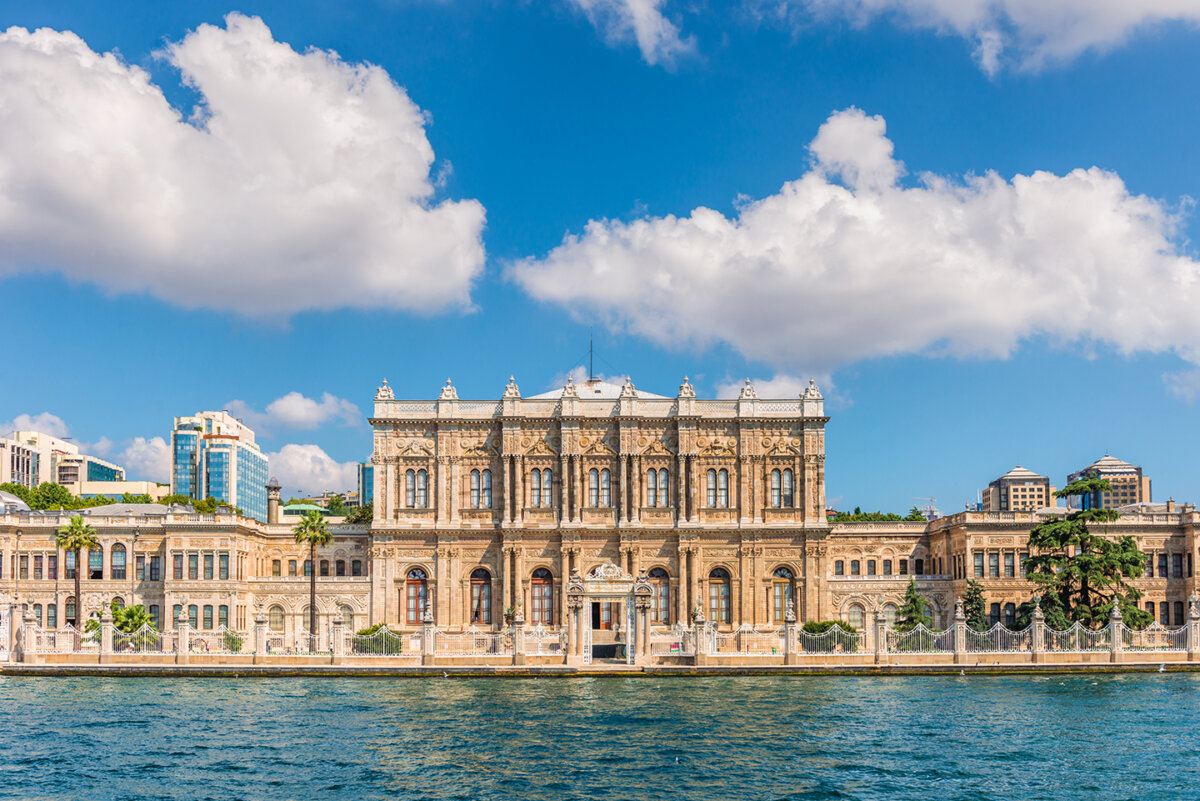
Viewed from Turkey’s Bosphorus Strait, Dolmabahce Palace features a classical, European-designed façade with a grand central section flanked by two wings. The palace is the only mono-block structure (a single, unified building) in Istanbul, and its stone facade spans more than 480,000 square feet. (Joshua Davenport/Shutterstock)
Located on Istanbul’s Bosphorus Strait, Dolmabahce Palace is the largest palatial residence in Turkey. The 11-acre structure features 285 rooms, 46 halls, 68 washrooms, and six Turkish baths. The palace displays a stunning synthesis of Western and Eastern architectural designs by blending baroque, rococo, and neoclassical styles with Ottoman-era flair.
Shifting from the old-world style of the Topkapi Palace, which was the former administrative center of the Ottoman Empire, Sultan Abdulmecid I (1823–1861) hired architects Garabet Balyan and Nigogayos Balyan to design his era’s European-style dream palace. The construction of Dolmabahce Palace began in 1843 and took 13 years to complete.
Since 1856, Dolmabahce Palace has become a symbol of the Ottoman Empire’s transition from a sultanate to a republic. The opulent palace still stands proudly at 169 years old.
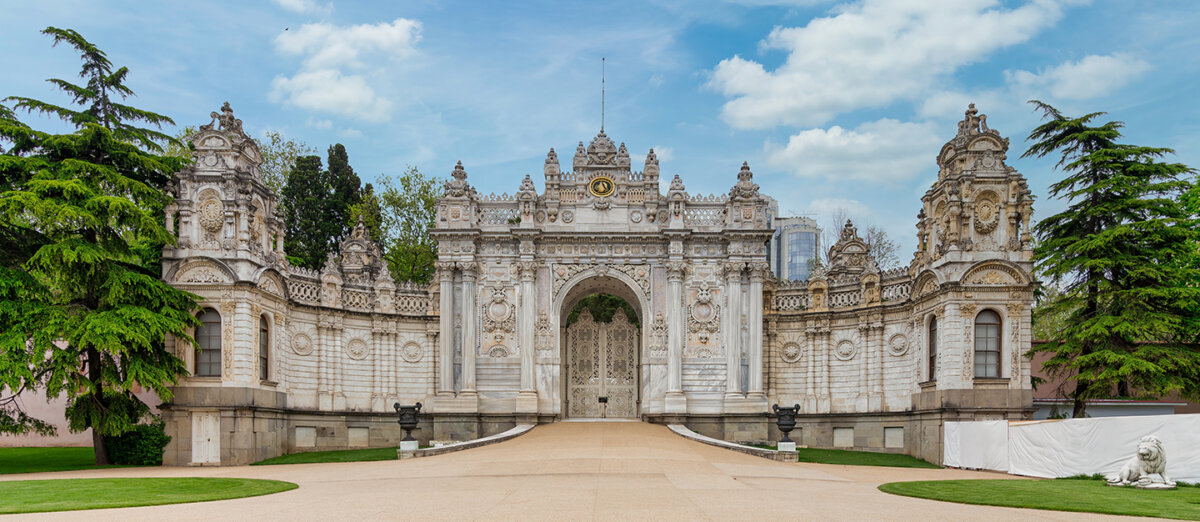
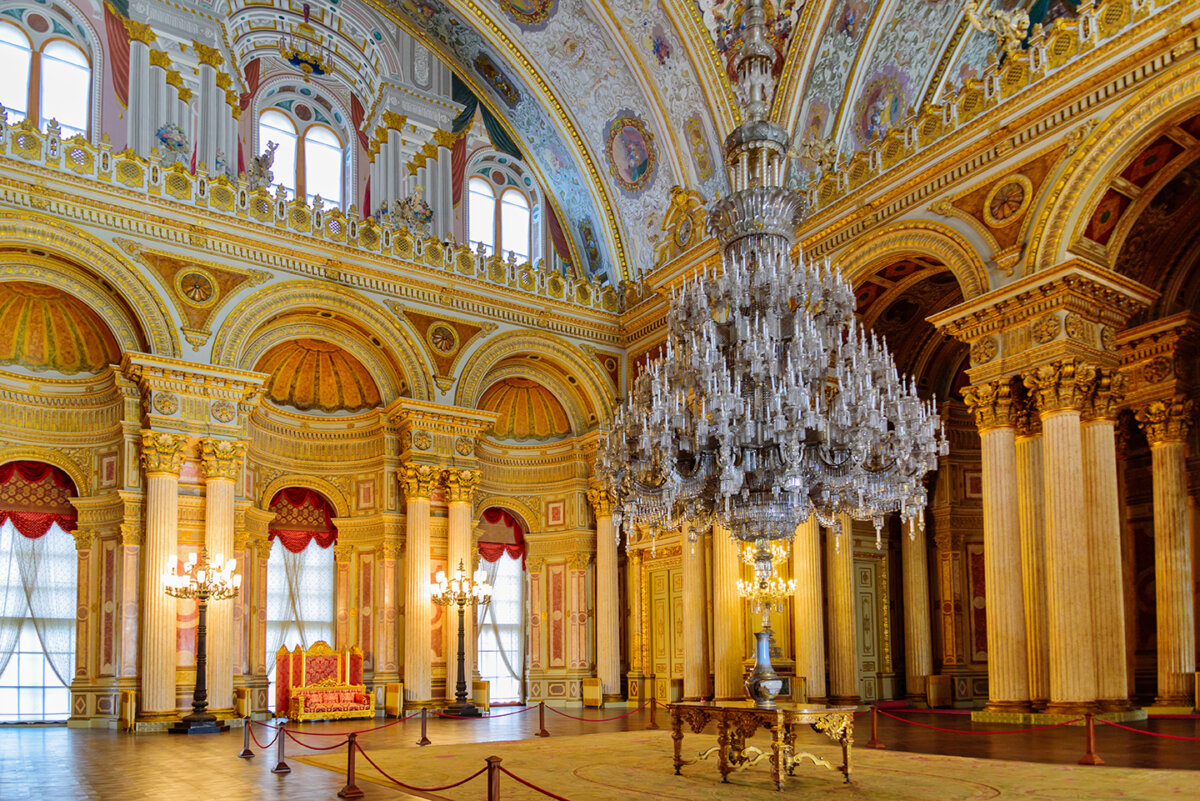
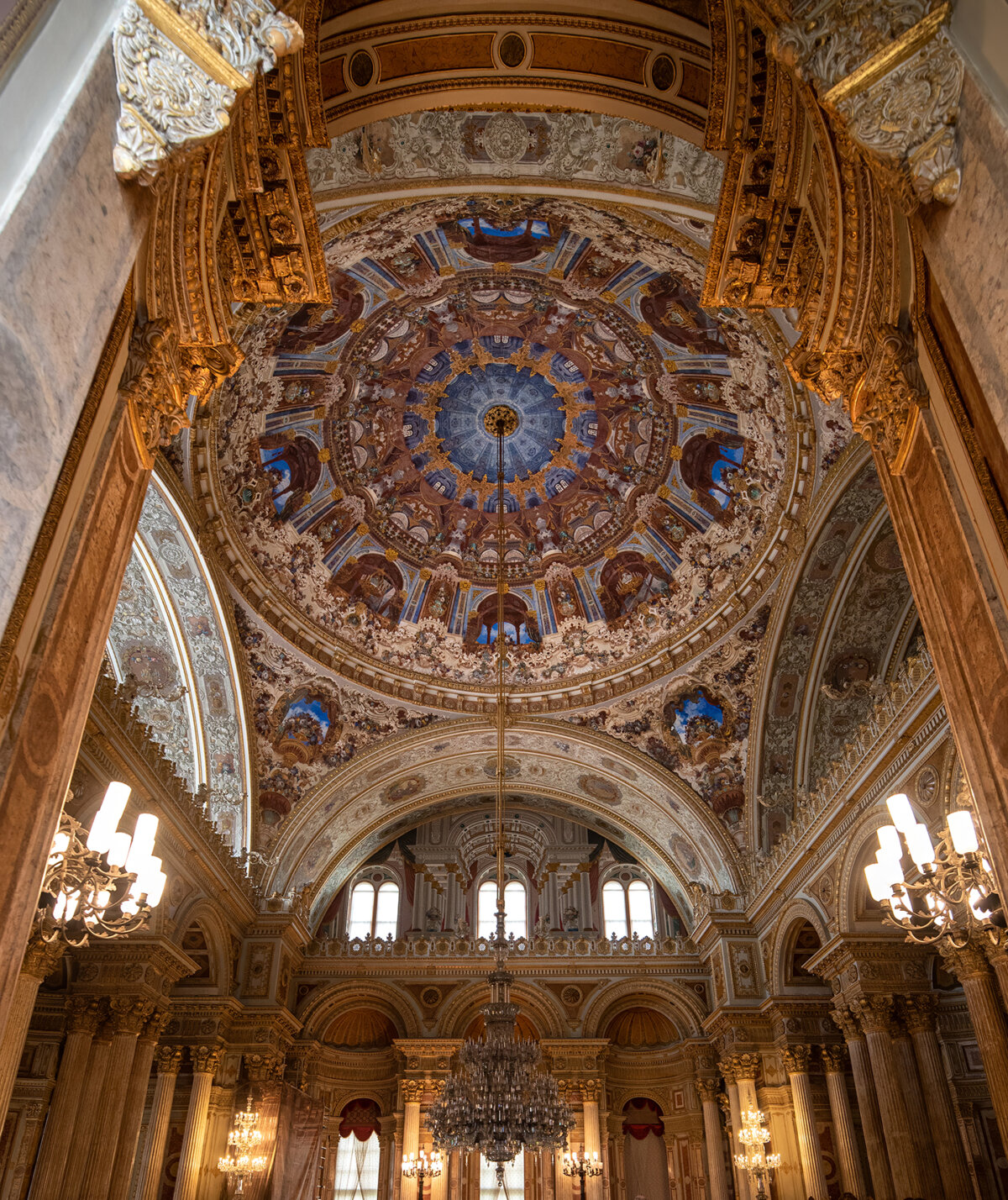
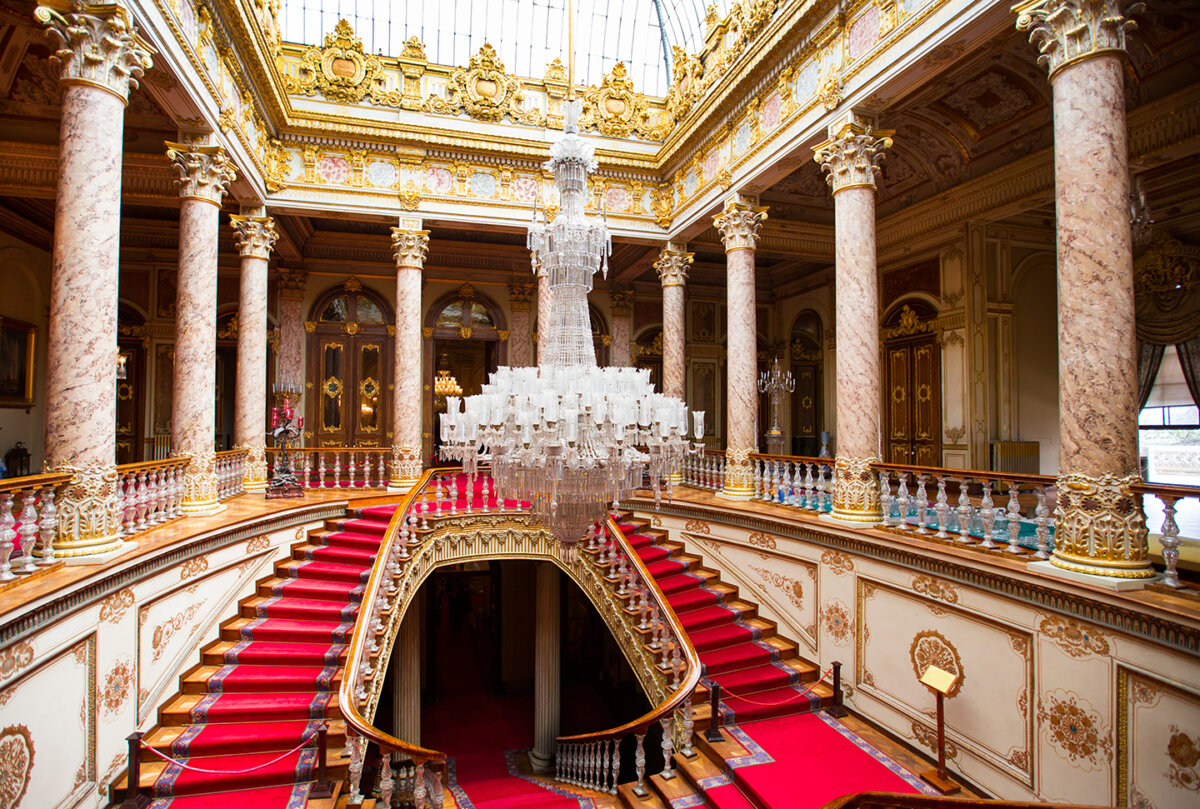
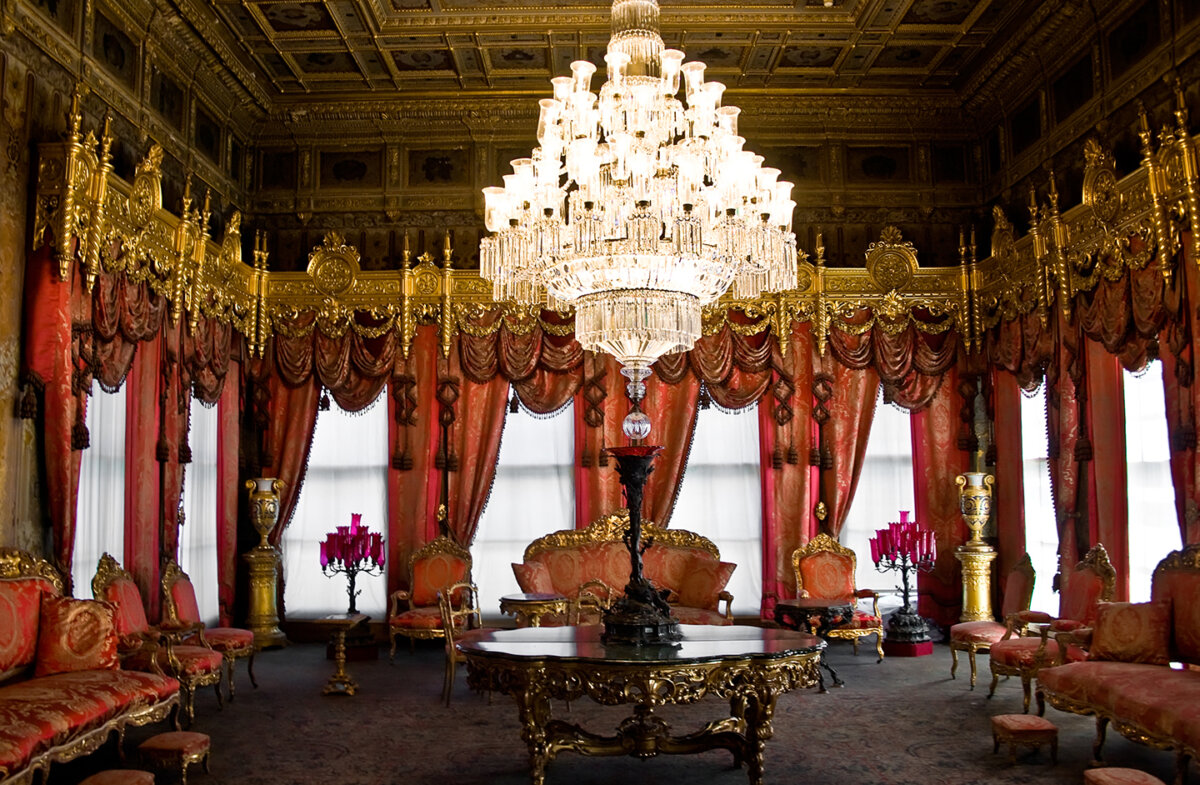
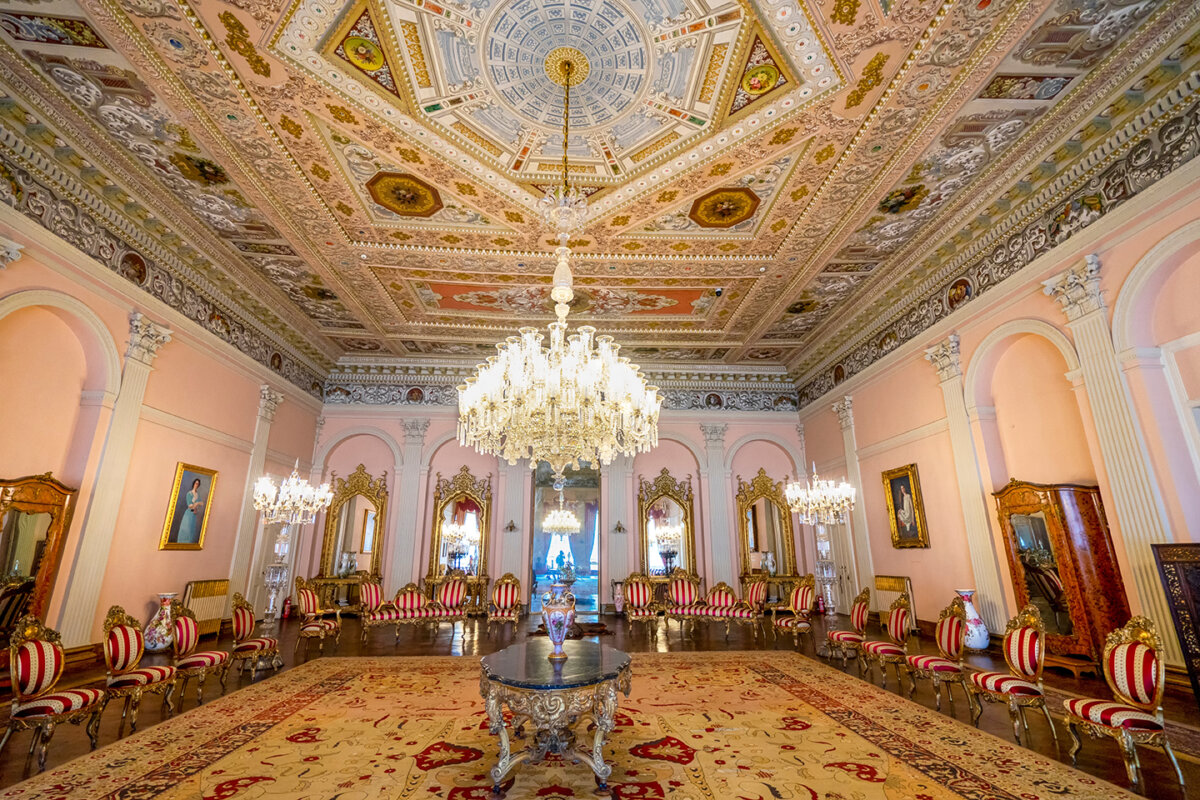
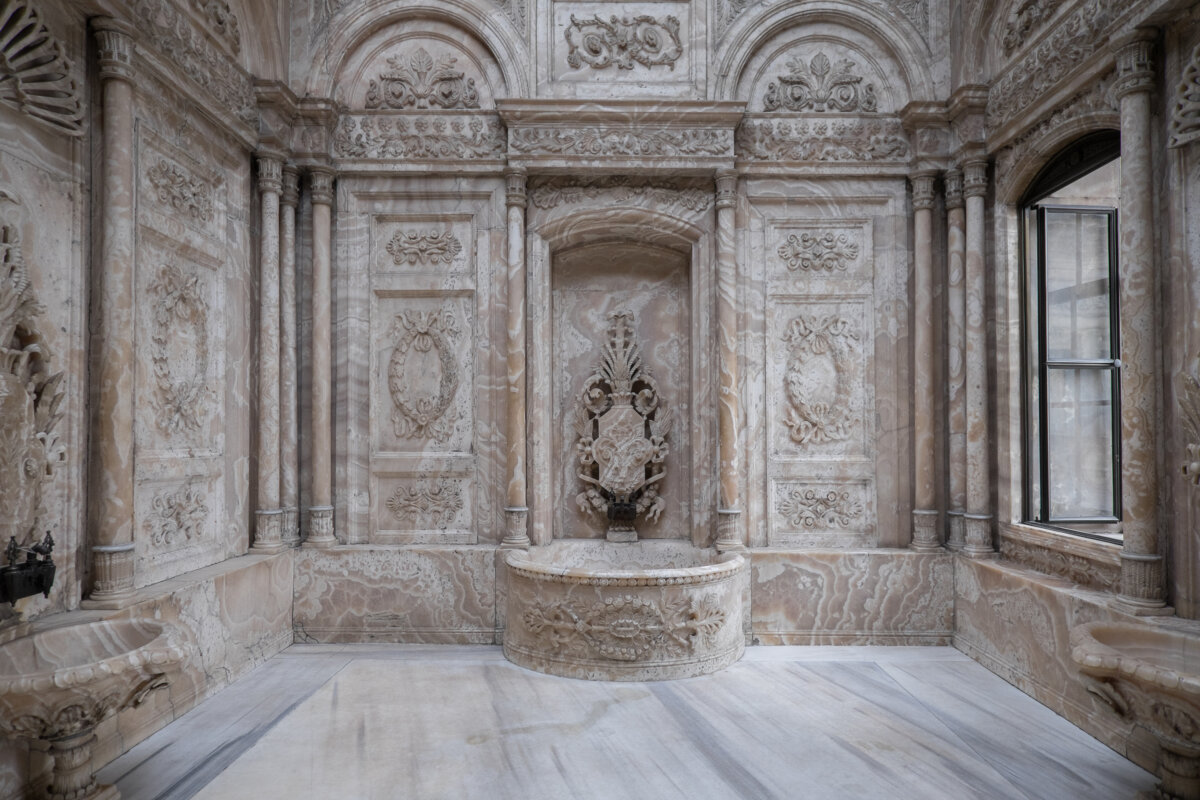
The Saltanat Kapisi (Sultan’s Gate) is the grandest of the eight gates at Dolmabahce Palace. Designed to impress visitors, the gate opens onto the central garden and features marble columns and intricate motifs. It is topped with the sultan’s monogram (tughra), reflecting the prestige of the Ottoman Empire. (Halit Sadik/Shutterstock) Dolmabahce’s 6,500-foot Ceremonial Hall is the most impressive and opulent room in the palace. The floors are constructed with traditional Ottoman mosaics and feature the world’s largest Hereke rug (Turkish carpet). In 1852, Sultan Abdulmecid ordered the Bohemian crystal chandelier from the UK. Weighing 1,000 pounds with 664 candleholders, the chandelier was designed by Frederick Rixon in London and manufactured by Hancock, Rixon & Dunt. (Stock for you/Shutterstock) Supported by 56 gilded, marble, Composite Order (Roman) columns, the Ceremonial Hall’s walls and 118-foot dome are adorned with classical frescoes depicting scenes from Ottoman history and literature. (Mitzo/Shutterstock) The Crystal Staircase, which ascends from the Ceremony Hall to the palace’s second level, features a baroque-style double horseshoe staircase with crystal spindles and mahogany handrails. The vaulted, glass skylight illuminates the Baccarat crystal chandelier from the UK. One of the world’s largest chandeliers, it features 750 lamps and took two months to install. (muratart/Shutterstock) One of the most famous rooms in the palace, the Red Room once served as the reception room for the sultans. The color scheme, which was a symbol of the Ottoman culture’s prestige, dictated the room’s name. The walls and ceiling are adorned in red silk and detailed with gold-leaf, gilded plasterwork. (Sailorr/Shutterstock) The Queen Mother’s Reception Room, also known as the Pink Hall, was a gathering place for the harem women and the noble guests of the sultan’s mother. Like the Red Room, the Pink Hall gets its name from the room’s dominant pink hues and warm lighting. While the hall’s design is strongly influenced by baroque and rococo styles, the walls and ceiling are fashioned with paintings that reflect Ottoman-era cultural aesthetics. (Gokhan Dogan/Shutterstock) Dolmabahce Palace features six large hammams, or Turkish baths. The sultan’s hammam is the most extravagant bath and is constructed with Egyptian alabaster and Egyptian marble. Reflecting 19th-century European influences, the hammam features classical symmetry, Western decorative carvings, and Corinthian Order columns. (TaraPatta/Shutterstock)
What arts and culture topics would you like us to cover? Please email ideas or feedback to features@epochtimes.nyc.
James Baresel is a freelance writer who has contributed to periodicals as varied as Fine Art Connoisseur, Military History, Claremont Review of Books, and New Eastern Europe.