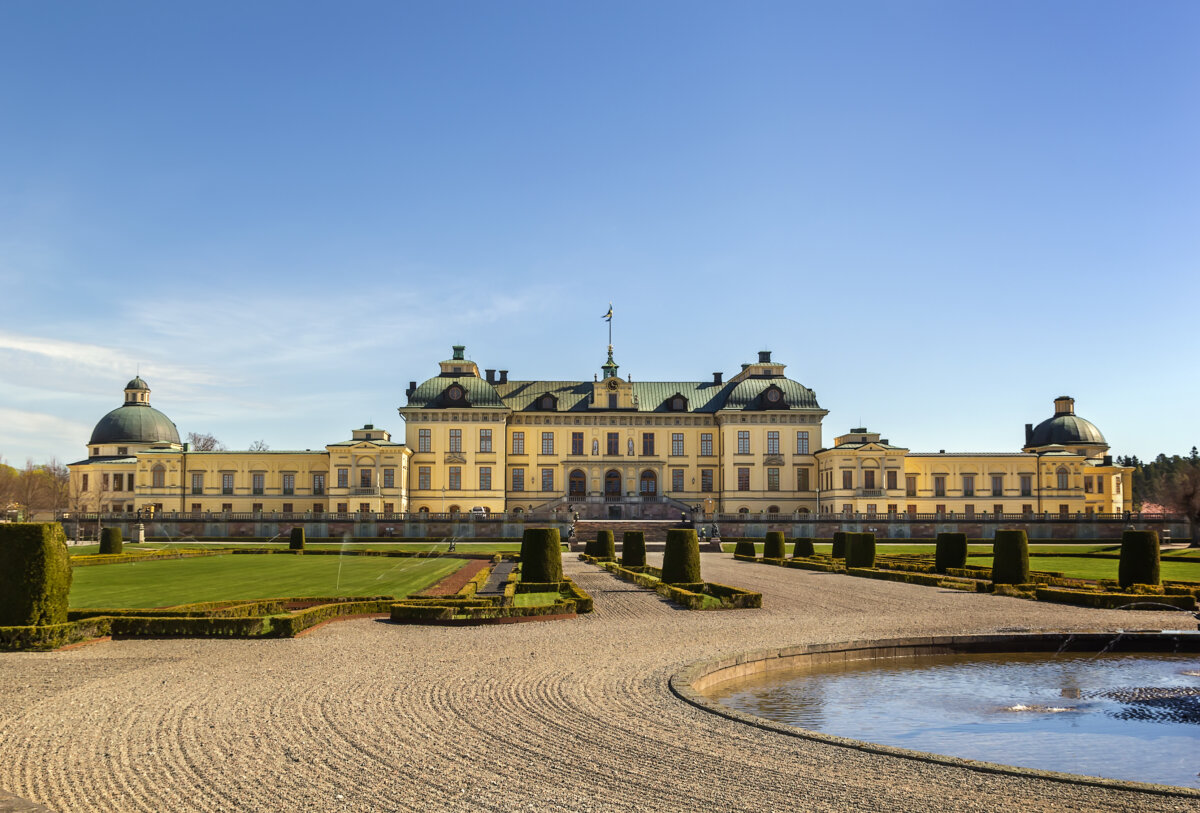
Situated on the banks of Lake Malaren, Drottningholm’s 700-foot-long façade exemplifies the French baroque designs that Nicodemus Tessin the Elder popularized in Sweden. Characteristics of this style can be seen in the palace’s symmetrical two-story wings as well as the tall, curved roof (mansard roof) on the building’s central section. (Borisb17/Shutterstock)
Located on Lovon Island in Lake Malaren, Drottningholm Palace is the finest architectural work of the period known as the Swedish Age of Greatness. Drottningholm, which translates as “Queen’s islet,” was built for Dowager Queen Hedwig Eleonora (1636–1715). Known as the ladies’ castle, it was passed on to queens consort as a summer pleasure palace and evolved according to each successor’s fashion.
In 1662, the widowed queen hired Sweden’s most eminent 17th-century architect Nicodemus Tessin the Elder (1615–1681) to build her palace. While the palace’s façade was influenced by French baroque prototypes—particularly the Palace of Versailles—the interior showcased Dutch, German, and English and other Northern European designs. His signature interiors display a darkly colored yet flamboyant aesthetic nicknamed Caroline baroque, which coincided with the era’s warrior kings named Karl, also known as Charles (a variant of the Latin Carolus).
After Tessin the Elder’s death in 1681, his son Nicodemus Tessin the Younger (1654–1728) completed the interior for the dowager queen. The Tessin gold baroque style that he introduced was inspired by the brighter and more colorful works of his teacher, the great baroque sculptor and architect Gian Lorenzo Bernini (1598–1680) .
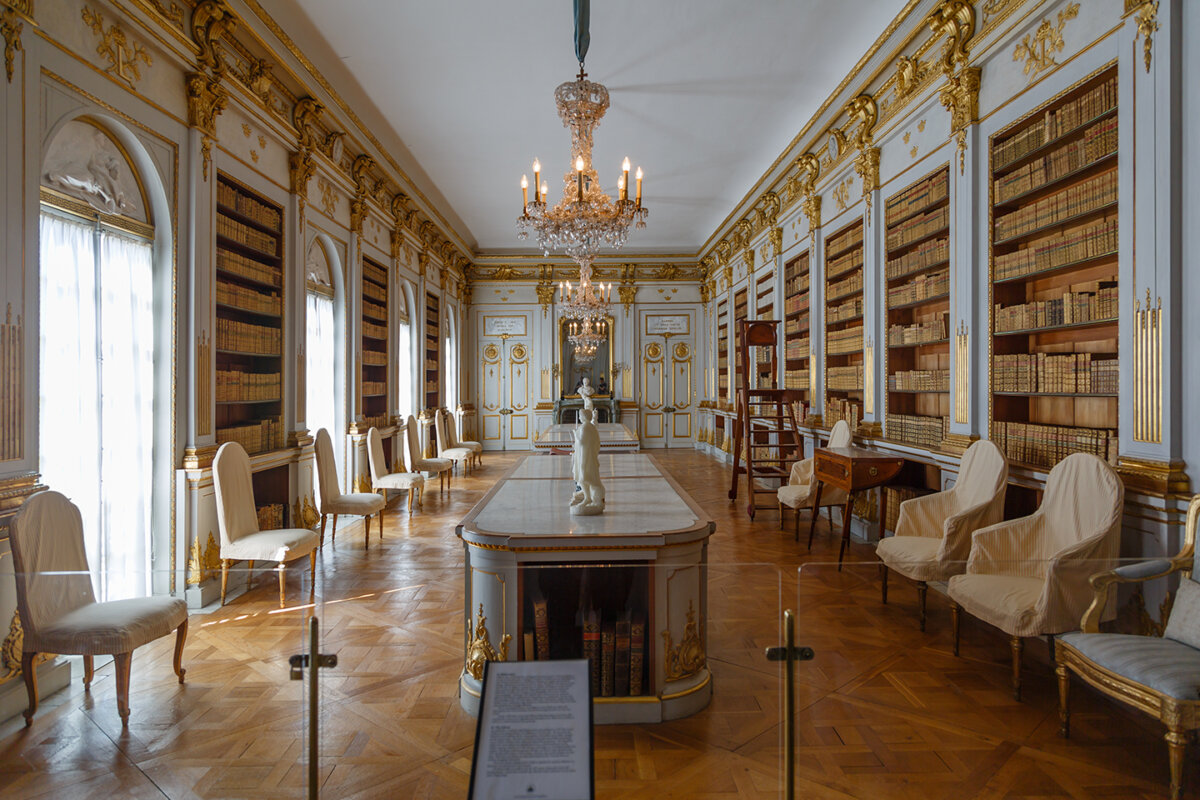
When Queen Louisa Ulrika inherited Drottningholm in 1744, she commissioned a few major additions to demonstrate her patronage of literature, arts, and science. The soberly classical library by Swedish architect Jean Eric Rehn (1717–1793) and receptions rooms in the soft, playful rococo style are among her most important projects.
After a 20-year restoration project, which culminated in 2002, Drottningholm Palace was refurbished to its original beauty. In 1991, the palace became a UNESCO World Heritage site. While many of the rooms are open to the public, the palace’s southern wing is the private residence of Sweden’s current royal family—King Carl XVI Gustaf and Queen Silvia.
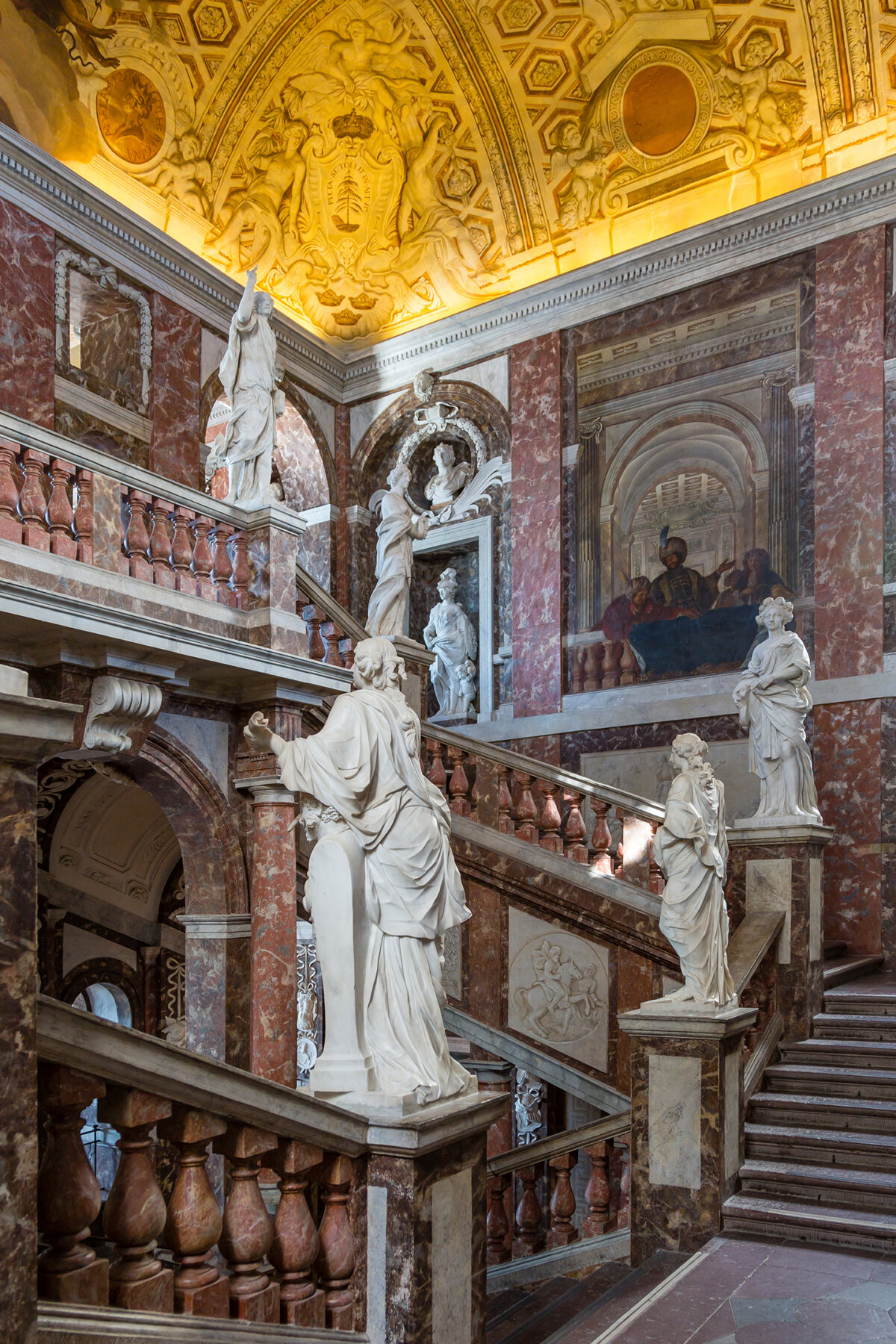
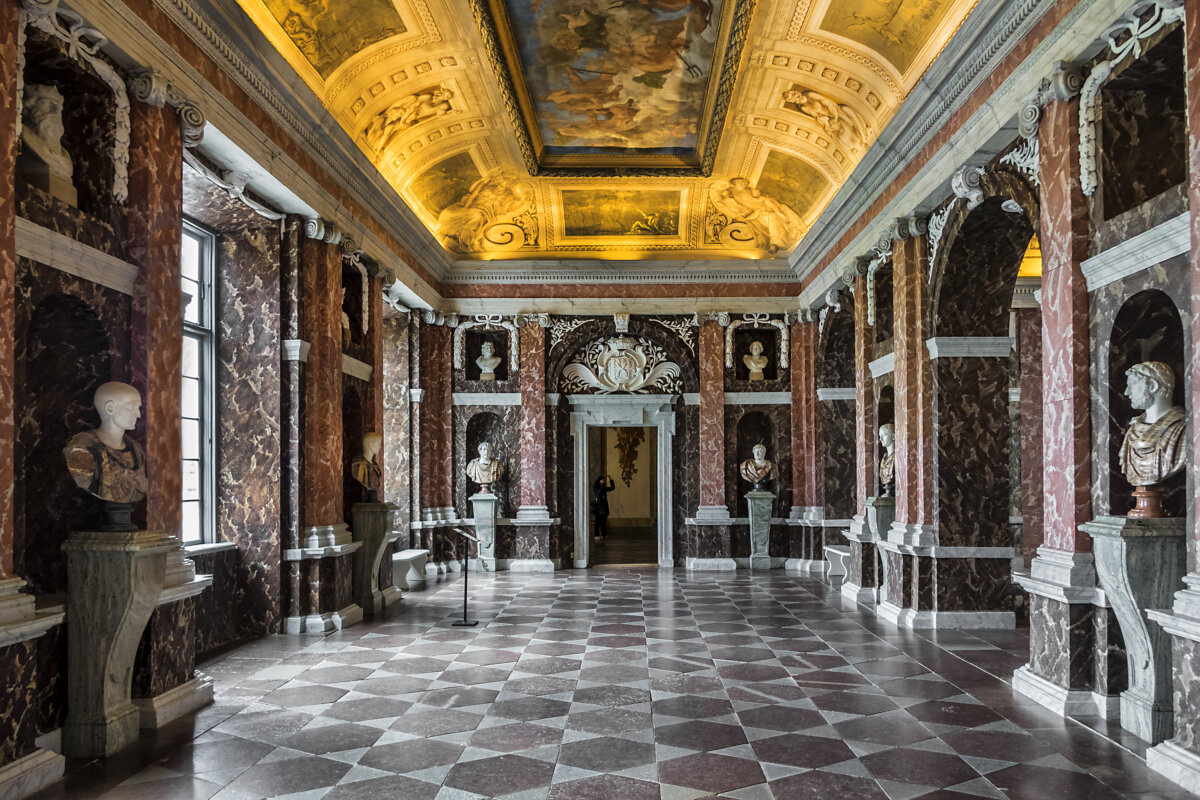
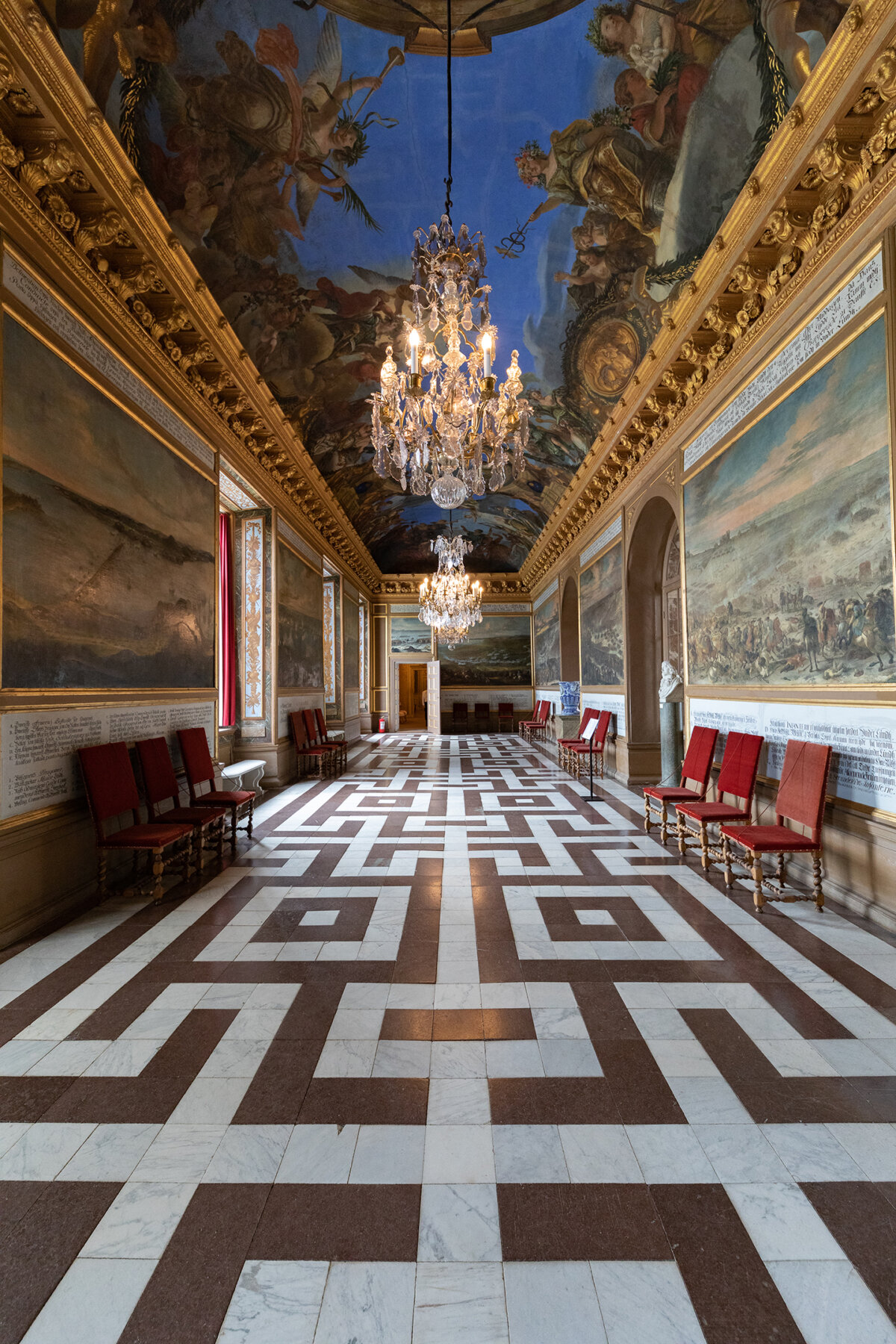
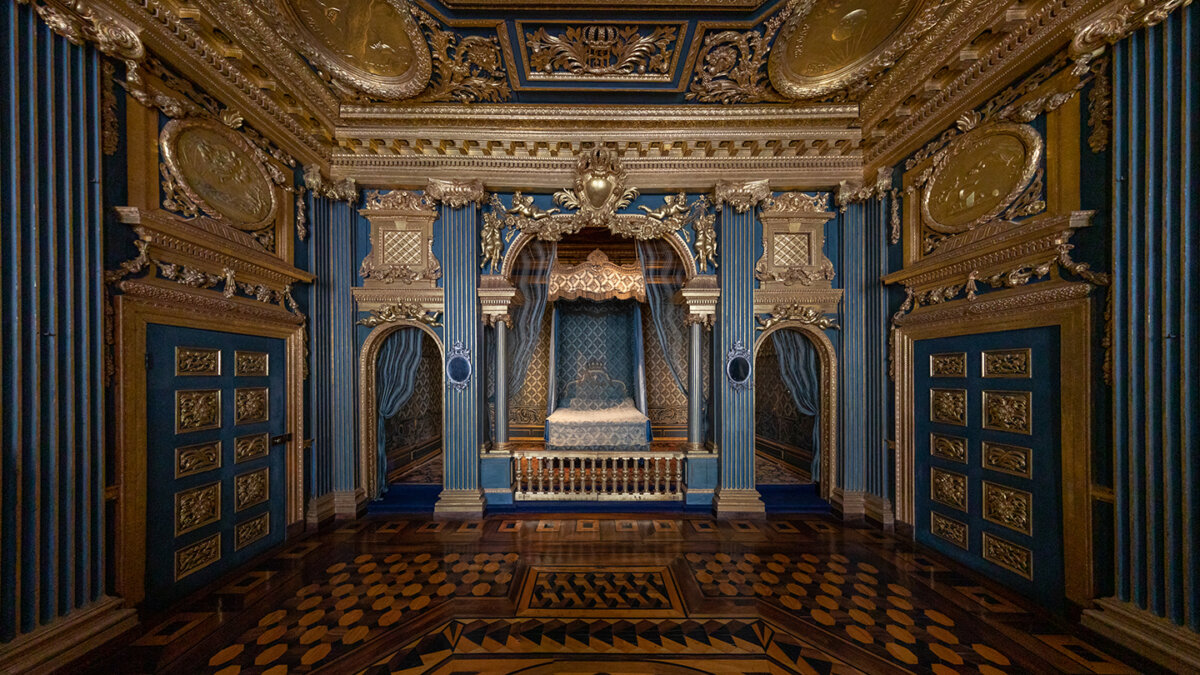
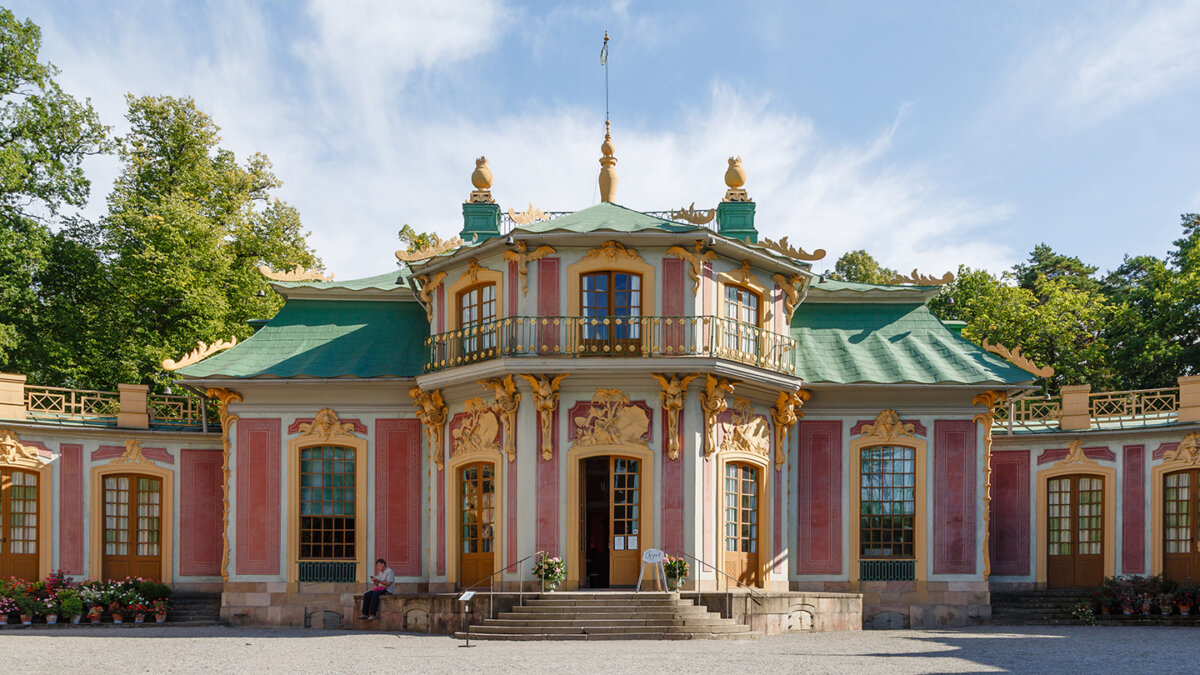
Designed by Tessin the Elder, the grand staircase has been described as “the most baroque space in Sweden.” Marble statues of Apollo and Minerva, carved by Nicolaes Millich, are featured in niches, with the nine muses adorning the staircase’s balustrade. The grand staircase features marble stucco as well as trompe-l’oeil wall frescos by Johan Sylvius. (Uwe Aranas/Shutterstock) Above the staircase’s landing, the vestibule showcases the same maroon marbling and white stucco decorations seen in the grand staircase, which exemplifies Tessin the Elder’s Caroline baroque style. Busts of Swedish kings are displayed in tiered niches, and the vaulted ceiling features Johan Sylvius’s fresco “The Gods of Mount Olympus.” Centered above the entryway is Hedwig Eleonora’s stucco, crowned monogram. (Kiev.Victor/Shutterstock) Decorated entirely in white and gold, Jean Eric Rehn’s library design showcases one of Sweden’s earliest classical interiors. Gilded crown decals with the letter “L” for Louisa Ulrika reflects the ideals of the 18th-century queen. More than 700 beautiful leatherbound books are housed in cedarwood bookshelves, which complement the parquet flooring. (Uwe Aranas/Shutterstock) Tessin the Younger’s Karl XI Gallery celebrates the Scanian War victories of Hedwig Eleonora’s son (King Karl XI) with paintings by Johann Philip Lemke that cover the entirety of the 150-foot-long walls. Johan Sylvius’s allegorical ceiling fresco “Fame Awakes,” bordered by Carlo Carove’s ornate and gilded cornice, is the gallery’s centerpiece. The geometric patterned floors were constructed from white marble and brown stone tiles from Oland, Sweden. (Martin Kraft/ CC BY-SA 4.0) Originally designed by Tessin the Elder, and completed by Tessin the Younger, Queen Hedwig Eleonora’s State Bedchamber features intricately patterned wood-inlay flooring, carved and gilded stucco ornamentation, and emblematic reliefs. Originally black and gold, the room featured elements of both the Caroline baroque and Tessin gold baroque styles. (Martin Kraft/ CC BY-SA 4.0) Topped by curved Wudian roofing, the Chinese Pavilion was inspired by Chinese and rococo aesthetics, which commonly feature scrolling curves, gilding, and pastel colors—particularly pink. Sculptures above the doors and windows depict Chinese plants, animals, vases, umbrellas, and men with damao hats (Ming dynasty high-crowned hats). (Uwe Aranas/Shutterstock)
What arts and culture topics would you like us to cover? Please email ideas or feedback to features@epochtimes.nyc.
Correction: A previous version of this article misspelled the names of Hedwig Eleonora and Johann Philip Lemke in a photo caption. The Epoch Times regrets the error.
James Baresel is a freelance writer who has contributed to periodicals as varied as Fine Art Connoisseur, Military History, Claremont Review of Books, and New Eastern Europe.