



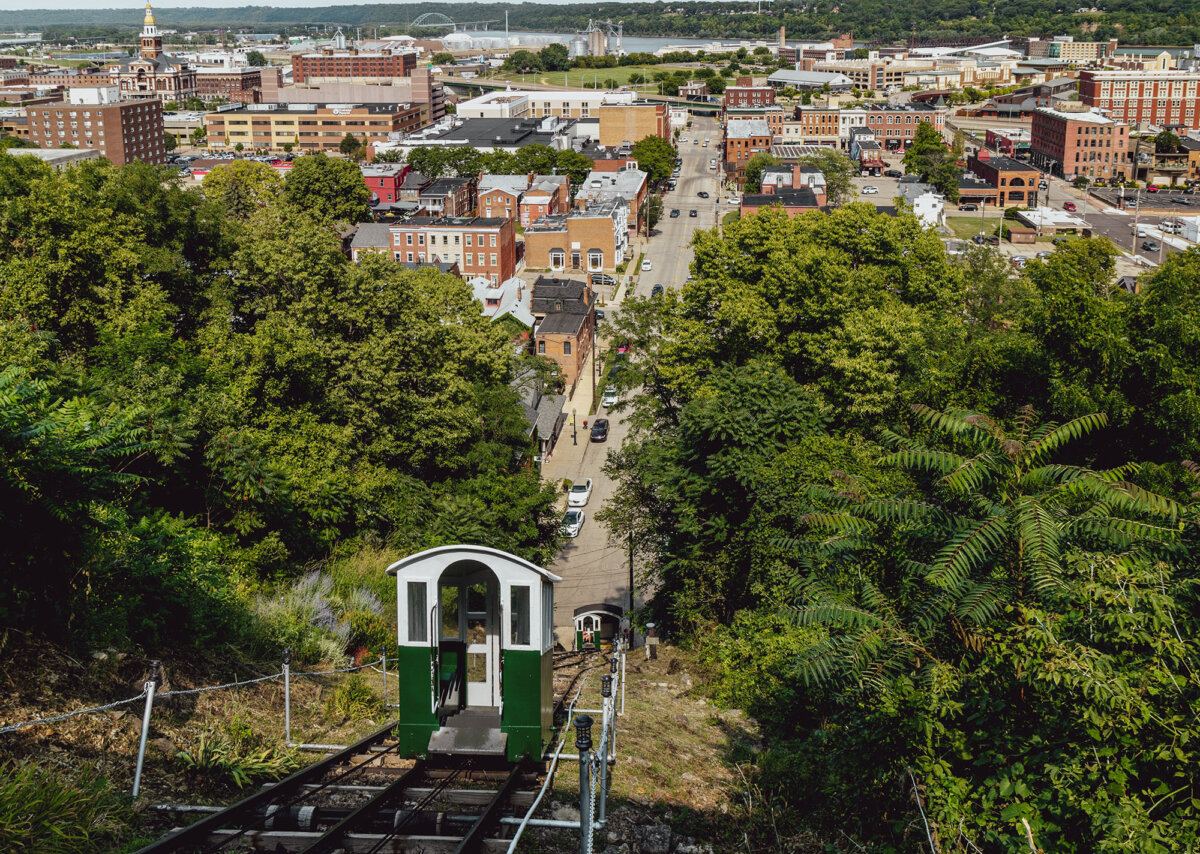
As the funicular car rose above the scene before me, like the basket of a hot air balloon leaving the earth behind, I thought to myself, this was someone’s own private elevator, really.
That someone was J.K. Graves, a banker who lived in a privileged perch along the top of a ridge overlooking the city, the Mississippi River, and his office directly below. Before building his cable car in 1882, he and his neighbors had to ride north to take a switchback road down the ridge into town, a journey of about 30 minutes. After installing his cable car, he could just board “the World’s Shortest and Steepest Railroad” and be lowered 189 vertical feet (296 feet of track) to street level in a few minutes. He’d use it to go home for lunch and a midday nap each day. After two fires and a few upgrades, Fenelon Place Elevator became a two-car funicular and a recommended highlight of a trip to Dubuque, Iowa.
I love places with those touches of history—whether it’s an Art Deco light fixture, a Brunswick back bar, or a quirky story from yesteryear—places steeped with history, or at least dusted in it.
Dubuque fits the bill; the city has 64 Historic Places on the National Register and a storied history of Native Americans, European settlers, and—as it seems typical in the Midwest—Al Capone. Add to that the natural history of a mighty river running through it, and you’ve got a good long weekend in any season.
The Roots of History
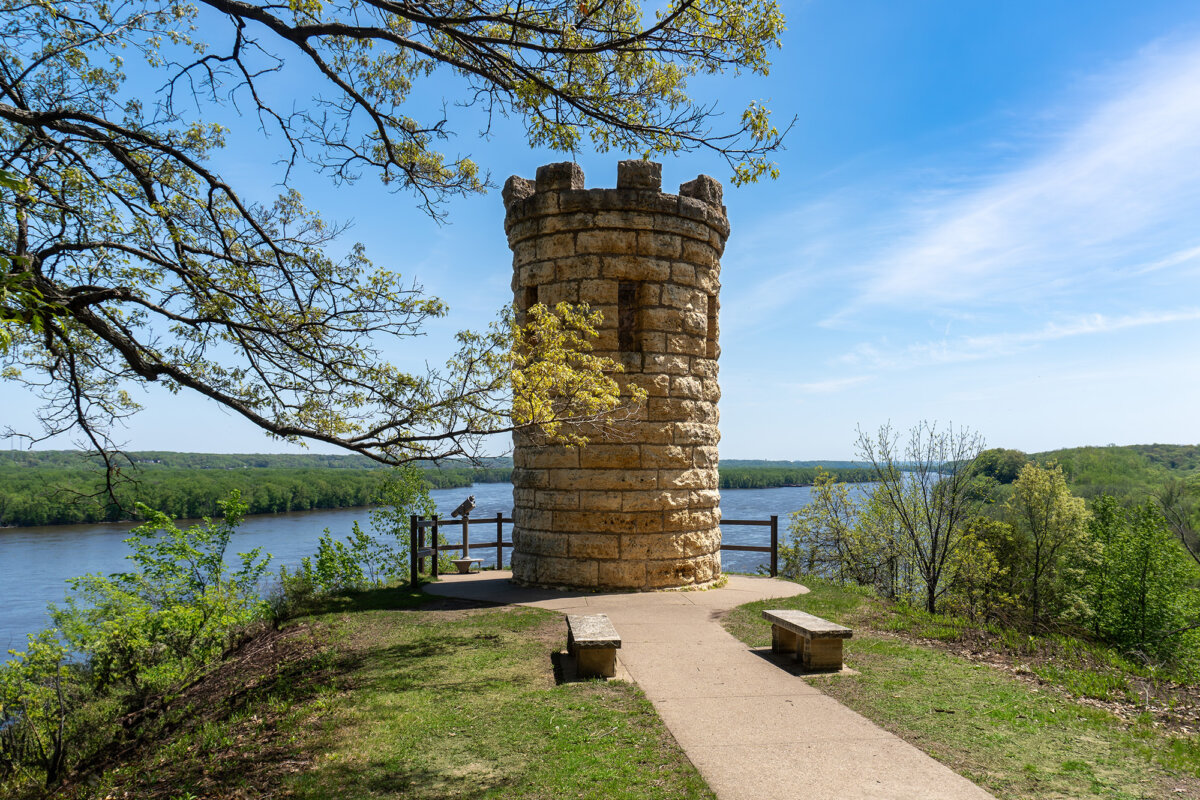
Julien Dubuque, a French Canadian fur trader, settled here in 1785, giving up fur-trading for lead mining. He developed a close relationship with the local Mesquakie people and is believed to have taken Potosa, the daughter of the chief, as his wife and acquired tribal permission to dig for lead. But ultimately, he named his project the Mines of Spain, a nod to the then-governing Spanish who created legal documents granting him 189 square miles of land in 1796. Nevertheless, in 1810, when Dubuque died, the Mesquakie gave him a tribal funeral and burial. His grave lies in the Mines of Spain Recreation Area. There, a 25-foot medieval-looking limestone tower was constructed in 1897 as a monument to him. It sits high on a bluff overlooking the Mississippi River.
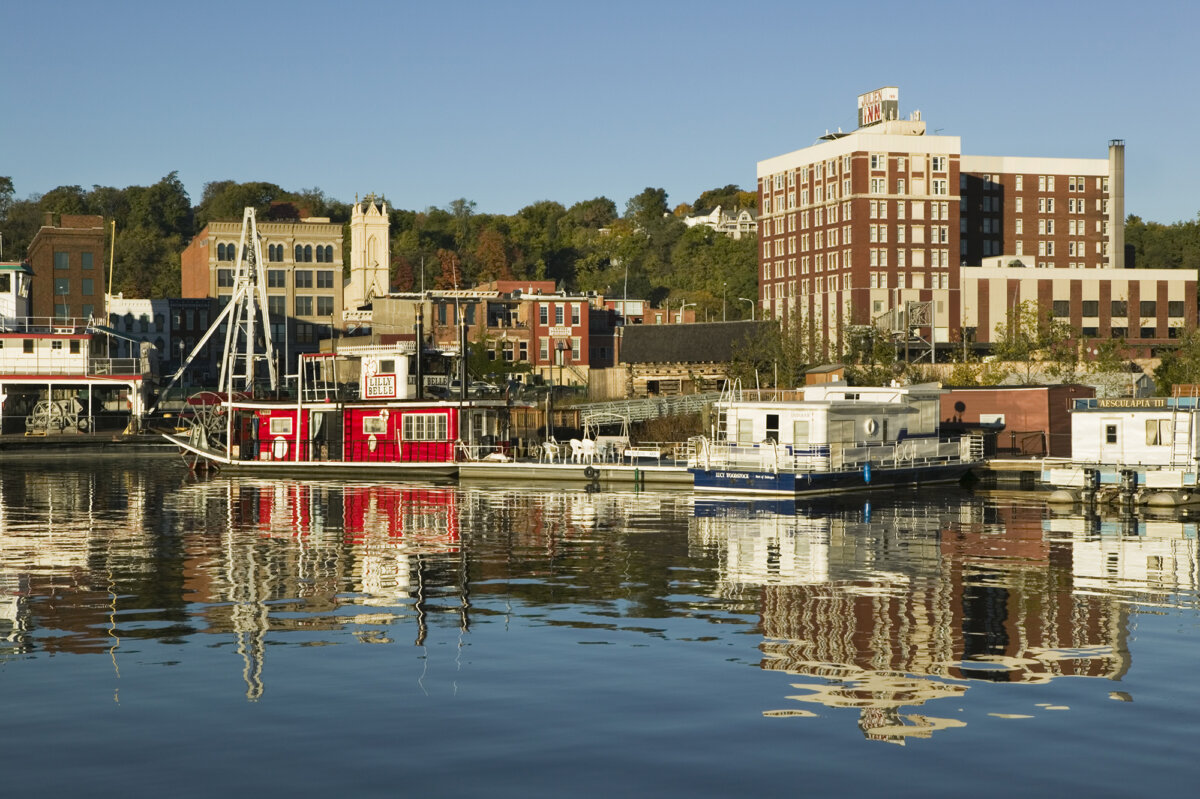
I booked a room at the historic Hotel Julien Dubuque in the heart of downtown. Some form of guesthouse has existed on this corner since 1839, including the Waples House, which was remodeled and renamed the Julien in 1854. Like so many guesthouses of old, this construction fell to fire in 1913. The replacement, opened in 1915, would become a useful hideout for Chicago’s Al Capone. Naturally, his ghost (or a spirit posing as the gangster) is rumored to appear here on occasion, and a two-bedroom, 2 1/2-bath luxury suite bears his name.
In the lobby area were a couple little pieces of history: a newspaper story of a visit from a young Illinois attorney, Abraham Lincoln, and a plaque commemorating Henry Rose, a black doctor who first worked at the hotel as a porter but eventually “hung out his shingle” in the hotel as a podiatrist. Mark Twain was also a Hotel Julien guest, likely arriving by the interstate highway that was the Mississippi River.
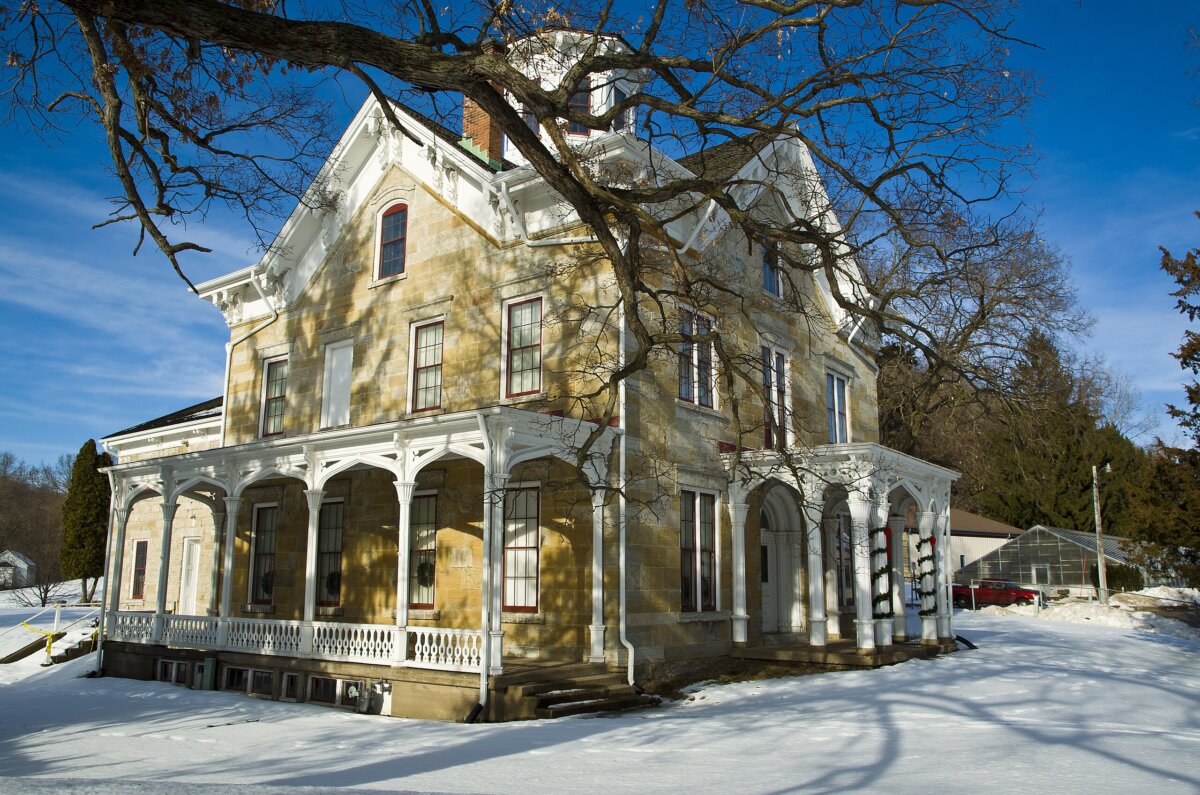
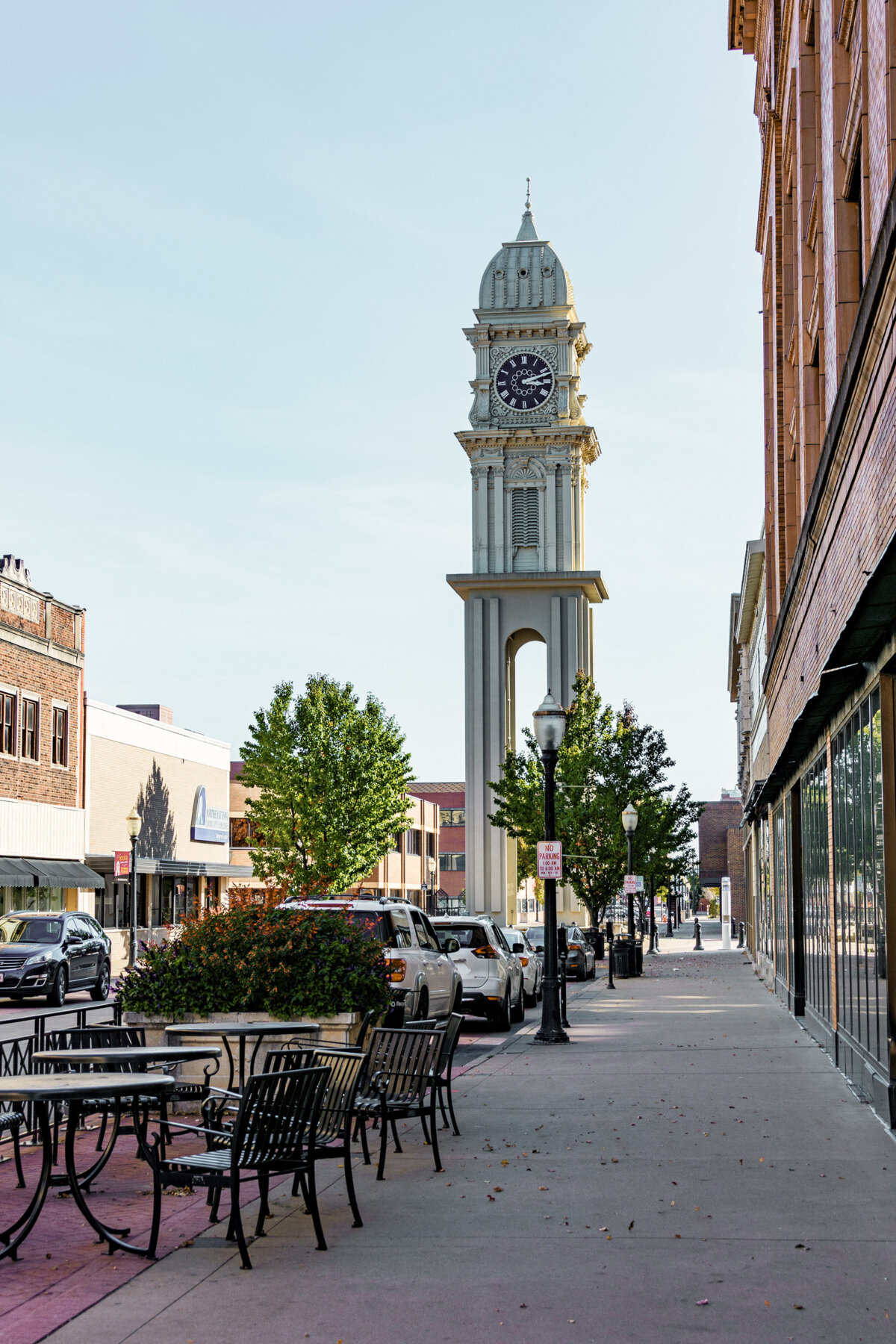
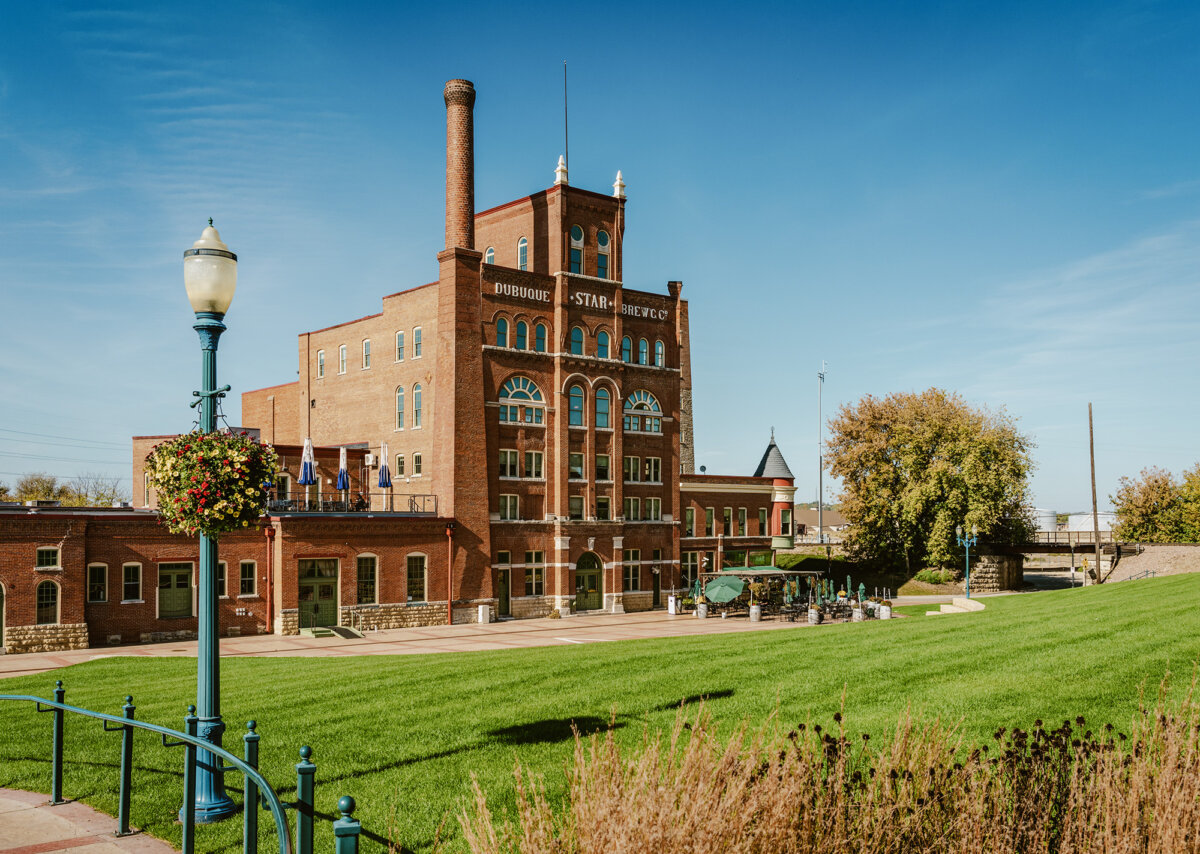
All around downtown, the past meets the present in 19th-century brick buildings with colorful modern murals. The historic Mathias Ham house, undergoing restoration in 2025 and 2026, shares its grounds with a schoolhouse, cabin, and even a mine. The 1873 Dubuque Town Clock tower, originally set on a rooftop, was moved to street level in 1971. Ammunition was made in 1856 by dropping molten lead from the 120-foot Shot Tower along the Mississippi Riverwalk. Also on the riverfront, the 1898 five-story Star Brewery building has traded grain for grapes: Stone Cliff Winery has a tasting room within. But there are also exhibits about the brewery’s history and an excellent collection of breweriana within. An amphitheater out front hosts concerts in summer.
The River
Dubuque is still a port city, and river traffic is abundant. Go to Eagle Point Park for views of Lock and Dam No. 11, where you may see long barges making the passage.
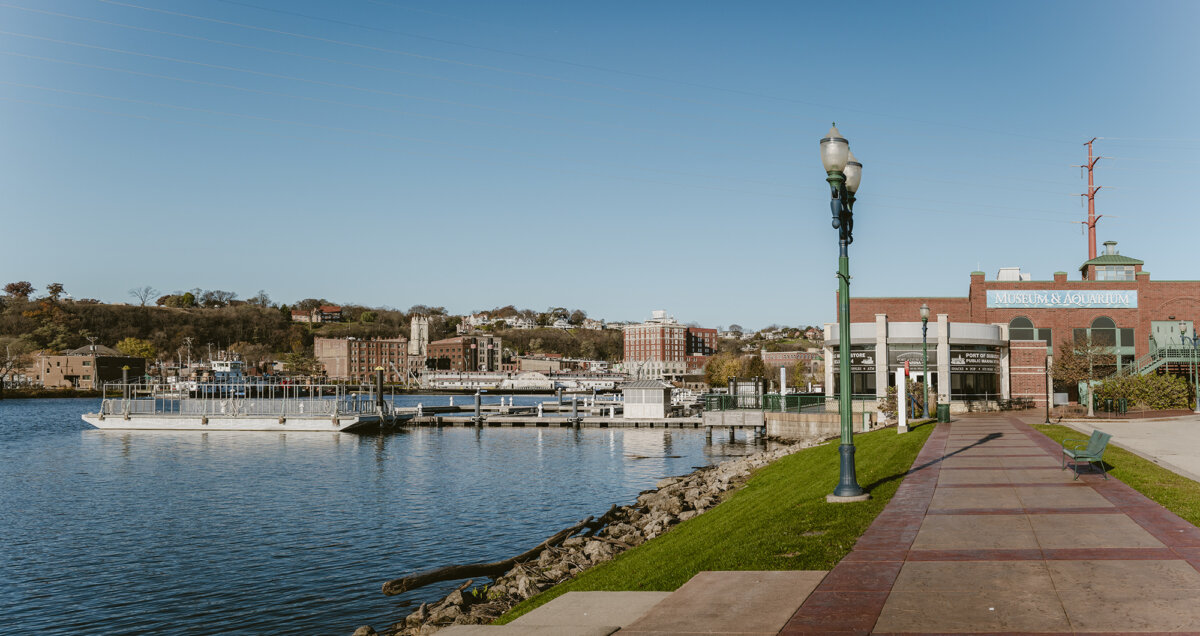
Arguably the most significant attraction in town, however, is the Smithsonian-affiliated National Mississippi River Museum & Aquarium, a 14-acre property with two buildings dedicated to both human history and the natural world. You’ll find a bronze Twain here on a park bench waiting for photos. You can also board the 1934 William M. Black, a 227-foot sidewheel riverboat. Much of the aquarium is dedicated to freshwater creatures, the largest tank holding 30,000 gallons. But an even larger habitat contains more than 40,000 gallons dedicated to sea life where the Mississippi meets the Gulf of Mexico.
Tom Sawyer and Becky Thatcher, the resident river otters, sail past your nose behind the glass of their enclosure. But there’s no glass between you and the ducks and the turtles breaking the surface for a breath in the lobby’s backwater marsh exhibit. An open pool with (safely debarbed) stingrays allows visitors to touch them as they pass. Plan ahead if you want to book a feeding of the stingrays, or even cooler, the resident octopus!
While the tanks and enclosures feature all things Mississippi, from gators and jellyfish to the prehistoric-looking sturgeons and otters, the geological and human history of the big river and the region is also extensive. A 4D theater has scheduled shows available as a ticket add-on. There’s so much here that it can be overwhelming. No worries, your ticket can get you in the next day, too.
Eats and Drinks
For a population hovering around 60,000, Dubuque has a lot going on gastronomically. Four craft brewers keep the spirit of Star alive, including 7 Hills Brewery, located in one of the restored and repurposed industrial buildings in the historic Millwork District. Great beer and a bar menu that includes a creative list of appetizers, from fried cheese curds to blackened Brussels sprouts, as well as brisket burgers and other classic sandwiches.
The next block over is a dinner destination: Brazen Open Kitchen & Bar. Kevin Scharpf, a James Beard Best Chef of the Midwest nominee, and his crew put together constantly changing menus favoring fresh regional ingredients and featuring creative dishes that should earn future nominations. It’s a special night out for sure, and despite the artistry, you aren’t going home hungry.
For cheaper comfort food, and of course a bit of history, hit up Paul’s Tavern. Founded in 1948, the establishment still uses its original cast-iron broiler for solid burgers that won’t break the bank. You can’t miss the bar’s menagerie of taxidermy, which includes a polar bear.
Stop in at Cremer’s Meats, a family-run 1940s butcher shop, for some bratwurst or sirloins to take home, or to pick up lunch, including the traditional and cheap Dubuque tradition: the turkey and dressing sandwich.
While I am not a gambling man, it’s worth pointing out that there are two large casinos in Dubuque: Q Casino & Resort, beneath the bridge over the river to Wisconsin, and Diamond Jo Casino, near the harbor and across the street from the aquarium. Both keep patrons fed while they feed the slots. But whether you wager or not, it’s a safe bet that a good time awaits in Dubuque.
Baseball and movie fans take note: The ballpark in the cornfield from the movie “Field of Dreams,” situated 25 miles west of Dubuque in Dyersville, is open for visits and hosts games in season. Dubuque Regional Airport (DBQ) has a connection to Chicago O’Hare (ORD) and other airports. It’s about a 1- to 1 1/2-hour drive from Cedar Rapids, Iowa, or Madison, Wisconsin, respectively.
