



NR | 1 h 59 min | Drama | 1943
The word “quisling” wouldn’t be a common noun had it not been for WWII Norwegian traitor Vidkun Quisling. He conspired with the Nazis so that Germany could invade Norway.
“Edge of Darkness,” a 1943 film about Norway’s underground anti-Nazi resistance, was the first movie to personify that word in a uniquely Norwegian story. Director Lewis Milestone dramatizes William Woods’s eponymous novel.
It’s 1942. No more than 800 people live in the Nazi-controlled seaside village of Trollness, Norway. With every ounce of dignity in them, the villagers resist being controlled by the 150-man German garrison stationed there.
Passive Resistance
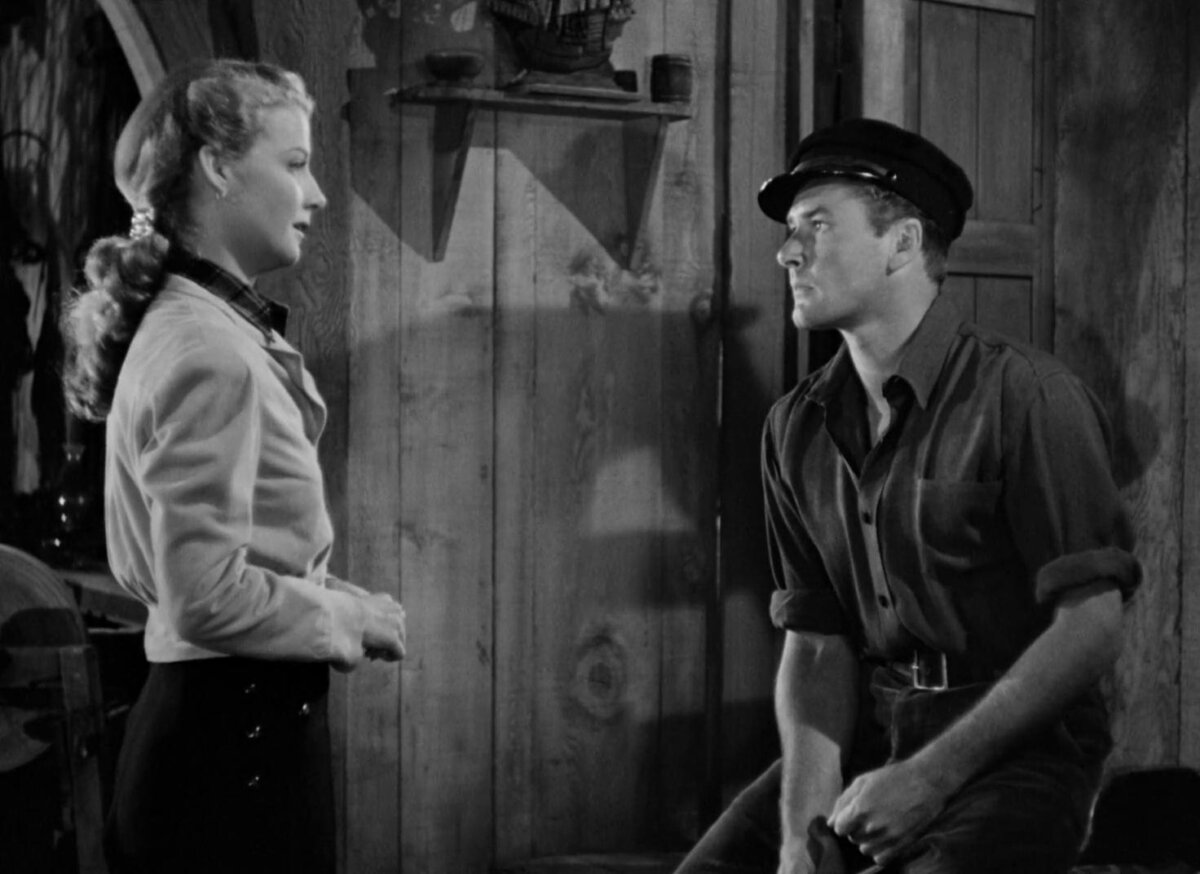
Their resistance, though, is largely underground; instead of outright fighting, they secretly sabotage food and supplies to the Germans. Fisherman Gunnar Brogge (Errol Flynn) leads all this with his sweetheart, Karen Stensgard (Ann Sheridan), innkeeper Gerd Bjarnesen (Judith Anderson), and a handful of other brave Norwegians.
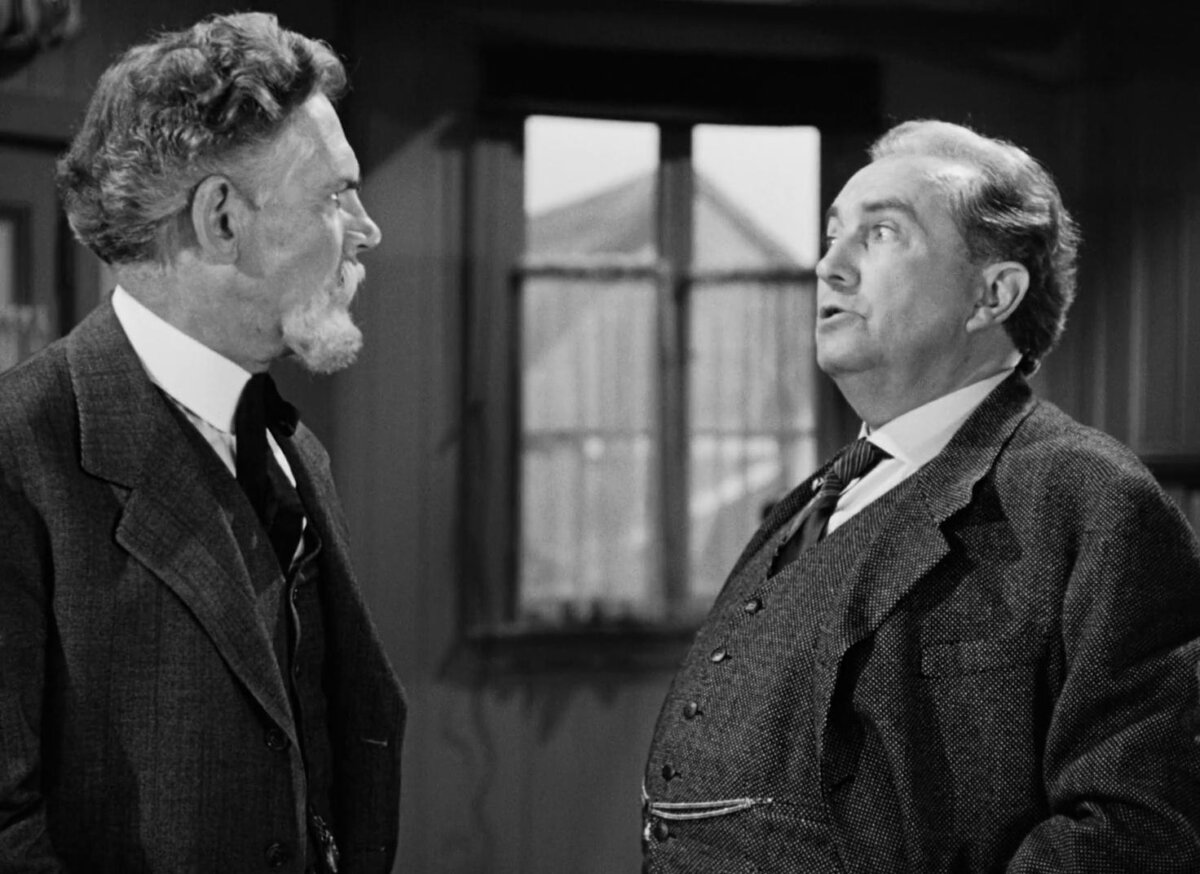
Karen’s father, village doctor Martin Stensgard (Walter Huston), plays it safe, keeping the resistance at arm’s length. He worries for the lives of his wife, Anna (Ruth Gordon), and gutsy daughter, Karen. He worries also for his son, Johann (John Beal), who’s just in from Oslo with the stain of being a Nazi informant, a quisling.
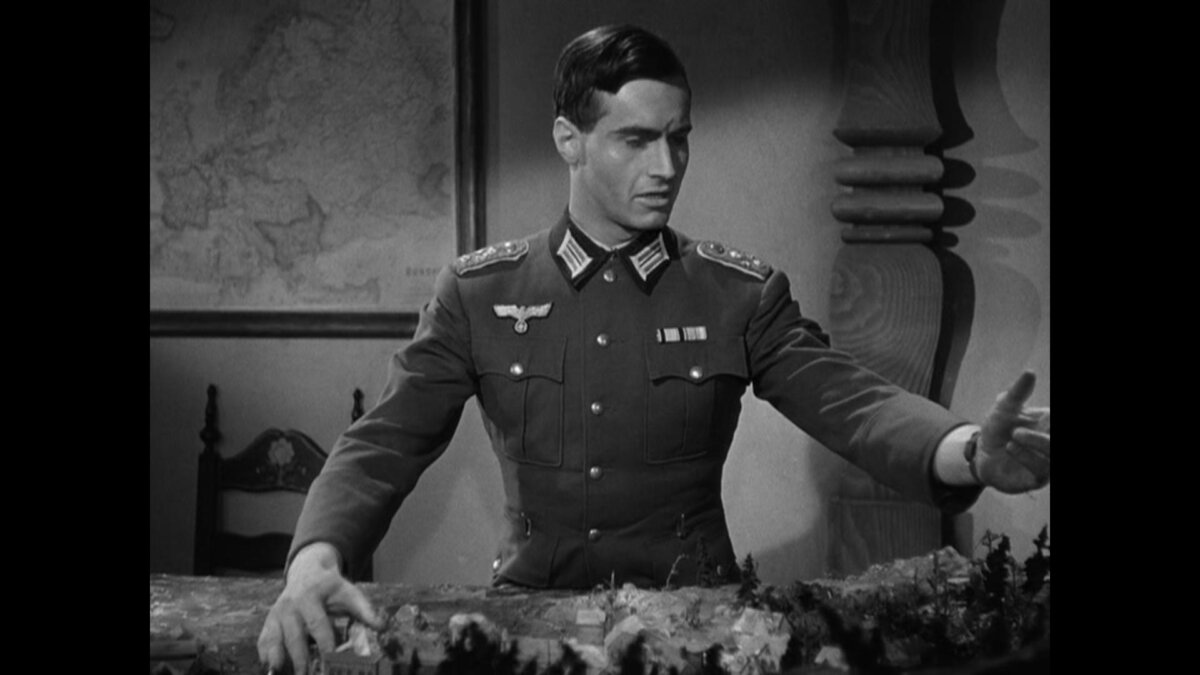
Less conflicted is fish cannery owner Kaspar Torgersen (Charles Dingle), who openly helps the Nazis; to him, bravery’s bad for business. Lacking sufficient proof to order a full-blown crackdown on the resistance, Nazi commandant Capt. Koenig (Helmut Dantine) is itching for a fight and tries hard to provoke it. However, Trollness won’t take the bait. Not yet.
Flynn’s obvious action-star charisma aside, Milestone’s direction avoids the melodramatic trap of valorizing a single heroic individual. He does the opposite. Each villager here helps the others find clarity, conviction, and courage.
They start out as mere individuals, making purely single-minded choices. But when they make the right choice, their village becomes, as if miraculously, mightier. Suddenly, they’re more than the sum of their parts.
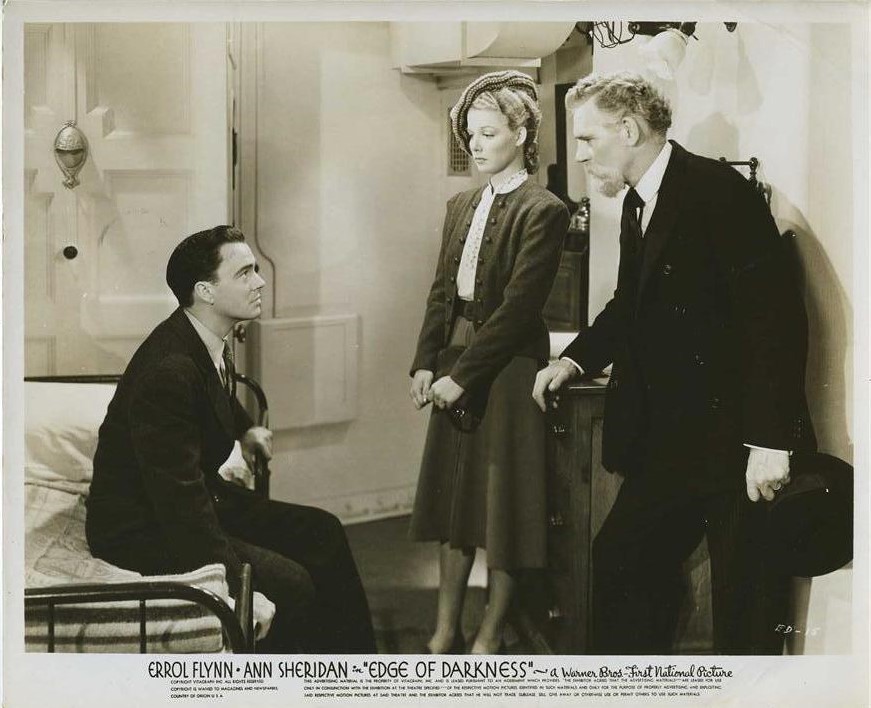
At first, everyone has an excuse to not get involved; some make excuses for others, not just themselves. Martin makes excuses for Johann’s failings in Oslo. He was bewildered; he was weak. Ultimately, nearly all the villagers have to find reasons to stop making excuses for themselves and others.
Active Resistance
Milestone packs in several twists and turns. He uses just one extreme close-up of Ruth Gordon—and makes it count. He conveys this mother’s inner transformation just by having his camera zoom in on her.
He repeatedly depicts a ticking clock face, indicating that when the time is right, no force on earth can hold back a people who unitedly favors freedom over fear. Karen takes centerstage in a way that neither she nor the village expects. Also, watch for who among the villagers wields the first machine gun.
What’s the secret cache sailing from Britain to Trollness? It’s 15,000 rounds of 50-caliber ammunition, 100 hand-grenades, 300 bayonets, 300 rifles, and four light machine guns.
Has Britain bungled in trusting Trollness to fight back? Yes, Gunnar is ex-Army, but the others can hardly be called soldiers: a butcher, tailor, shoemaker, storekeeper, the baker’s widow. All Trollness produces under duress for the Germans is overcoats, shoes, milk, eggs, butter, and tons of fish.
Then again, otherwise innocuous church services double as steely displays of Trollness’s resolve.
At one such meeting, when one man wonders why he should sacrifice for the cause, as it all seems so futile, Gerd snaps back. “Is it sacrifice?” she asks. What’s he giving up? His life? Nazis may kill him anyway. His farm and his home? Those aren’t his unless he can defend them first. His peace? What sort of peace exists when innocents live in constant fear?
A pause. The man has his answer.
In real life, amid the rise of wartime antisemitic Nazism, President Franklin D. Roosevelt’s “Look to Norway” speech saluted Norwegians who saw beyond the edge of darkness. He said that if anyone doubts the democratic will to win, he will find in Norway “at once conquered and unconquerable, the answer to his questioning.”
This film sums up that spirit, as the humble village of Trollness defies Koenig’s vile ideas of a “master race.” It’s also a haunting reminder of how antisemitism (whether Nazi or of a newer vintage) can rise again in Norway or elsewhere. This will happen if people forget or undermine the humanity that their ancestors fought so bravely to preserve.
Tired of waiting for the promised munitions, Karen wonders aloud with Gunnar what a world without Nazis might be like. Before he smilingly kisses her, Gunnar replies, “Good.”
You can watch “Edge of Darkness” on TCM, Prime Video, and Apple TV.
‘Edge of Darkness’
Director: Lewis Milestone
Starring: Errol Flynn, Ann Sheridan, Walter Huston
Not Rated
Running Time: 1 hour, 59 minutes
Release Date: April 24, 1943
Rated: 3 stars out of 5
What arts and culture topics would you like us to cover? Please email ideas or feedback to features@epochtimes.nyc
