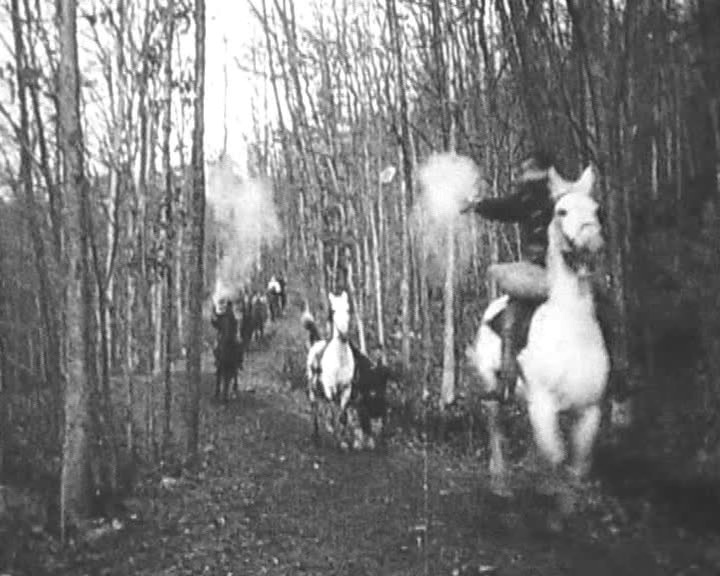
Edwin S. Porter was the first American director to establish many of Hollywood’s filmmaking techniques. During the first 15 years of the 20th century, he directed roughly 250 shorts and features, including landmarks such as “Life of American Fireman” (1903) and “The Great Train Robbery” (1903).
Porter was a modest man who didn’t engage in self-promotion. As a result, many film scholars were unaware of the depth of his work and wrongly credited some of his breakthroughs to other directors.
Mercifully, Porter’s importance to the film industry is now recognized. Many of his works survive and are being appreciated by new generations of movie lovers.
Watching the Audience
Porter was born April 21, 1870, and raised in Connellsville, Pennsylvania, an industrial town 36 miles southeast of Pittsburgh. His initial exposure to show business came in his early teens as a ticket taker and usher at the Newmyer Opera House, his hometown’s first commercial theater.
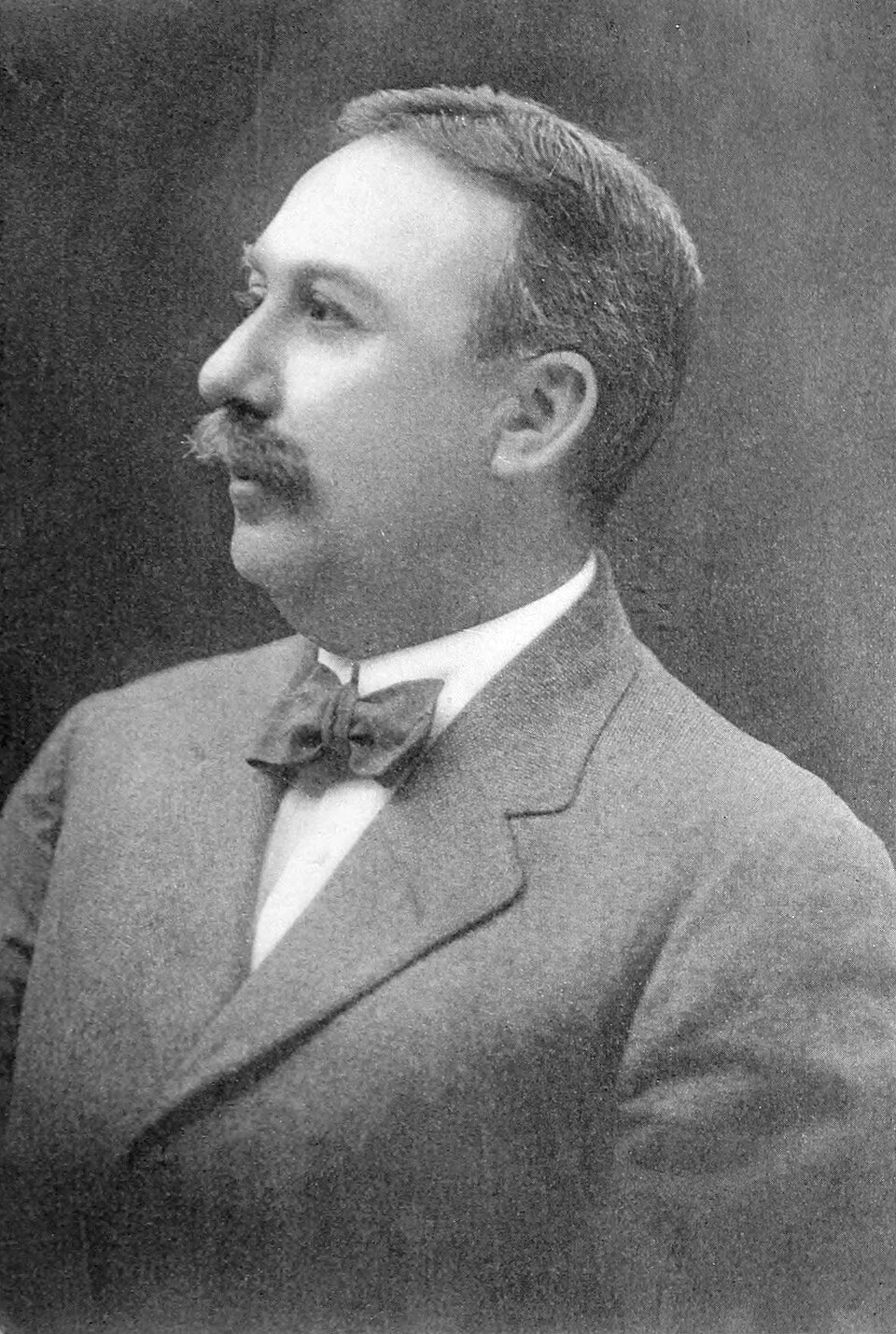 Edwin S. Porter in 1901. (Public Domain)
While audiences were transfixed by the performances, Porter watched the audiences to see which shows resonated with them. Years later, he recalled what he saw when he adapted the most popular theatrical productions into film versions of “Uncle Tom’s Cabin” (1903), “Kathleen Mavourneen” (1906), “Daniel Boone” (1907), and “She” (1908).
In his late teens and early 20s, Porter held a variety of jobs including telegraph operator and a merchant tailor. At 21, he teamed up with a friend to secure a patent for an electric current regulator. Porter was devastated by the economic depression in 1893 and declared bankruptcy before joining the U.S. Navy for a three-year stint.
After his discharge, Porter entered the nascent motion picture industry as a projectionist and exhibitor. Working for several different companies, he presented films across the United States, Canada, and the Caribbean. Again, he monitored the audiences to see which films generated the best responses.
Creating Production Techniques
In 1900, Porter joined Thomas Edison’s film production company in New York City. At that time, American audiences were becoming bored with movies due to a glut of dull travelogues and stiff shorts with stagnant camerawork.
Porter studied films coming out of Britain and France for inspiration and identified creative aspects that could enhance American output, including the use of special effects and intertitles to enhance the narrative flow.
Porter’s first innovation was in the one-minute short “The Finish of Bridget McKeen” (1901), in which he used a dissolve shot to set up a jokey denouement. By 1902, Porter created a more engaging story flow with the fantasy “Jack and the Beanstalk,” which retold the fairy tale in a 10-shot narrative.
“I came to the conclusion that a picture telling a story in continuity form might draw the customers back to the theatres,” he later recalled.
Porter recognized that audiences were hungry for action-oriented films. In 1903, he satiated that demand with “Life of an American Fireman,” which detailed a fire brigade’s rescue of tenants in a burning building, and “The Great Train Robbery,” a Western with a surprisingly high level (for the time) of violence.
“The Great Train Robbery” was a forerunner of immersive entertainment. Its unexpected final shot was of an ornery bandit squinting directly into the camera, aiming his gun at the lens, and firing point blank at the viewer. Porter’s work created such a sensation that for years it became a tradition to screen “The Great Train Robbery” as the first attraction in new theaters.
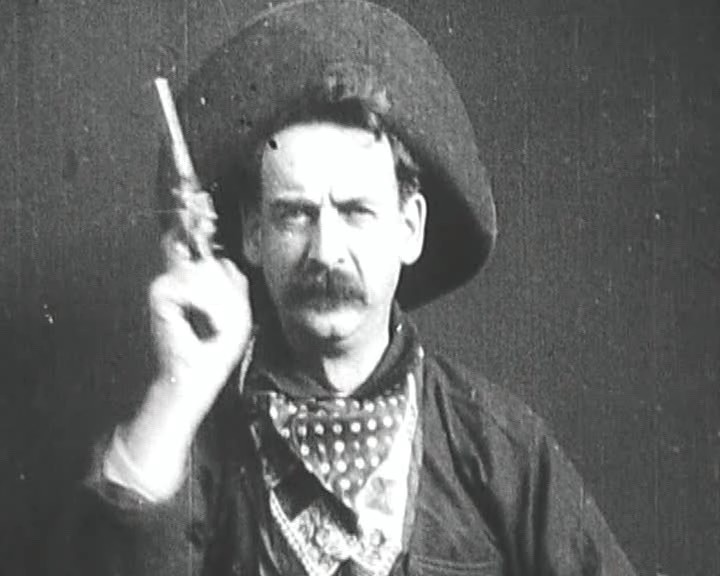 In a movie-making first, “The Great Train Robbery” concluded as an outlaw (Justus D. Barnes) “shot” into the camera. (Public Domain)
Expanding Screen Offerings
Porter also took on subject matter that challenged audiences. “Terrible Teddy, the Grizzly King” (1901) brought political satire to the big screen with its cheeky spoof of Vice President Theodore Roosevelt on a hunting trip with a photographer and press agent. “The Ex-Convict” (1904) and “The Kleptomaniac” (1905) highlighted the flaws in the nation’s criminal justice system.
Porter’s mechanical genius enabled new techniques: cross-cutting, continuity editing, close-ups, and parallel plotlines. Long before comic books were a main source material for movies, Porter helmed “Dream of a Rarebit Fiend” (1906), a live-action version of a popular Winsor McCay comic strip.
The filmmaker’s influence was so dominant that a young D.W. Griffith sought him out with a screenplay that he hoped Porter would produce and direct. Porter turned down the screenplay but gave Griffith a role in “Rescued from an Eagle’s Nest” (1908), which Porter produced and J. Searle Dawley directed.
Griffith would give up acting and concentrate on working behind the camera, later expanding on many of the techniques that Porter initiated. Some film scholars erroneously credited Griffith with these breakthroughs, but he never insisted on giving Porter his proper due.
Porter left the Edison film operations in 1909. He later joined producer Adolph Zukor’s Famous Players Film Company (the forerunner of Paramount Pictures). Porter was entrusted with the company’s prestige productions. His feature film “Tess of the Storm Country” starring Mary Pickford was budgeted at a then-princely sum of $13,000 and broke box office records by grossing over a $1 million, the greatest cinematic return on investment at that time.
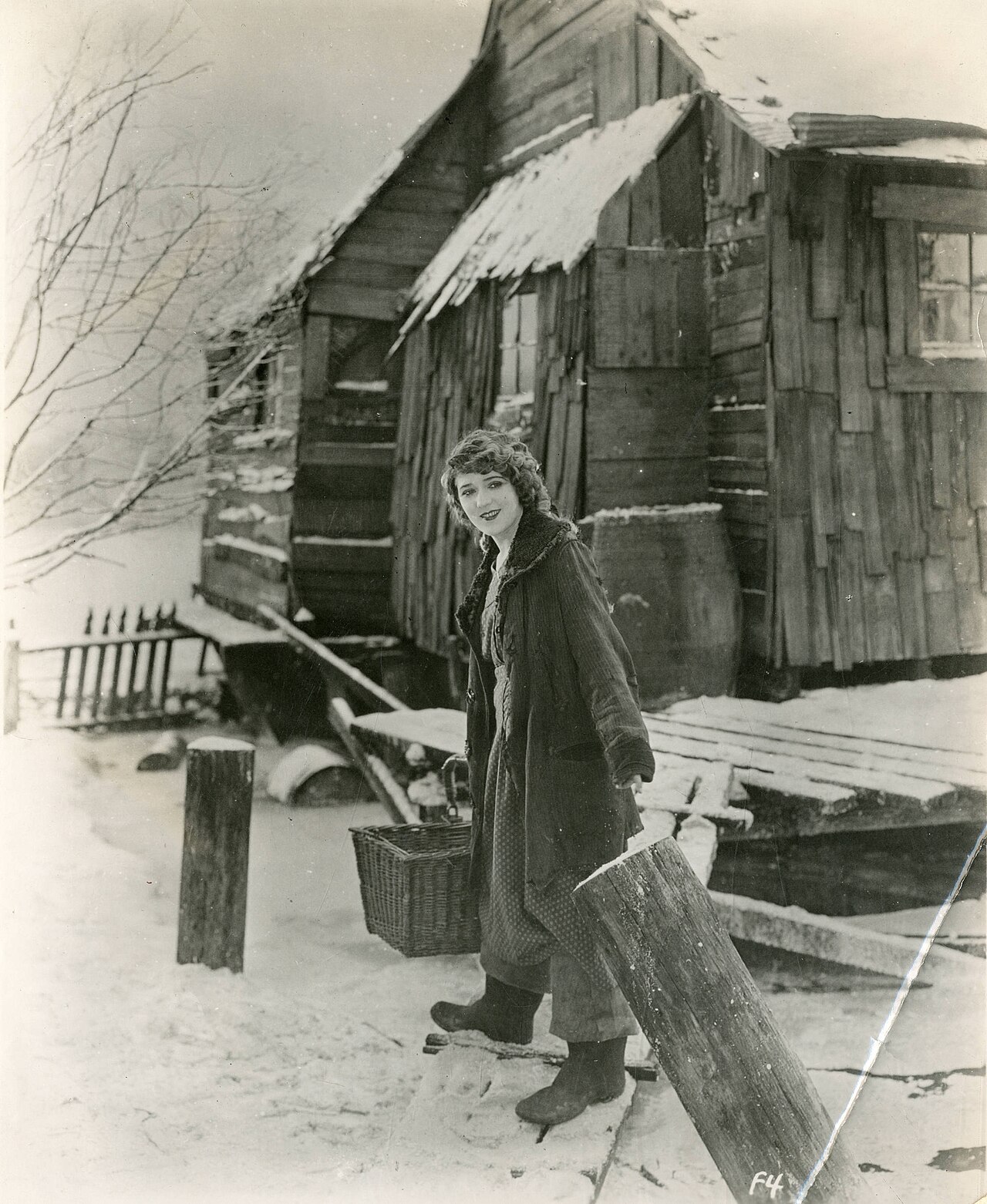 Mary Pickford as “Tess,” in the 1922 film “Tess of the Storm Country.” (Public Domain)
Disappearing From View
By the end of 1915, Porter moved away from production to focus on the technology side of the industry. He became president of the Precision Machine Company, whose Simplex projector became the industry standard. He was also an executive in the Sunlight Arc Company, which produced the special lights used in studio productions.
Porter retired in 1925 a wealthy man, but lost most of his savings in the 1929 stock market crash. In his later years, he worked independently on the development of new 16mm cameras. But he was mostly forgotten by the industry he helped to create, while his silent film output was considered obsolete with the arrival of sound films.
In June 1940, the New York Times profiled Porter for his final published interview. By that time, he was in poor health and living a mostly reclusive life in a New York City hotel.
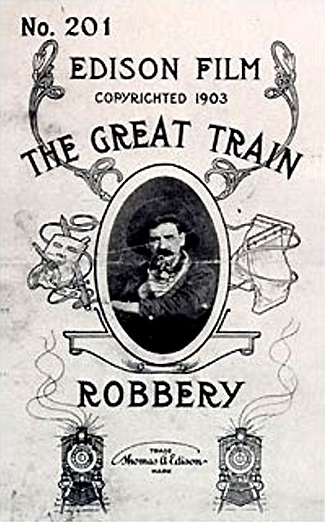 A poster for the 1903 film “The Great Train Robbery.” (Public Domain)
“I rarely see pictures anymore,” he told his interviewer, adding that he was working on the development of a new still camera. That work remained unfinished when passed away on April 30, 1941, shortly after his 71st birthday.
Time has been the ally to Porter’s work. Today his surviving films are widely available and studied, and his importance to the film industry is firmly acknowledged. Four of his films (“Life of an American Fireman,” “The Great Train Robbery,” “Dream of a Rarebit Fiend” and “Tess of the Storm Country”) are listed by the Library of Congress in the National Film Registry as being “culturally, historically or aesthetically significant.”
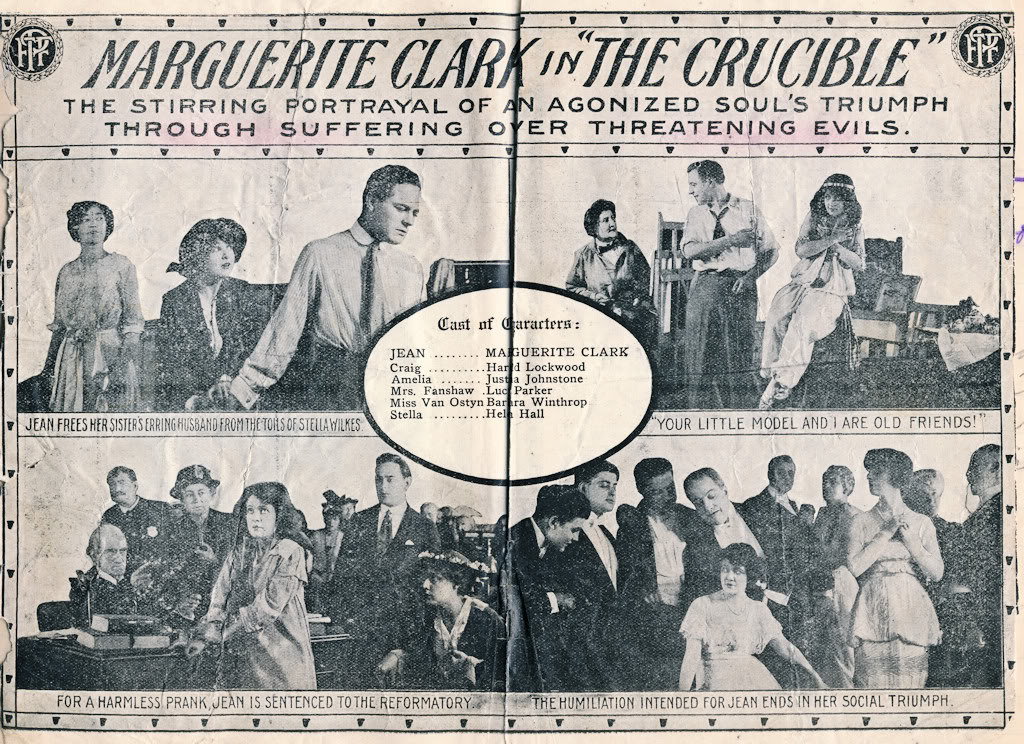 Porter directed the 1915 film “The Crucible.” (Public Domain)
Geno Cuddy, a film historian who hosts and produces the YouTube series “Sunset Cuddy’s Six-Gun Theatre,” credits Porter for putting motion pictures on the popular culture map.
“He created much of the cinematic language still used today,” Cuddy said. “While there were other films which proceeded it, ‘The Great Train Robbery’ is basically where film as we know it today really started. Without Porter and ‘The Great Train Robbery’ setting the stage, who knows where film would have wound up.”
What arts and culture topics would you like us to cover? Please email ideas or feedback to features@epochtimes.nyc.