The old master painter El Greco was multinational. He established himself as an artist in his birthplace, the Greek isle of Crete, before working in Venice and Rome. Eager for prestigious commissions, he moved to Spain and settled in the city of Toledo, where he spent the rest of his life. Many of his masterpieces have remained in Spain.
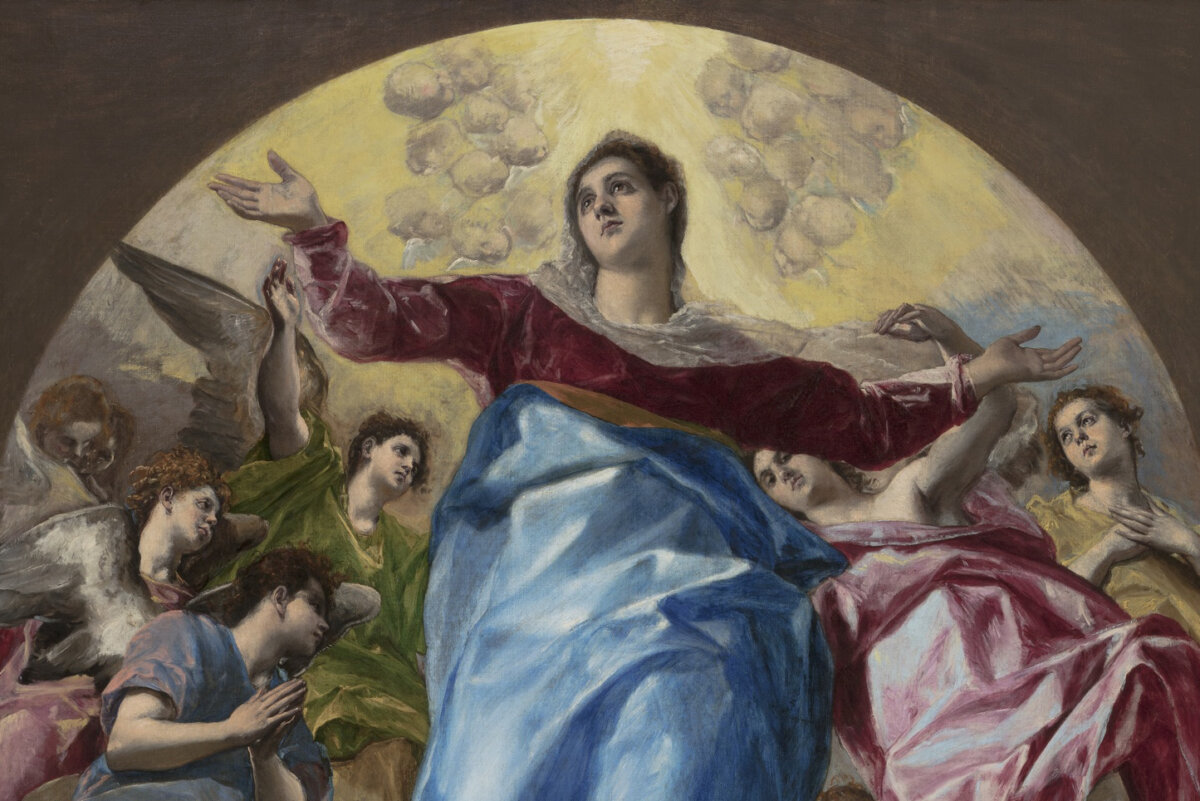
El Greco’s most significant painting outside of that country is in an American museum, the Art Institute of Chicago (AIC). It is the majestic oil on canvas “The Assumption of the Virgin” from 1577 to 1579.
The Singular Greek Master
Born Domenico Theotokopoulos (1541–1614), El Greco is known for a singular artistic style that is instantly recognizable. His dramatic paintings feature elongated figures, ultra-saturated bright and bold colors, and vigorous broad brushstrokes. These characteristics are found in his mature works. His early career centered around Byzantine icon painting. After mastering this, he moved to Italy in 1567 to learn the Western Renaissance style. In the Republic of Venice, which ruled Crete at the time, El Greco studied Venetian Renaissance art by the likes of Titian and Tintoretto, absorbing their rich palette and loose brushwork.
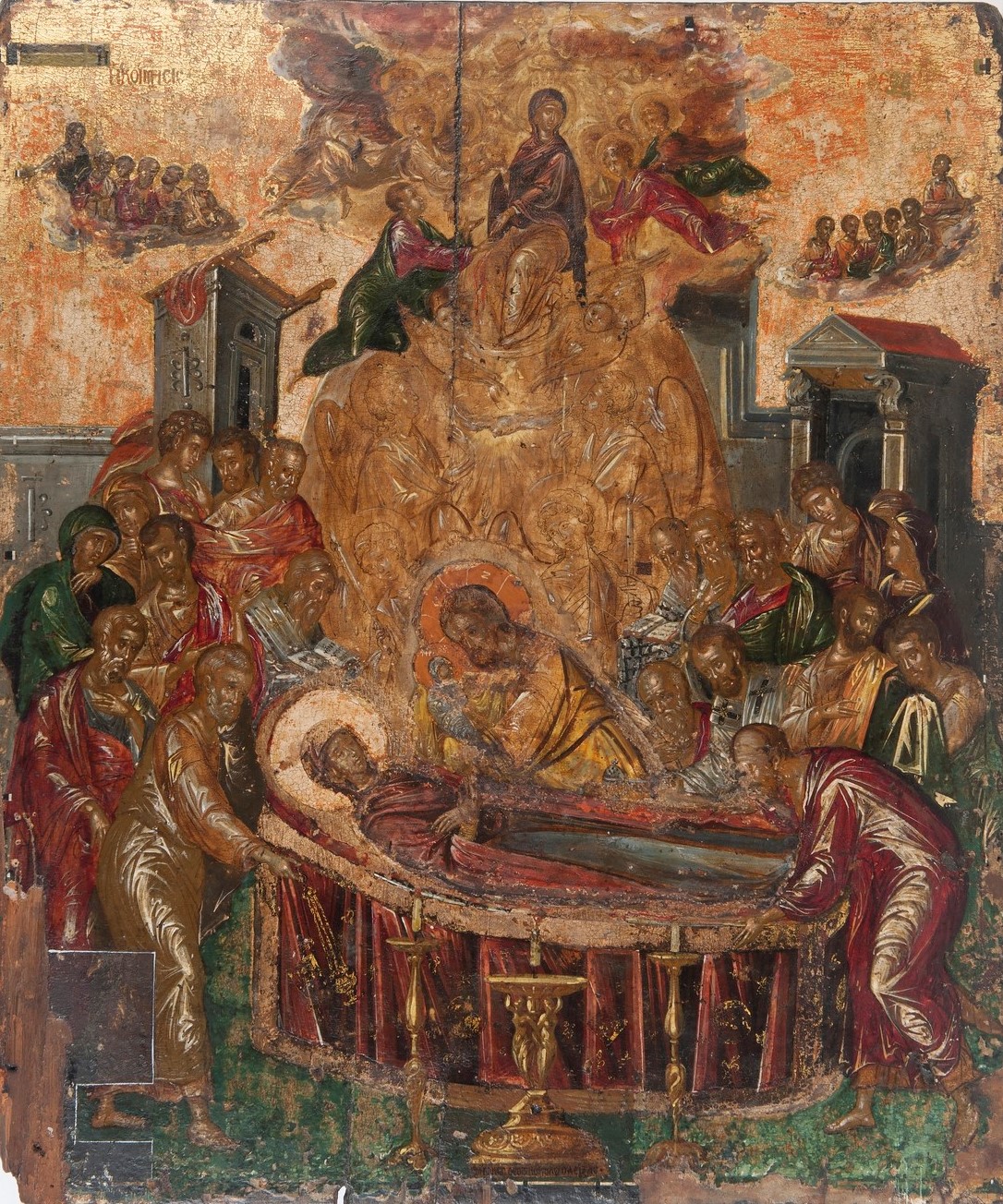
Next, the ambitious El Greco spent several years in Rome trying to secure exalted patronage. While unsuccessful in this endeavor, his art education expanded as he was influenced by the Renaissance works of Michelangelo and Raphael, as well as by Mannerist artists such as Parmigianino.
In 1571, El Greco met a Spaniard, Luis de Castilla, at the Farnese palace in Rome. This man was the conduit for El Greco’s relocation to Toledo. When Luis’s father, Diego de Castilla, the dean of the city’s cathedral, was looking to engage an artist for a complex project at the Cistercian convent church of Santo Domingo el Antiguo, his son recommended El Greco. The artist signed the contract in Rome in 1576. This was El Greco’s first large public work.
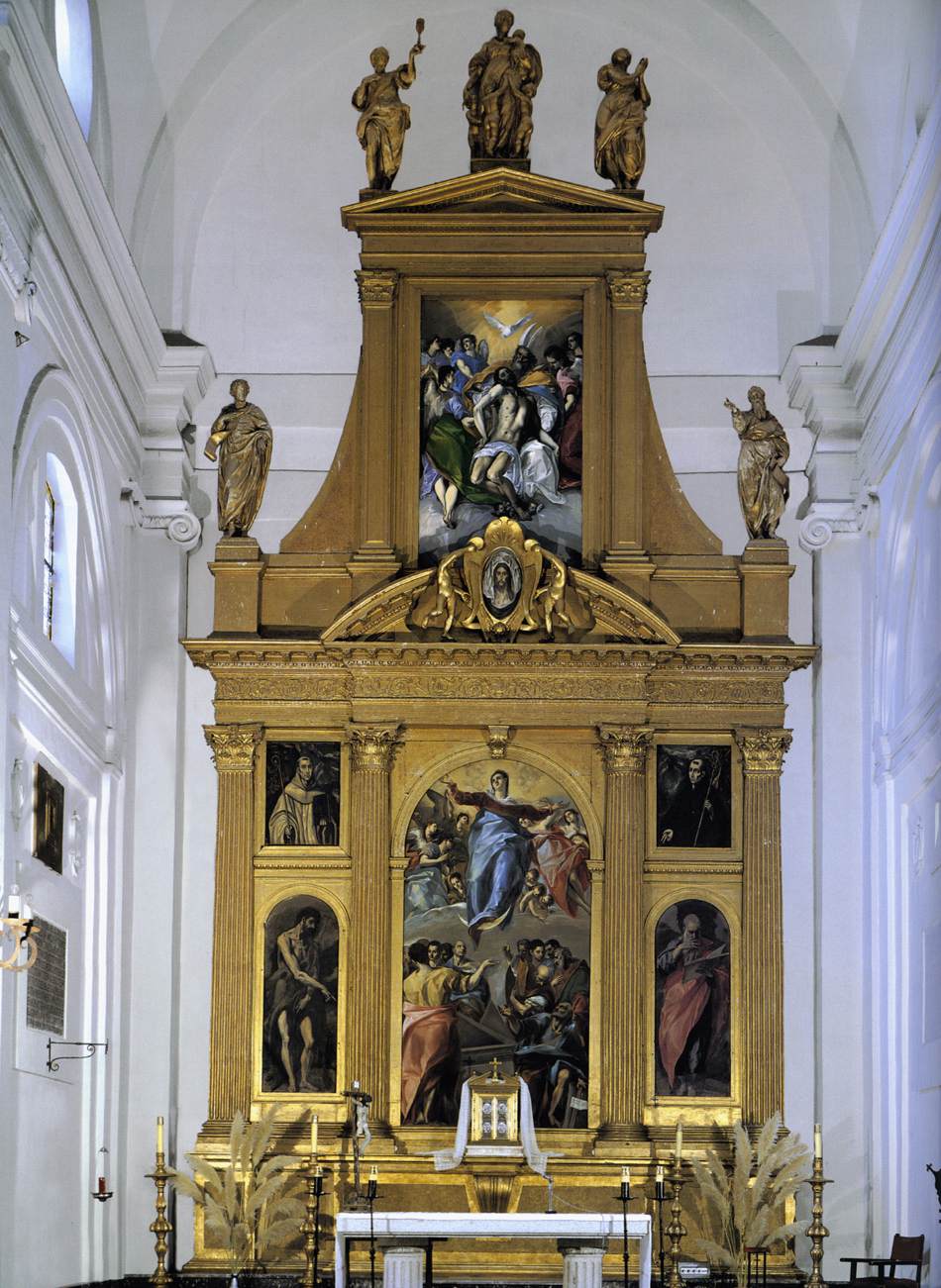
The church of Santo Domingo el Antiguo was being rebuilt as the funerary chapel, and the artist was commissioned to design the central and two side altarpieces. El Greco ended up completing nine canvases: “The Assumption of the Virgin,” “The Trinity,” “Saint John the Evangelist,” “The Resurrection,” “The Adoration of the Shepherds,” “Saint John the Baptist,” “Saint Benedict,” “Saint Bernard,” and “The Veil of Veronica.”
Three paintings remain in-situ, while the rest are in either museums or private collections. Copies of the absent works are now displayed in the altarpiece. In a 2025 exhibition, Madrid’s Prado Museum reunited eight of the nine works for the first time since they began to be dispersed in 1830.
El Greco’s Madonna
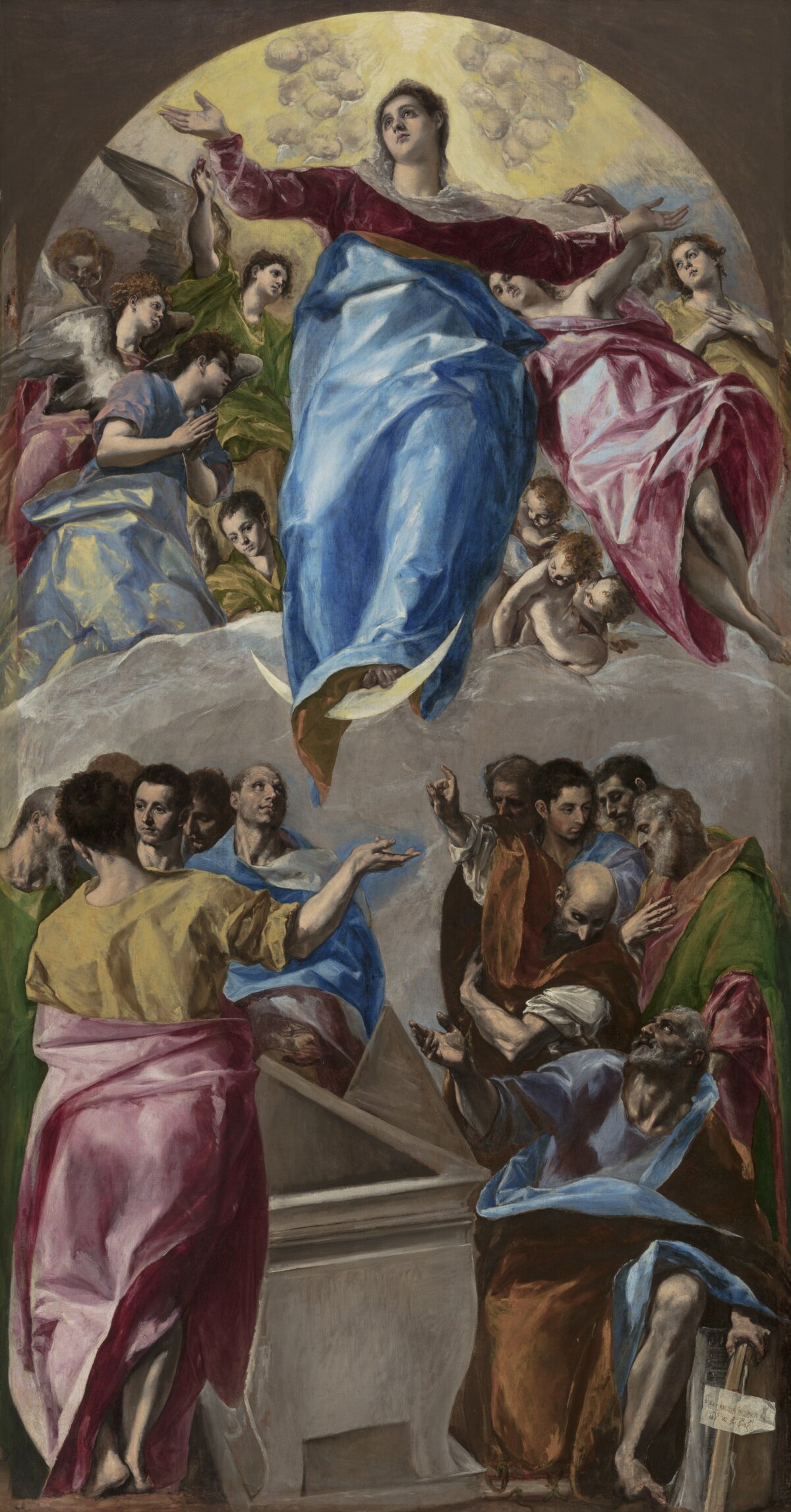
“The Assumption of the Virgin” was the main altar’s monumental central canvas. It was likely the first work El Greco made in Spain. It depicts an event not in the Bible: Mary, as she was so holy and pure, ascended to heaven in soul as well as in body. In this commanding work, El Greco shows the Madonna standing on a crescent moon, a symbol of her purity. Soaring upward, she joins angels in a glowing heaven. Below, in the earthly realm, lies her opened, empty tomb.
Witnessing this scene are the apostles, Jesus’s 12 disciples. They express a range of emotions, including confusion, concern, and astonishment. The artist used thickly textured brushstrokes and employed acid greens, lemony yellows, bright blues, and pink to render this intense narrative. This dazzling painting reflects the full realization of El Greco’s confident genius.
Over 250 years after “The Assumption” was installed in Santo Domingo el Antiguo, it was sold to Infante Don Sebastián Gabriel de Borbón y Braganza, a descendant of King Charles III of Spain. After his death, his heirs offered works from his art collection for sale. In 1901, “The Assumption” caught the attention of the American Impressionist painter Mary Cassatt, who was a passionate crusader for American museums acquiring Old Master paintings for the public’s benefit. She lobbied for an institution to buy it. It was a hard sell, as the purchase price was steep and El Greco was little known in the United States. Several major museums turned the opportunity down. Finally, she approached the AIC, and in 1906 the board voted to acquire the painting. It is now a cornerstone of their collection.
El Greco’s triumphant commission for the church of Santo Domingo el Antiguo, with its star painting “The Assumption of the Virgin,” capitulated his career. It marked the start of his 37 years in Toledo. The artist’s last major work was the 1612 to 1614 “Adoration of the Shepherds,” now at the Prado. Poignantly, El Greco painted this altarpiece for his own planned tomb at the place where his artistic legacy started: Santo Domingo el Antiguo.
What arts and culture topics would you like us to cover? Please email ideas or feedback to features@epochtimes.nyc