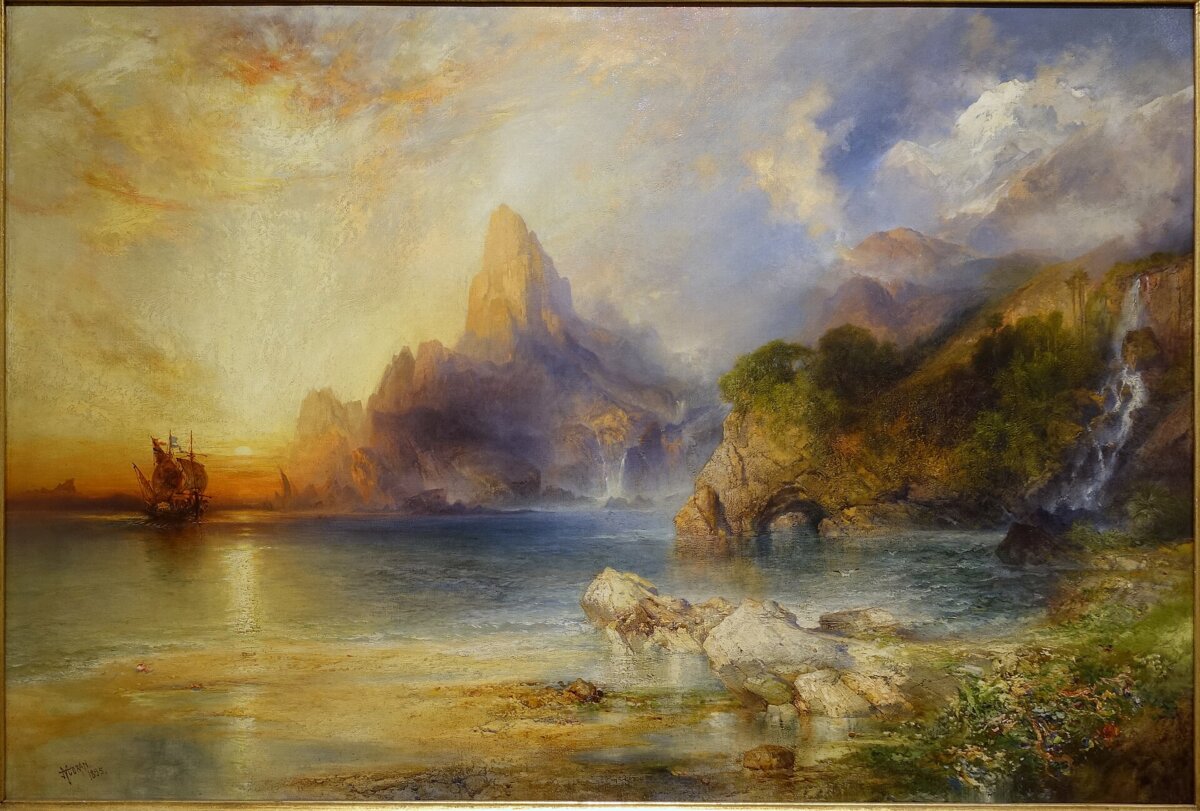
The great Victorian poet Alfred, Lord Tennyson clearly found the works of Homer fascinating; two of his most notable poems—“Ulysses” and “The Lotos-Eaters”—drew inspiration directly from Homer’s “Odyssey.” Of these two, “Ulysses” is the finer, more popular poem, yet “The Lotos-Eaters” is also impressive and worthy of closer study. In it, Tennyson used an episode from Homer’s work to explore humanity’s potentially destructive longing for peace, paradise, and rest.
Through a kind of nature-induced dream-state that seeks to transcend life’s sufferings, Tennyson examines the nature and danger of a melancholy that relies on intoxication.
It’s interesting to compare these two Odyssean poems, “Ulysses” and “The Lotos-Eaters,” which draw from common source material in such different ways. They embody almost opposite impulses. “Ulysses” is all about the restless, driving, searching urge to wander, seek out new experiences and adventures, and ultimately achieve heroic transcendence. On the other hand, “The Lotos-Eaters” is a celebration of stasis and laziness, a surrender to a narcotic daze, a world-weary descent into unending slumber amidst the bobbing heads of the lotus plants.
“The Lotos-Eaters” draws its inspiration from a brief episode in “The Odyssey.” In it, a group of Odysseus’s men go ashore and become intoxicated by an opioid-like plant called Lotos. They forget that they are on a journey home from the Trojan War and sink into a blissful yet mind-numbing and soul-ruining state.
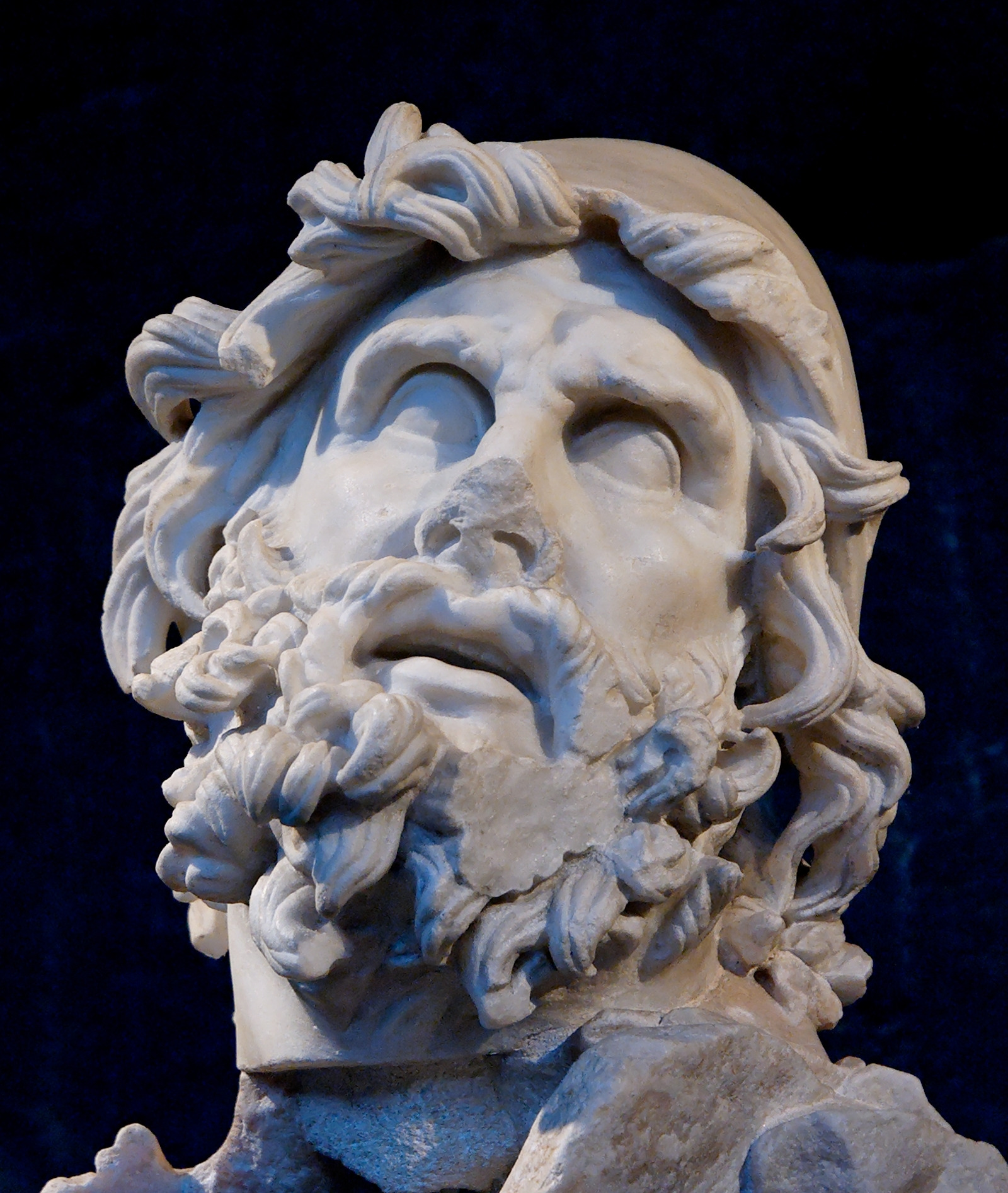 Head of Odysseus. Marble, Greek, A.D. first century. From the villa of Tiberius at Sperlonga. Museo Archeologico Nazionale in Sperlonga. (Public Domain)
Poem Origins
Tennyson originally wrote the poem as an undergraduate, publishing it in 1832, then heavily revised it a decade later in 1842. According to literature scholar John Batchelor’s biography of Tennyson, “Tennyson: to Strive, to Seek, to Find,” the young poet initially wrote the poem as a celebration of leisure. “‘The Lotos-Eaters’ in particular expressed the languor and pleasure that these young men at Cambridge enjoyed. Laziness was to be relished,” Batchelor wrote.
A more mature Tennyson heavily revised the poem to reflect a deeper and more melancholy theme: the transience, changeableness, and heartbreak of life that is sometimes so intolerable as to make one want to dissolve into unconsciousness. In this revised version of the poem “the men [who narrate the poem] have an Olympian, or God-like, perspective. … They can see the human condition that they have left behind and they make a judgement, namely that it is better to leave it.”
As Batchelor pointed out, the poem begins with an energetic word—“Courage!”—and progressively loses energy over the course of the following lines. “The poem starts with its least lazy words: from that point it is downhill all the way.”
“Courage!” he said, and pointed toward the land,
“This mounting wave will roll us shoreward soon.”
In the afternoon they came unto a land
In which it seemed always afternoon.
All round the coast the languid air did swoon,
Breathing like one that hath a weary dream.
Full-faced above the valley stood the moon;
And, like a downward smoke, the slender stream
Along the cliff to fall and pause and fall did seem.
Besides the first word, there is little that is courageous. Tennyson sets the stage by describing a land that “seemed always afternoon.” Most of us have experienced long, lazy afternoons and can understand the atmosphere Tennyson sought to create. The island’s perpetual afternoon, along with the waterfall that almost seems to pause in its descent, introduces the theme of stasis throughout the poem. Yet this isn’t the unchangeableness of perfection or eternity, it’s the stasis of death—physical and spiritual. By refusing to go any further, the men condemn themselves to a living death upon the island. There’s a faint rotten scent beneath the sweet perfume of the Lotos flowers.
The laziness and listlessness that dominates the poem is indicated from the very start. Tennyson rhymes “land” in line 1 with “land” in line 3. This was intentional. Tennyson later said (as quoted by Batchelor), “The ‘strand’ was, I think, my first reading, but the no rhyme of ‘land’ and ‘land’ seemed lazier.”
The entire poem moves lazily downward. We see it in the waterfalls of stanza 1, described like “downward smoke.” We see it in the reference to the “grave” and “sleep” in stanza 4 and throughout, and the “Music that brings sweet sleep down from the blissful skies.” When read aloud, even the sounds themselves are downward, such as the repeated falling feminine rhymes in these lines (“moly,” “lowly,” “holy,” “slowly,” “calling,” “falling”):
“But, propt on beds of amaranth and moly
How sweet—while warm airs lull us, blowing lowly–
With half-dropt eyelid still,
Beneath a heaven dark and holy,
To watch the long bright river drawing slowly
His waters from the purple hill–
To hear the dewy echoes calling
From cave to cave thro’ the thick-twined vine–
To watch the emerald-color’d water falling
Thro’ many a woven acanthus-wreath divine!”
The poem brilliantly generates a sluggish atmosphere of languid despair. Tennyson makes heavy use of monotonous rhythms, repeated words, alliterative sounds, and soft rhymes to create a sleepy, hypnotic mood. The poem is suffused with sameness. It’s like a dream, where the dreamer makes no progress. It all reflects the drug-induced daze of the men who narrate the poem—Tennyson leads us into their hazy brains to experience it from the inside.
“Most weary seem’d the sea, weary the oar,
Weary the wandering fields of barren foam.
Then some one said, ‘We will return no more;’
And all at once they sang, ’Our island home’
Is far beyond the wave; we will no longer roam.’”
The repetition of the word “weary” parallels the meaning of the word. Moreover, the repeated rhyming sound of “foam”/”home”/”roam” has a monotony that overtakes the poem’s ending , so that it almost grinds to a halt. The same technique is used at the end of the next stanza. It insists on returning to the same rhyme a tiring number of times:
“Here are cool mosses deep,
And thro’ the moss the ivies creep,
And in the stream the long-leaved flowers weep,
And from the craggy ledge the poppy
hangs in sleep”
The stanza ends, fittingly enough, with “sleep.” This monotony reflects the sailors’ loss of willpower. “We will no longer roam,” they say, sinking into the forest’s soft undergrowth. Tennyson uses thick, luxuriant, sensory language to describe the island’s plants and waterways, “the cool mosses,” and “ivies,” and the “folded leaf,” along with “the yellow down / Border’d with palm, and many a winding vale/ And meadow, set with slender galingale/ A land where all things always seem’d the same.” It’s gorgeous imagery—almost too indulgent, like the lotos itself. The paradisal natural imagery oozes throughout the poem, dulling the mind with indulgence.
 “The Lotos-Eaters,” 1901, by William Edward Frank Britten. (Public Domain)
An Uneasy Peace
Yet, there is something unnatural and unholy about this “rest.” We can sympathize with the men’s Edenic dream, their longing for something that transcends suffering, and sorrow, and change. But this isn’t Eden, and it isn’t yet time to rest. There is something unsettling and deadly about this island with its contradictory afternoon lighted by the moon, where men are both “deep-asleep” yet “all-awake,” with faces both “dark” and “pale.” This place makes men forget “the last embraces of [their] wives/ And their warm tears.”
The full story of “The Odyssey” reveals that true rest only comes when Odysseus at last makes it home. Because he doesn’t forget his wife’s warm embrace or succumb to the distraction of goddesses or cyclops or Lotoses, Odysseus earns the reward of feeling his wife’s tears against his cheeks once again. He arrives at last—not at some paradisal dream—but at the reality of his home soil, Ithaca, far dearer than any “paradise.” The trouble with the Lotos-eaters’ solution to sorrow is that it’s loveless and unreal.
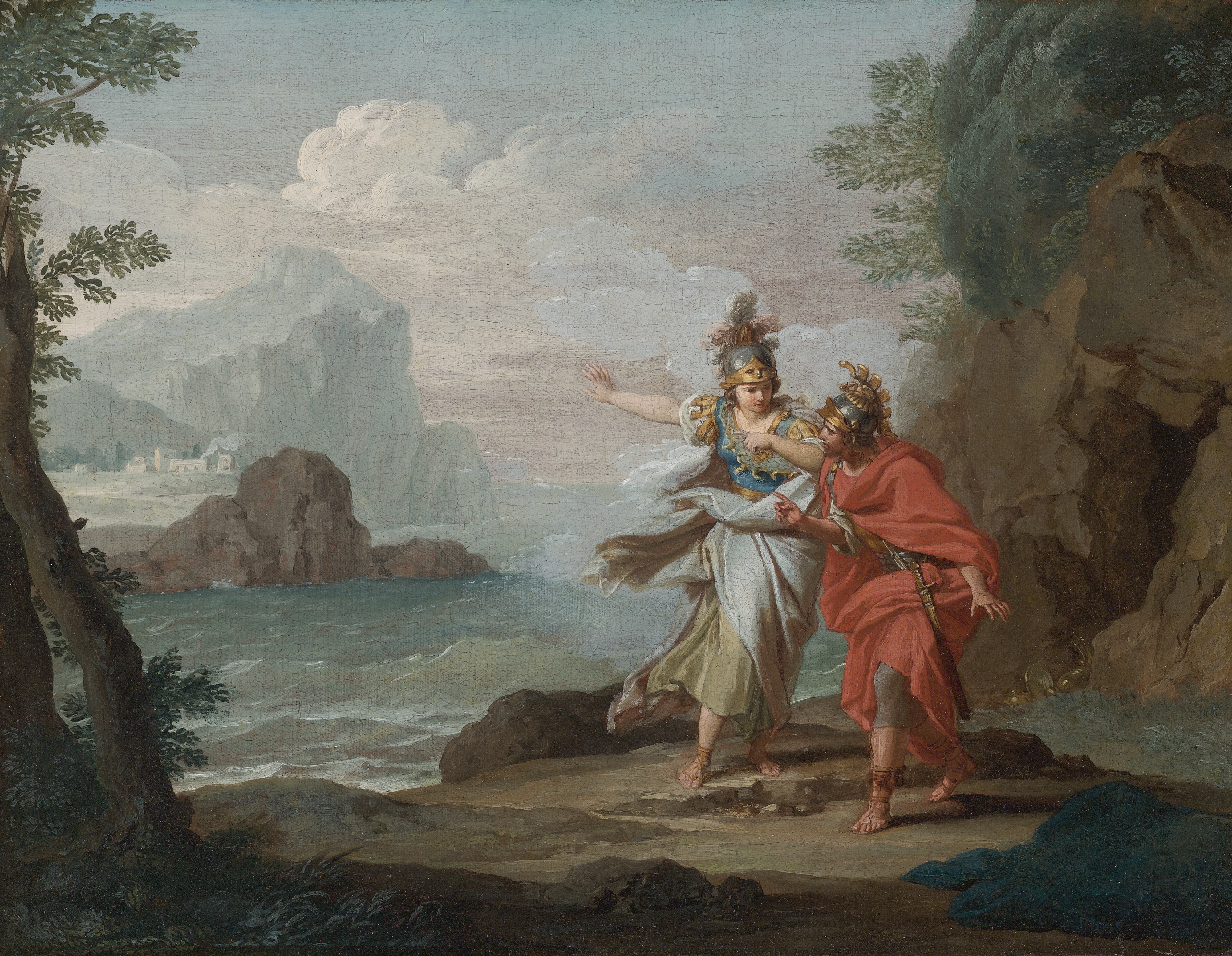 Athena appearing to Odysseus to reveal the island of Ithaca, 18th century, by Giuseppe Bottani. Oil on canvas. Private collection. (Public Domain)
Odysseus knew that seeing his wife and son again—even seeing them age, suffer, and die—was a better antidote to weariness and sorrow than the sleepy, empty, selfish dream, steeped in phantasms, of the Lotos-Eaters.
The Lotos-Eaters cry out, “Let us alone. … Surely, surely, slumber is more sweet than toil,” to which Odysseus, with words put on his lips by Tennyson, responds (in “Ulysses”): “Some work of noble note, may yet be done. … ’Tis not too late to seek a newer world. … To strive, to seek, to find, and not to yield.”
What arts and culture topics would you like us to cover? Please email ideas or feedback to features@epochtimes.nyc