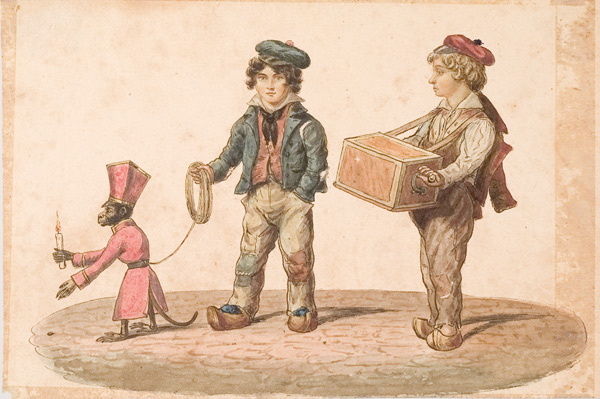
The first miner must have been shocked when, after a hard day’s work, he was greeted by a monkey with a red jacket playing a hand organ. During the California Gold Rush era of the late 1840s and 1850s, most who traveled west had only seen animals like these in books or traveling circuses. As they settled into life on the West Coast, many of the newcomers became attracted to exotic animals—monkeys, parrots, and kangaroos—for entertainment and companionship.
‘Gold, Gold!’
On Jan. 24, 1848, carpenter James Marshall made a shocking discovery while he was building a water-powered sawmill near Coloma, California, at the base of the state’s Sierra Nevada Mountain Range. He found gold flakes in the American River. At first, Marshall and his boss, John Sutter, tried to keep the find a secret. However, word got out when some of Sutter’s employees used gold dust to buy products at a store in Sacramento owned by entrepreneur Samuel Brannan.
The word of the gold discovery started to spread, but most in San Francisco were skeptical. But then one day, Brannan walked down the city streets with a vial full of gold dust, shouting that gold had been found nearby. Brannan owned a newspaper in the city, but he couldn’t break the story with a front-page headline, because all of his staff had already headed to the mountains to find gold. By mid-June 1848, most of San Francisco’s shops and businesses were empty; about three quarters of the city’s male population had headed for the gold mines.
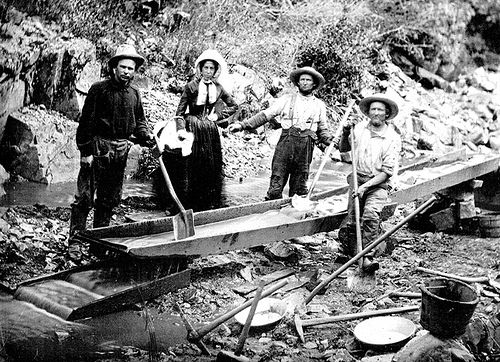
The news then spread. Anyone who could access California by ship flooded the area. People from Peru, Mexico, Chile, Oregon, and China traveled to California during the summer and fall of 1848. A short time later, those from the American East Coast and Europe joined the gold rush craze.
Life as a Miner
Most of the travelers were men who sold everything they had or took up loans to search for gold. In fact, out of the 40,000 people who arrived in California in 1849, only 700 of them were women. Many women were forced to run households and businesses alone.
Some did find fortunes in gold, but others made money operating businesses in the boom town of San Francisco. One farmer was said to have made the equivalent of $250,000 selling onions. But soon, the changing city became rampant with crime.
Work as a miner was extremely difficult, with many battling death from disease or work-related accidents every day. Many were overworked, isolated, and homesick. Activities like gambling, prostitution, and drinking added to the other criminal enterprises in the city.
Enter the Animals
Once people flooded the area, wild game and oysters became popular to eat. Exotic animals, like monkeys, parrots, and even kangaroos, started becoming pets.
In 1850, one person wrote about being entertained by a monkey donning a vest and playing enjoyable melodies on a hand organ.
Throughout the 1850s, journals and newspapers reported the presence of monkeys and parrots. After a fire burned through San Francisco on June 22, 1851, the Daily Alta California ran an advertisement bought by someone looking for a lost “black Brazilian monkey.” In 1854, a report circulated about a person leading a horse and wagon with a monkey riding on the horse’s back.
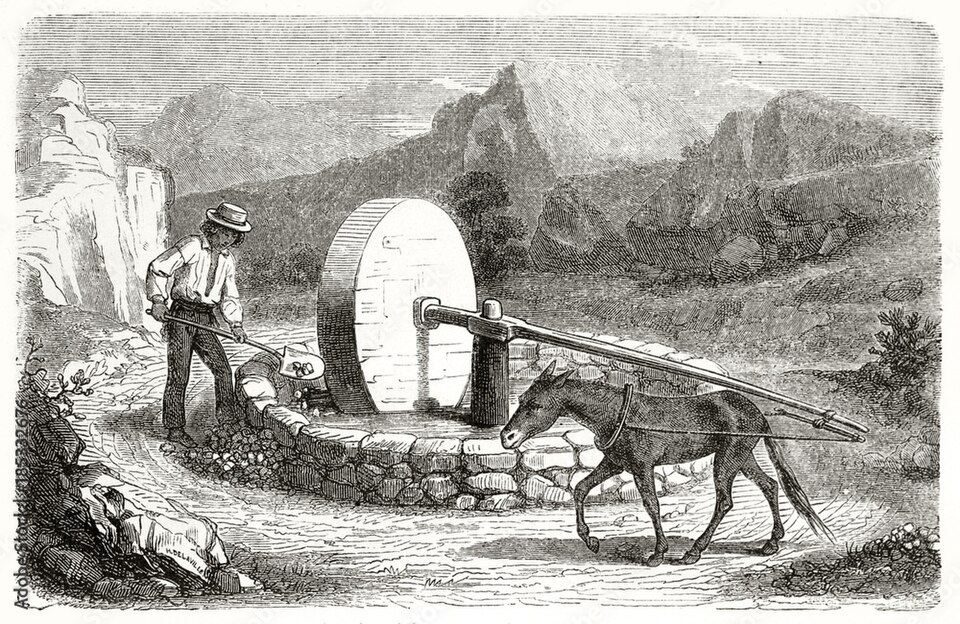
Between 1850 and 1854, newspapers were filled with ads looking for lost pet parrots. An 1856 drawing shows several people in a San Francisco saloon joined by a pig, two dogs, six monkeys and a parrot. In the late 1850s, people reported being charged one “bit per sight” to view live kangaroos.
Most of the animals came on boats from places like South and Central America and as far away as Australia. The first live kangaroo arrived in San Francisco from Sydney, Australia, on Sep. 7, 1852, aboard a ship named the Corsair. On March 15, 1853, the Democrazia arrived from El Realejo, Nicaragua carrying 50 parrots and five monkeys.
With all of the ads for lost exotic animals, it’s clear that these animals meant more to the miners than just a gimmick to make a buck. During the isolation the gold rush days caused for many, some made connections with the animals they had only seen from a distance before.
What arts and culture topics would you like us to cover? Please email ideas or feedback to features@epochtimes.nyc