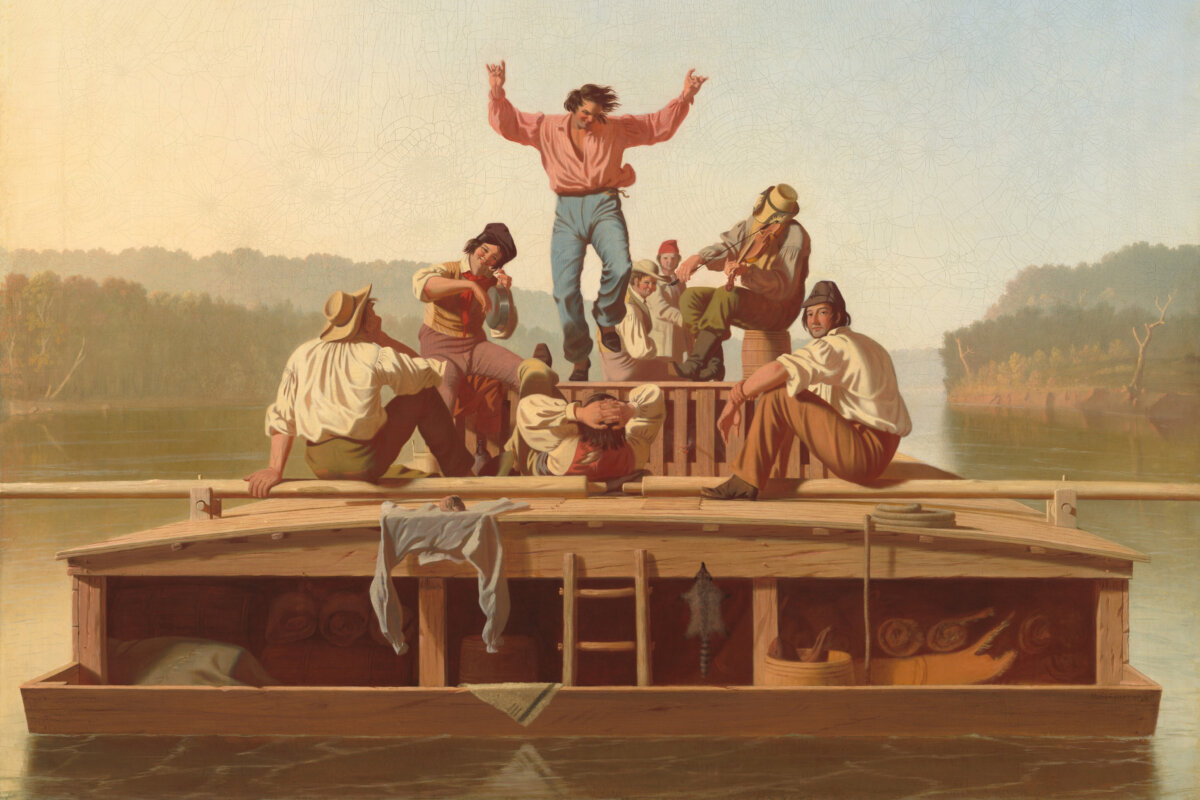
The essentially self-taught American painter George Caleb Bingham (1811–1879) was born in Virginia and moved as a child to Missouri Territory before it became a state. He was the first artist actually from America’s Western frontier to depict the region in his work.
Bingham specialized in genre scenes and was among the foremost practitioners of this in the United States during the 19th century. The artist is best known for his paintings set along the Missouri and Mississippi rivers that idealized and documented everyday life. Bingham’s most famous picture is “The Jolly Flatboatmen” from 1846, now at the National Gallery of Art (NGA).
American Genre Scenes
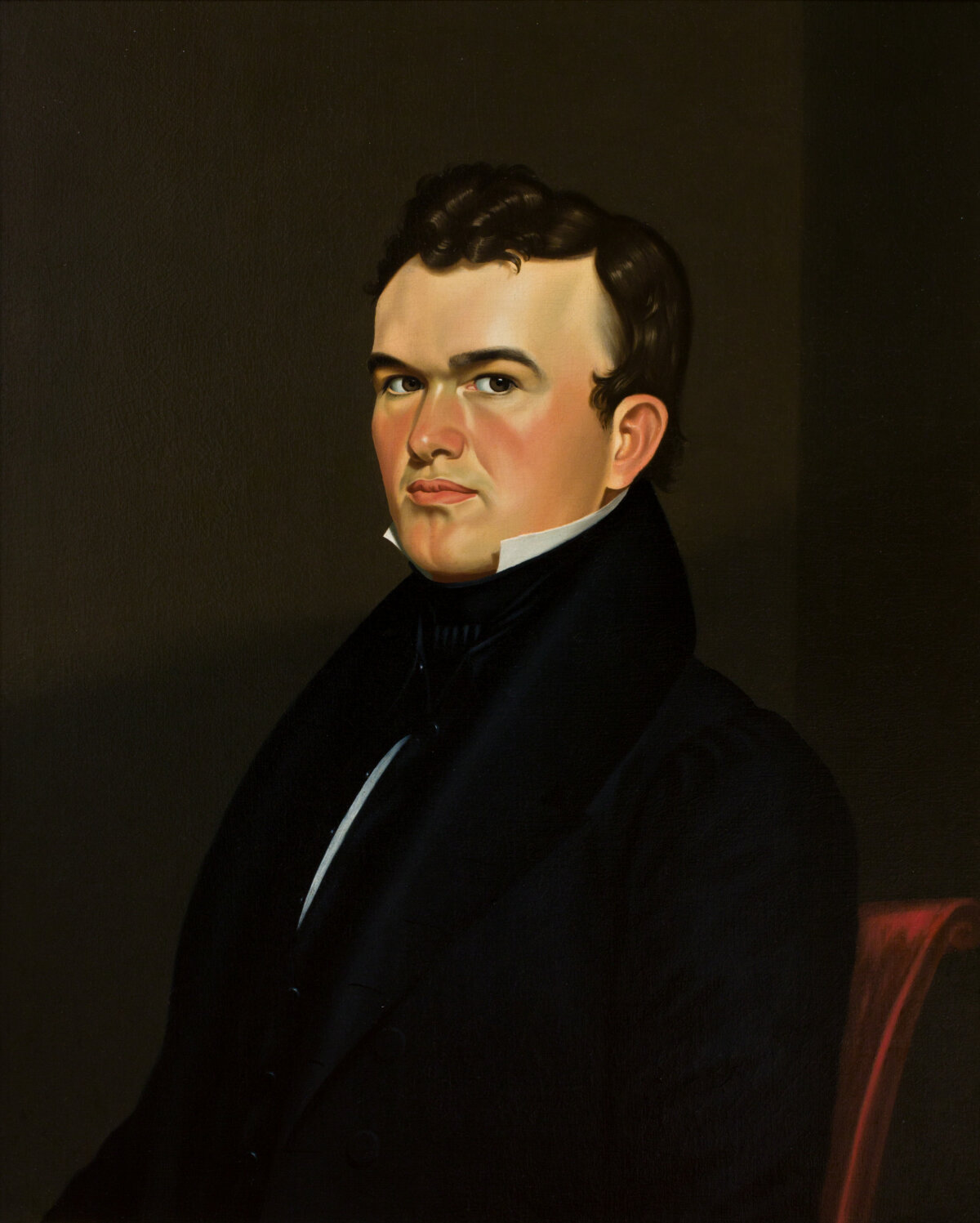
Bingham was an itinerant portrait painter before he turned to painting genre scenes along the Mississippi and Missouri rivers, important trade routes for the expanding nation. His work features a range of archetypal Westerners, including boatmen, fur traders, and card players. These common character types were foreign to urbanites living in east coast cities, who clamored for Bingham’s art. The artist explored variations of the “jolly flatboatmen” theme over several decades. While working as a fine artist, Bingham also had a long-term political career in Missouri.
Despite limited formal training, Bingham produced sophisticated artworks by studying drawing manuals and engravings of historic European art. The NGA’s “The Jolly Flatboatmen,” whose figures are positioned in a pyramidal arrangement, gives the illusion of deep recession into space. This triangular composition was inspired by Renaissance art.
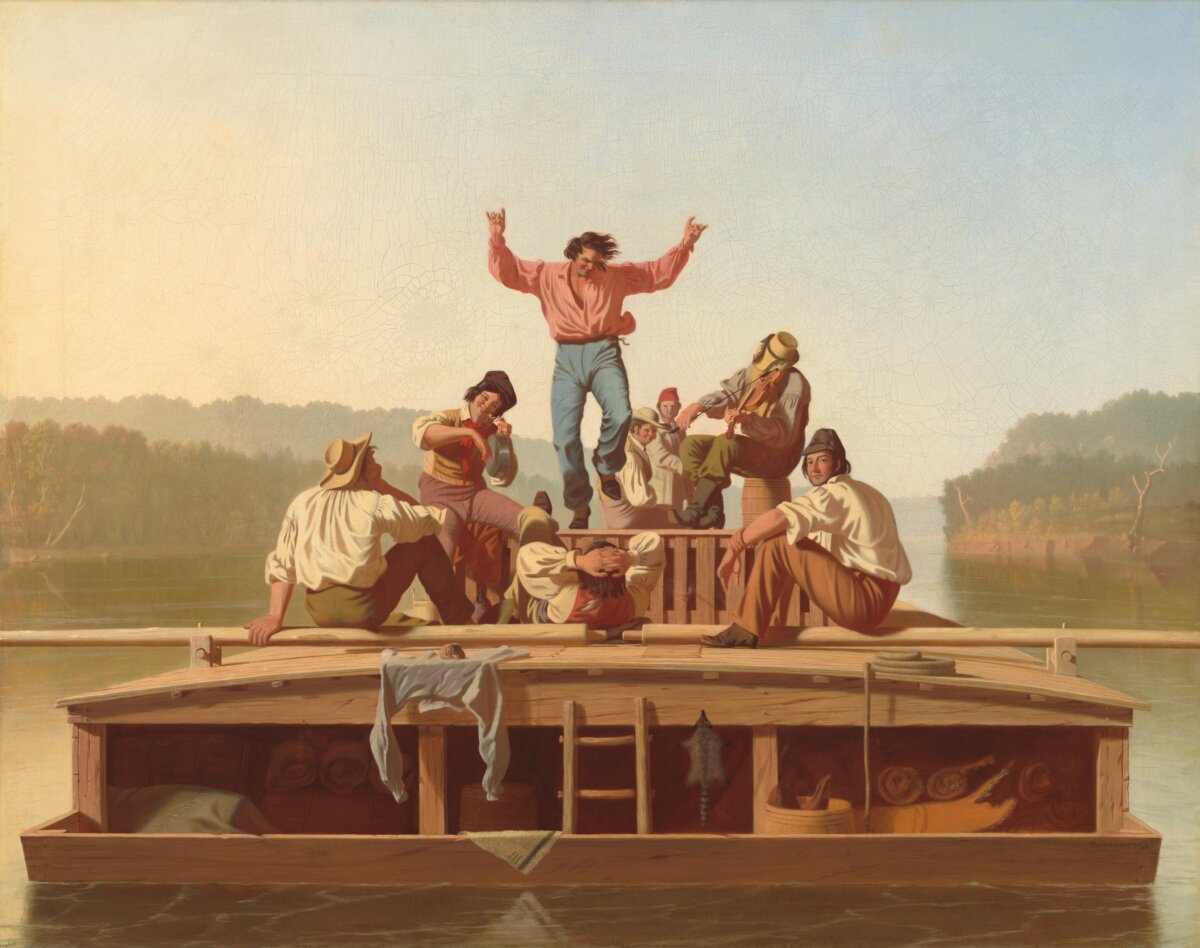
Life trading on the river was rough. However, Bingham’s painting shows a romanticized image of boatmen playing music, dancing, and being merry while floating down the Mississippi on a flatboat, or cargo raft. Joy emanates from the scene as warm as the sunlight that bathes the riverscape and men.
The artist’s intimate knowledge of realistic details is found throughout the painting. Goods depicted include blankets and a raccoon pelt. A shirt lays out to dry, and a turkey can be spotted through a slatted crate under the dancing man’s feet. In addition to a man playing a fiddle, a boatman drums on a metal pan with his fingers, adding to the naturalistic atmosphere.
The NGA’s composition became the most famous of these scenes after prints of it were widely circulated throughout the country by the American Art-Union, which purchased the painting from Bingham in 1847. After that same year, the whereabouts of the original painting were not publicly known. Fortuitously, it was safe, residing in a private collection over multiple generations.
In 1952, the then-owner shared its location with an art historian. Approximately 34 years later, that same family sold it to the legendary American art collector Richard A. Manoogian for $6 million, which was the highest price ever paid for an American painting at the time. In 2015, he sold it to the NGA.
Another example of this boatmen theme is Bingham’s 1857 painting “Jolly Flatboatmen in Port,” part of the Saint Louis Art Museum’s collection. The setting is a wharf in St. Louis. Once again, the boatmen are organized in a pyramid and are making their own entertainment. This time, another flatboat is depicted alongside with crew observing the revelry, and the flatboats are docked instead of floating downriver. The museum notes, “Though early 19th-century writers described flatboatmen as violent, rambunctious individuals living on the margins of society, Bingham’s rosy-cheeked river workers appear more mischievous than threatening.”
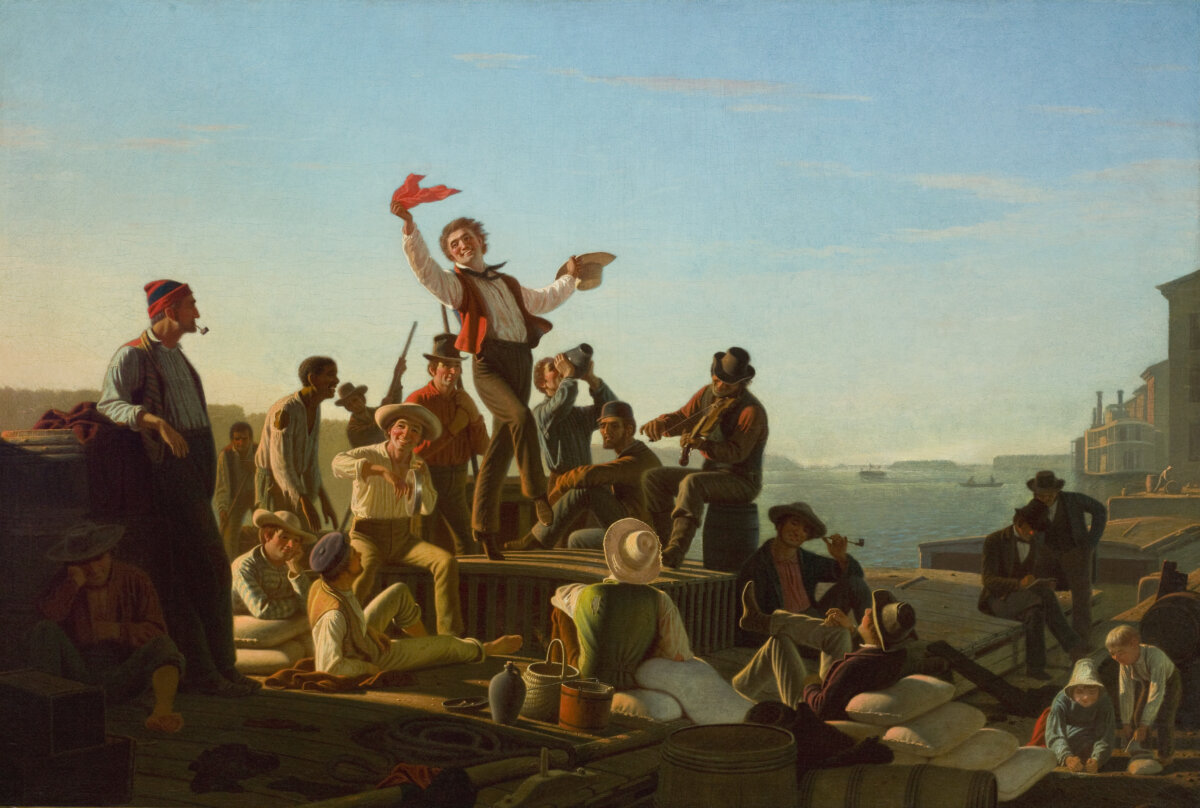
“The Jolly Flatboatmen” canvas owned by the Terra Foundation for American Art was long thought to be from 1848. It is now dated from 1877 to 1878, shortly before Bingham’s death. Poignantly, as the end of his life neared, Bingham returned again to the theme that made his mark on the art world. Here, he altered the dancer’s pose so that the man held a hat in one hand and a red scarf in the other while smiling directly at the viewer. In the NGA’s picture, the dancer snaps his fingers and looks down.
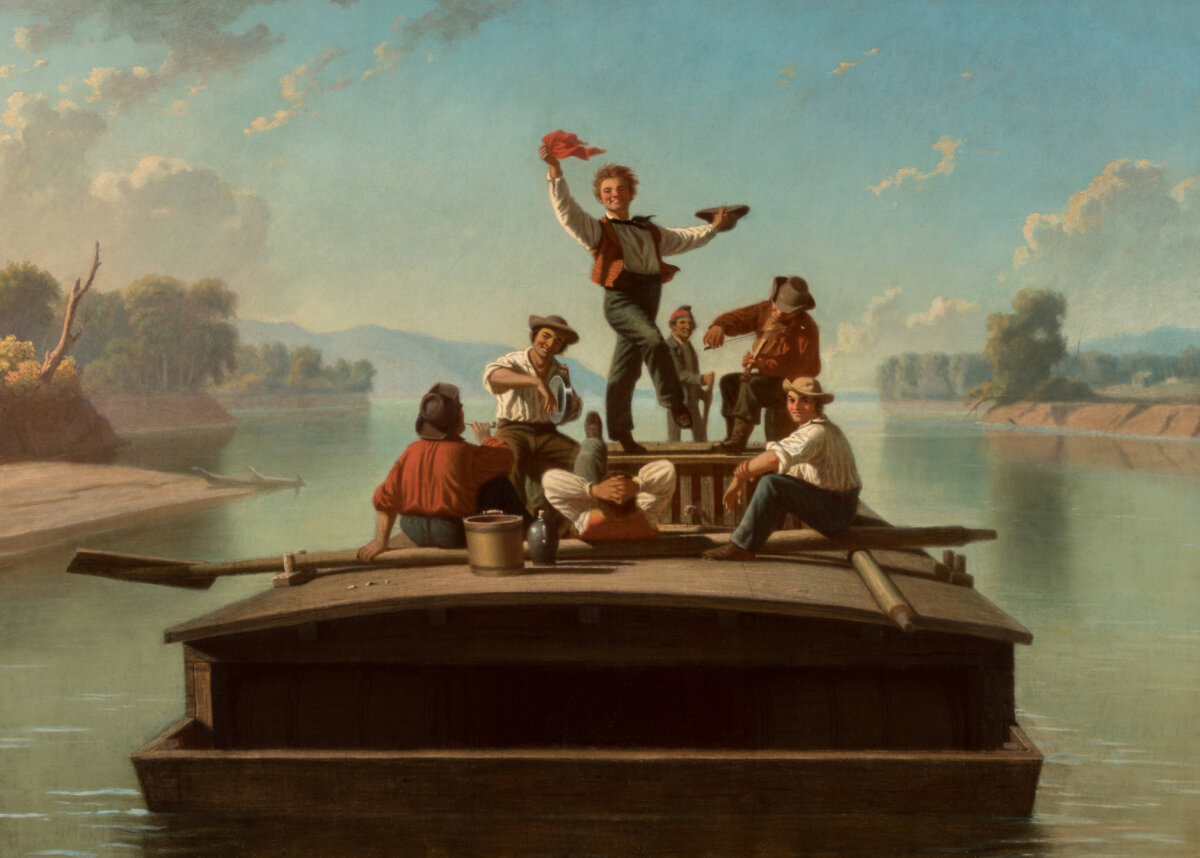
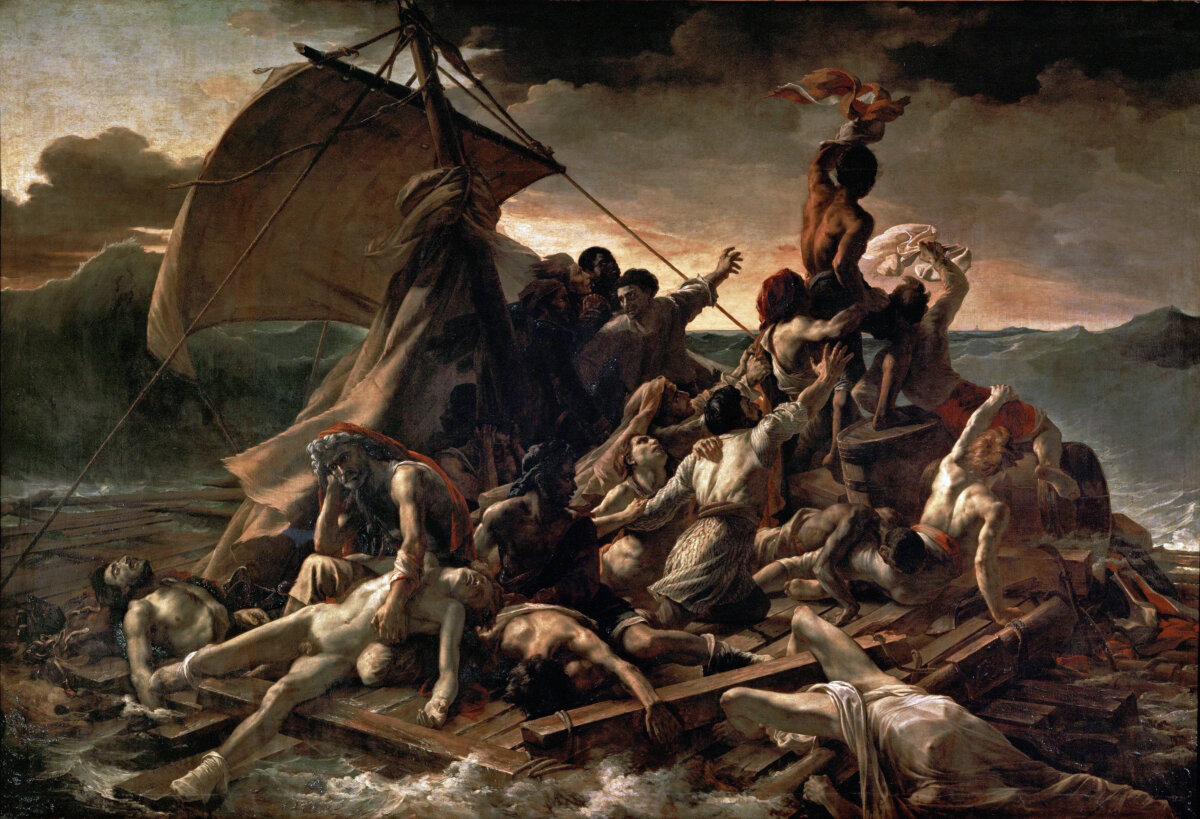
The pyramid structure remains, but in this latter version, Bingham harkened to a Hellenistic sculpture of a dancing satyr for the main man’s pose. The foundation singles out the significance of the main dancer’s new accessory, explaining that “the red cloth he waves highlights the correspondence between Bingham’s entire composition and French Romantic painter Théodore Géricault’s (1791–1824) celebrated painting ‘The Raft of the ‘Medusa’ (1819, Louvre Museum), which Bingham may well have known through an engraving.”
By the time Bingham painted this version, the river life of his youth was long gone, replaced first by steamboats and then railways. Today, such a way of life is even more removed from contemporary Americans, but these paintings continue to fascinate viewers as they capture a fundamental moment of American history.
What arts and culture topics would you like us to cover? Please email ideas or feedback to features@epochtimes.nyc.