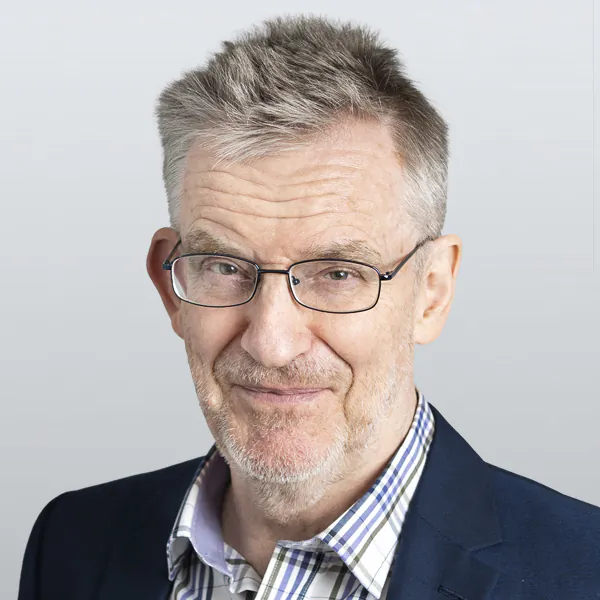
At first glance, none among Herakles’s Twelve Labors seems less heroic than the cleansing of the Augean Stables. Where the slaying of monsters and dragons suggests glory, this task smacks of drudgery by a great hero reduced to the status of a man who mucks out stables. Yet, considered properly, the fifth labor conceals a task of deeper wisdom. It isn’t about brute force but about creative intelligence: the ability to purify what has become foul, not through endless toil, but through reimagining the problem itself.
Even the slaying of the Nemean Lion wasn’t merely a question of brute strength. The genius of the act lay in the fact that Herakles was able to skin its pelt and so provide invulnerability for himself. Herakles exhibited not just strength but deep wisdom in his victory.
A Triumph
King Augeas of Elis owned vast herds of cattle, but for 30 years he’d neglected to clean their stables. The result was a mountain of filth so immense that no one believed it could be cleared.
King Eurystheus, ever eager to humiliate Herakles, assigned him this degrading task, expecting the hero’s failure and an opportunity to ridicule him. Yet within a single day, Herakles accomplished it—not by shoveling muck, but by diverting two great rivers, the Alpheus and the Peneus, through the stalls, washing away decades of decay in a torrent of renewal.
At first sight, this was simply a triumph of ingenuity. But as with all Greek myth, the literal act points to something larger. The 30 years of neglect are symbolic. In both Greek and biblical tradition, 30 marks the threshold of maturity, the point at which responsibility can no longer be deferred. It’s the age of Christ when his ministry began, and the age at which ancient Greek citizens might enter public life.
The uncleaned stables therefore represent not a passing lapse but the maturity of corruption. It’s the moment when decay has become institutionalized, where what was once an oversight has hardened into habit.
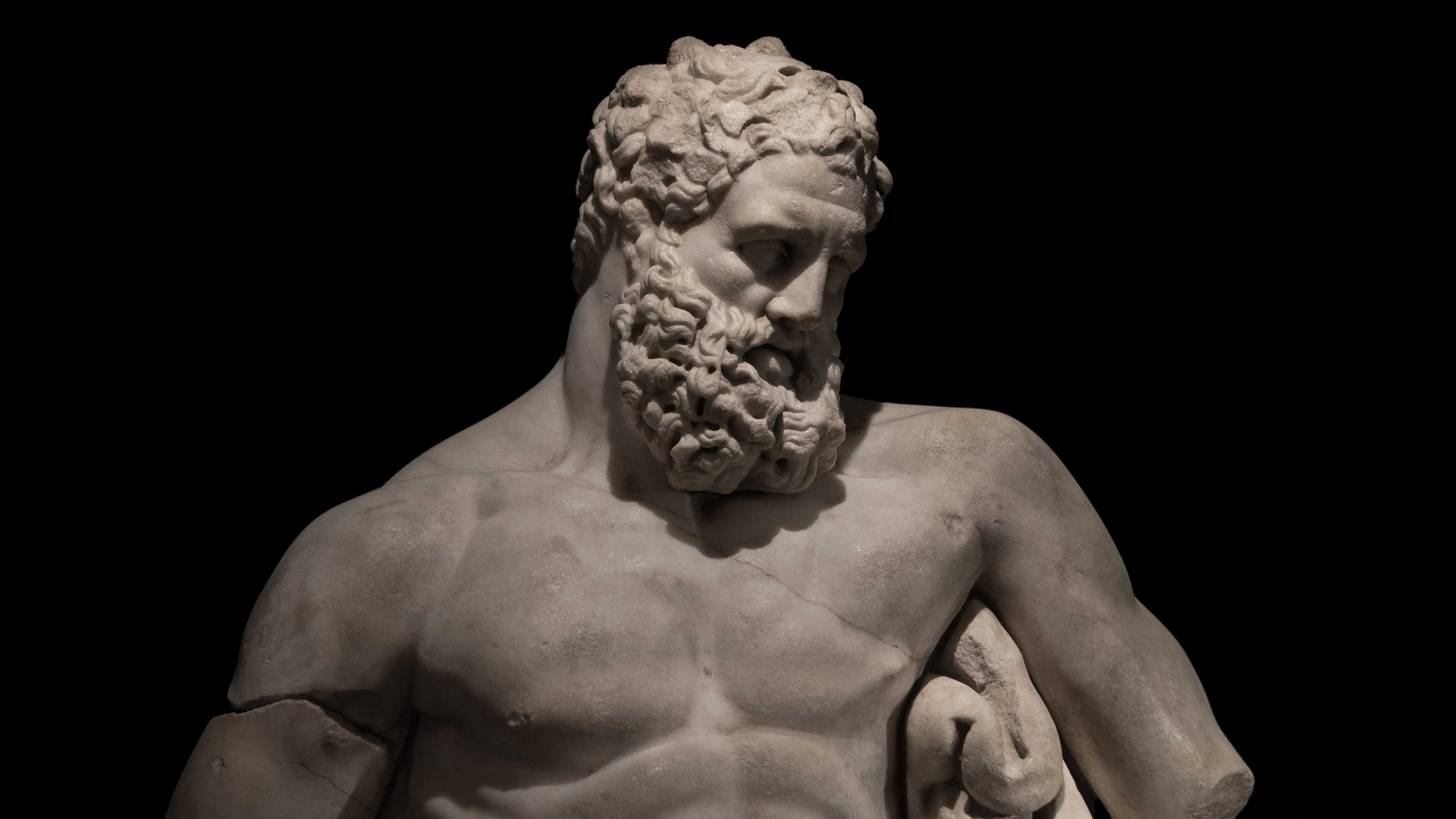 We, like Herakles, have many tests to overcome. (Oleg Senkov/Shutterstock)
 Whole-Brain Thinking
Herakles’s task, then, was to deal not with dirt alone but with the moral and psychological silt that accumulates when conscience sleeps. Every person, every society, every institution has its Augean Stables. They are the neglected corners where falsehood, apathy, and denial pile up until they seem immovable. The hero’s insight was to see that such filth can’t be cleaned by effort alone; it demands a redirection of energy, a new flow.
This is where the myth has its subtlest meaning. Herakles channels the two rivers, the Alpheus and the Peneus—streams that can be read as symbols of the two hemispheres of the human mind. The left river (Alpheus) represents logic, order, and calculation. It’s a seeking, a clarifying outward energy. The right river (Peneus) represents intuition, imagination, and vision, a weaving, transforming, and inward energy.
Alone, each can stagnate. Reason without imagination becomes sterile bureaucracy, and imagination without reason dissolves into chaos. But when Herakles unites them, the result is transformative. The waters of thought and inspiration, flowing together, cleanse what neither could have managed alone.
Here, Herakles becomes the archetype of the integrated mind. He combines the practical with the visionary, the disciplined with the daring. His solution embodies what we now call “whole-brain thinking”: creativity as the union of opposites. The rivers of intellect and imagination, when directed with purpose, can sweep away even the most intractable corruption or problem.
A Historical Connection
Interestingly, there is a historical correlate to Herakles’s action. It concerns a man who saw also himself as a son of Zeus: Alexander the Great.
From early childhood, Alexander was told and firmly believed that he was descended from Herakles through his father, Philip II. The Argead dynasty of Macedon traced its lineage directly to the hero through Temenus of Argos, himself a descendant of Herakles. In Greek eyes, this gave Alexander’s family heroic legitimacy.
Alexander the Great solved the “impossible” Gordian knot conundrum. When Alexander cut the Gordian knot, he was in a sense repeating Herakles’s insight. Faced with an impossible task, Herakles had already shown that true mastery lay not in toil but in changing the terms—not cleaning with a shovel but cleansing with water.
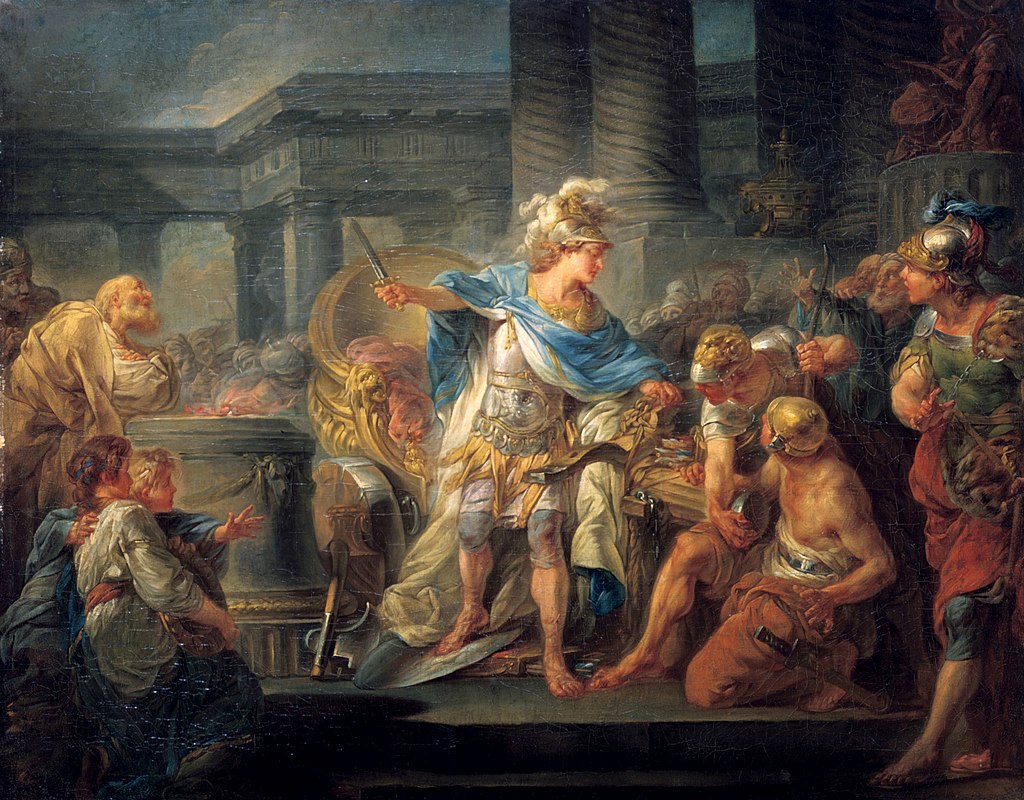 With a simple thrust of his sword, Alexander the Great severed the Gordian knot and so fulfilled the oracular prophesy that whosoever untied the knot would become emperor of Asia Minor. “Alexander Cuts the Gordian Knot,” circa 1767, by Jean-Simon Berthélemy. Beaux-Arts de Paris. (PD-US)
A Thankless Job
But to return to Herakles himself: There is also a moral irony to the story. Having struck a bargain with Augeas to be paid for his work, Herakles was later refused his reward. Moreover, King Eurystheus declared the labor invalid because the hero had acted for his own gain.
The message is sharp: True purification, whether of mind or society, is seldom recognized by the powers it threatens. Reformers who cleanse the stables of their filth are rarely thanked by those who have lived comfortably amid it. Yet the cleansing must be done, regardless of reward.
Astrologically, this Labor belongs under the astrological sign of Aquarius, the “Water Bearer,” the sign of renewal, reform, and humanitarian vision. Aquarius brings fresh currents to stale systems and often faces resistance from those invested in the old order.
Herakles thus stands as both hero and innovator. He channeled the living waters of truth through the decayed chambers of the world. It’s important at this point to note that his weapon, his instrument of renewal, was water. In one sense, we could say that the stables were baptized into a new life. Such is the property of water.
In another sense, we could refer to the Chinese concepts of yin and yang, and the notion that true life comes through the flow of the Qi energy, not through static, old ways of thinking.
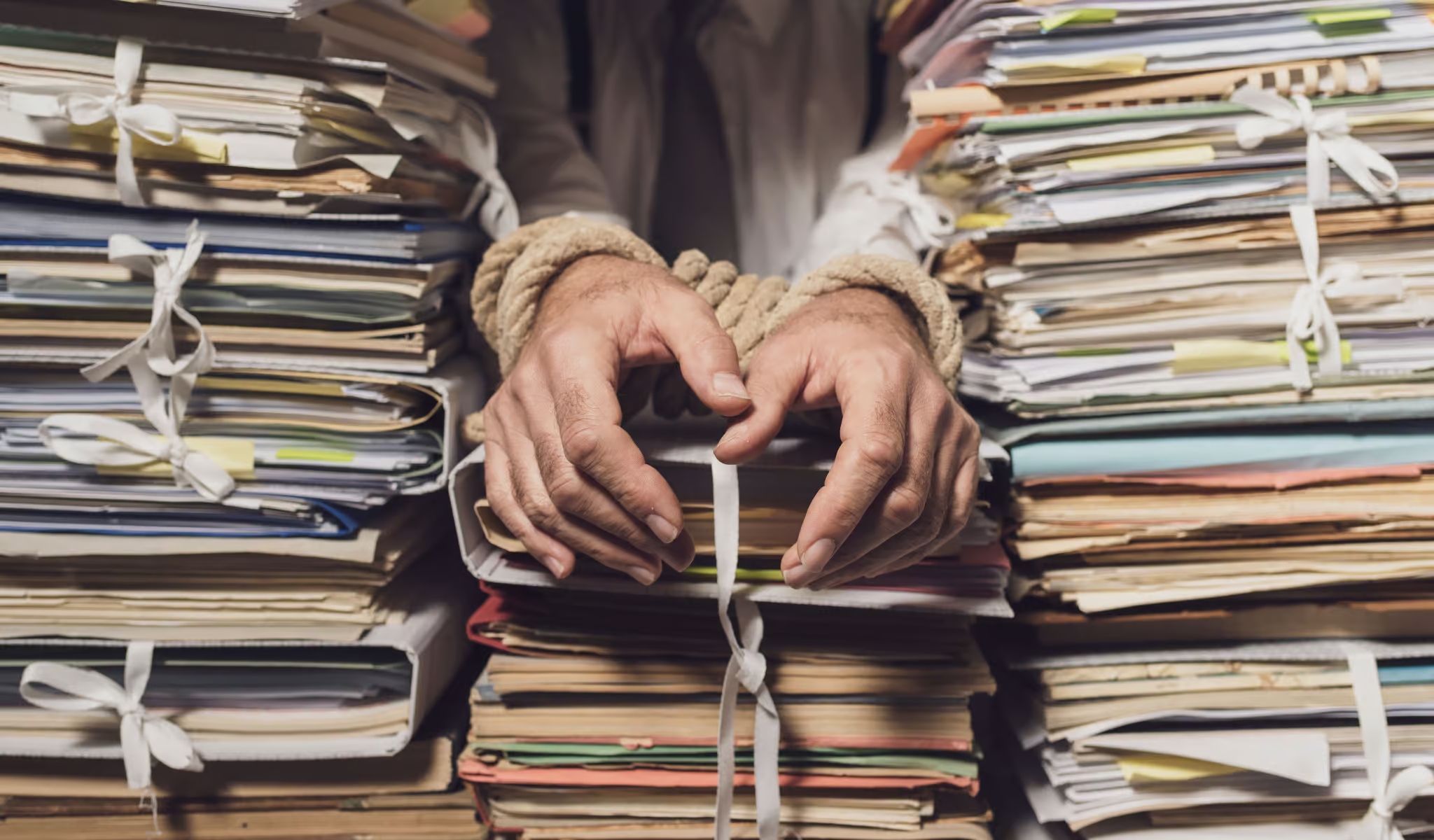 Paperwork and needless bureaucracy can get in the way of innovative solutions. (Stokkete/Shutterstock)
In contemporary terms, the Augean Stables are all around us: institutions bloated with bureaucracy, political discourse clogged with cynicism, and digital spaces choked by misinformation. On a personal level, they are the inner rooms where our own compromises, half-truths, and neglected duties accumulate. The myth reminds us that shoveling harder isn’t enough. We must, like Herakles, redirect the rivers to restore the circulation of honesty, imagination, and moral energy.
The cleansing of the stables, then, isn’t an act of hygiene but of creative renewal. It shows that purification is an imaginative act, that intelligence itself is a kind of moral water. When the two rivers of the mind are brought into harmony, what seemed impossible becomes natural. The filth that once defined us is swept away, and we emerge into clarity.
Herakles’s Labor ends where all great acts of reform end: in quiet transformation. The stables gleam once more; the cattle breathe clean air. But the deeper cleansing is within, in a mind that has discovered the power of unity, and in the world that, if only for a moment, has been made new.
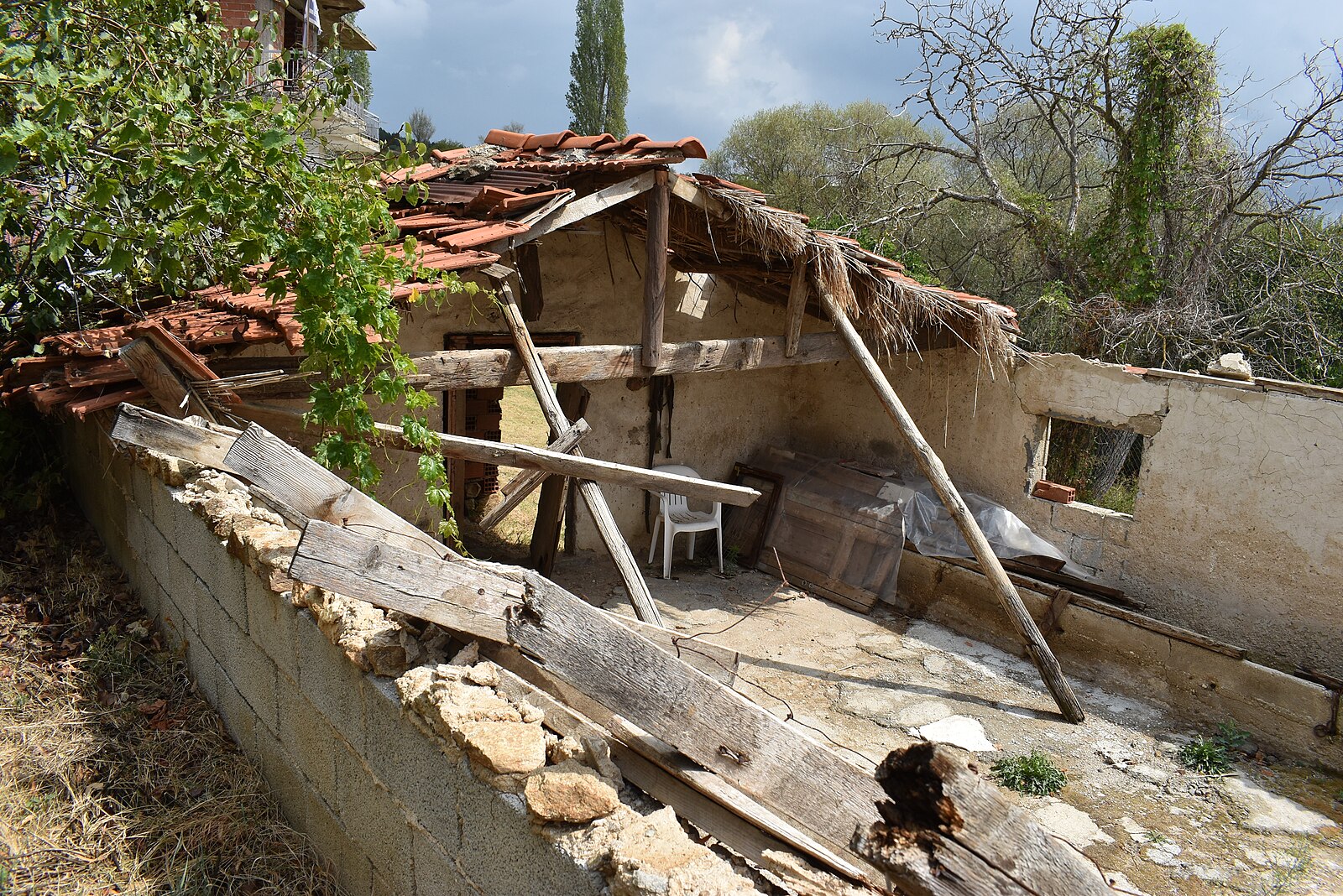 While this Greek stable hasn’t been used in years, it helps readers imagine the difficulty of cleaning 30 years’ worth of manure from immortal cattle. (Annatsach/CC BY-SA 4.0)
In previous articles, we discussed Herakles and the Hydra and Herakles’s conquest of the Nemean Lion.
What arts and culture topics would you like us to cover? Please email ideas or feedback to features@epochtimes.nyc