NR | 1h 28m | Documentary | 2025
“Fairy Creek” opens with heartbreakingly beautiful footage of Canadian forests—ancient trees, birdsong, flowing rivers, centipedes crawling on moss, and bright green frogs. Fairy Creek is a minuscule bit of wilderness real estate; the last holdout and sanctuary of pristine old-growth forest. It contains an enormous degree of biodiversity.
Then, cue the familiar, nasal-metallic, two-stroke-engine din of industrial-strength chainsaws roaring to life. That’s basically the movie in a nutshell.
‘Fairy Creek’
Filmmaker Jen Muranetz went behind the scenes of the titular protest of old-growth logging on Vancouver Island, which began when the British Columbia government approved the request of three First Nations to cease logging in their territories for two years. Fairy Creek was considered one of the largest acts of civil disobedience in Canadian history, and it made national headlines from 2020 until mid-2021.
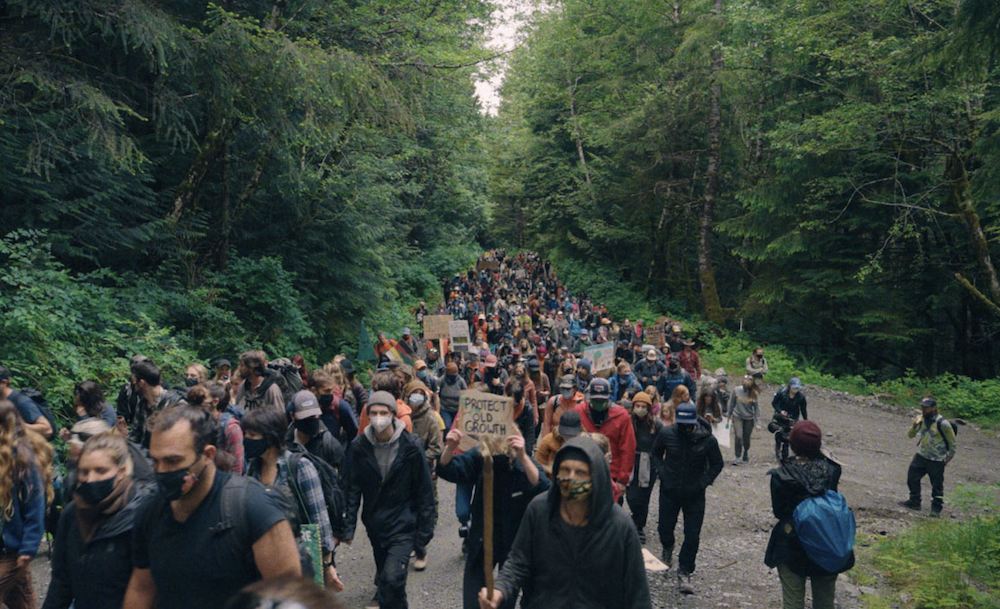
Muranetz films the environmentalist eco-hippie strategy meetings. Also the vegan stir-fry preps in rain-dripping tents, and the climbing ropes-carabiners-harnesses and knot-tying workshops for building treetop “you-can’t-cut-this-tree-down-because-I’m-sitting-in-it” protest forts.
Law enforcement officers will inevitably be sending cease-and-desist paperwork up the trees to the tree squatters, and as one protester mentions—she’ll be sending said paperwork back down to the police in her moss-covered poo bucket. Muranetz documents the protesters’ motivations, frequently folding their perspectives into the film by including their own recorded cellphone footage.
She also digs into the social complexities of the protest itself, which is basically the Caucasian dreadlocked kids chiding the irate lumberjacks and RCMP (Royal Canadian Mounted Police) officers, who’ve got mouths to feed at home.
Protesters
The footage of the blockade meeting planning and the standoffs with authorities is offset by depictions of current protest culture and lifestyle—DJ equipment, laptops, and speaker systems revving up mini rave parties.
It’s left up to the audience to decide whether America’s (and now the world’s) now time-honored Civil Rights-Vietnam-Haight-Ashbury-spawned protest culture is just more of “trustafarians” searching for existential meaning while partying. They certainly deserve a party, because the work they put in is truly prodigious and backbreaking.
One young man feels that meaning has to do with where you focus your energy. Is it better to grind out 12 passionate hours for free, or work 8 hours a day for money? His sincerity makes it easy to forget who paid for all that expensive climbing gear, cameras, walkie talkies, various other tech, and food supplies. Or how the protesters can be so lengthily unemployed but still afford cellphones and to spend time posting on social media, not to mention banging on Native American powwow drums. A trustafarian (wordplay on Jamaican rastafarianism) is defined as a trust fund-owning wealthy young person who adopts an alternative lifestyle incorporating elements from non-Western cultures.
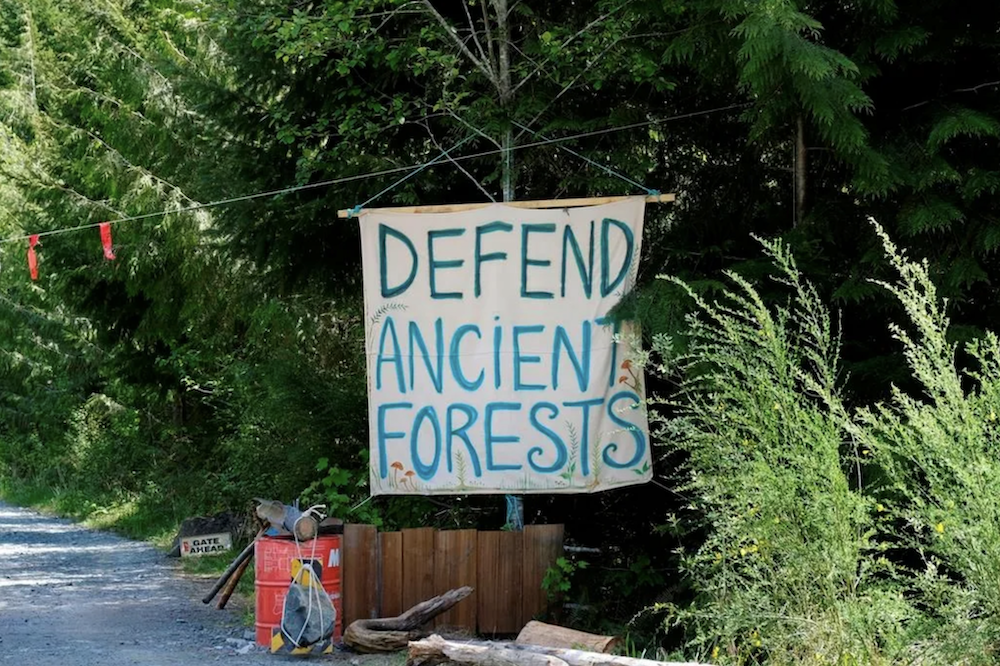
In the same vein, the youthful confidence and bluster of facing arrest bespeaks naïve, entitled, privileged assumptions that the justice system is fair. The protesters don’t seem to be able to read the room too well. One conversation, where the pacifist notion that loggers and cops aren’t looking to come in there and beat them up, is immediately juxtaposed with footage of blue-streak-cursing, hard-hatted loggers clearly hopeful to help hurry these hippie eco-Karens down the highway to the hospital.
First Nations
Muranetz explores the difference between the protests of environmentalists of settler descent and those of First Nations land defenders. It’s also noted that a big part of the problem is that the government has paid First Nations for logging rights, and those economies depend on this arrangement, so complicated internal dissent issues are present. It’s similar to the difficulty of solely holding the white man responsible for American slavery when multiple African kingdoms and societies are now known to have actively participated in facilitating the slave trade, both within Africa and with European and Arab traders. We humans are our own worst enemies, and pretty much everyone is to blame for everything.
The environmentalists and the Indigenous are in two different fights that often contradict each other. The Indigenous communities want to do as they please with their own lands, while the environmentalists are largely concerned with telling the British Columbia and Canadian governments how best to treat the land.
Also, it’s made clear that the Indigenous are concerned that the settlers’ protests, by dominating the media, make it look like First Nations can’t speak or fight for themselves. At one point a woman of mixed-race Indigenous-settler heritage, with blue eyes and blonde hair, is subject to criticism by Indigenous youth who inform her that her protesting is more problematic than helpful. She feels misunderstood.
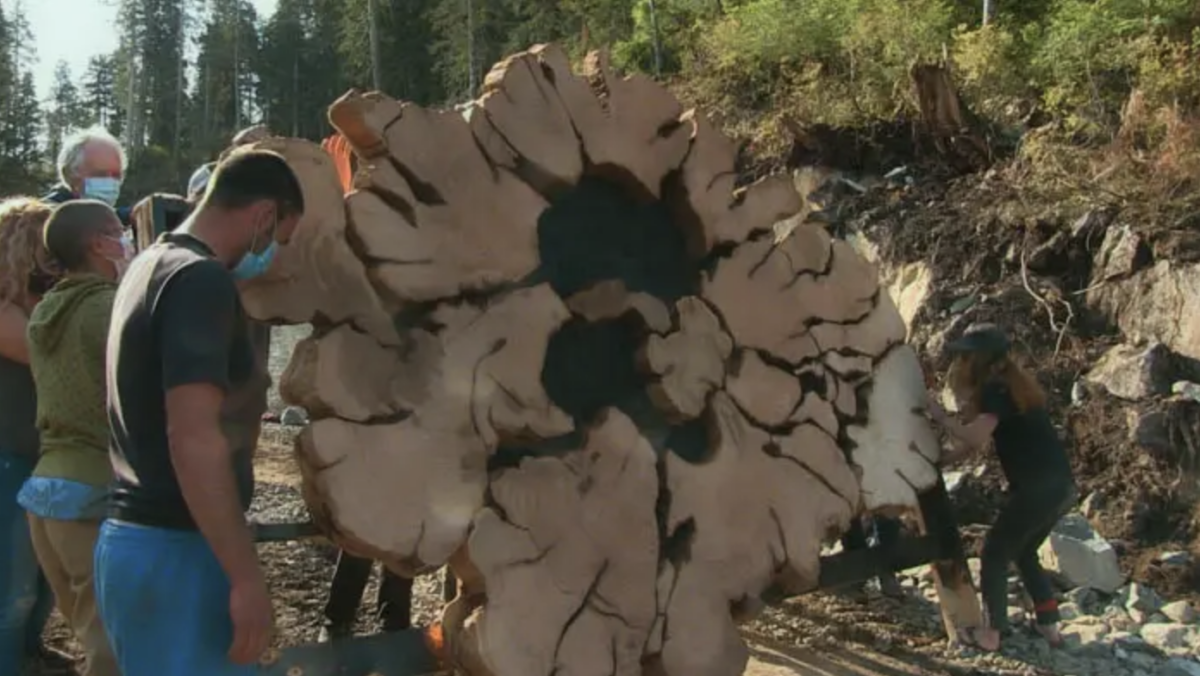
End Game
During the film’s final moments, we see four members of the protest revisiting the now vacant site with one remarking, “This is the best thing I’ve ever done in my life.” Was it sincere? Of course. Was it also virtue signaling? Maybe. Probably. Part of the problem is that traditional childhood-to-adulthood rites of passage have gone missing, and today’s youth need to manufacture ordeals and challenges. Like sitting in trees to thwart clear-cutting, and nose-thumbing authorities via poo buckets.
A good 2013 movie about how this kind of thing can go terribly wrong is “Night Moves.” The thriller follows a group of radical environmentalists who dynamite a hydroelectric dam as an act of protest, but end up drowning an innocent bystander.
Muranetz has captured a moment in Canadian history that remains unresolved. “Fairy Creek” is a wake-up call not only for environmentalists believing that they’re fighting the good fight but for everybody. At this late hour, regarding the situation of humanity’s potential overpopulation of planet Earth and fast depleting resources, “Fairy Creek” is a neon orange highlight of Kurt Vonnegut’s quote: “We’ll go down in history as the first society that wouldn’t save itself because it wasn’t cost-effective.”
The catastrophic mid-1970s gypsy moth infestation comes to mind. The entire American Northeast was in a panic—the nasty critters were everywhere, munching all the leaves, clearly set to kill all the forests. Then the trees, now scientifically known to be sentient beings with highly complex thought processes, decided they’d had quite enough of the gypsy moths, and upped the tannic acid content of their foliage. And that was the end of that.
The Gaia theory suggests that Earth and all its living organisms, from bacteria to humans, are part of a single, self-regulating system that maintains the conditions necessary for life. It doesn’t consider the whole planet as sentient, the way Earth’s trees are, but who knows what future scientists will discover? Suffice it to say, it’s a safe bet that we humans will inevitably continue to mess around and find out. We may find out that we’re capable of being regulated like the gypsy moths.
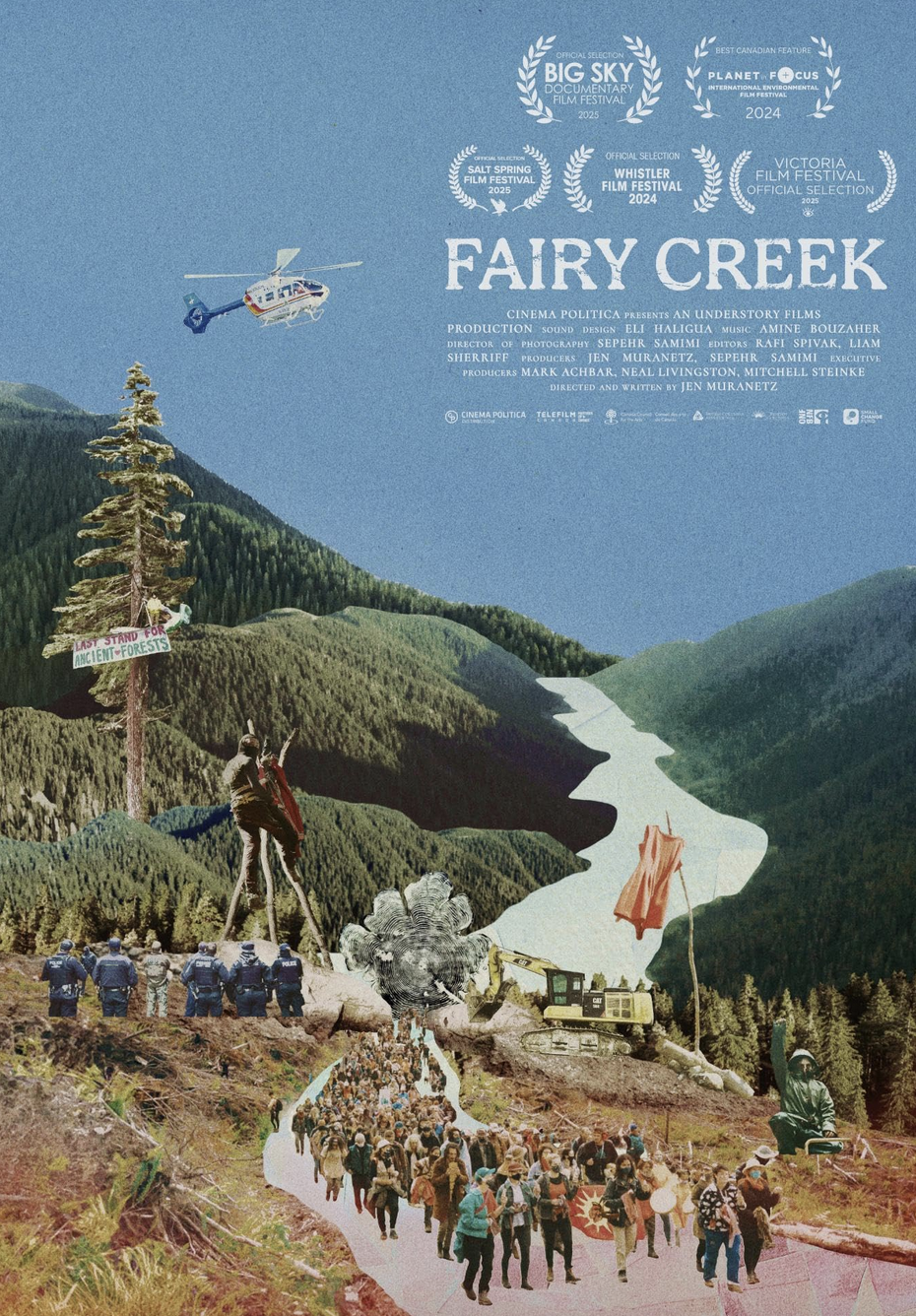
“Fairy Creek” is being released in select Canadian theaters starting June 6, 2025
‘Fairy Creek’
Director: Jen Muranetz
Documentary
Running Time: 1 hour, 28 minutes
Release Date: June 6, 2025
Rating: 4 stars out of 5
Would you like to see other kinds of arts and culture articles? Please email us your story ideas or feedback at features@epochtimes.nyc