Traditional Culture

Faith, Royalty, and Stone: The Cathedral of the Carpathians

BY Sarah Isak-Goode TIMEMay 23, 2026 PRINT

Tucked into the forested slopes of the Carpathian Mountains in Sinaia, Romania, Sinaia Monastery (also known as the Cathedral of the Carpathians) stands one of the country’s most storied religious landmarks. It’s distinguished by a striking blend of Byzantine and Brâncovenesc styles.

Byzantine art and architecture weaves together classical Greek and Roman elements with Eastern influences, giving rise to domed ceilings, opulent mosaics, and symbolic imagery. The Brâncovenesc style, a late-Renaissance aesthetic that flourished in southern Romania during the 17th and 18th centuries, is celebrated for its elaborate stone carvings, open arcaded porticos, and decorative exterior frescoes.

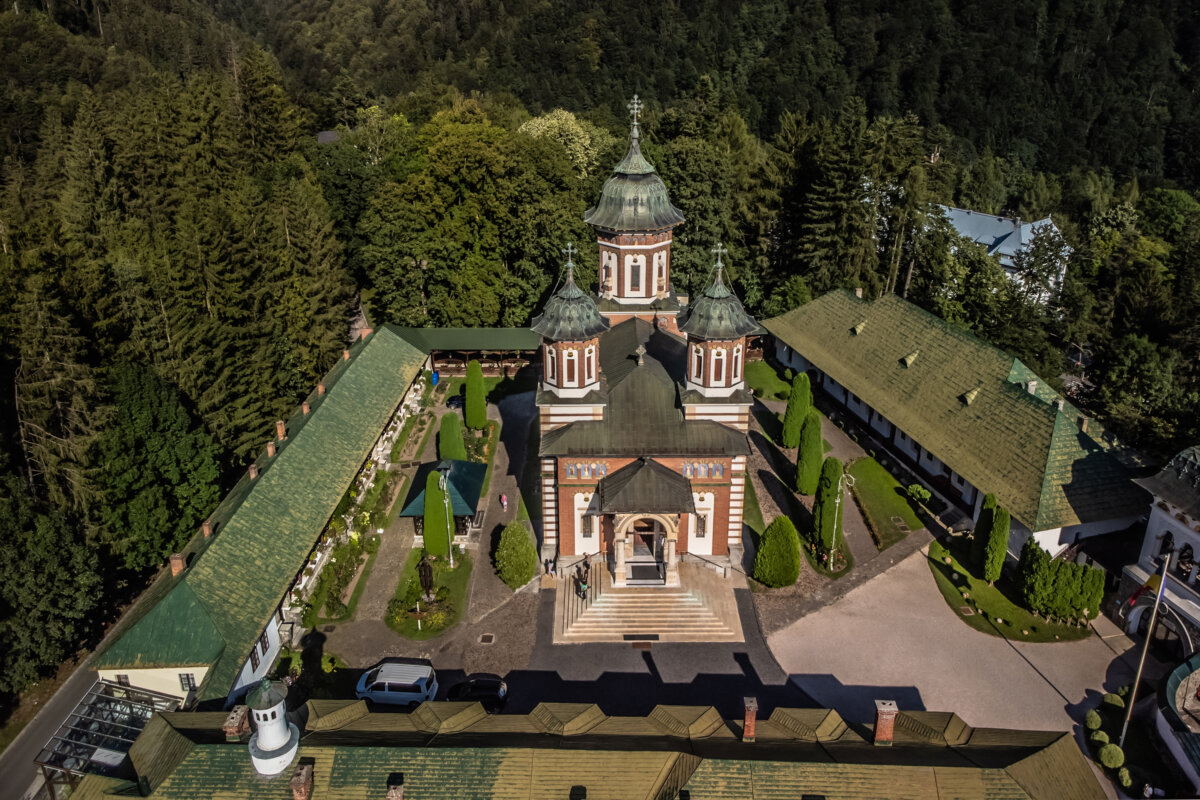
Prince Mihail Cantacuzino founded the monastery in 1695 upon returning from a pilgrimage to Mount Sinai, Nazareth, and Jerusalem, and named the complex after the great Sinai Monastery. He designed it to function both as housing for a religious community and as a fortified stronghold along the road connecting Brasov to Bucharest. The original plan allowed for 12 monks, a deliberate nod to the Twelve Apostles, though the community eventually outgrew this vision.

A larger church, known as the Great Church (Biserica Mare), was constructed between 1842 and 1846 to accommodate the expanding congregation, complementing the original Old Church (Biserica Veche), which remains the town’s oldest building.

The monastery’s history has not been without hardship. During the Russo-Turkish War of 1735 to 1739, monks buried the monastery’s valuables inside a bell before fleeing, and Ottoman forces breached the walls and set fire to the surrounding area. By 1850, Sinaia was little more than a monastery and a scattering of huts.

The town began to grow in earnest after 1864, spurred in part by the arrival of King Carol I and Queen Elisabeth. The royal couple spent many holidays at the monastery and chose the surrounding area as the site of their summer residence, Peleș Castle. King Carol I further distinguished the site by making the Great Church the first in Romania to be lit by electricity.

In acknowledgment of their deep connection to the monastery, the Great Church was adorned with large painted portraits of the king and queen, along with two royal seats near the altar. By 1948, the monastery had come under the patronage of the Archdiocese of Bucharest, and a restoration effort between 1951 and 1957 brought running water, electricity, and natural gas to the entire complex.

Today, the monastery remains an active spiritual community, its two churches holding regular religious services. Home to approximately 13 Orthodox monks, the monastery continues to observe centuries-old monastic traditions through daily prayers, spiritual guidance, and tending of its churches and grounds. The monks also maintain a library housing precious jewels belonging to the Cantacuzino family and the earliest Romanian translation of the Bible, dated 1668. The wing that once served as a royal summer residence now houses Romania’s first religious museum. Together, these treasures make the monastery as much a cultural landmark as a sacred one.
Sinaia monastery
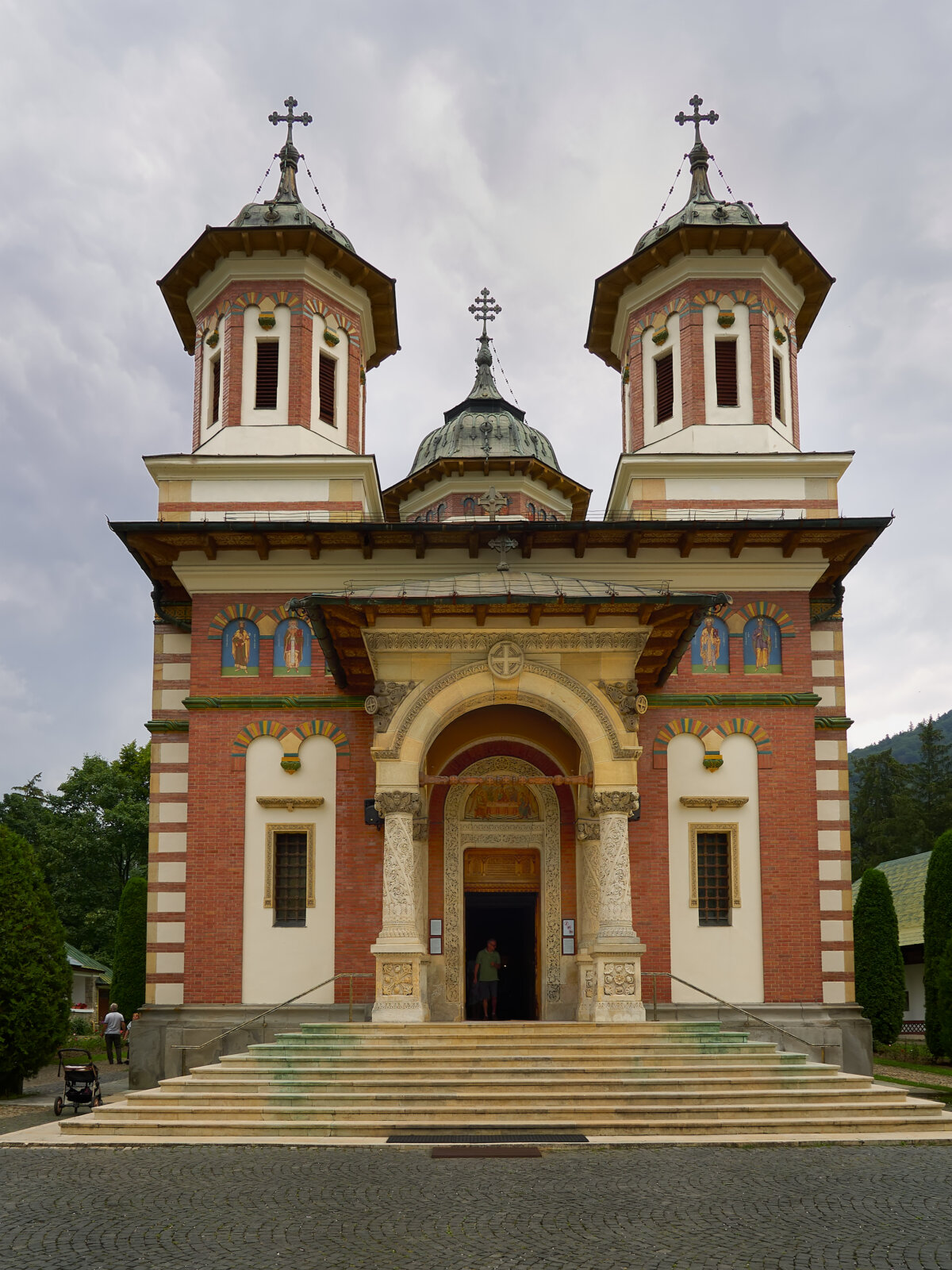
Built between 1842 and 1846, the Great Church is a structure where even the smallest details carry deep meaning. Running along its exterior are three green enamel lines thought to symbolize the unity of the Holy Trinity and the joining of the three Romanian kingdoms: Wallachia, Moldavia, and Transylvania. (Teodor Costachioiu/Shutterstock)
Sinaia monastery
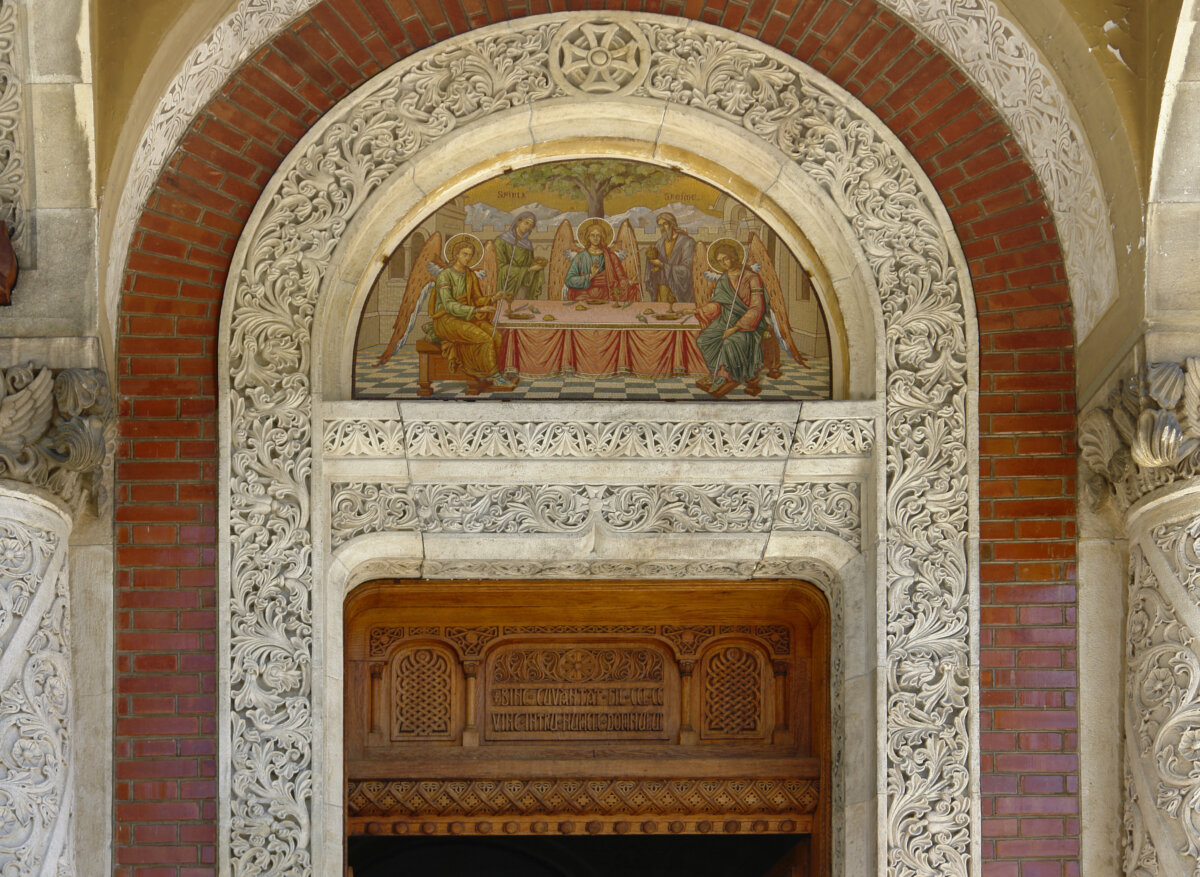
Above the entrance to the Great Church, a decorated semi-circular tympanum depicts the Holy Trinity, framed by densely carved foliate stonework and a medieval Christian cross. The tympanum is the ornamental space nestled between a doorway’s horizontal lintel and the arch above it; here, it serves as a richly detailed focal point that welcomes visitors into the sacred interior. (Prill/Shutterstock)
Sinaia monastery
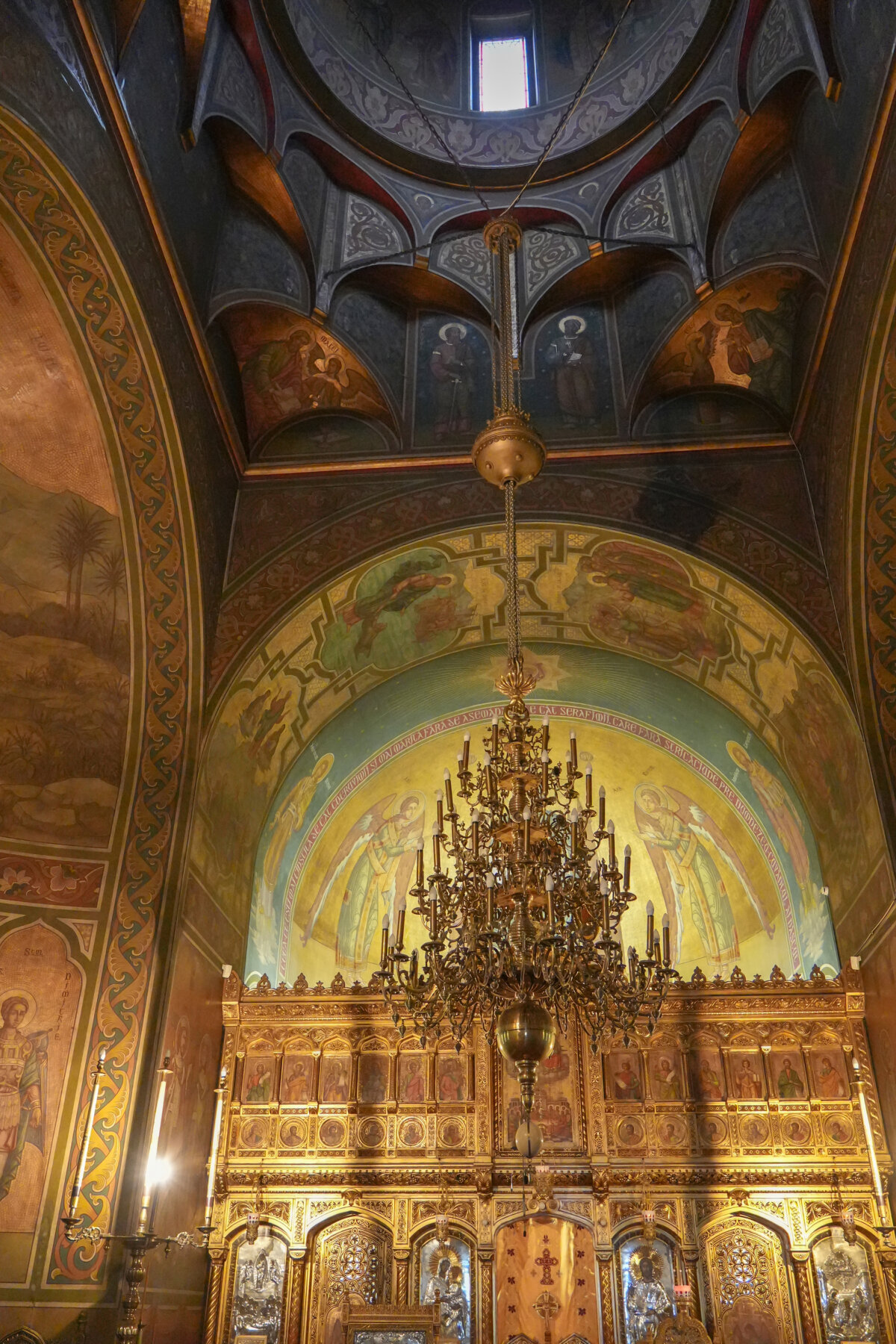
The Great Church is celebrated for its embellished interior, which offers a striking contrast to the more rustic Old Church within the same complex. A gilded wall, known as an iconostasis, separates the sanctuary from the nave. It is adorned with intricate carvings and shimmering painted icons. Above, a painted dome rests on pendentives, an architectural element that transitions the circular dome over a square base. (Ana del Castillo/Shutterstock)
Sinaia monastery
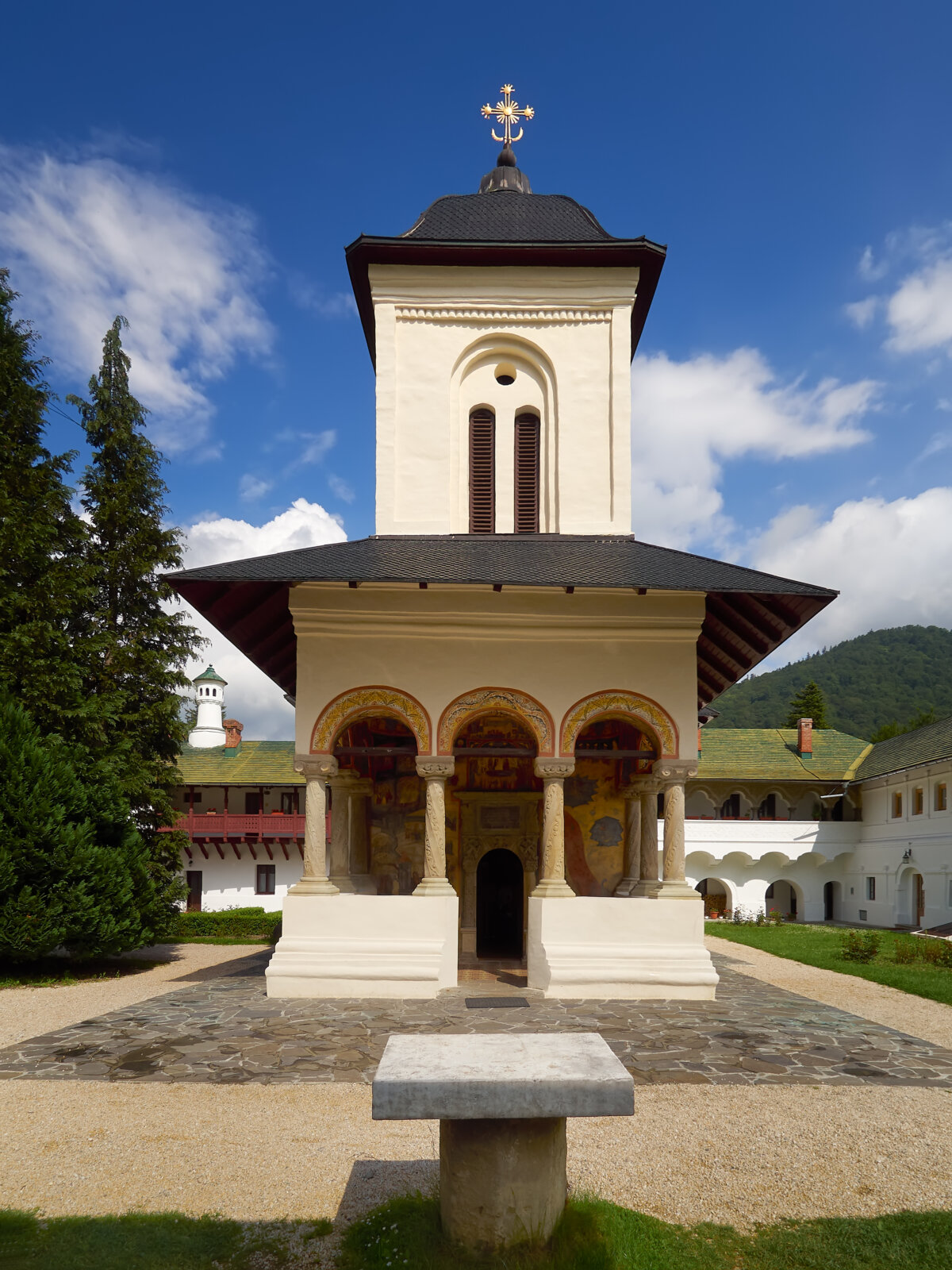
Built in 1695 of stone and brick, the Old Church welcomes visitors through a loggia-style entrance, with a covered patio integrated into the main structure. Well-preserved Corinthian stone columns and frescoes stand among the most remarkable elements of the Brâncovenesc style. (Teodor Costachioiu/Shutterstock)
Sinaia monastery
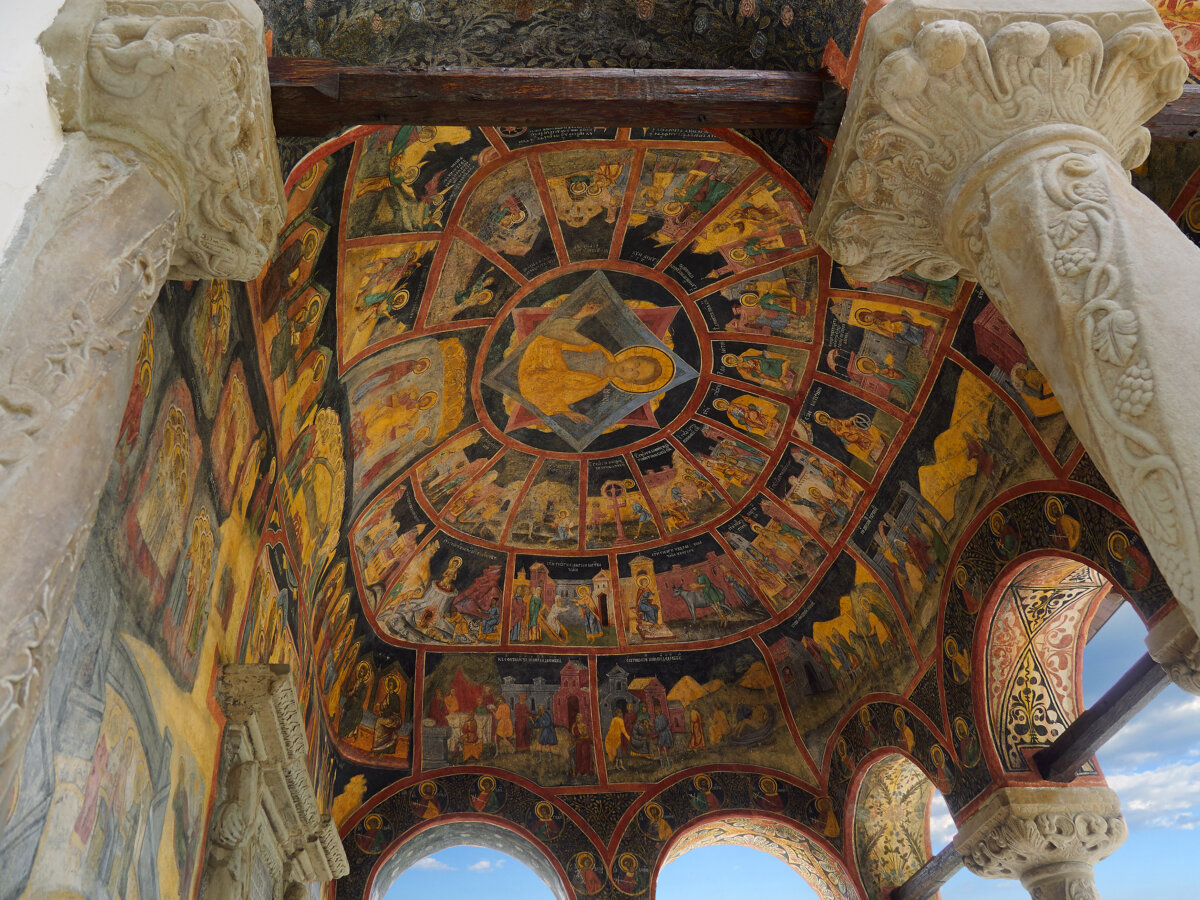
Delicately carved stone columns support the pronaos, or open vestibule, of the Old Church. The ceiling is graced with 17th-century frescoes renowned for their biblical scenes and portraits of saints, brought to life with rich lapis lazuli blue and reflective gold leaf. (Teodor Costachioiu/Shutterstock)
Sinaia monastery
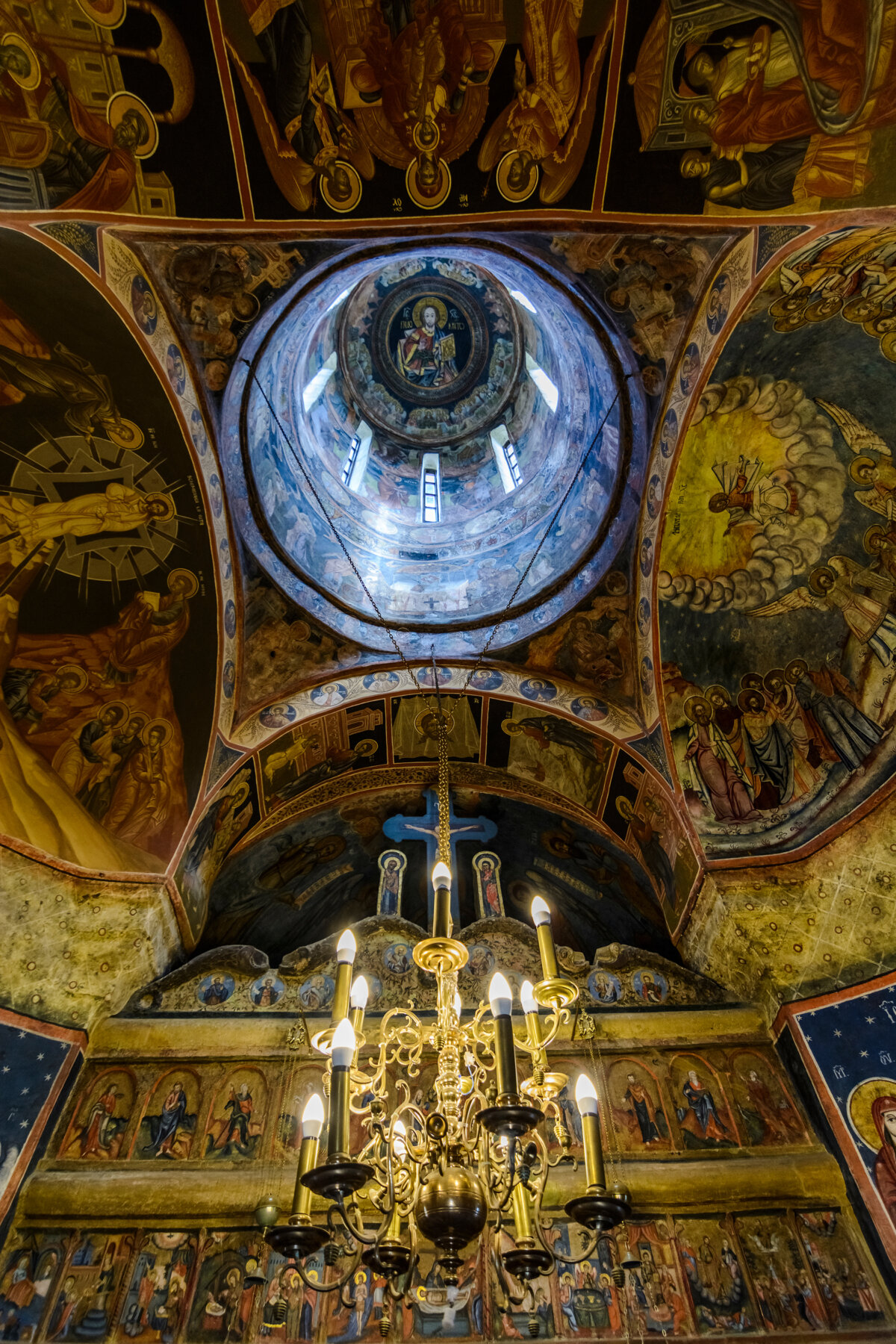
Founded in 1695 by Prince Mihail Cantacuzino, the Old Church is the oldest building in town and home to a remarkable fresco cycle by 17th-century muralist Pârvu Mutu. Across the walls and vaulted ceilings, the paintings unfold as a visual narrative of faith and devotion, with Christ Pantocrator presiding over the dome, the Virgin Mary gracing the apse, and prophets, apostles, and martyrs depicted throughout. (Cpifbg13/Shutterstock)
Sinaia monastery
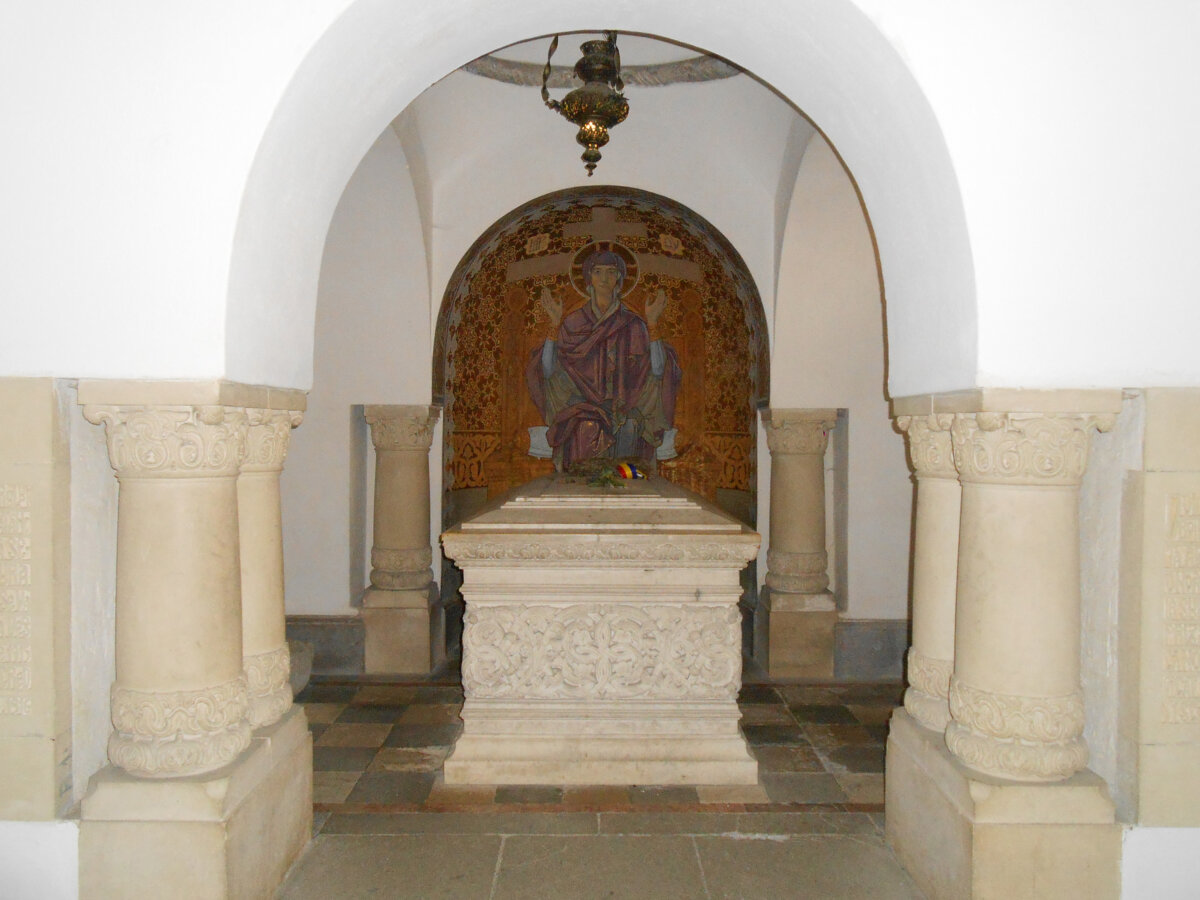
Near the Old Church rests the tomb of former Romanian Prime Minister Tache Ionescu, who served during the World War I and championed the unification of Romanian territories. A painting of the Virgin Mary Oranta presides over the sarcophagus. She is surrounded by a burgundy-and-gold pattern of eight-pointed stars and flowers, a motif characteristic of Byzantine art. (Pivari.com/CC-BY-SA-4.0)
Sinaia monastery
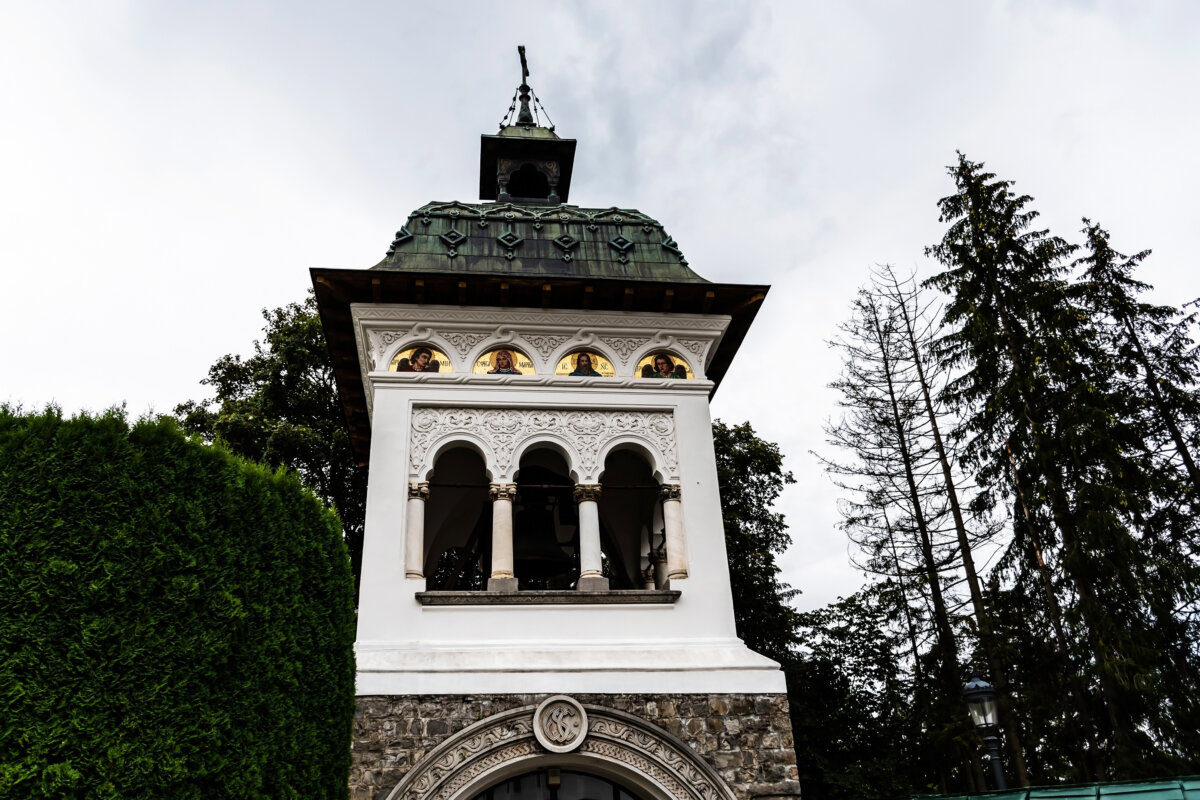
Dating to the late 19th century, the bell tower features trilobed arches, a clover-shaped curve common to Brâncovenesc architecture. The tower affords broad views over the forested landscape below. Its 3,700-pound bell, brought from the Colțea Tower in Bucharest, continues to ring out across the forested valley below. (Adriana Sulugiuc/Shutterstock)

What arts and culture topics would you like us to cover? Please email ideas or feedback to features@epochtimes.nyc. 

Sarah Isak-Goode is a writer and art historian rooted in the Pacific Northwest. Her name—pronounced EYE-zik-good and meaning "good laugh"—hints at the warmth she brings to everything she does. Equal parts scholar and storyteller, Sarah brings the past to life through a distinctly human lens, exploring what connects us across the centuries. Away from her desk, she feeds her curiosity through traveling, painting, reading, and hiking with her dog, Thor.
You May Also Like