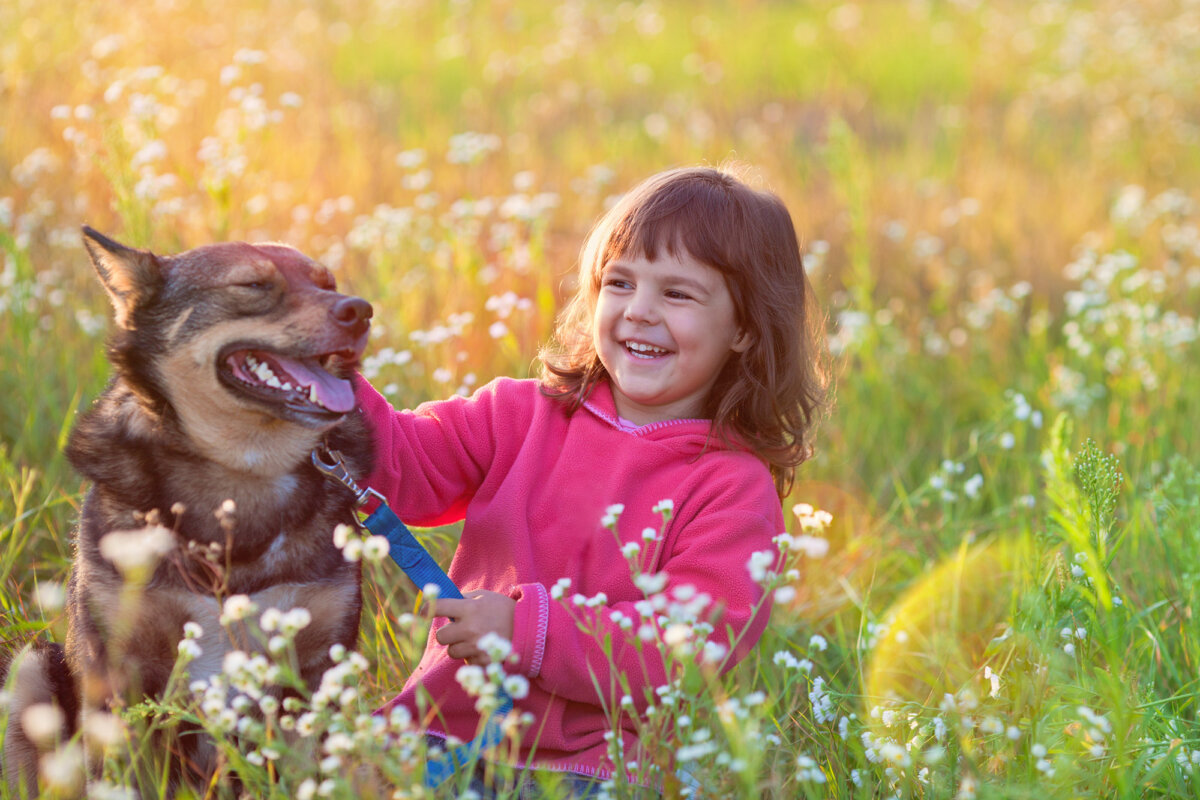
Recently, I had a heart-wrenching parental experience: I had to be the bearer of some very bad news to my 3-year-old daughter. I walked slowly into the sunroom where my daughter was playing, dragging my feet like a man with a ball and chain shackled to his ankles. I called my daughter’s name. We sat down together on the couch, and, collecting my courage, I said, “Honey, Daisy died last night.”
It took my daughter a few seconds to process what I was saying—that our family dog was gone. She fell into my arms, dissolved into tears, and whimpered, “I want my dog back, I want her back.”
A few minutes before this conversation, my wife had come into my home office with a worried look and told me that Daisy was lying out in the yard and not moving. I went to check on her. She lay not far from the door, on the snow at the foot of a small hill, her warm nut-brown fur stark against the white. I knew without touching her that she was dead.
I bent down and ran my fingers over her glossy fur, which was still as soft to the touch as ever. She hadn’t been injured. She hadn’t been sick. She was just old, and one morning, her tired body finally settled down for a rest from which it never rose.
The Most Loyal of Friends
Pets have a tendency to work their way into our lives and hearts without us really noticing it. Daisy was an outdoor dog, but she still played a big part in our family, always greeting us with the inextinguishable cheerfulness and joy that only dogs have. She loved to accompany us on walks or sit by the swing set while my daughter played. She loved to chase animals—especially our poor, bewildered sheep.
Dogs slip seamlessly into the pattern of human lives, quite happy just to be around us, to be our companions who ask little and give much.
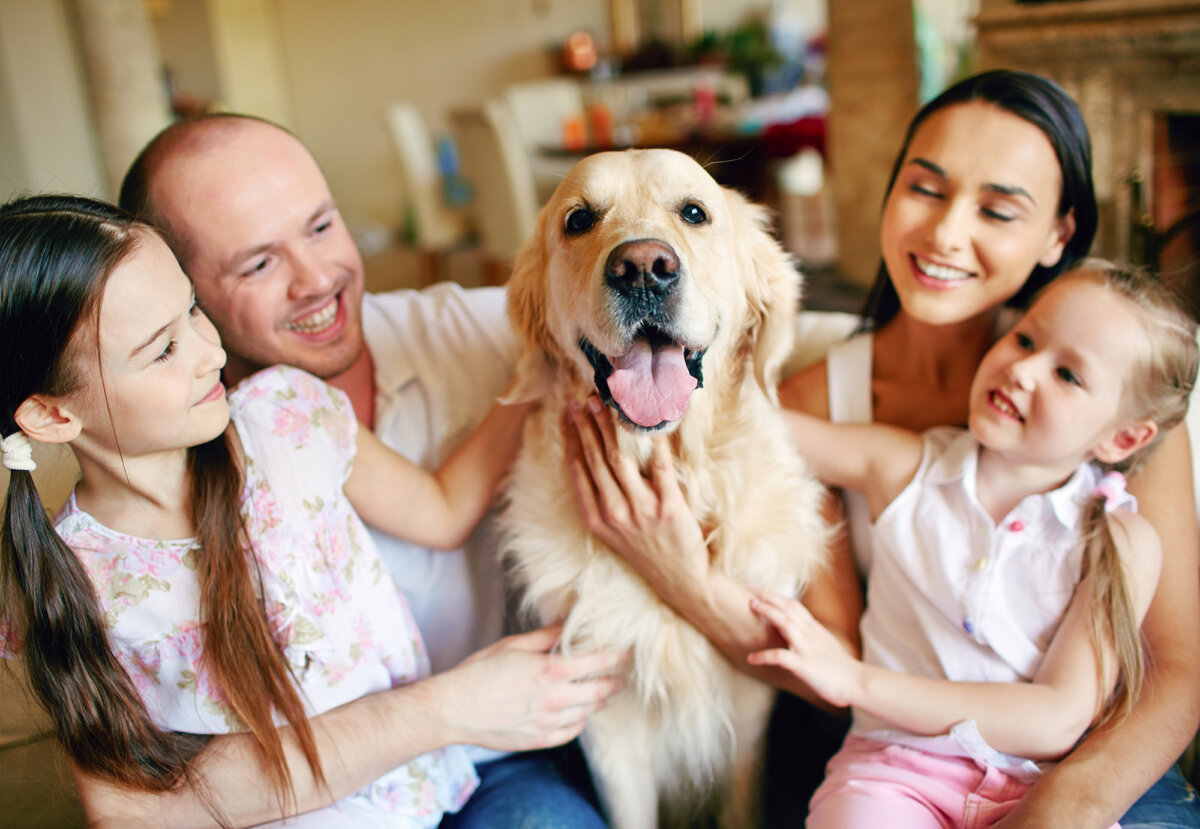
My wife and I were grieved by Daisy’s loss, but that grief was made worse by seeing my daughter crying. Dogs form a necessary and natural backdrop to childhood. I’d grown up with dogs, and I want the same thing for my kids. That comes at a cost—of course—the cost I’d witnessed.
At the same time, this was an opportunity for my girl to grow. Children’s experience of the loss of their pets begins to teach them about the mystery of death more broadly. The cycle of life in the animal world sheds a little light on the cycle of life in the human world.
I’m happy to report that my daughter has recovered quickly from the loss of Daisy. She’s already talking about how she wants a new dog. I think that we’ll get one. There are a number of reasons, reasons that I grasp so intuitively that I’ve never really thought through and articulated them. The necessity of a dog seems to me one of the unquestionable primordial truths of the world.
In the immortal words of G.K. Chesterton from his essay “On Keeping a Dog”: “Somehow this creature has completed my manhood; somehow, I cannot explain why, a man ought to have a dog. A man ought to have six legs; those other four legs are part of him. Our alliance is older than any of the passing and priggish explanations that are offered of either of us; before evolution was, we were.”
Let me be more specific about why families should have dogs.
Dogs are an essential link between humans and nature. Keeping one around has a grounding effect. This grounding effect is hard to describe, but dog owners will know what I mean. It pertains to the simple directness, the sincerity, and the enthusiasm of doggy nature. Dogs are, quite literally, down-to-earth, and so they help keep us tethered to common sense, to simple, everyday things, and to nature.
I’m not the first to write about a dog’s loyalty, but it bears some repetition. On rainy days and sunny ones, there they are—at the foot of your bed or waiting outside your door, gently wagging their tails. They provide steady, reliable companionship; they remain unperturbed by clouds or rain or politics or whatever else might be going on. Simple creatures that they are, they tend to bond with whoever “their” person is. Their affection completely lacks judgment, and our flaws rarely diminish their attachment. You could be good-looking or unattractive, healthy or unhealthy, intelligent or not so intelligent; it doesn’t matter—your dog loves you the same. Maybe it’s this unconditional affection that wins us over so much—and teaches us important lessons.
A Child’s 1st Companion
Dogs are particularly important for children. Through a dog, children get to commune with the world of animals that they find so fascinating, but in a safe and familiar way. They also learn about responsibility and how to care for another creature. They discover the rewards that come from faithfully doing so.
Perhaps most importantly, interaction with dogs helps develop affection and bonding in formative ways, as the host of literature about boys and girls and their dogs indicates. Educator John Senior saw connection to animals as a necessary part of a child’s progression to more important types of love.
As Francis Bethel related in “John Senior and the Restoration of Realism,” Senior, speaking from a boy’s perspective, wrote that “love grows in five cumulative (not disjunctive) stages, each defined by its object: parents, animals, boys, girls and God.” From this perspective, owning a dog is an essential part of a child’s education.
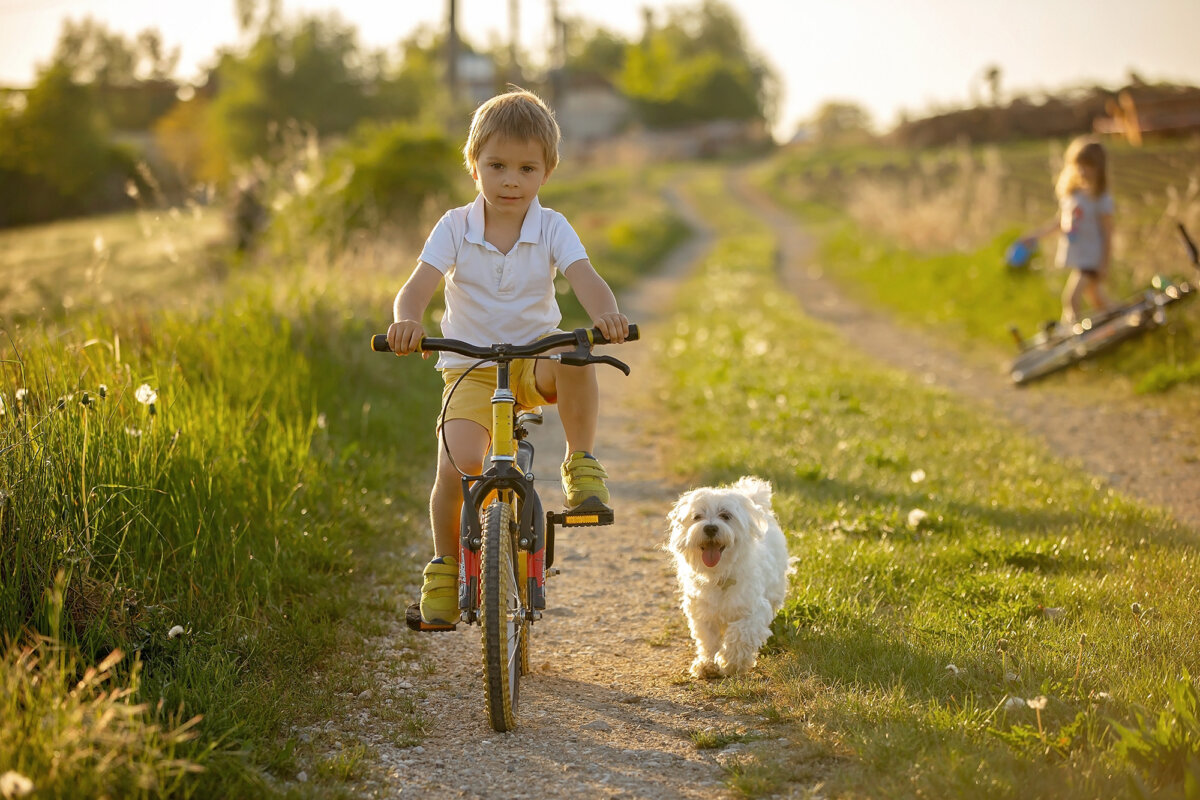
There is probably no interspecies relationship as profound as that between the canine and the human. Dogs “get” us in a way other animals don’t.
As Chesterton wrote, “My dog knows I am a man, and you will not find the meaning of that word written in any book as clearly as it is written in his soul.” In a comical yet true way, we see ourselves reflected in our canine companions. Our identities are clearer because of them.
So do yourself a favor: Get a dog. Then, some evening, after a long day at work, you’ll stagger home tired, depleted, and depressed. But your home will feel even more like a home and a refuge when you step inside and a four-legged fellow waves a greeting with his tail. The highlight of his day—and maybe yours—is here.