



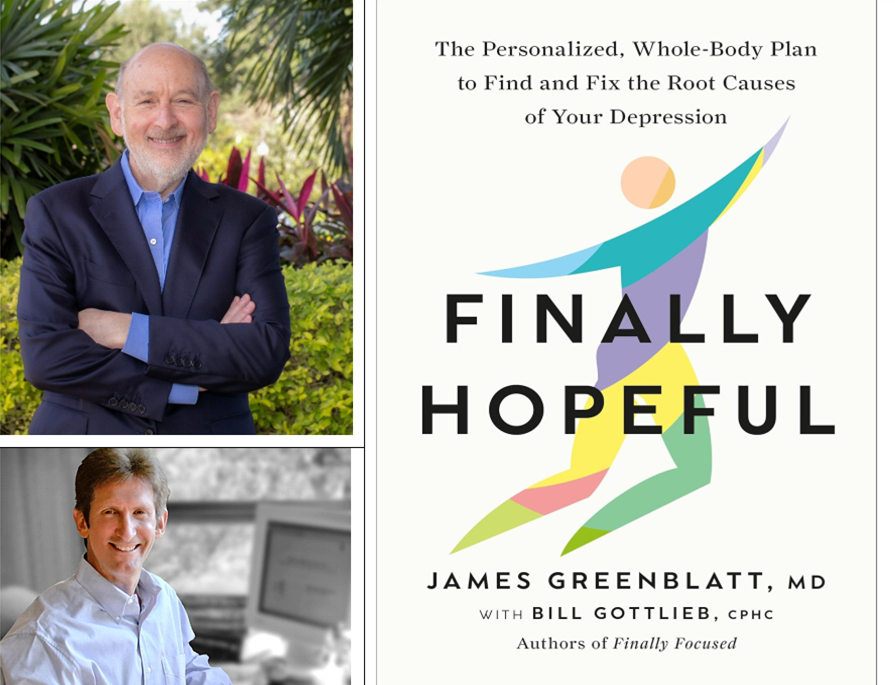
Depression sufferers will find compassion and optimism in “Finally Hopeful: The Personalized, Whole-Body Plan to Find and Fix the Root Causes of Your Depression.” Dr. James Greenblatt, a pioneer physician in the field of functional medicine, is an international lecturer and professor of psychiatry at two top universities.
Dr. Greenblatt says psychiatry can do so much better than what was done in the past. Practitioners should pay more attention to what he refers to as “largely ignored research and clinical results.” He provides scientific-based evidence that nutritional interventions need to be an important component in cases of self-reported depression or other symptoms of mental distress.
In many cases, root causes can include nutritional deficiencies, hormonal deviations, or neurotransmitter imbalances. These biochemical factors must, he states, be considered as part of the treatment plan.

One-Size-Fits-All Doesn’t Work
The book’s promise is well-stated in the subtitle. Through his practice of functional psychiatry, Dr. Greenblatt and those that follow this field of medicine base their diagnosis on tests that seek the “biochemical individuality” of each person. There’s no “one size fits all” approach to illness. It needs to be a personalized treatment.
There’s a lot to digest here. Although a nutritional strategy may be a new concept, the material is easy to understand, and the author’s claims make sense. Through sharing clinical tests and results, readers will be much more knowledgeable about depression and the available options to treat it. Consequently, the opportunity exists for a serious, productive and potentially life-changing conversation between patient and physician.
In Part 1, Dr. Greenblatt focuses on the definition of depression, how it’s typically treated, and the fault behind that process. There are many overlooked causes of depression, such as medication side effects and hormonal imbalances. Genetic factors or undiagnosed medical conditions can also be at play. He provides plenty of case studies that should encourage readers to consider a whole-body approach to their treatment.
Case Studies
Case studies show how other factors contribute to depression. We’re introduced to “Frank,” who came to Dr. Greenblatt looking for a different approach to easing a five-year battle with depression. After self-reporting symptoms to his primary care doctor, he’d been given an antidepressant. This worked minimally. Then he was given another medication from a mental health specialist. The depression continued.
The author met him and took a full medical history, including diet, sleep habits, and family history. This revealed Frank had low levels of crucial nutrients. Frank also had sleep apnea, a diagnosis that can triple the risk of depression. With a new regimen of supplementation, the depression symptoms improved. In time, Frank reported feeling “mostly recovered” from the illness.
What may be one of the most useful aspects of the book is the in-depth analysis and explanations of nutrients and minerals heavily advertised in the media. Even with all that information in the headlines, depression sufferers may find it difficult to weed through the fine print or may become overwhelmed and not follow through.
In Part 2, titled Nutritional Healing, the author goes through the nutrients one by one discussing, among others, amino acids, B vitamins, minerals, and essential fats. For example, Vitamin D gets a lot of play in the press, but how much should one take, in what form, and what does it do exactly? All that is covered in Chapter 5 that explains how the vitamin works in the body. In fact, seven areas require the vitamin to function properly, like the liver, the skin, the immune system, and the heart. Plus, the vitamin aids the body’s ability to produce serotonin, the feel-good chemical.
Antidepressants
Dr. Greenblatt doesn’t downplay the important role of antidepressants, but says they should be one tool among many, and not the sole solution. His integrative approach of biological intervention, therapy, and medication is a treatment model he encourages patients to consider, and medical practitioners to adopt.
The target audience for this book is not limited to those who are taking depression medications, but also those who are health conscious, or curious about the functions of the body. It can also be a valuable companion book for healthcare professionals.
The practical layout of the book includes specific chapters on possible root causes, and plenty of reference notations to research and clinical studies. While Dr. Greenblatt mentions a few supplement and nutritional companies, he provides ways for readers to determine what to look for in choosing their own reputable suppliers.
The author’s resume is impressive. He has been practicing integrative and functional psychiatry since the late 1980s; he’s written numerous books on mental health and nutrition. He is also a faculty member of Tufts University School of Medicine and Dartmouth College Geisel School of Medicine. His education and expertise provide a strong foundation for his recommendations.
There’s a sobering statement in the chapter on understanding antidepressants and how widely they are prescribed. “More than twenty-one million American adults—about one in eight of us—suffer from a major depressive episode in any given year,” says Greenblatt. “That number tripled to about one in four during the pandemic,” he adds. This book should open the door to important conversations about looking at depression from all angles.
COVID-19
Covid anxiety increased the number of patients on antidepressants. Dr. Greenblatt lists a variety of possible reasons one feels depressed, psychological causes like childhood trauma and low self-esteem. There are also social and lifestyle causes like poor sleep, losing one’s job, and difficulty maintaining relationships.
During the COVID-19 pandemic, many Americans looked to antidepressants to deal with the anxiety over getting the virus, their employment status, and the lockdowns, which meant less socializing. Prescriptions for antidepressants rose 19 percent between February and March 2020 when the pandemic was in full swing.
In the later pages, the author discusses the withdrawal from antidepressants and shares a “safe, science-supported, patient-proven protocol” for ending the dependency on medications. However, he can’t emphasize enough that when weaning off these medications, “you must work with your doctor,” to monitor and minimize discomforts, and ensure safety.
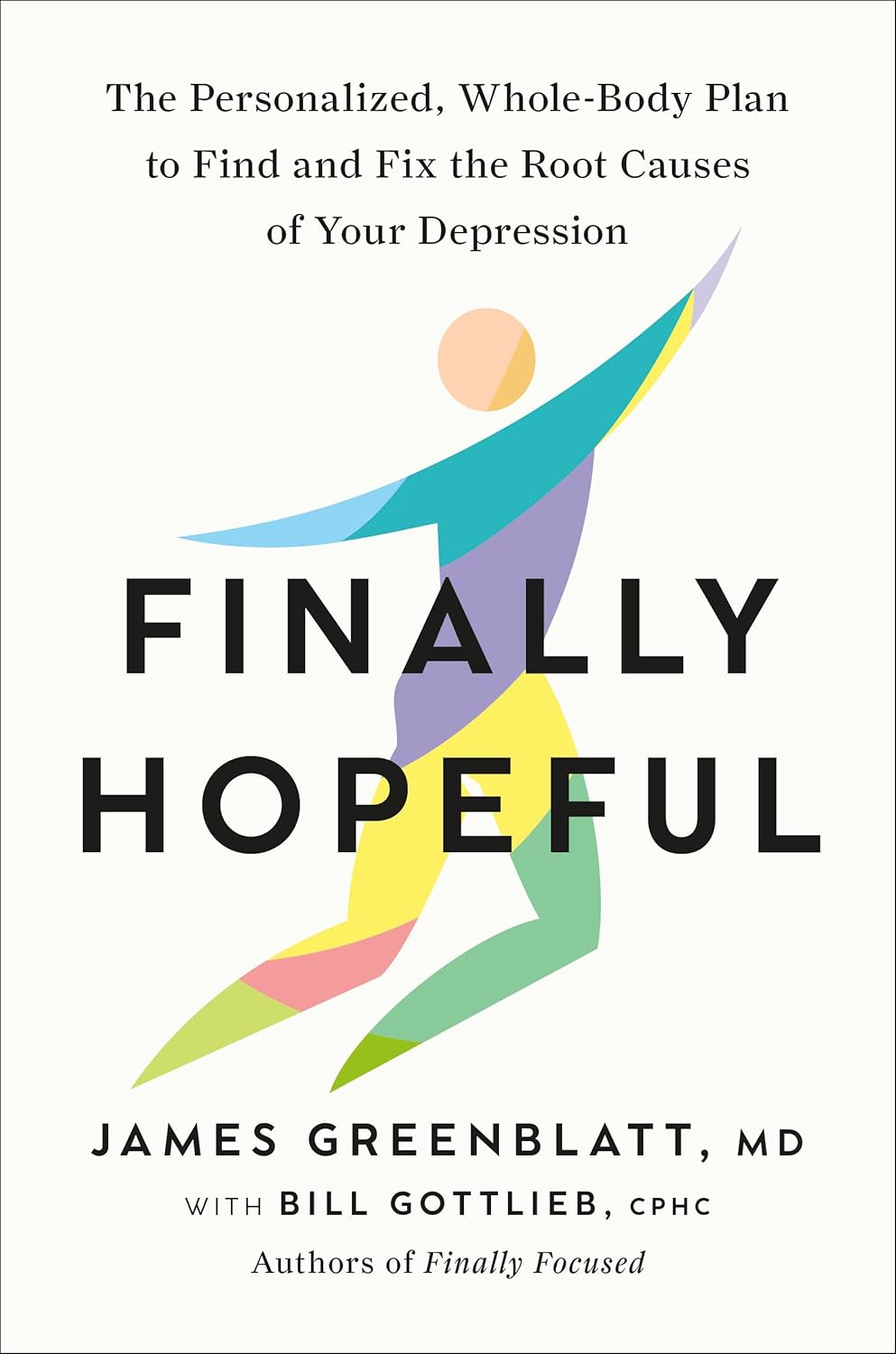
‘Finally Hopeful: The Personalized, Whole-Body Plan to Find and Fix the Root Causes of Your Depression’
By James Greenblatt, MD, with Bill Gottlieb, CPHC
Rodale Books: Jan. 13, 2026
Hardcover, 368 pages
What arts and culture topics would you like us to cover? Please email ideas or feedback to features@epochtimes.nyc
