



PG | 1h 24m | Animation, Drama, Family, Adventure | 2024
I have to admit that since I was a wee lad, I’ve had a love-hate relationship with animated features. If one’s age is in the single digits, animation is great, quality notwithstanding. It’s like a fish gazing at lures. Whether real or fake, they look good. However, the attention spans of young children are limited, which is why I still treasure the Warner Bros. shorts released in the 1940s, 1950s, and early 1960s.
Keeping a child’s interest for 90 minutes or so is tough. Boredom sets in quickly, something animation pioneer Walt Disney recognized early on. As far back as 1940, Disney began mixing child friendly imagery with adult-ish themes (“Fantasia”). Although critically acclaimed, “Fantasia” failed to match the box office returns of “Snow White and the Seven Dwarfs” (1937) or “Pinocchio” (earlier in 1940). With these, Disney ruled the theatrical feature market.
This all changed in 2001 with the DreamWorks studio release of “Shrek,” which went on to win the first-ever Best Animated Feature Academy Award. While “Shrek” featured broadly drawn animal, human, and nonhuman characters, it also leaned heavily into inoffensive adult humor, which had a net-zero effect on children. It was a perfect mix. Children loved it, adults could stand (if not also love) it, and feature film animation was forever changed.
A New Direction
Well into the new millennium animated movies have taken a welcomed new and positive direction with “Flow,” the second feature from Latvian visionary Gints Zilbalodis (“Away,” 2019). “Flow” does things no other animated feature has done since “Fantasia,” and then some. It’s the perfect “show, don’t tell” movie.
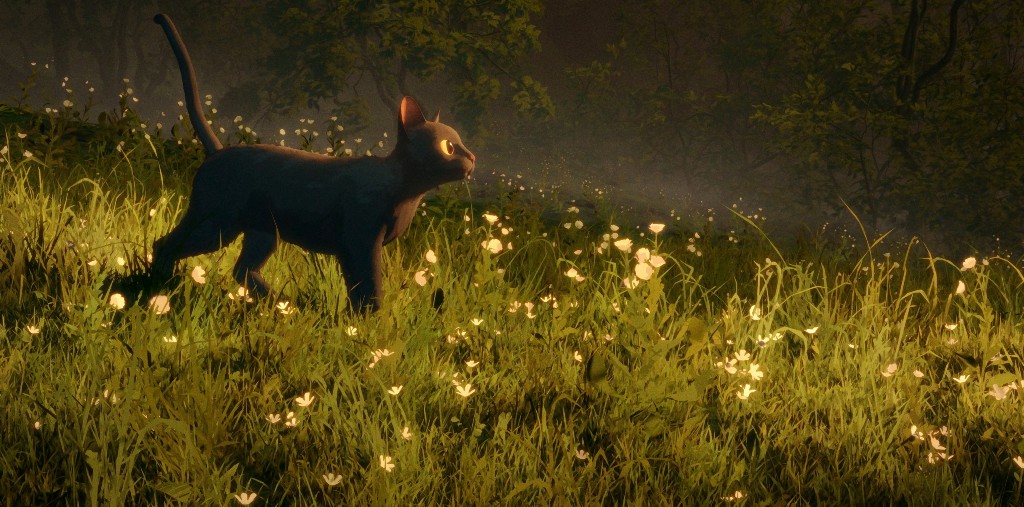
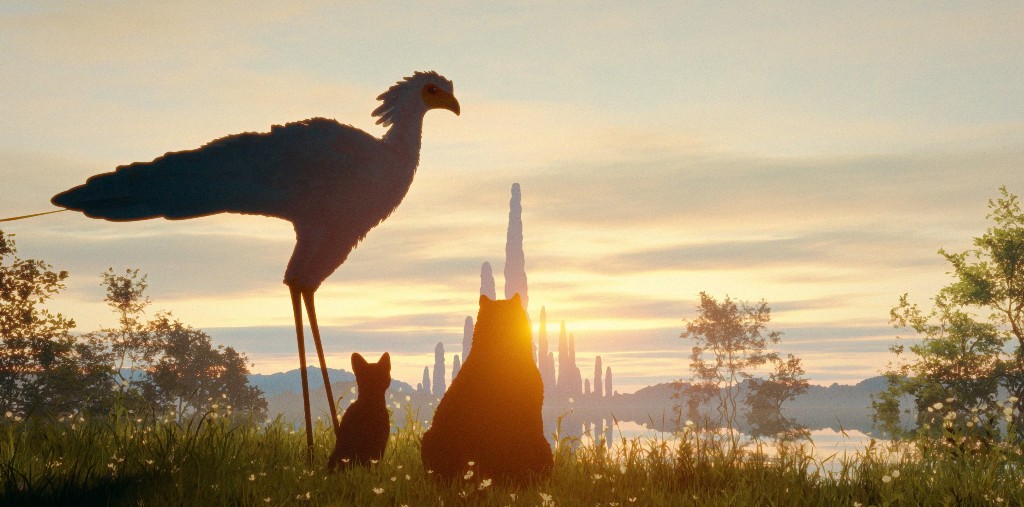
There are no human characters in “Flow.” The animal characters look like real animals in proportion and size. There are no songs performed by the characters, the animals don’t speak English or any other human language, and there’s no narration. It consists entirely of images, incidental sounds, and a low-key “wallpaper” score.
The film opens in the unspecified future, not long after an event that has flooded the globe. The lead character, a Russian Blue cat, begins trying to figure out what happened and what to do next. The cat crosses paths with a pack of dogs that barely notice it while looking for food. As dogs with short attention spans often do, they then chase the cat, which ultimately proves to be futile.
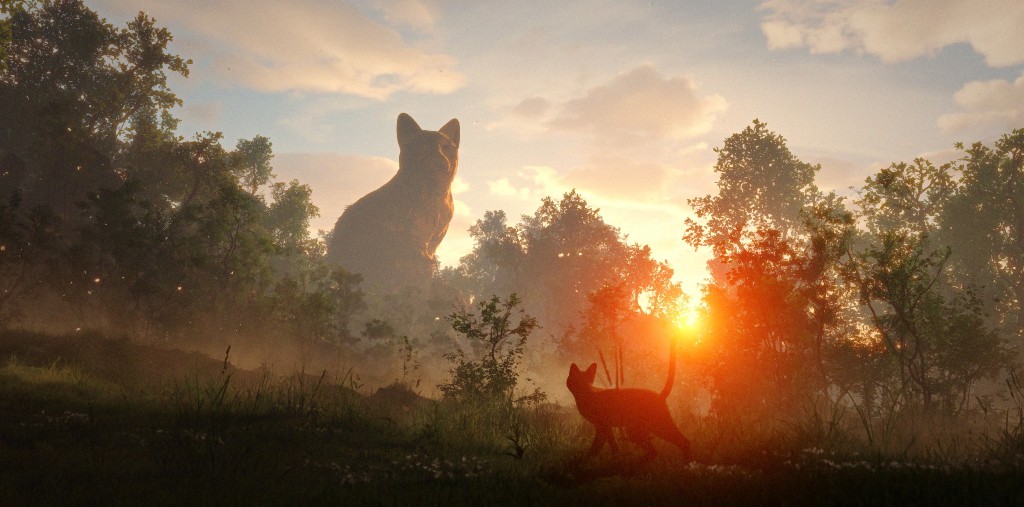
The cat returns to what looks like its home, an estate owned by an artist that was way too enamored with felines. Multiple cat statues on the property range from life-size to multistory buildings. As the water continues to rise, the cat tries to escape by seeking higher ground.
The Capybara
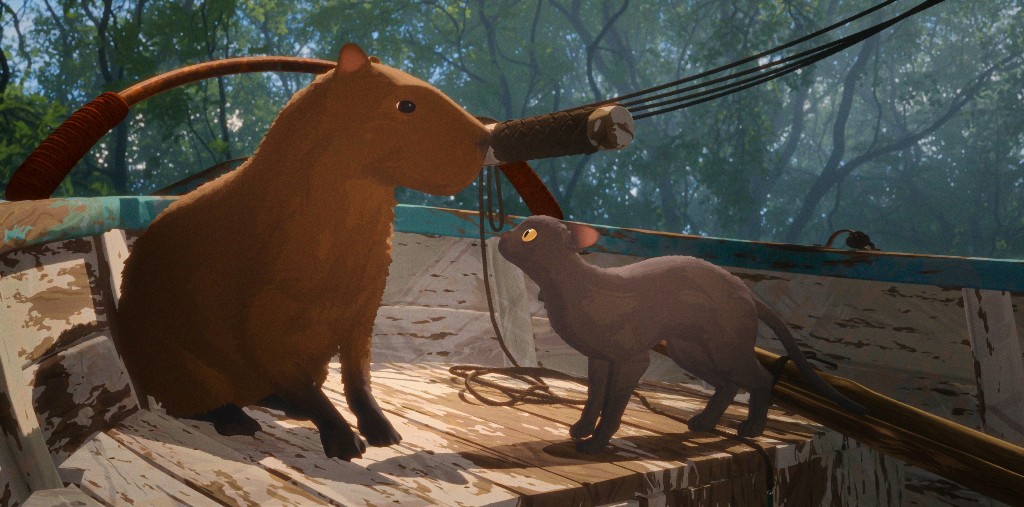
At the point when the flooding appears to be over, the cat jumps aboard an abandoned sailboat occupied only by a capybara. Never heard of a “capybara”? Neither did I. The capybara is the world’s largest rodent that measures four feet long by two feet tall and can weigh up to 180 pounds. By all indications here, this animal is extremely passive and easily unimpressed.
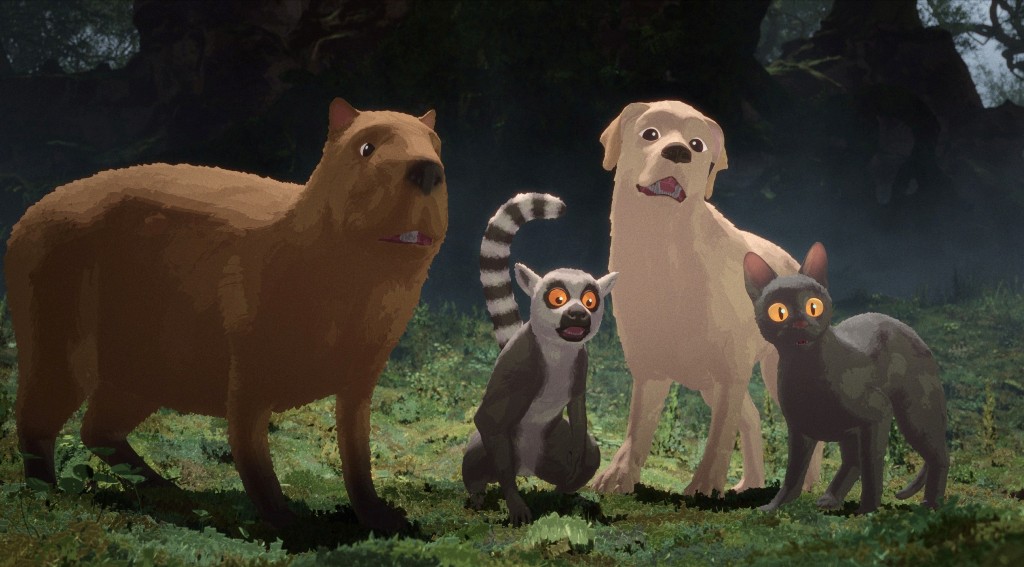
The cat and the capybara are soon joined by a high-strung ring-tailed lemur, a Golden Lab, and, for a good stretch, a large secretarybird that gets separated from its flock. Imagine an animal with an eagle head and a white swan-ish torso atop crane legs that’s about five feet tall.
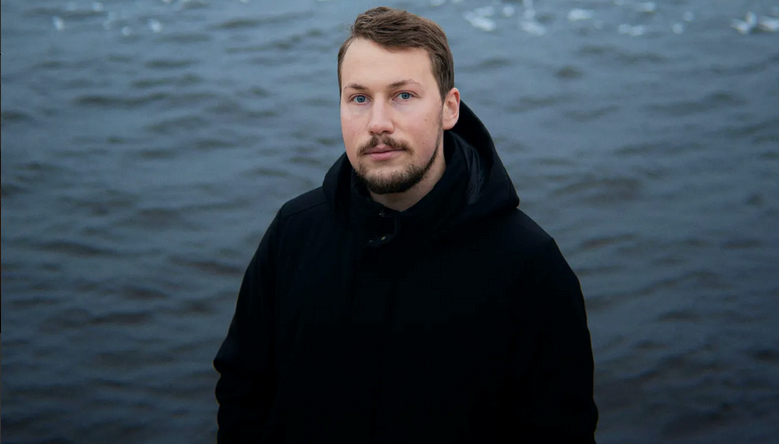
In addition to directing “Flow,” Zilbalodis co-wrote, co-produced, and co-scored the movie, and it’s clear that he poured his heart and soul into it. It’s a tale of the aftermath of incalculable, unspecified devastation; but it’s also a metaphor of beings of differing backgrounds, with no knowledge of their fellow survivors, banding together to merely make it to the next day.
After 15 minutes, I’d forgotten I was watching an animated movie. I was viewing it as a documentary that was retouched in post-production. None of the imagery is exaggerated or overbroad. The animals have personalities that aren’t delivered through dialogue or song, but rather through behavior and deeds.
Possible Peril
The movie’s PG rating is appropriate. There are passages containing possible peril, mostly involving the cat, that could leave some young children frightened. But (spoiler ahead), there are no on-screen deaths of the principal characters.
If you decide to see it, be sure to stick around through the end credit sequence. There’s a brief post-credit scene that completely changes the complexion of the unofficial “last” scene.
“Flow” is unlike anything you or your children have ever witnessed, and (hopefully) is just an indicator of what is possible to come for the future of animation. My lifelong “love-hate” relationship with the genre has, for now, swung back strongly to one of love.
The film opens nationwide in theaters on Dec. 6.
‘Flow’
Director: Gints Zilbalodis
Running Time: 1 hour, 24 minutes
MPAA Rating: PG
Release Date: Dec. 6, 2024
Rating: 5 stars out of 5
What arts and culture topics would you like us to cover? Please email ideas or feedback to features@epochtimes.nyc
