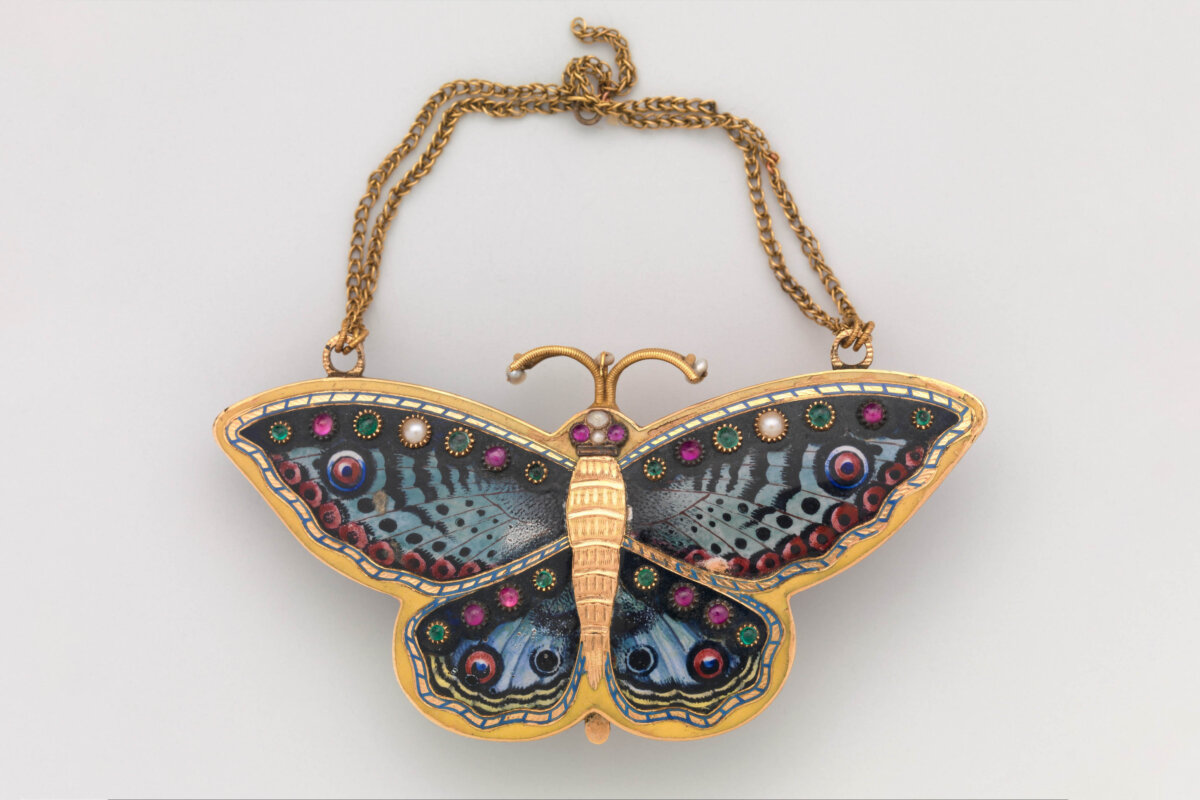
What is it about butterflies that draws a delighted cry as one flutters near? From jewel-toned wings to weightless grace, the butterfly carries a joy that seems outsized for something so small. That quality has inspired artists to fix in permanent form what nature made so fleeting: Painters have pursued it across canvas, craftsmen have inlaid its winged silhouette into fine furniture, and jewelers have conjured its iridescence in glittering gemstones. Across fine art, decorative arts, and fashion, the butterfly remains a gentle reminder of beauty in the world.
Inspired Paintings
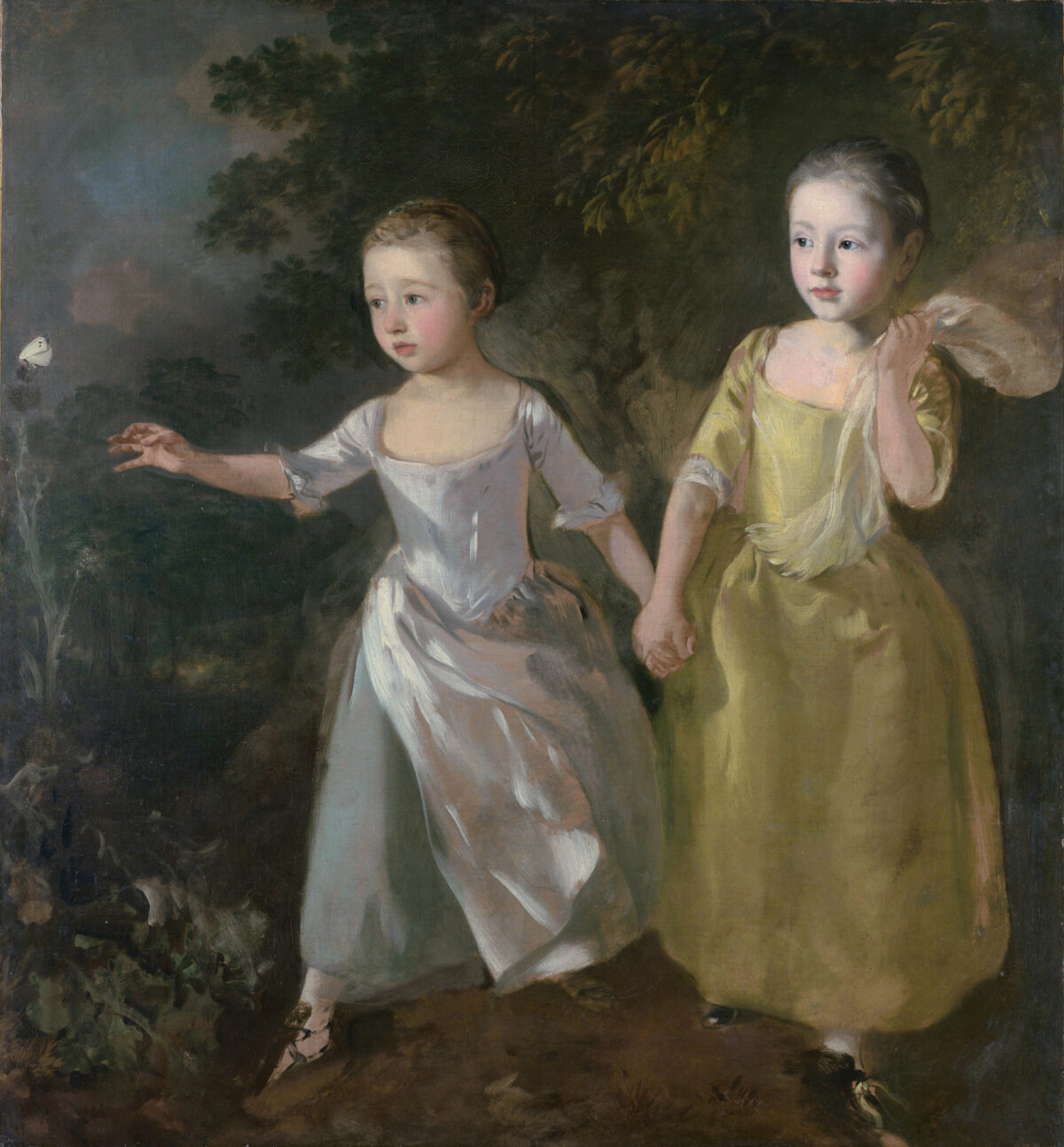
“The Painter’s Daughters Chasing a Butterfly,” was painted while Thomas Gainsborough (1727–1788) was still establishing himself in Ipswich, a borough of Suffolk, England. This double portrait of his daughters, Mary and Margaret, is among the most tender images in British art. The two young girls, hand in hand, pursue a butterfly in the forest. There is no formal studio staging here, no borrowed mythology. Gainsborough treats his children with the same alert informality he would later bring to his landscapes: The girls exist within the natural world, not posed before it.
Gainsborough aptly captures the concentration of children mid-chase through their sweet, intent expressions. The butterfly, barely a presence at the upper left, anchors a scene of childhood joy while also hinting at how briefly such moments last.
A century later in America, Winslow Homer (1836–1910) found his own way to the subject through the slower rhythms of the natural world. By 1878, Winslow Homer was working on a smaller, more intimate scale, his attention drawn to the unhurried textures of American rural life. “Butterflies” belongs to this contemplative phase. “Butterflies” shows the winged insects suspended among grasses and wildflowers as a young woman reaches to capture them in her net, handled in his characteristic brushwork.
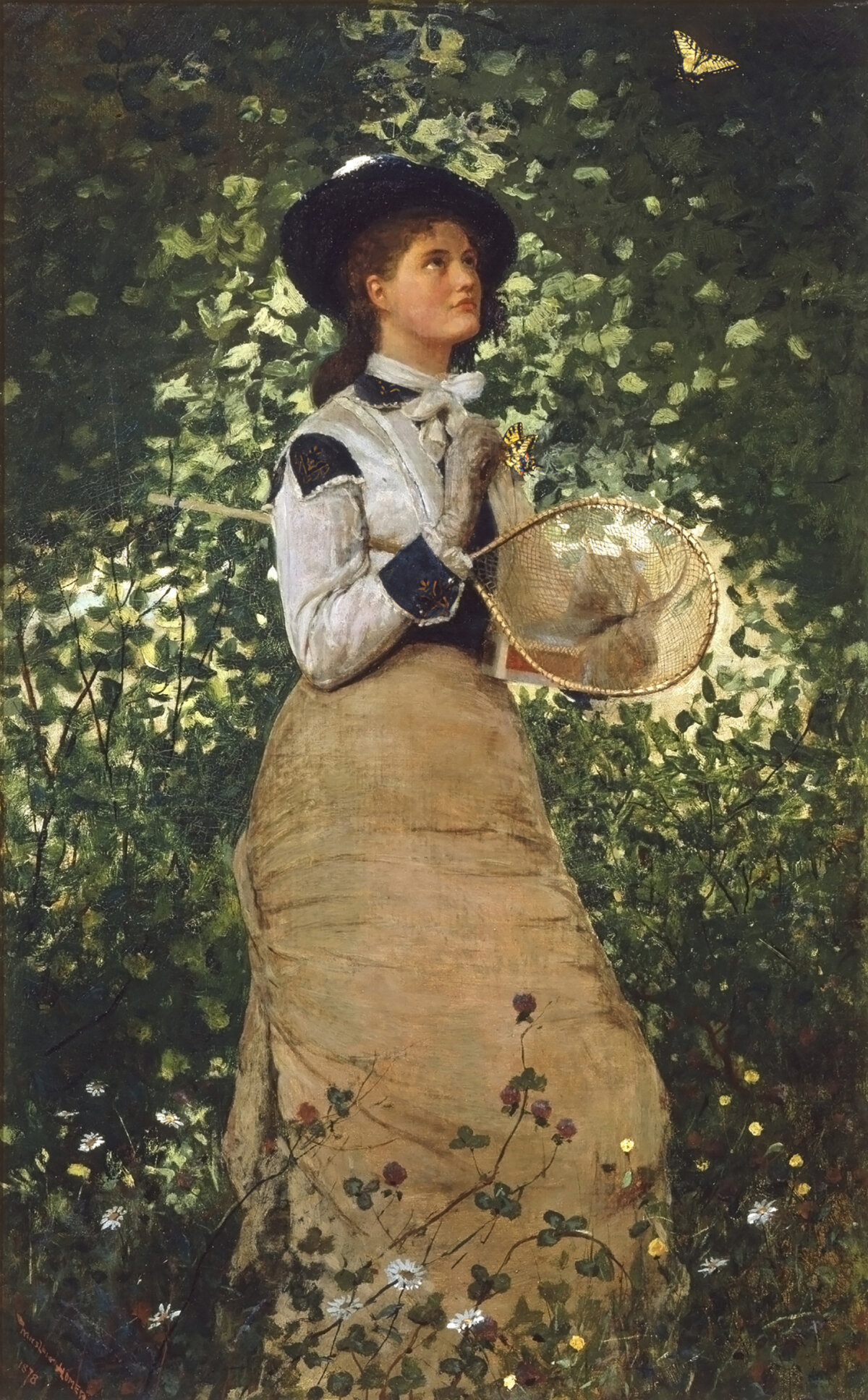
Homer’s treatment refuses sentimentality. Where an academic painter might have arranged butterflies in a jewel-like romantic effect, Homer treats them as facts of the visible world. His palette of yellows and greens evokes the heat of late summer, anticipating the lyrical restraint of his later Adirondack and Maine watercolors.
Butterflies as Decorative Arts
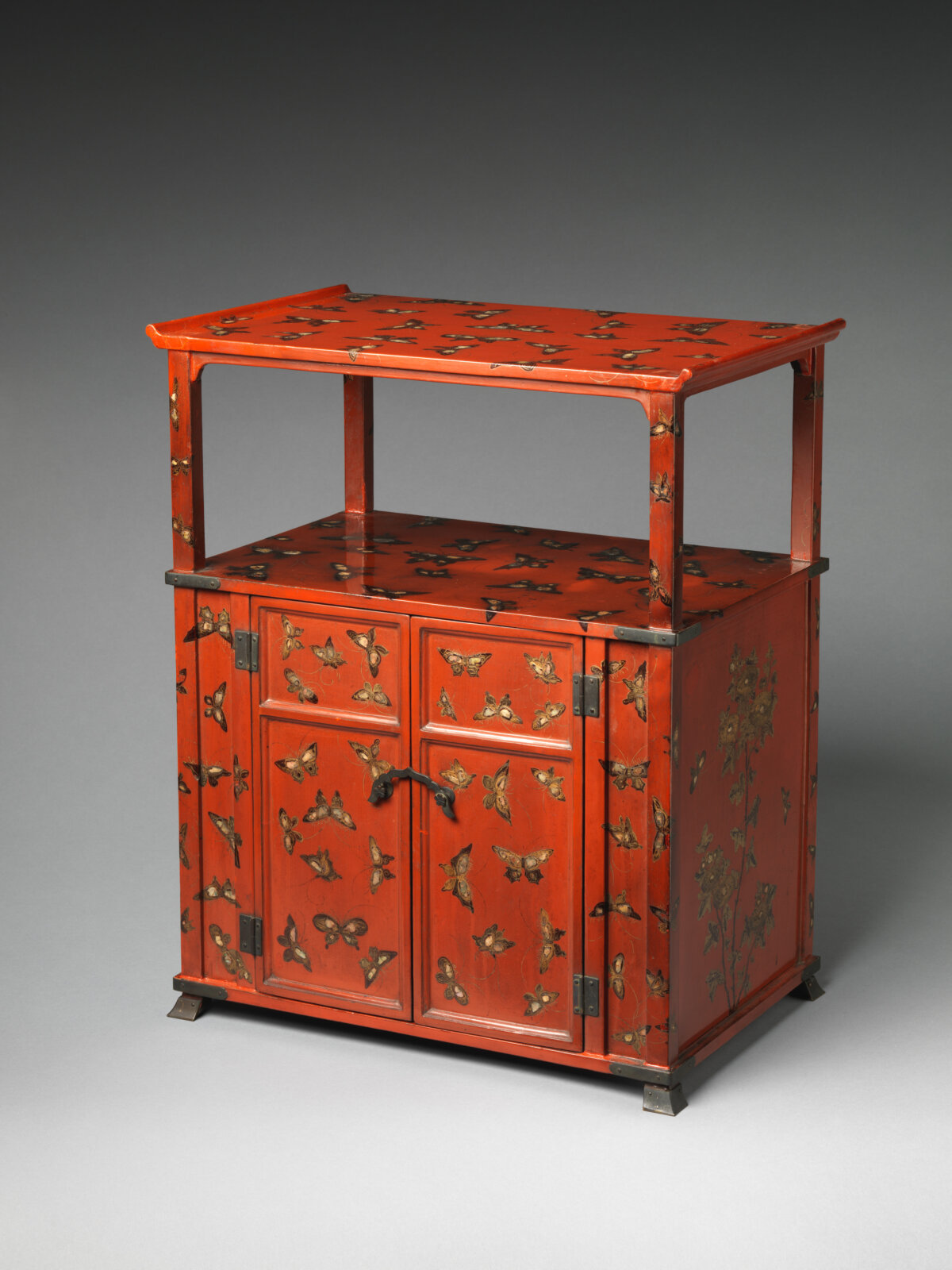
An 18th-century cabinet with a design of butterflies exemplifies Japan’s Ryūkyūan lacquerware tradition: Its red lacquer ground is animated by butterflies in black and gold lacquer inlaid with mother-of-pearl. An opening in the back wall suggests the piece once housed sacred objects.
The butterflies are shown in flight, their wings layered with colored lacquer that shift and shimmer as the viewer moves. In Japanese decorative art, butterflies carry associations of domestic happiness and longevity, making them a fitting embellishment for a piece intended for the home.
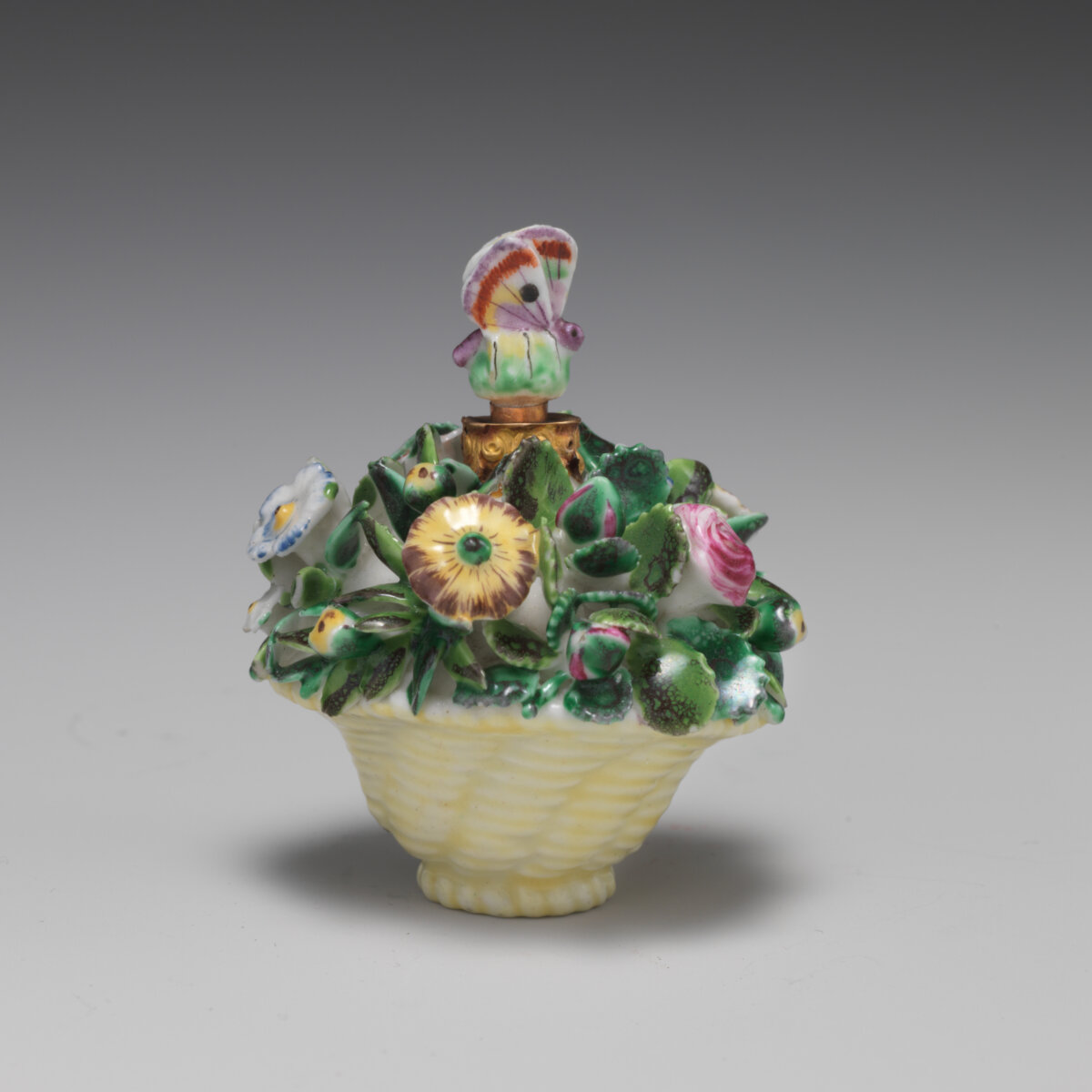
Half a world away, European craftsmen of the same era channeled similar decorative impulses into the airy exuberance of the Rococo style. Made in 1755, “Basket of Flowers” is one of the most charming surviving works of the short-lived Saint James’s Factory, which operated in London from 1749 to 1759 under French jeweler Charles Gouyn. Although the nearby Chelsea factory loomed large, the Saint James’s Factory carved out its own peculiar and charming visual identity. Saint James’s pieces are prime examples of English Rococo: whimsical, asymmetrical, and animated by colorful floral motifs.
A plump purple-bodied butterfly perches atop a mound of porcelain flowers. Delicate in medium but playful in spirit, “Basket of Flowers” shows that fine porcelain can be lighthearted.
More than two centuries later, the American ceramicist Susan Thayer pushed the humble teapot into imaginative territory with “Washday Miracle.” The title of Thayer’s decorative piece suggests domesticity, routine, something scrubbed clean. But the teapot is so much more. Thayer has packed its surface with an entire ecosystem: a tiger prowling the base, caterpillars inching from grape clusters, and butterflies perched on the handle, spout, and lid.
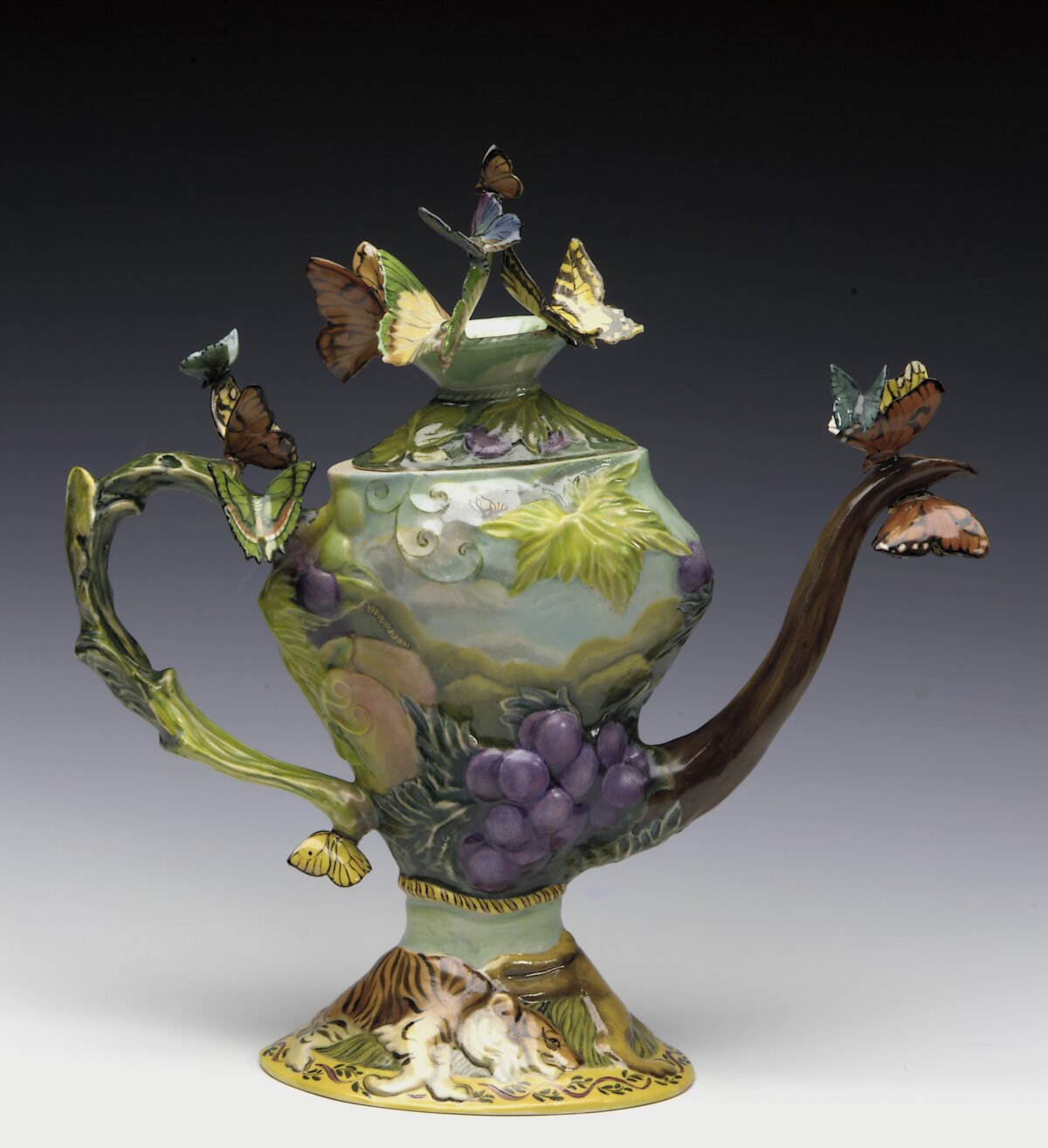
The work sits within a rich American tradition of narrative ceramic sculpture drawing on folk art, natural history, and traditional craft. The “miracle” of washday is not the removal of a stain but the revelation of a teeming imaginary world within an ordinary object. Donated to the Smithsonian in honor of the artist’s mother, the piece carries added layers of wonder and nostalgia.
Jeweled Butterfies
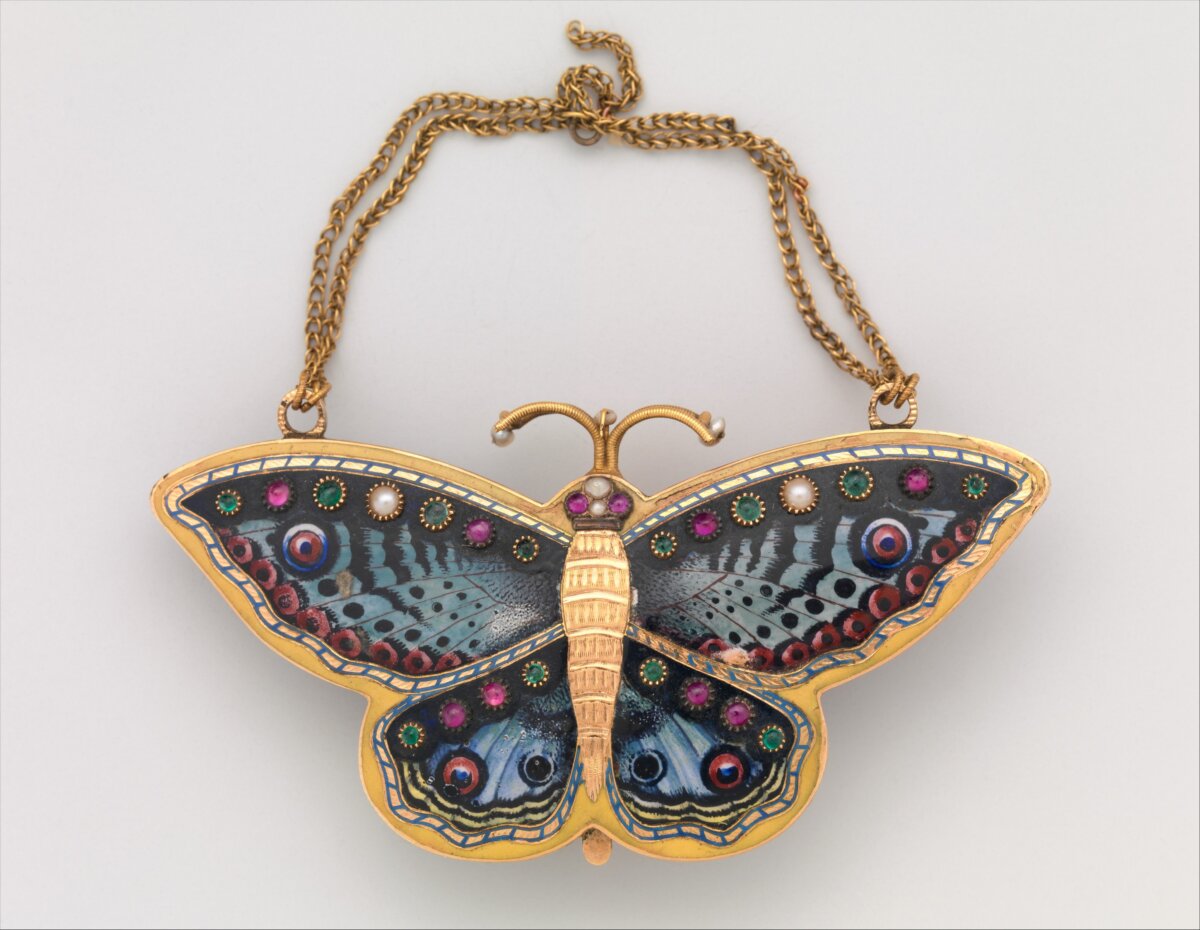
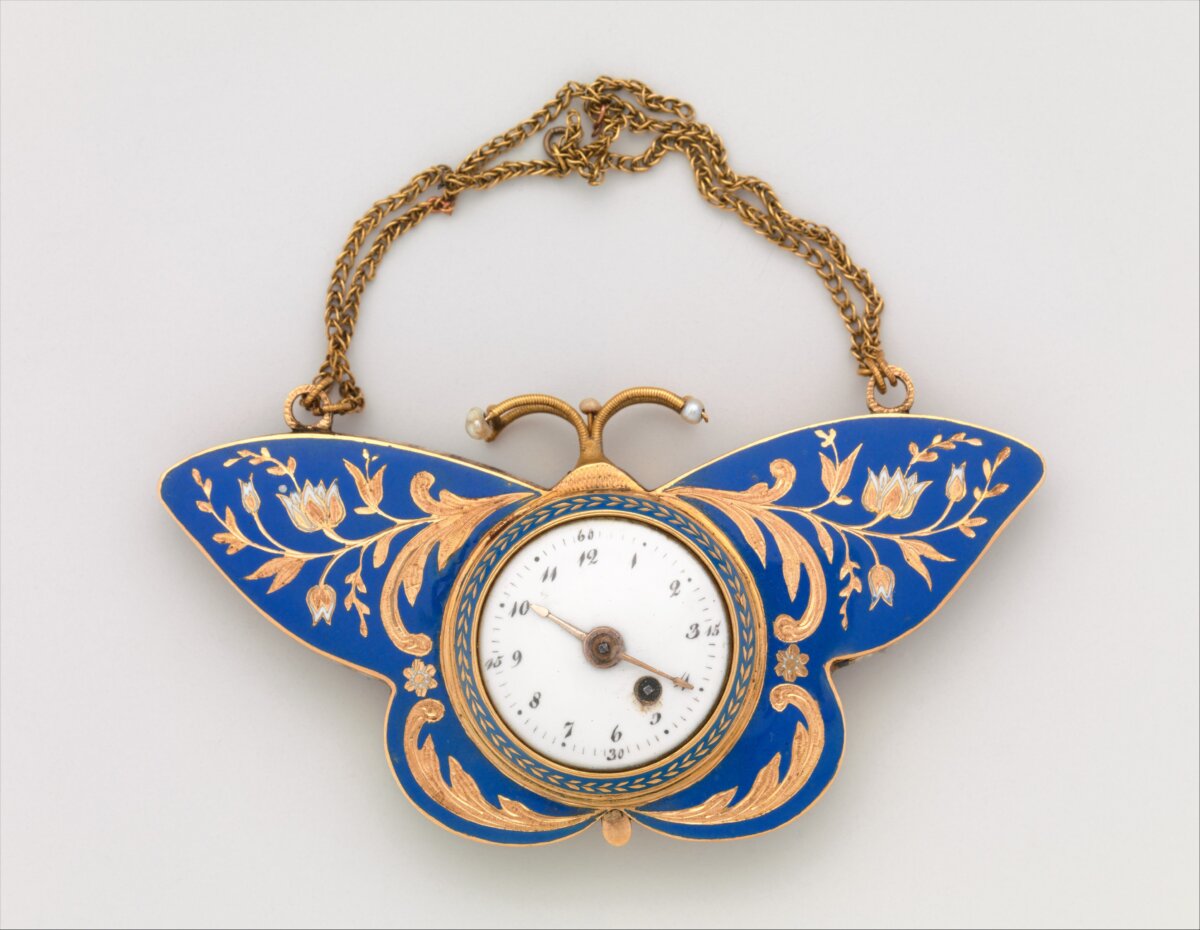
Across the Atlantic, Swiss craftsmen of the 1840s pursued a similar delight in surprise and transformation, concealing it within some of the most exquisite objects of the watchmaker’s art. Key-wound and designed as concealed pendant watches, they took the form of flowers and insects, their surfaces enriched with champlevé and guilloché enamel. Coveted by European and Asian elites, they were as much jewelry as timepieces.
The butterfly watch’s wings were laid in translucent enamel over gold, then painted to render the markings of a specific species. The mechanical element was concealed within the body, and the wings could be opened to reveal the dial, allowing the owner to surprise and delight in a single gesture.
While the Swiss watchmaker concealed wonder within a butterfly’s wings, the jeweler sought to rival nature itself: Butterflies captivate on their own, but a butterfly set with diamonds is something else entirely. Among the most distinctive pieces in the celebrated insect collection of Deborah Cavendish, Duchess of Devonshire, this late 19th-century brooch is set in gold, its wings composed of circular-cut diamonds alongside cushion-shaped diamonds, the eyes rendered in cabochon rubies.
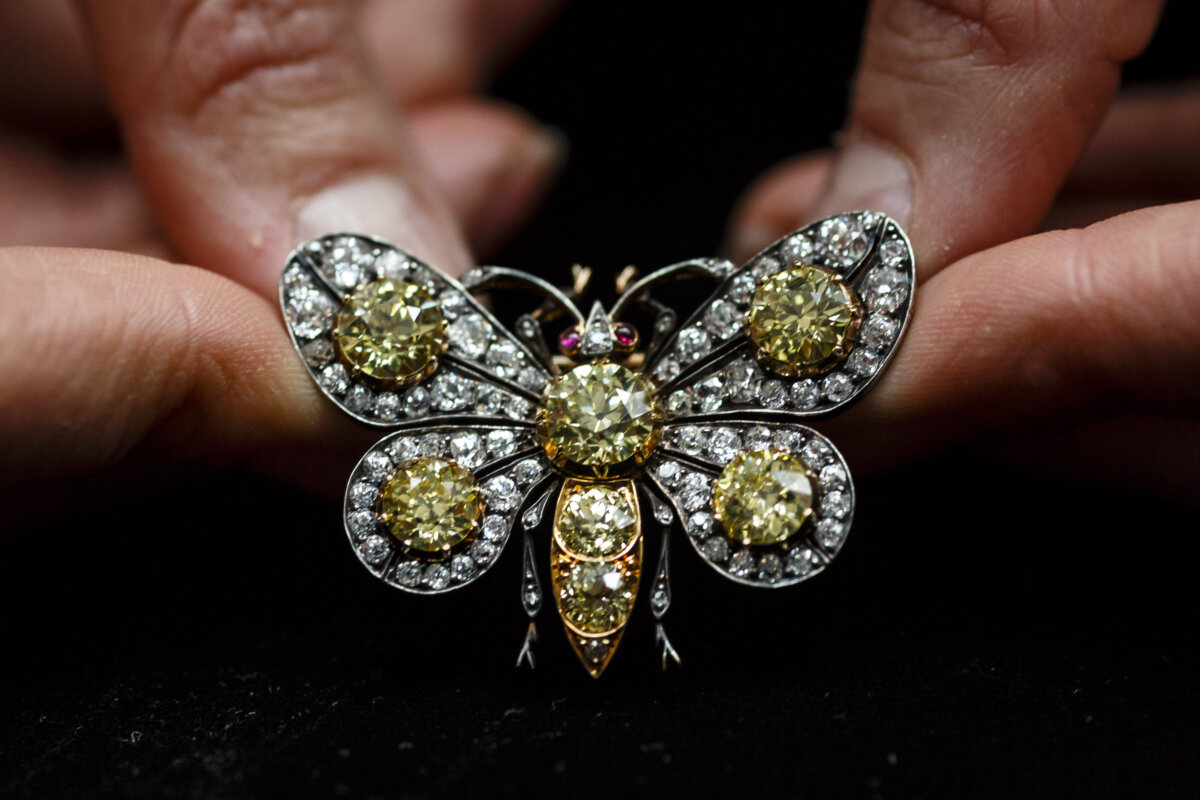
The brooch belonged to a tradition that began on her wedding day in 1941, when the future Duke of Devonshire presented her with a diamond butterfly brooch. For nearly every anniversary across their 63-year marriage, he gifted her a new jeweled insect. She became known for wearing her brooches in dense clusters along the velvet sleeves of her jackets, a single garment carrying a whole cabinet of natural history.
Dating to around 1880, the brooch reflects the European revival of Renaissance and baroque jewelry techniques, its wings exploiting the subtle asymmetries of differently cut stones to evoke the texture of real butterfly wings.
From Gainsborough’s forest to the Duchess of Devonshire’s sleeve, the butterfly has passed through paint, lacquer, porcelain, enamel, and gold. Each medium catches something different in its wings: A child’s fleeting joy, a craftsman’s ingenuity, a husband’s devotion, renewed anniversary after anniversary. Though the subjects and scales could not be more different, they all have a similar desire to hold, the same impulse persists: To hold and keep a fleeting thing of beauty.
What arts and culture topics would you like us to cover? Please email ideas or feedback to features@epochtimes.nyc.