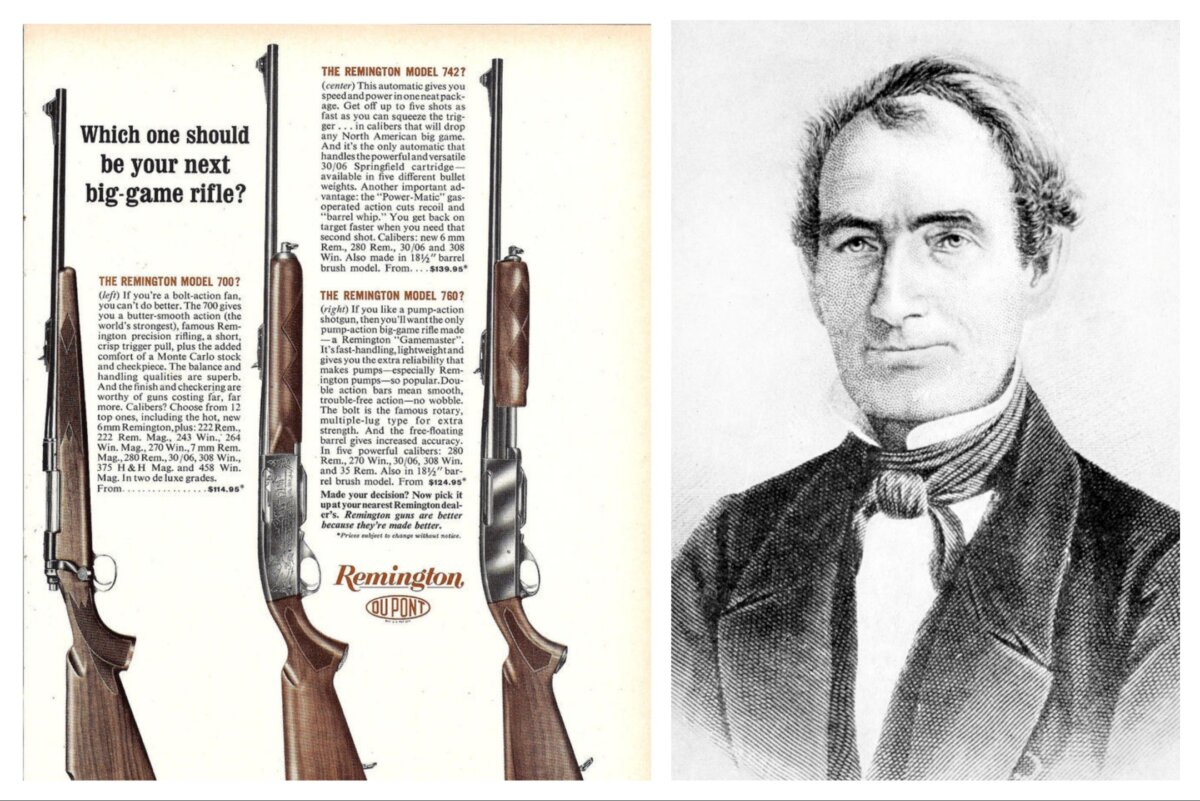
Long before Remington became a fixture of American industry, it was simply a name struck into iron in a small upstate New York forge. In the early 19th century, as the young republic pressed outward—across rivers, over ridgelines, and into contested ground—Eliphalet Remington II turned skill, necessity, and a restless eye for improvement into something more lasting than tools. He built a reputation that would travel quietly, but persistently, with the nation itself.
A Blacksmith of Blacksmiths
Born in 1793 in Suffield, Connecticut, Remington came of age in a country still defining its edges. When his family settled near Ilion, New York, the region stood at the fringe of expansion, where self-reliance was less a virtue than a requirement. He learned blacksmithing in his father’s shop, shaping iron into the implements settlers depended on—axes, plowshares, and fittings that held wagons and livelihoods together. It was steady work, but Remington saw beyond it.
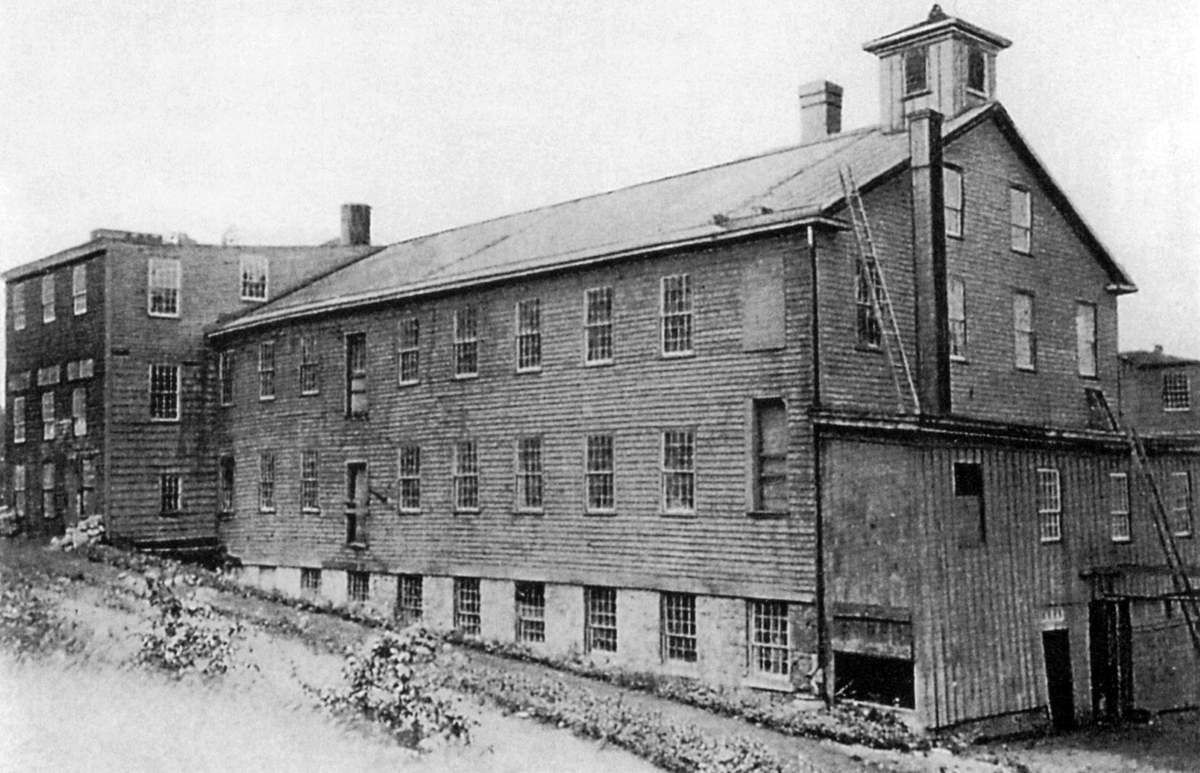
Around 1816—so the story is often told—he set out to make a rifle barrel after finding existing ones wanting. He forged the barrel and carried it to a specialist for rifling, returning with a finished piece that quickly drew attention. Whether polished by time or not, the episode captures something essential: Remington’s instinct to improve what already existed and to trust his hands to do it.
Orders followed. First for barrels, then for complete firearms. What began as a sideline in a blacksmith shop grew into a dedicated enterprise. By the 1820s, Remington had established a small but expanding operation in Ilion. He brought his three sons—Philo, Samuel, and Eliphalet III—into the business, and they gradually standardized production, incorporating ideas about interchangeable parts and quality control. It was not a sudden transformation, but a steady one, shaped by demand, practice, and fine-tuning.
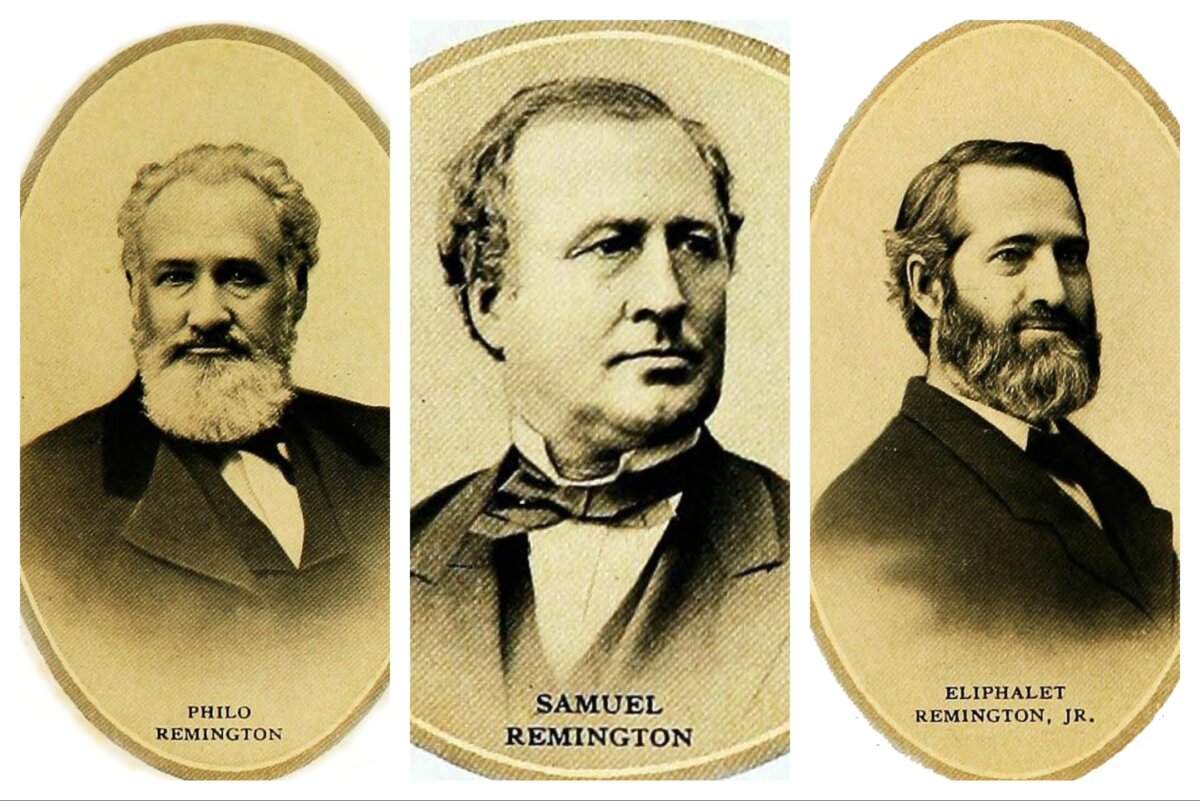
As markets widened and demand increased—following the building of roads, canals, and, eventually, rail—those who could produce reliable goods at scale gained an advantage. By the mid-19th century, the company grew into a major American firearms manufacturer under the name E. Remington & Sons. Their products earned a reputation for durability and precision—qualities valued by civilians and the military. Their reliability earned lasting loyalty from people who often carried them far from places where replacements were easy to find.
Remington didn’t live to see the reach of his enterprise. He died in 1861, at the outset of the Civil War, just as demand for firearms surged. It was his sons who carried the business forward, expanding production and broadening its scope. Philo was involved with the company for nearly 50 years, retiring in 1886.
In the decades that followed Eliphalet’s death, the firm moved into typewriters, sewing machines, and other mechanical goods, extending the family name into new corners of American life.

Remington firearms made their way West, carried in wagons, on horseback, and in the hands of settlers, scouts, and soldiers moving into unsure territory. They were tools, first and foremost, used for hunting, protection, and survival, but they also became part of the wider mythology of the American West. Out on the plains or along a remote trail, reliability was not a slogan; it was essential.
Remington’s rise was built less on promotion than on products that performed when people needed them most. In an era before modern advertising, manufacturers stamped their goods, but few names endured with such uniformity. Over time, Remington came to signal a certain level of workmanship—something earned not through promotion, but through practice and trust.
That trust was built slowly. A well-made barrel. A rifle that held up under strain. A customer who returned, and then another. The growth of the company followed that same pattern, expanding from a single forge into a national presence. By the time industrial America matured, Remington was already established within it, its name traveling along the same routes as the country’s ambitions.
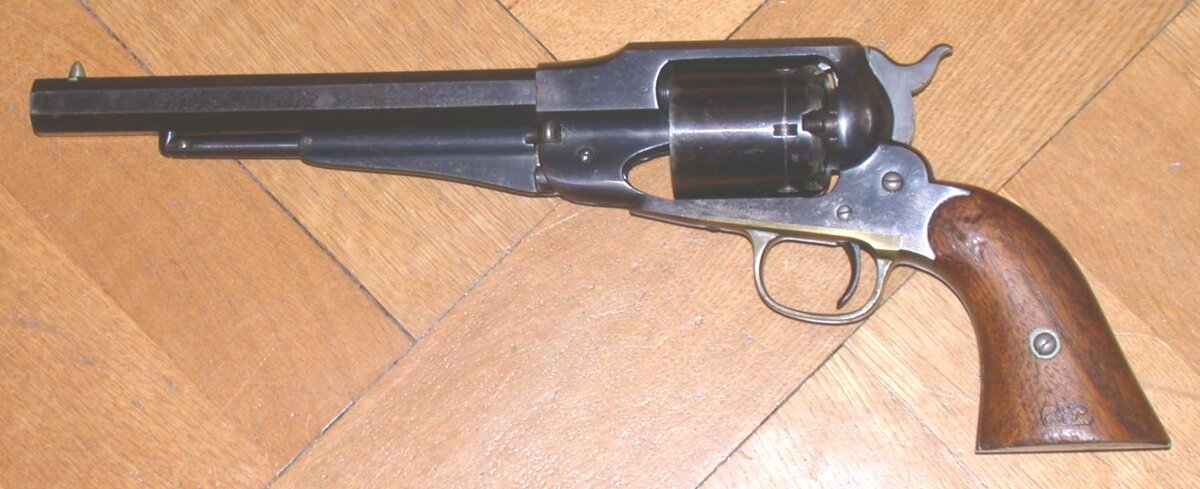
It is easy, in hindsight, to mistake his success for inevitability. The reality was less certain. He worked in a competitive trade, in a young country where failure was common and markets were unpredictable. What set him apart was not a single breakthrough, but a continual commitment to doing the work well—and then doing more of it, indeed, until the results spoke for themselves.
In 2024, Remington closed its Mohawk Valley base of operations in Ilion. Yet Remington still manufactures firearms and ammunition in Georgia. It has adapted to new technologies, survived changing ownership. The brand of few 19th-century craftsmen achieved that kind of permanence, and fewer still left behind a brand carries both utility and identity so completely.
Remington made things that worked—and made them well enough, often enough, that people remembered. The frontier moved on, industries evolved, and the country changed shape, but the name endures, still carrying, perhaps, the ricochet of that first hammer strike in a New York forge.
What arts and culture topics would you like us to cover? Please email ideas or feedback to features@epochtimes.nyc.