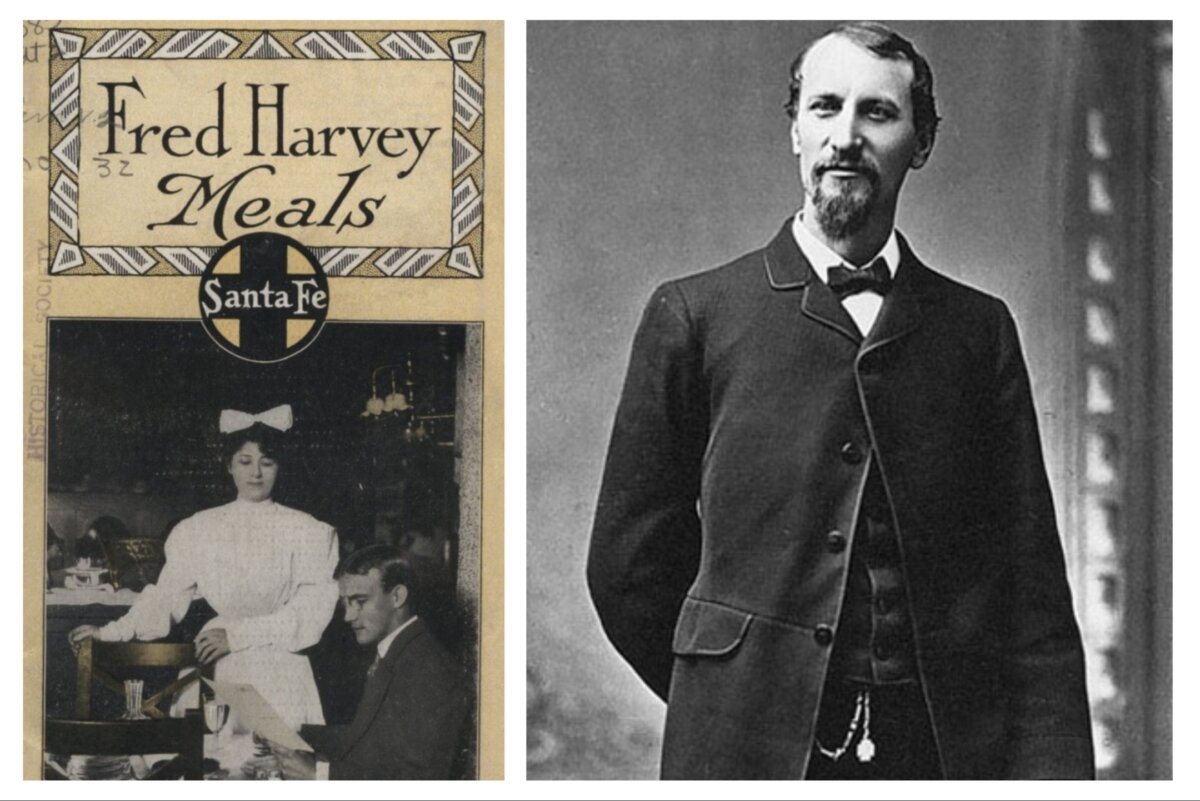
In the railroad West of the 1870s, a meal could be as uncertain as the journey itself. Passengers stepped from smoky coaches into depot yards where coal dust, prairie wind, and locomotive exhaust mingled in the air. A train might stop for an hour, giving hungry travelers just enough time to find a meal, eat it, and climb back aboard. Food along the tracks was often of poor quality, served hurriedly in rough surroundings. Fred Harvey believed railroad passengers deserved better.
Harvey Tames the West
Born in England in 1835, Harvey came to America as a teenager and entered the restaurant business, eventually working in railroad service as well. He traveled extensively and became familiar with the poor food and inadequate accommodations available to passengers. In 1876, Harvey took over the Atchison, Topeka, and Santa Fe Railway’s lunchroom in the Topeka depot and began remaking the operation.
The venture proved successful, and Harvey soon expanded to Florence, Kansas, where he acquired the hotel and dining operation. In 1878, he signed his first formal contract with the Santa Fe, establishing the terms for the Florence operation and setting the pattern for the partnership that would grow with the railroad.
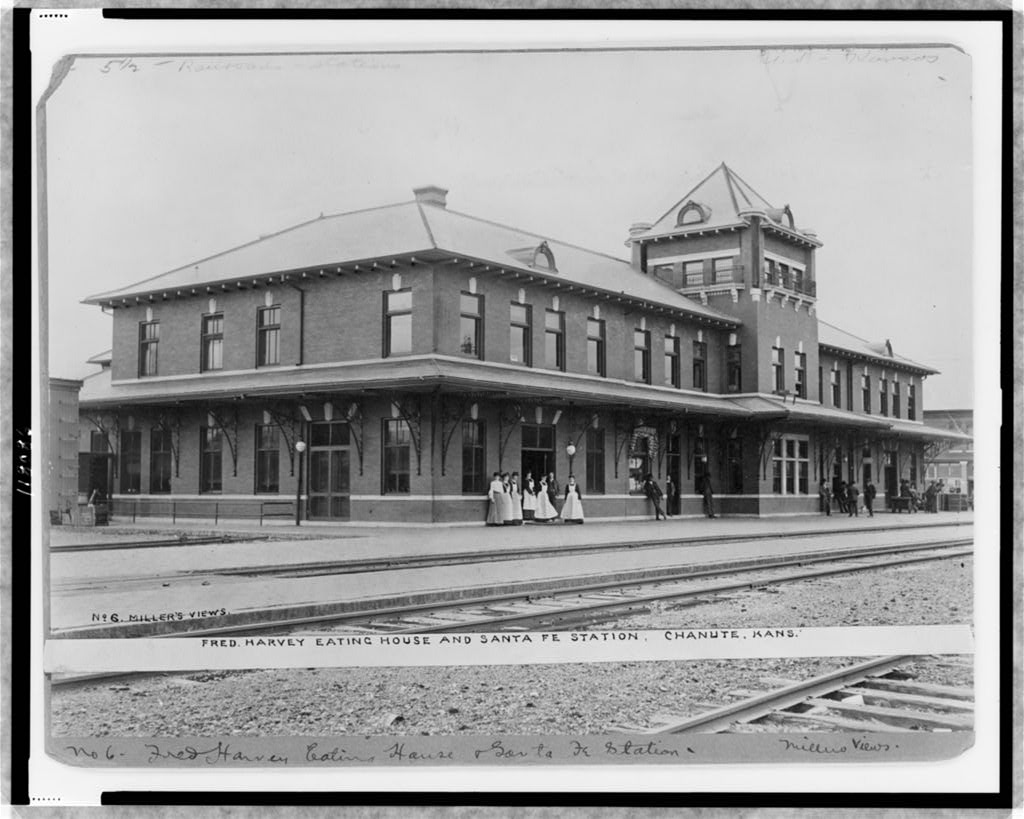
Harvey concentrated on the practical details: cleanliness, food quality, prices, service, and timing. He understood that travelers were constrained by the railroad schedule. A passenger could not linger over a meal while a locomotive waited outside.
To address this, information about approaching trains could be sent ahead, allowing employees to prepare for the passengers expected to arrive. The number of diners could be relayed before the train reached the station, giving the staff time to ready the dining room and kitchen. The arrangement was efficient enough that passengers could step off the train and find a prepared meal waiting.
Growth and Expansion
The business expanded with the railroad. By 1883, Harvey had assumed control of meal service on the Santa Fe line between Topeka and El Paso, and Harvey Houses were appearing farther west.
Harvey died in 1901. His sons, Byron and Ford, continued the company, preserving its standards while expanding its hotels, restaurants and tourist services. One of the early achievements of this new era was El Tovar at the Grand Canyon, which opened in 1905.
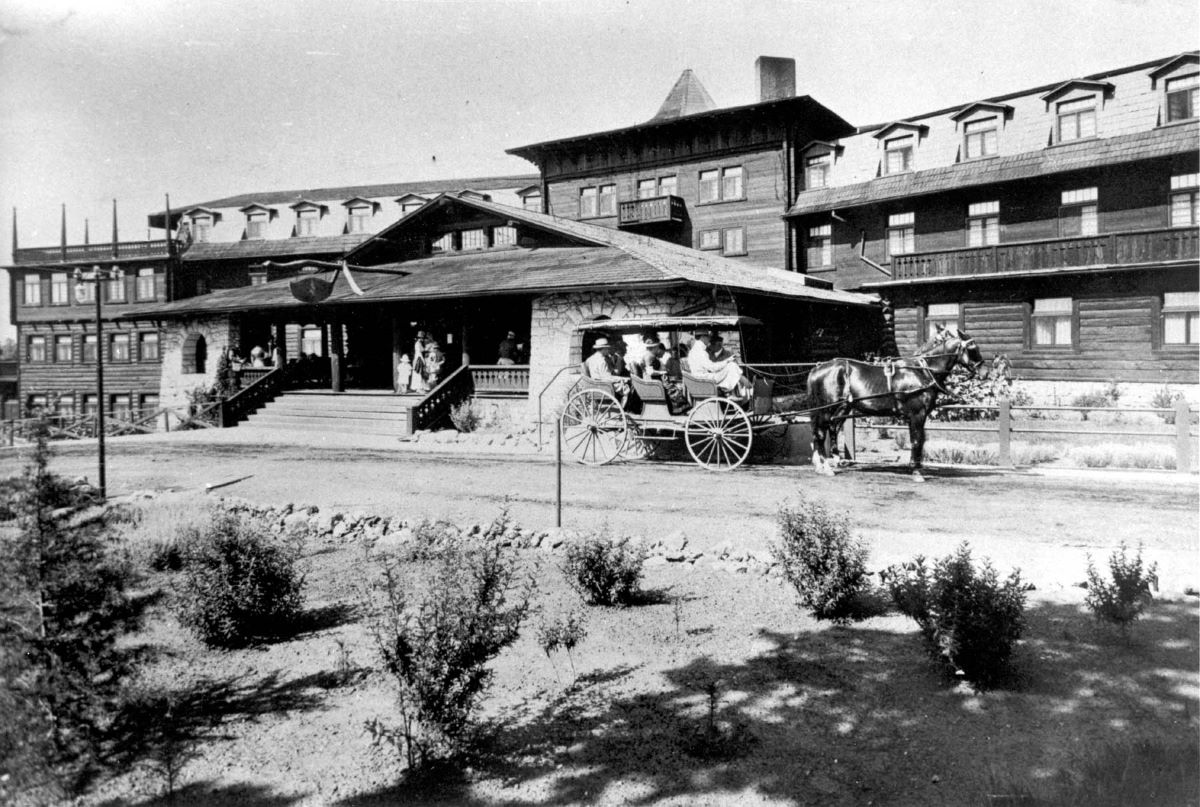
By 1912, the Harvey system had more than 65 eating houses, 12 large hotels, and 60 dining cars on the Santa Fe and St. Louis-San Francisco railroads.
New Mexico became one of the most important chapters in that expansion. The Santa Fe Railway reached New Mexico in 1878 or 1879, and Albuquerque in 1880. Harvey establishments followed the railroad into New Mexico’s Las Vegas, Lamy, Albuquerque, and Gallup. El Ortiz in Lamy and La Castañeda in Las Vegas were early Harvey hotels.
A Showcase of Native Elements and Traditions
One great legacy of the Fred Harvey Company was the Alvarado Hotel in Albuquerque, which opened in 1902, with Mary Colter designing the Indian Building and interiors. That assignment began her long association with the Harvey Company. In 1922, she returned when the hotel was remodeled and expanded, redesigning and redecorating its public spaces.
Colter’s work helped shape the way the Southwest was presented to visitors. She became one of the most influential designers associated with the Harvey enterprise, creating interiors and buildings that drew upon Southwestern materials and traditions.
The company also became deeply involved in selling Native American jewelry, pottery, blankets, and other arts. Its Indian Department promoted Native American arts and crafts as part of the tourist experience and helped turn them into a significant commercial enterprise.
For travelers arriving from the East, the landscape could seem almost unreal. The train crossed open country beneath a hard blue sky, passed adobe walls and cottonwoods, and moved through mesas, mountains, and high desert. Inside a Harvey House was another world: polished silver, white linen, china, hot food, and the measured movements of trained servers. The contrast gave travelers something familiar amid an unfamiliar landscape.
The Harvey Girls
The Harvey Girls became another essential part of the operation. In 1883, the company began recruiting young women to work as waitresses, with Raton, New Mexico, playing an important early role. Employees received wages, room and board, and training in the company’s requirements for appearance, cleanliness, and service.
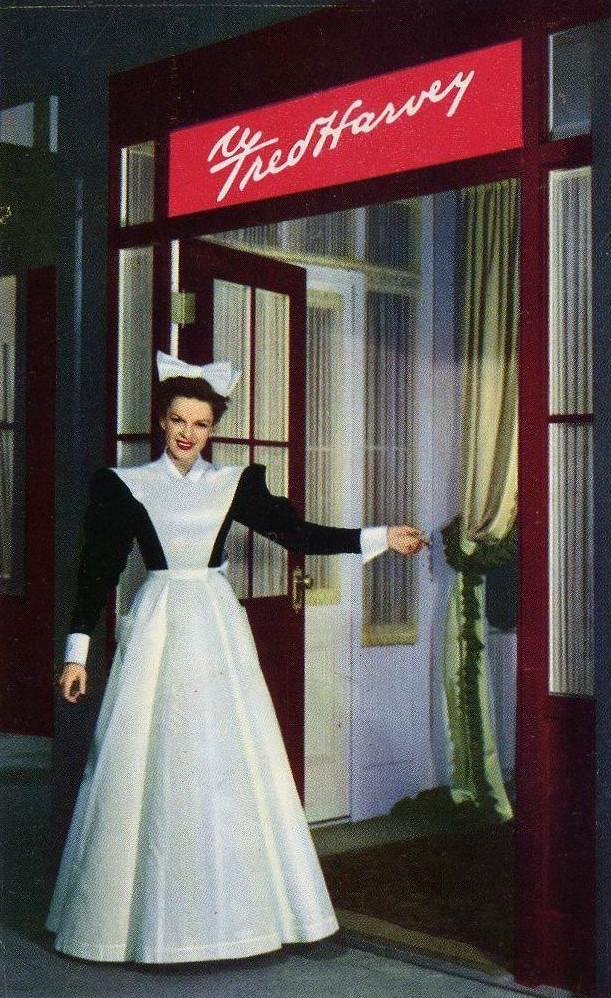
Their uniforms became recognizable along the railroad, and their work helped establish a professional service culture in towns where a Harvey House often became an important part of the local economy. For many employees, the job offered a chance to leave home and earn their own money in a rapidly changing country.
The rules were strict. Harvey expected punctuality and close attention to detail, and the company maintained those expectations as its operations spread across hundreds of miles of railroad.
Harvey’s business began in a Topeka depot and followed the railroad into a changing West. For the traveler, its legacy could be measured in something simple: a train arriving in the dust, a dining-room door opening, and a meal ready before the next departure.
What arts and culture topics would you like us to cover? Please email ideas or feedback to features@epochtimes.nyc.