Frederick Knott’s name isn’t recognized by most people today. Nevertheless, in the 1950s, he was celebrated as the author of “Dial M for Murder,” which enjoyed great success in stage and television productions and as an Alfred Hitchcock film.
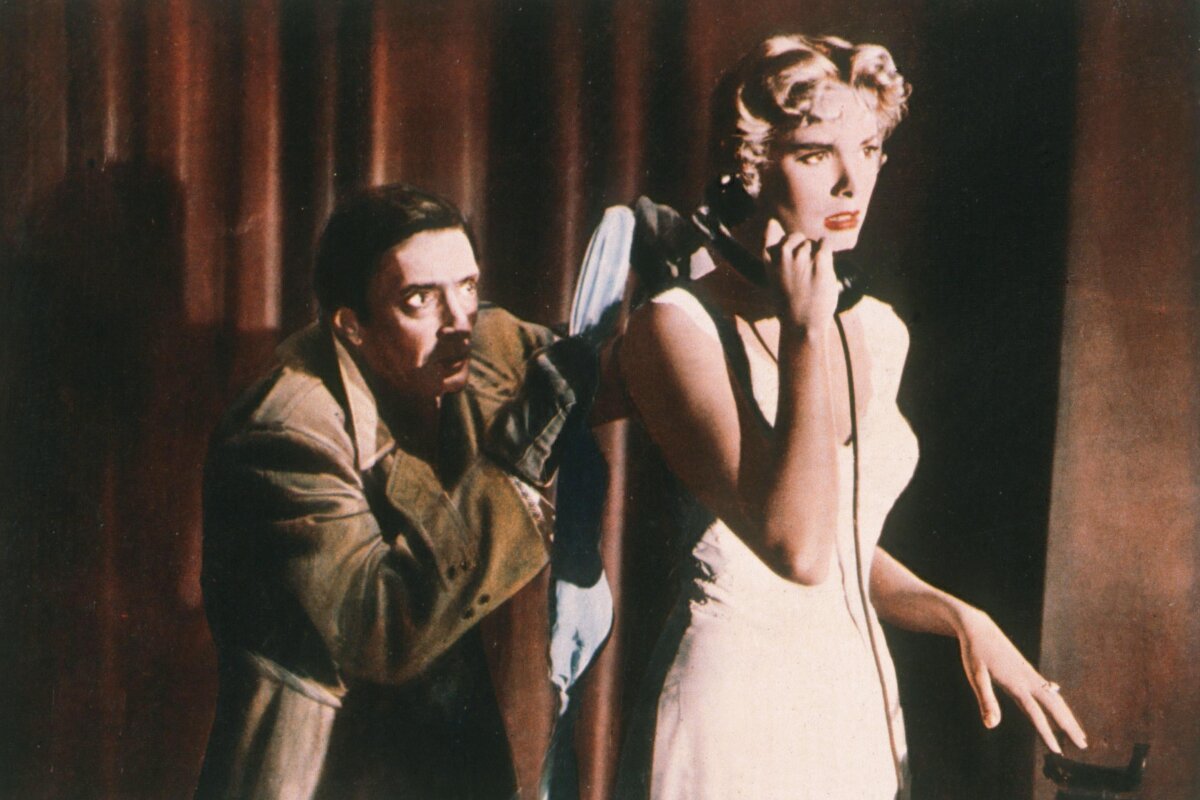
New versions of “Dial M for Murder” are still being produced, with the latest scheduled to premiere on April 17 at Nebraska’s Omaha Community Playhouse. It has an ingenious plot. A murder-for-hire scheme goes awry, with the intended victim being framed by her husband for murdering the would-be assassin. It’s one of the most celebrated thrillers of all time.
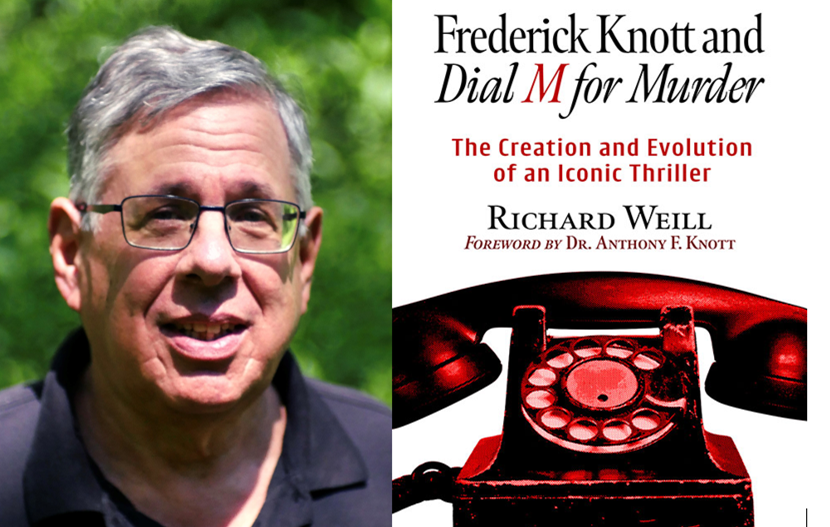
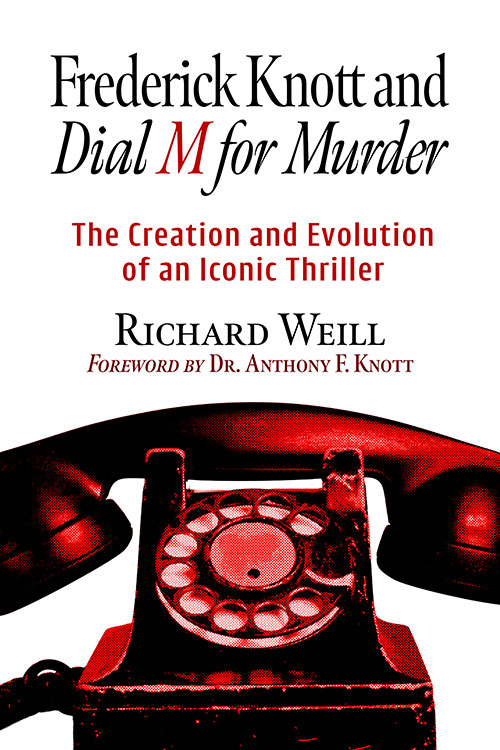
However, people tend to associate “Dial M for Murder” with Hitchcock rather than its author. Richard Weill’s new book, “Frederick Knott and Dial M for Murder: The Creation and Evolution of an Iconic Thriller,” focuses on the convoluted history of the classic thriller. Weill cautions his readers that this isn’t meant to be a traditional biography of Knott, who’s mostly presented as a one-dimensional figure.
Instead, Weill brings forth a fascinating story through an in-depth journey into the creative process.
Making a Mystery
Knott was born in China in 1916, the son of British Quaker missionaries. He was educated in England and became intrigued with murder mysteries while at school. At 18, he wrote a play called “Murder in the Air” and submitted it to a Manchester theater. It was rejected.
Knott attended Cambridge University, where he studied law and led the tennis team. Following military service in World War II, he decided to become a writer. He spent 18 months reconfiguring aspects of “Murder in the Air” into a new play. The result was “Dial M for Murder,” and Weill tracks the extraordinary series of fortuitous events that propelled Knott to fame.
Very Good Luck
Thanks to a well-connected friend in London, Knott was able to get the BBC to premiere “Dial M for Murder” in a live television broadcast on March 23, 1952. Based on that presentation, movie producer Alexander Korda bought the film rights for 1,000 pounds (approximately $42,000 today).
Another producer, James P. Sherwood, tapped Knott to help him fulfill a theatrical booking when a scheduled London show was abruptly canceled. Knott quickly re-edited “Dial M for Murder” for the stage, and the work opened at the Westminster Theatre on June 19, 1952.
One of Sherwood’s friends was the prominent Shakespearean actor Maurice Evans, who read Knott’s script and offered to star in and produce a Broadway version. At Evans’s direction, Knott rewrote the London-based “Dial M for Murder” so it would appeal to New York audiences. British phrases and slang were Americanized, and the story’s hero was changed from a British radio writer to an American television writer.
This production opened on Oct. 29, 1952, with Variety hailing it as “an unmistakable hit.” Unfortunately, the New York run had a sour element for Knott, who read a newspaper article claiming that Korda had sold the film rights to Warner Bros. for $175,000. The article wildly inflated the sale figure, but Knott would always bitterly regret his deal with Korda.
However, it turned out to be a blessing in disguise. Warner Bros. had acquired “Dial M for Murder” at the request of Alfred Hitchcock, who insisted on having Knott write the screenplay. Knott lived with Hitchcock during the film’s production, reconfiguring his work yet again to accommodate a cinematic setting.
Hitchcock enjoyed collaborating with Knott, but he was unhappy when the studio forced him to shoot the film in 3D. By the time it was ready for release, 3D had fallen out of favor with audiences. “Dial M for Murder” opened in May 1954 as a “flat” release (without 3D) to robust reviews and a strong box office. Four years later, the play was produced as part of the “Hallmark Hall of Fame” television series.
An Uneven Encore
Knott’s subsequent output was spotty. His 1959 play “Mr. Fox of Venice,” based on Ben Jonson’s 17th-century–farce “Volpone,” had a brief and unprofitable London run. His 1961 Broadway mystery “Write Me a Murder” was only a mild success. Other projects fizzled shortly after they were conceived.
Knott scored a commercial hit with the 1966 thriller “Wait Until Dark.” Ahead of its Broadway opening, he sold the film rights to Warner Bros. for a six-figure sum, plus 10 percent of the film’s gross receipts. News of that deal angered Hitchcock, who ended his friendship with Knott because he wasn’t given a first look at the material.
In his later years, Knott authored two plays that were never produced. For the remainder of his life until his death in 2002, he lived comfortably off the royalties from U.S. and international stage and made-for-television versions of “Dial M for Murder.”
Yes, Knott could be seen as a one-hit wonder. Weill quotes playwright Jeffrey Hatcher, who praises “Dial M for Murder” as “the perfect one,” with “Wait Until Dark” merely being “a good runner-up.”
However, from those who measure worth by quality instead of quantity, Knott deserves praise as a gifted mystery writer. Weill’s book is a well-researched and invigorating tribute to an elusive talent whose imagination still resonates today.
‘Frederick Knott and Dial M for Murder: The Creation and Evolution of an Iconic Thriller’
By Richard Weill
McFarland: March 19, 2026
Paperback, 257 pages
What arts and culture topics would you like us to cover? Please email ideas or feedback to features@epochtimes.nyc