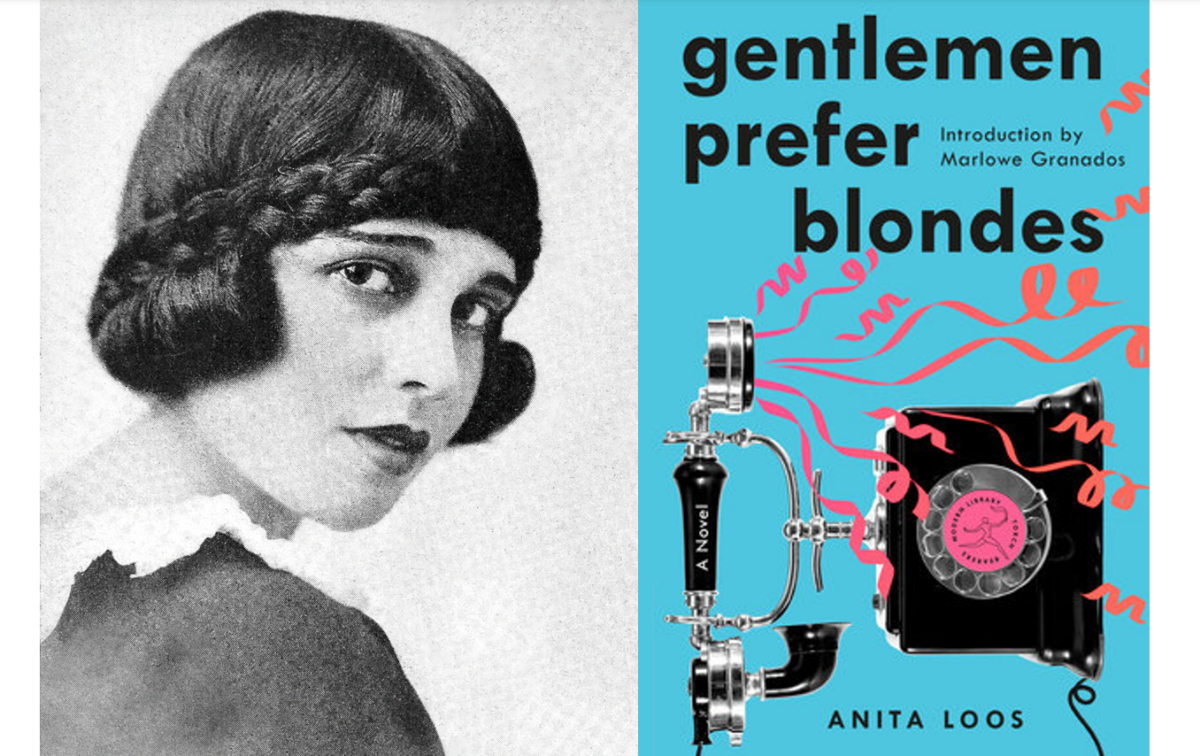
Anyone hearing the title “Gentlemen Prefer Blondes” will likely think of the 1953 film featuring the glorious Marilyn Monroe in a breakout performance. However, not many people know it was based on a hugely successful book, written in 1925 by one of Hollywood’s first female screenwriters, Anita Loos.
Loos was already a notable name before her literary career took off. She worked in the burgeoning film industry for many years alongside the most prominent names of the time, like the powerhouse and innovative (and infamous) director, D.W. Griffith.
Penguin Random House recently released a series of classic novels called “Modern Library Torchbearers.” The series aims to spark new interest in the literary works of women, and this novel was wisely included. What started as a joke for a good friend, “Gentlemen Prefer Blondes” ultimately became a very clever satirical commentary on consumerism and sexual morals of the era.
An Education Abroad
“Gentlemen Prefer Blondes” is made up of entries from the diary of Lorelei Lee, a golden-haired, vacuous socialite from Little Rock, Arkansas, now living in New York City. One night, one of her male admirers remarked that if she “put down all of [her] thoughts it would make a book.” Lorelei liked this idea, but added: “What it would really make would be a whole row of encyclopediacs.”
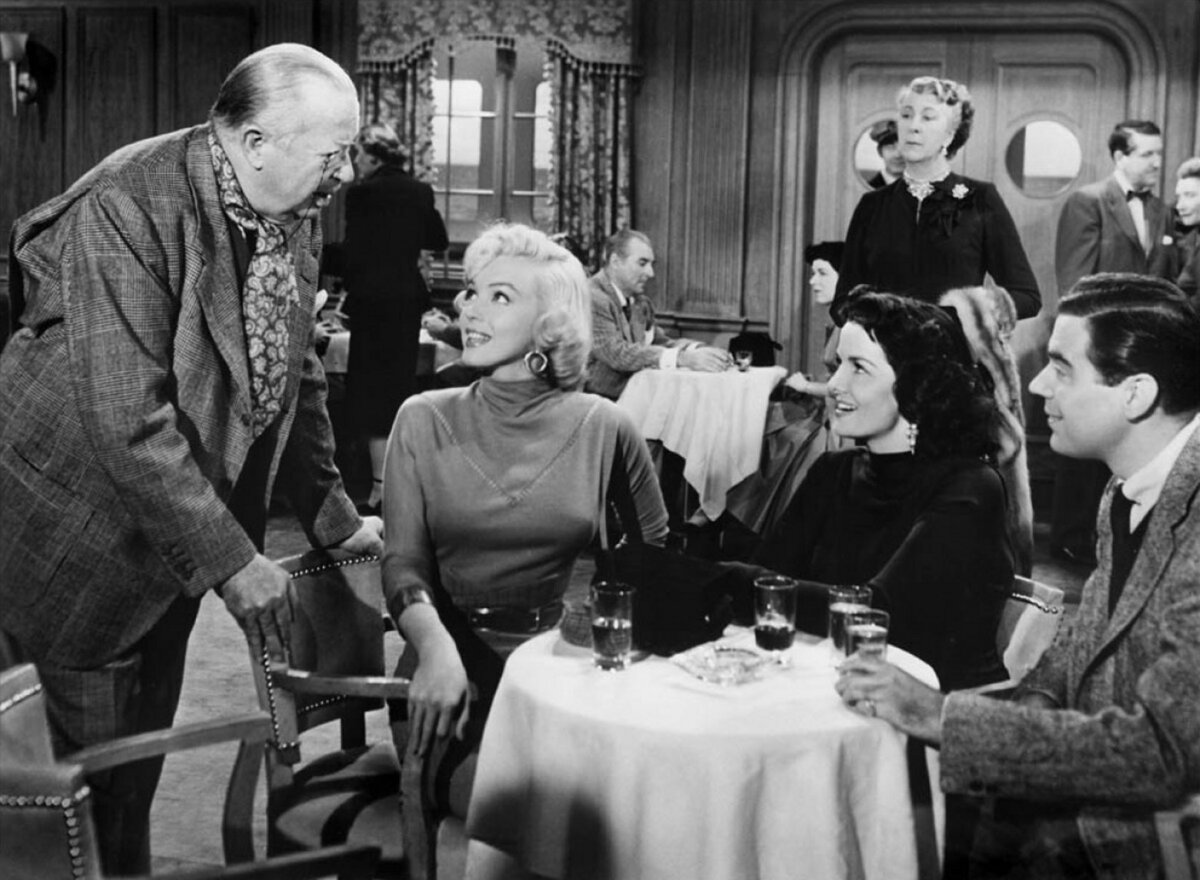
Over the course of several weeks, Lorelei chronicles her dating life with several rich older men in New York City. She then makes a trans-Atlantic journey to London and Paris accompanied by her equally unrefined, but far more pragmatic, friend Dorothy Shaw.
Along the way, Lorelei charms and discards a parade of men, including the “Button King” Gus Eisman. Eisman ultimately funds her “education” by giving her a free cruise vacation (and thus removing her from a rival). On board the luxury liner, she takes up with perpetually flustered Englishman Sir Francis “Piggy” Beekman; his wife’s wrath over a diamond tiara becomes an absurdly elegant farce.
The ‘Samson Effect’
Loos conceived the character after encountering a real-life “golden-haired birdbrain” named Mae Davis on a train trip to Hollywood. Amazed, Loos watched as a bevy of smart, successful men on board lavished attention on Davis, including her friend, H.L. Mencken, one of the era’s most formidable critics.
In her autobiography, “A Girl Like I,” Loos wrote: “[Davis] was not outstanding as a beauty; we were, in fact, of about the same degree of comeliness.” As for “mental acumen, there was nothing to discuss: I was smarter. Then why did that girl so far outdistance me in allure? … Possibly the girl’s strength was rooted (like that of Samson) in her hair.”
What began as a seed of jealousy quickly became a great source of amusement for Loos, as she watched men practically falling over each other to ingratiate themselves with this “bonehead.” She decided to write some literary sketches about a fictional version of Davis, christening her Lorelei Lee.
Mencken loved the sketches and encouraged her to submit them. “Do you realize, young woman,” he told her, “that you’ve made fun of sex, which has never before been done in this grand and glorious nation of ours?” Soon after, Harper’s Bazaar magazine released them as a serial, which eventually brought Loos millions in royalties from the serial, as well as from film and stage adaptations.
A Gold Digger’s Life
Loos doesn’t have to spell out who Lorelei is—every moment of the page shows us in hilarious detail. There are frequent misspellings and grammatical errors that reveal Lorelei’s educational shortcomings; yet she’s always, in theory, interested in her intellectual improvement.
When trying to read Cellini’s famous autobiography, she laments: She “decided not to read the book by Mr. Cellini. … It was quite amuseing in spots [and] riskay” but she didn’t like spending so much time hunting for those good bits.
Lorelei is undeniably a “gold digger,” but Loos still knows how to make her sympathetic, even if the reader spends most of the time laughing at her. It’s apparent that Lorelei is truly not conniving or manipulative. She simply wants what she wants. Yet she’s too oblivious to feel any ill effects from toying with men’s affections or compromising her virtue in order to satiate her impulses.
As Loos puts it: “I couldn’t take seriously the lost virtue of a heroine who was too dense to have any kind of emotional experiences at all.”
When the musical version opened on Broadway in 1949, Carol Channing brilliantly highlighted Lorelei’s naïveté, which made her more sympathetic. Monroe masterfully embodied the same quality, further cementing Lorelei Lee in popular culture.
As for the blind fools that pursue Lorelei, all are mature and smart enough to avoid the obvious pitfalls before them and, therefore, are equally hilarious when they gleefully walk right in.
Perhaps Loos’s advice for young women in “Gentlemen Prefer Blondes” might be this: Use your wits if you can, and if you ain’t got that, use what the good Lord gave you. And maybe a box of hair dye.
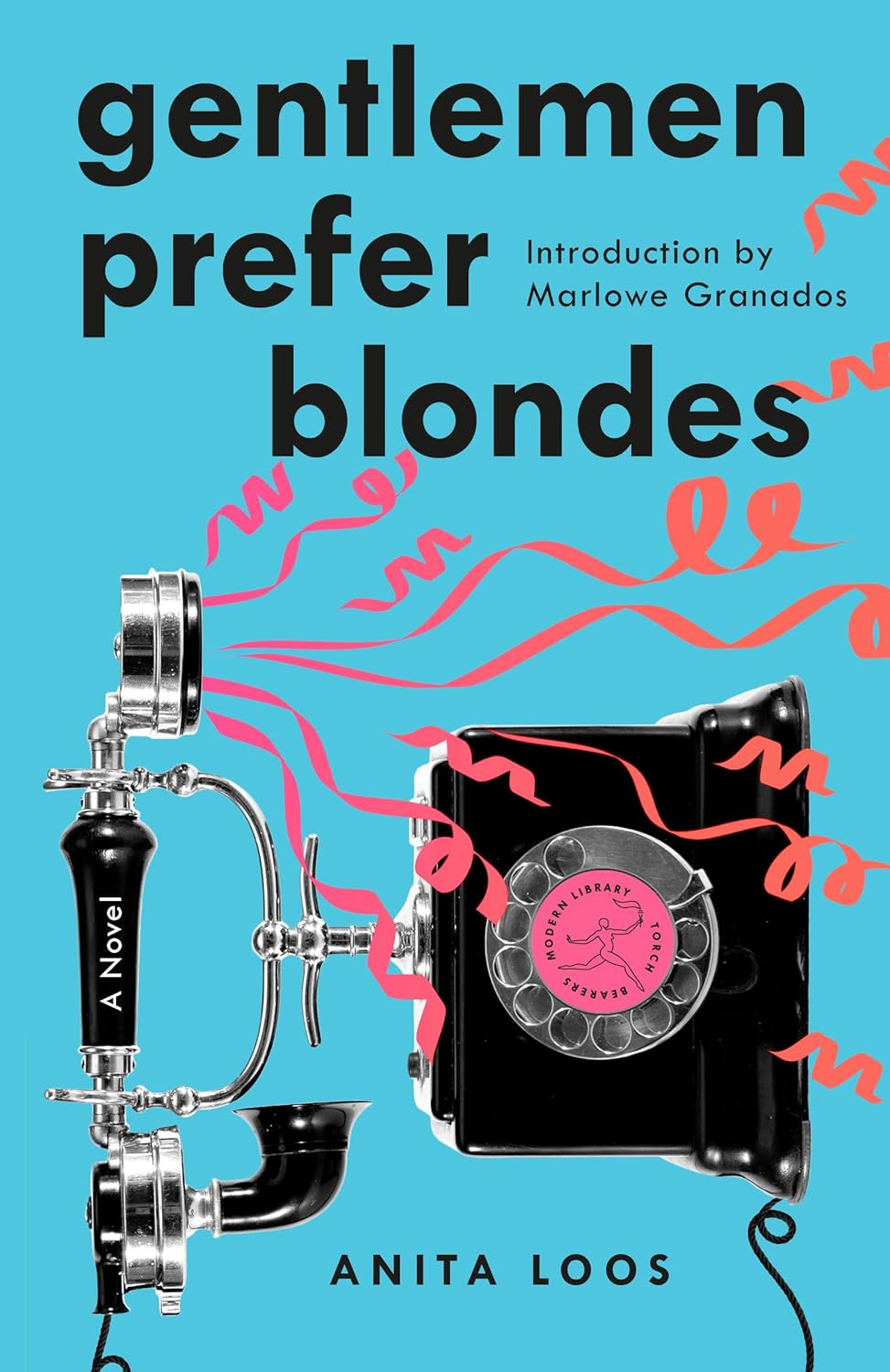
‘Gentlemen Prefer Blondes’
By Anita Loos
Modern Library Torchbearers: Aug. 5, 2025
Paperback, 176 pages
What arts and culture topics would you like us to cover? Please email ideas or feedback to features@epochtimes.nyc