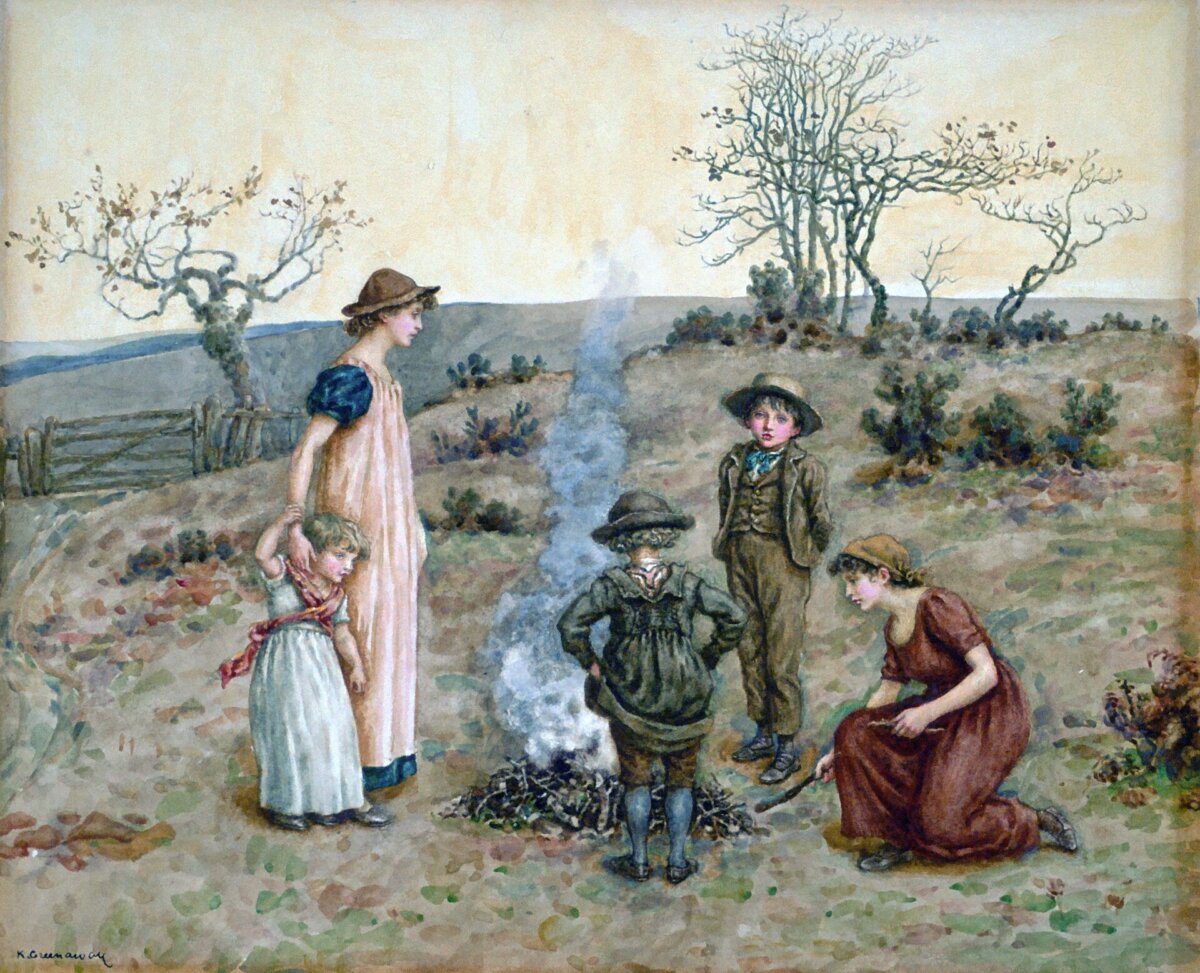
Of illustrator Kate Greenaway (1846–1901), the eminent Victorian art critic John Ruskin once wrote, “The fairyland that she creates for you is not beyond the sky nor beneath sea, but near you, even at your own doors. She does but show you how to see it.”
Millions of people over the years have wholeheartedly agreed with that assessment. The struggling illustrator whose work first found a home on greeting cards was by the end of her life acclaimed in Britain, Europe, and the United States. The children she depicted on the cards and in the books she illustrated became icons of the period. In the 1920s, some British high society weddings featured bridesmaids, flower girls, and ring bearers done up in the “Kate Greenaway style.” In the late 1970s, when retro was the rage, this Greenaway wedding style saw a revival along with Victorian greeting cards and dolls.
To understand how this socially shy, very private Victorian created this fairyland of nature and children requires a return to the spring from which all the rest flowed, her childhood.
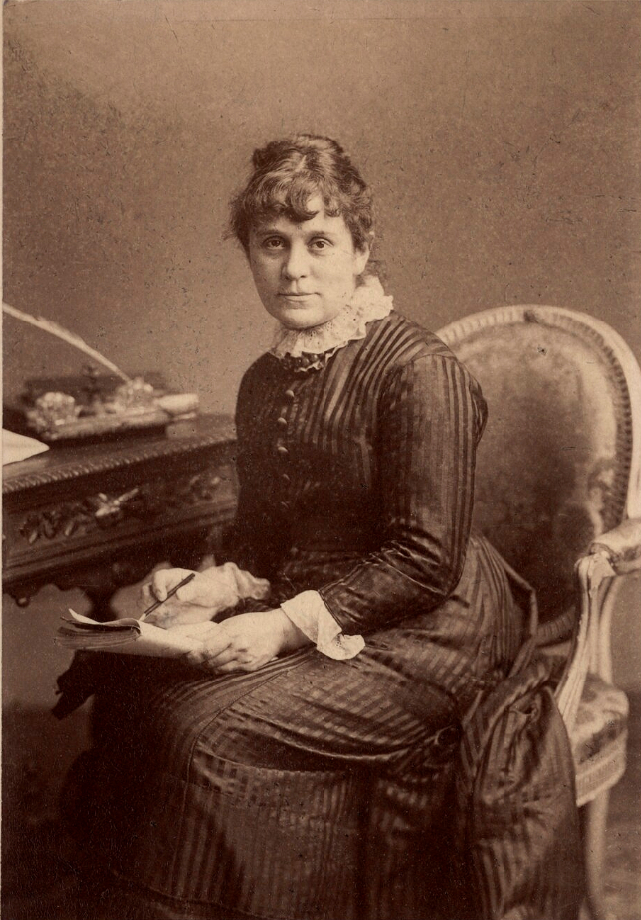 Kate Greenaway in the 1870s, photographed by Elliot Fry. (Public Domain)
Days of Wonder
In their 1905 biography “Kate Greenaway,” parts of which appeared as a biographical sketch in the 1965 “The Kate Greenaway Treasury,” M.H. Spielmann and G.S. Layard wisely zero in on the artist’s treasured childhood.
Greenaway was the second of four children born to Elizabeth and John Greenaway. Her father was a well-regarded London wood-engraver who also excelled at drawing and whose work appeared in such publications as The Illustrated London News and Punch. When a project to which he had committed himself collapsed into bankruptcy and was unable to pay him, the family entered a period of hard times. Elizabeth stepped into the breech and opened a successful women’s hat shop in North London, selling girls’ dresses as well.
Both professions impacted their daughter. As a girl, Greenaway would at times sit beside her father, watching him at work on his etching. She also spent time in her mother’s millinery shop, listening to discussions of fashion that doubtless influenced the flair for dress she later brought to the children and adults in her illustrations.
Moreover, both her parents strongly supported her interest in drawing and painting. In her teens, she enrolled in several schools of art for young women. By the age of 21, she was a student at the newly opened Slade School, where she turned to children as her subjects, painting them in clothing, Regency-style, which she herself had designed.
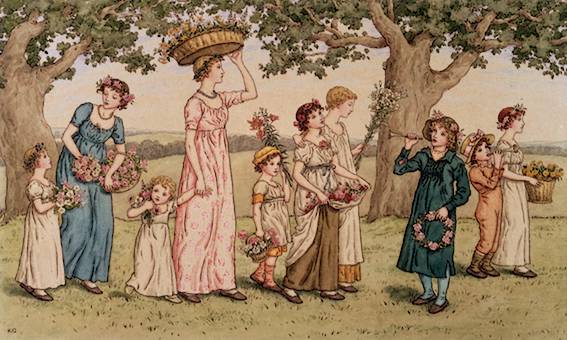 “May Day” by Kate Greenaway. Greenaway depicted children and teens in a variety of celebrations. (Public Domain)
An equally vital force in her artistic sensibility was nature. From early childhood, Greenaway was a regular visitor to family and friends in Rolleston, Nottinghamshire, where she spent her days in gardens and the countryside, absorbing the beauty she found in flowers, trees, and sunlit fields. In “The Kate Greenaway Treasury,” Spiegelman and Layard wrote, “Here began her relationship with the countryside and her intimacy with more or less unfettered nature—a love which was her prevailing passion throughout her life.”
Finally, there was Greenaway herself. A precocious child, she possessed a remarkable ability not only to experience beauty in nature or in her father’s etchings, but to also retain the sensations and emotions they’d aroused. Spiegelman and Layard were well aware of this gift: “Clearly, her early capacity for accurate observation, ravenously seizing upon and making her own the infinitely little details of her childish experiences, was an important factor in her artistic development” which “coloured the artist’s performances in far-off days to come.”
The Age and the Artist
During Greenaway’s younger years, the greeting card business in Britain skyrocketed.
In 1840, Sir Rowland Hill proposed uniform mailing rates and an adhesive mailing stamp to standardize the postal service. This change increased the number of mailed items from 67 million in 1839 to 242 million only five years later.
With this development came handmade cards that could then be printed in large quantities for commercial sale at affordable prices. In the early days, Christmas and Valentine’s cards were the most popular.
Though her art had appeared in a few periodicals and as greeting cards, it was a popular Valentine’s card—25,000 of them found buyers—that first pulled Greenaway out of relative obscurity. For several years, her star rose, though her income remained modest and her name unfamiliar to many.
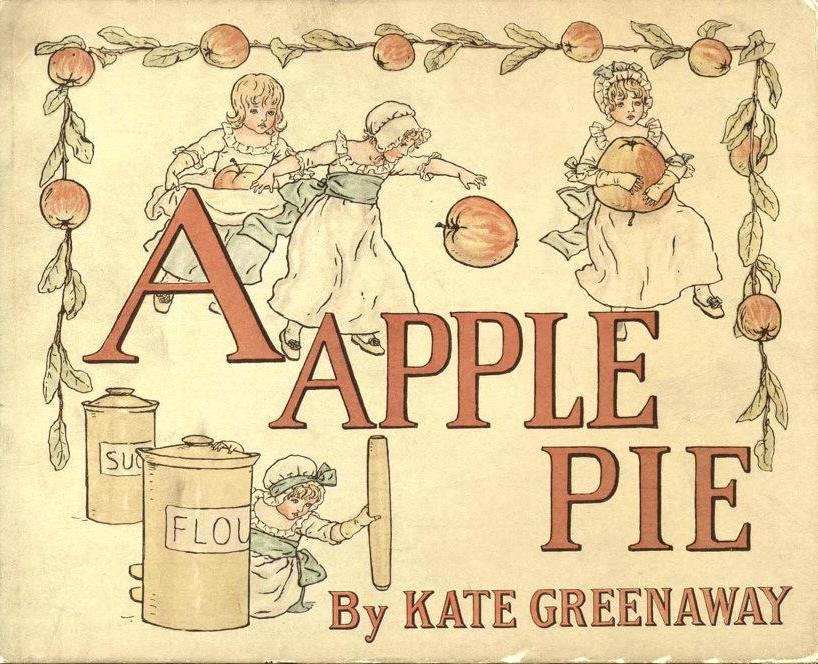 Kate Greenaway illustrated books that taught children to read, a burgeoning industry in the late 19th century. (Public Domain)
But here another marker of the age that bolstered her reputation. The second half of the 19th century and the first quarter of the 20th were a golden age of children’s literature. Victorians were sentimental about their children, an attitude that led to such advances as restrictions in child labor and mandatory universal education. This affection and a regard for the innocence of childhood can be found in the poetry, paintings, letters, and increasing number of children’s books of that time.
In 1878, Greenaway presented an original manuscript of illustrations and poetry for children to Edmund Evans, a printer, engraver, and publisher well-known for his success with children’s books. Charmed by her drawings of children, and at some risk to himself in terms of hours and money required by the project, he published 20,000 copies of “Under the Window,” which became an instant bestseller. Over the next 20 years, Evans sold more than 900,000 copies of this and other Greenaway books.
Ruskin, a Dear Friend
Soon after the publication of “Under the Window,” Britain’s eminent art critic opened a correspondence with Greenaway. It grew to over 500 letters from him and perhaps double that from her. They met in person for the first time in 1881, and as “The Kate Greenaway Treasury” reported, “From the first moment of their meeting a friendship sprang up which grew in strength and mutual appreciation until his death in 1900.”
Greenaway was then 36, Ruskin 64, and while it’s generally accepted that their relationship remained chaste, they were affectionate in person and in their letters. He encouraged her in her work, criticized her, and sometimes chastised her for what he regarded as poor artistry, but he remained a friend. In a letter written on Christmas Day, 1881, he wrote that she was “the helpfullest in showing me that there are yet living souls on earth who can see beauty and peace and Goodwill among men—and rejoice in them.”
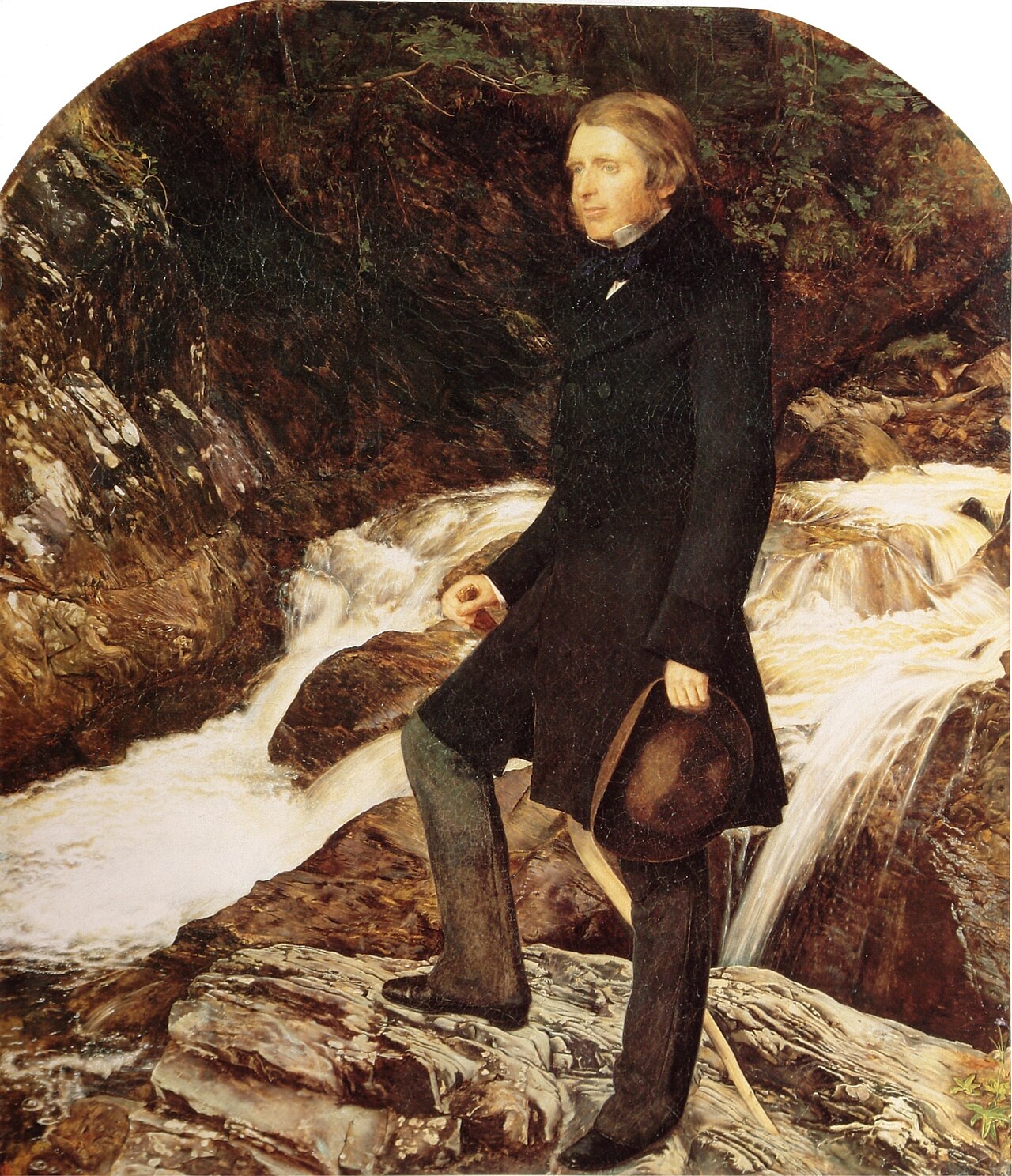 A portrait of John Ruskin, 1853–1854, by John Everett Millais. (Public Domain)
The excerpts from Ruskin’s letters in “The Treasury” reveal his continued interest in her work and a constant prodding toward improvement and change. Though he could be demanding at times, and Greenaway often fought off some of his suggested changes, she felt honored to have such a mentor at her side to give her great encouragement, and likely, the sense that she was now a full-blown artist.
From 1889 until his death in 1900, Ruskin suffered mental distress that included hallucinations and nightmares, what the doctors then called “brain fever,” and a collapse that eventually ended in dementia. He never wrote to Greenaway during this time, but it is a tribute to her character that she continued to write and to visit him. Joan Severn, Ruskin’s cousin and primary caregiver in this decade of torment, frequently wrote to Greenaway thanking her for her letters and for the good it brought to the ailing critic.
So many other influences, from the fairy tale books she loved reading as a child to her work ethic—she illustrated more than 150 books—helped shape the artist. Yet in the end, it seems her childhood resonated most deeply in Greenaway’s pursuit of art. She once told a friend, “Living in that childish wonder is a most beautiful feeling. I can so well remember it. There was always something more—behind and above everything—to me; the golden spectacles were very, very big.”
In her art, we find Kate Greenaway looking through those spectacles of gold.
What arts and culture topics would you like us to cover? Please email ideas or feedback to features@epochtimes.nyc.