Several times over my years of teaching composition to seminars of homeschoolers, I had the students carry their metal folding chairs to the building’s little-used rear parking lot. There, I’d arrange them in a large circle, sitting with their backs to their classmates, far enough from one another to prevent whispering. Per my instructions, for 20 minutes they sat in silence looking straight ahead, with no eye contact with classmates, no phones, no books, and no pens or paper, simply looking at the woods around the lot or at the building. When the time was up, we’d head back inside, where for another 20 minutes they’d put down on paper what they’d experienced.
Typically, a couple of them spent the time in prayer. Several more laid plans for the weekend or looked farther into the future, wondering what sort of future graduation might bring.
On each occasion, at least 50 percent of the students reported being bored out of their minds.
All Dressed Up and No Place to Go
Leo Tolstoy framed boredom with this definition: “the desire for desires.”
An anonymous writer added this twist to illustrate boredom: “It’s not boring staying in the house for weeks in a row. But how come one bag of rice has 48,356 grains and the other 47,998?”
Boredom is a relatively new word, introduced in a newspaper in mid-19th century Britain and deployed by Charles Dickens in “Bleak House”—but the condition itself is ancient. Romans suffered from “taedium,” from which we get our word “tedium.” Early Christians gave taedium a religious twist with “acedia,” which joins boredom to sloth, one of the seven deadly sins. The French gave us the word “ennui,” which attaches fatigue to everyday boredom.
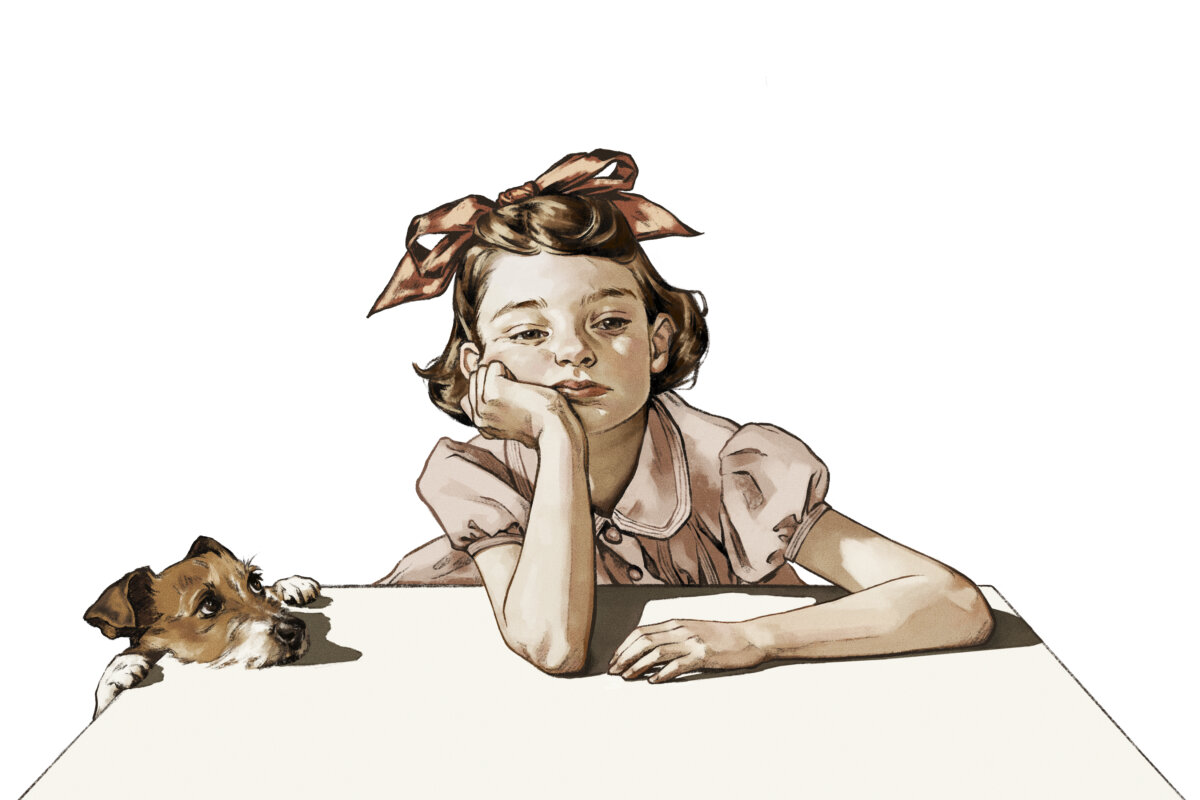
When dogs get bored, they often go to sleep. When humans get bored, we complain. The six-year-old who whines “I’m bored” is not a happy camper, but then neither is the teenager or the old man who feels the same. G.K. Chesterton once wrote, “There is no such thing on earth as an uninteresting subject; the only thing that can exist is an uninterested person.” Despite that grand abundance of interesting things, the guy with the blahs is blind to them all.
In our age of distractions by screen, boredom has lost some of its punch. Americans check their phones an average 186 times a day. Add computers to this stat, and the average American spends 6 hours and 12 minutes a day looking at a screen for both work and play. When ennui leaves us feeling listless and low, we can pull out our phones and escape with the click of a key, catching up on the news, playing a game, or watching the latest kitty videos on X.
But is this modern ability to banish boredom with screens necessarily a good thing?
Taking Boredom Outside Can Be Healthy
Most parents are familiar with that childhood complaint, “I’m bored,” particularly during the summertime when schools are closed. These days, some respond by turning on the television or letting the kid play some games on Mom’s phone. This solves the immediate problem but, according to experts, is likely a horrible solution if practiced frequently and long-term.
Other parents respond to “There’s nothing to do” with that traditional threat, “Oh, I can find something for you to do,” which translates to weeding the garden or picking up the toys in the living room. This warning may seem harsh, but it does benefit the child intelligent enough to pick up on his mother’s cue. He finds something else to do, which involves thinking creatively.
Jeff Gardner, author of the recently published book “Landscapes of Grace: Hiking, Faith, and Finding Yourself in the Wild,” stresses the importance of parental anticipation in reacting to a child’s summertime blues. This father of four grown children is a longtime advocate of outside free play for the young, meaning unsupervised play outdoors—be it in the woods and fields or in an urban backyard patch of grass. When speaking with The Epoch Times, Gardner said: “The boredom needs to be structured and guided. We can remove non-kinetic distractions, and then place in front of our children the opportunity for kinetic activities.”
By kinetic activity, Gardner means imaginative play outside or in bad weather, with toys rather than with screens inside. “The boredom should be structured in such a way where they can see an out to do something,” he said. “This is absolutely crucial—we know this from developmental psychology—to their healthy development as children, and then later as adults. The greatest unintended harm of the helicopter parent is the entertainment. Put them with that structure that provides this avenue to be involved in activities that engage the child within herself or himself, or with others.”
Outdoors kinetic activities—walking, gardening, lawn care, and so on—also provide healthy ways for adults to dispel boredom. But whether it fires up the imagination, as some believe, is less certain.
Boredom as a Gift
Boredom is often cited as a breeding ground of creativity, and this can be so, especially in childhood. Faced with little to do but provided with possibilities, kids can be inventive, setting up forts in the woods, learning some new moves for soccer, or even helping bake cookies or prepare supper. These experiences grow their imaginations and skills.
For bored adults, their ways of escape are broader, but not always as efficacious. Being stuck in the doldrums can lead from two glasses of wine in the evening to a bottle, to online gambling, or to even more hours spent as a screen-addicted couch potato. A dull, tedious job may spark creative thinking in some people while making others feel brain-dead and lethargic.
That said, boredom approached with intention can enhance our spiritual and mental well-being. A longtime investigator of the meaning of happiness, author and Vanderbilt professor Arthur C. Brooks touts the value of boredom when approached with the right attitude. It can become a pathway to contemplation, a journey into the self so often buried beneath our digital devices and the rush and hurry of modern life.
On his website, Brooks writes: “I often talk about the trap of trying to eliminate discomfort from our lives. Boredom is no different. When we constantly distract ourselves, we miss the very mental space where insight and reflection occur. The truth is that boredom can be a gift. One that opens the door to deeper thought and a clearer sense of meaning.”
Many people who already practice meditation or prayer, as does Brooks, don’t need boredom to induce contemplation. His point is that when we find ourselves “standing in line, sitting in traffic, or waiting for a delayed flight” we can give value and meaning to what is otherwise an exasperating annoyance.
Does the Arthur Brooks’ remedy for boredom work? Why not try it and find out? Next time the blahs infect your kids, send them to the back yard to grow their imaginations with some free play. Take your own boredom outside as well and watch it disappear on an evening walk. If you’re stuck in a long line at the post office, reflect back on your life and on the people who helped you along the way.
Once we start looking for Chesterton’s interesting subjects, both inside and outside of ourselves, we’ll start seeing them everywhere.