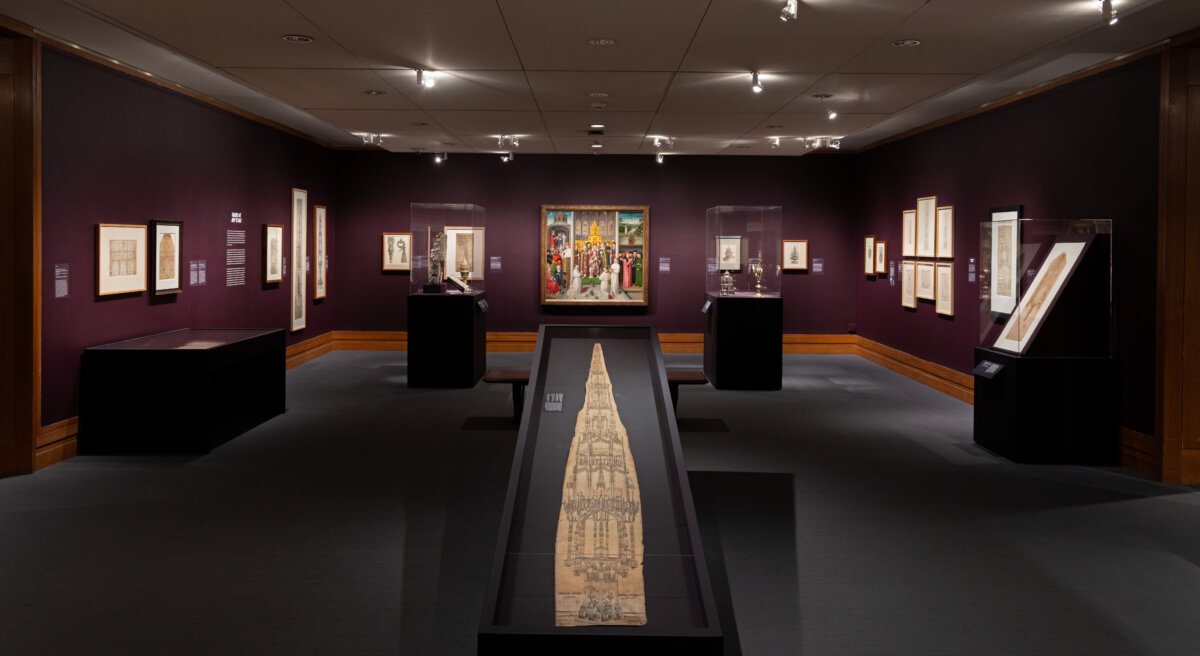
NEW YORK CITY—“Gothic by Design: The Dawn of Architectural Draftsmanship” is a groundbreaking exhibition at the Metropolitan Museum of Art. It is the first-ever presentation of Gothic architecture drawings in the context of art history.
Before this exhibition, such works have primarily been the purview of architectural historians, who studied them as blueprints as opposed to masterpiece drawings. The Met has engineered a revelatory show for both the public and specialists, many of whom are unaware that the Gothic architects of some of Europe’s most magnificent soaring structures made drawings that were fundamental to construction and the professions’ evolution.
Over 90 works spanning the 13th to 16th centuries in diverse media—including parchment, paper, metal, stone, and oil paint—bring the complex Gothic design practice to life. Many of these are on loan from international collections and are unlikely to travel again to the United States. More than 600 architectural drawings from the period are known today, ranging from oversize and highly finished presentation drawings to technical plans and small-scale sketches. The exhibition’s curator, Femke Speelberg, believes that more rigorous archival research will reveal around 400 additional examples.
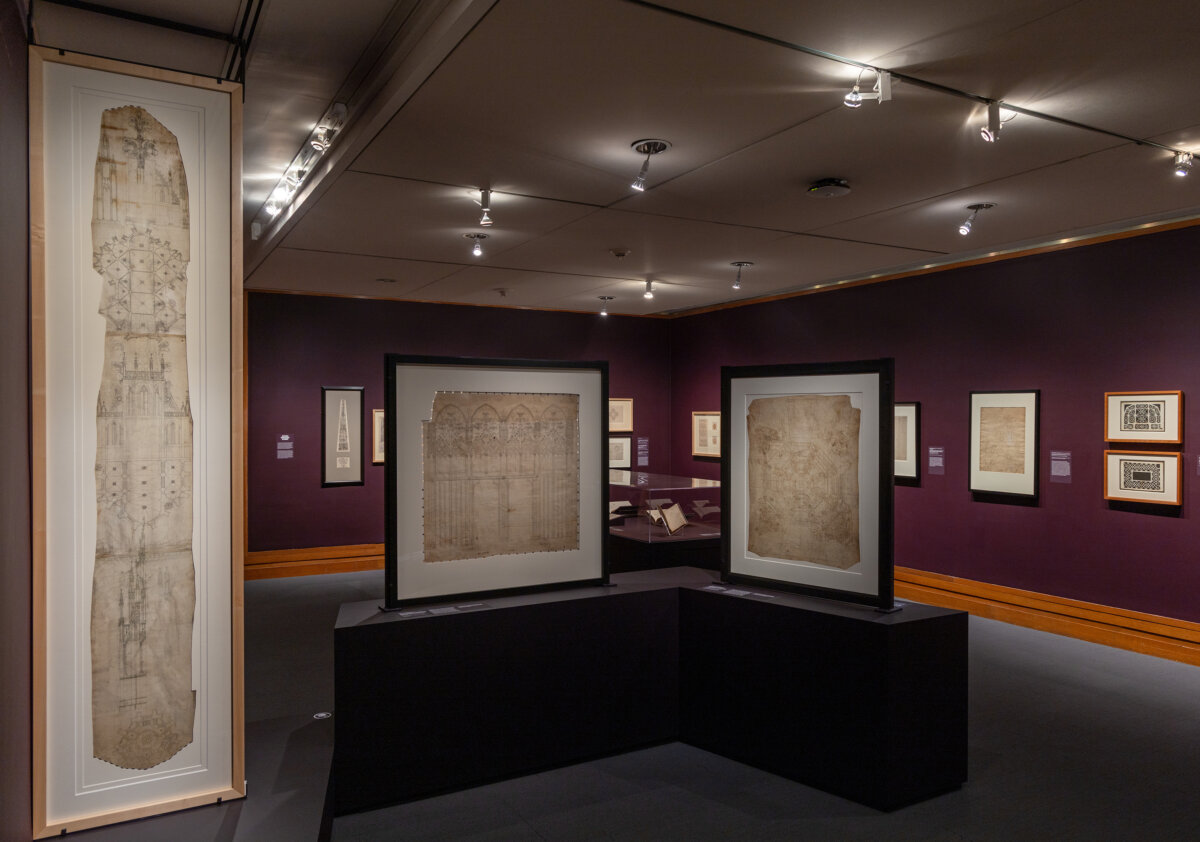
Even so, many more drawings were produced. Some cathedrals kept detailed documentation of their building process. Strasbourg Cathedral, then part of the Holy Roman Empire and now in France, was one of the first to form a graphic archive. Others had their records destroyed due to conflict or their drawings were lost because of poor storage and use conditions.
A noteworthy discovery by scholars has been that some parchment sheets with architecture drawings were washed to erase markings and then recycled. In some cases, evidence of original shallow incisions (blind ruling) that formed the basis for a variety of architectural features remain visible today. An example in The Met’s exhibition is dated to about 1230–1260, indicating that the Gothic architecture tradition of drawing was established by the early 1200s. However, because the Gothic style (pointed arches, tall spires, flying buttresses, and light-filled interiors), which developed around 1140, is more complex than the earlier Romanesque movement (rounded, fortress-like elements), some experts believe architects must have made drawings in the 12th century.
Masterful Masons
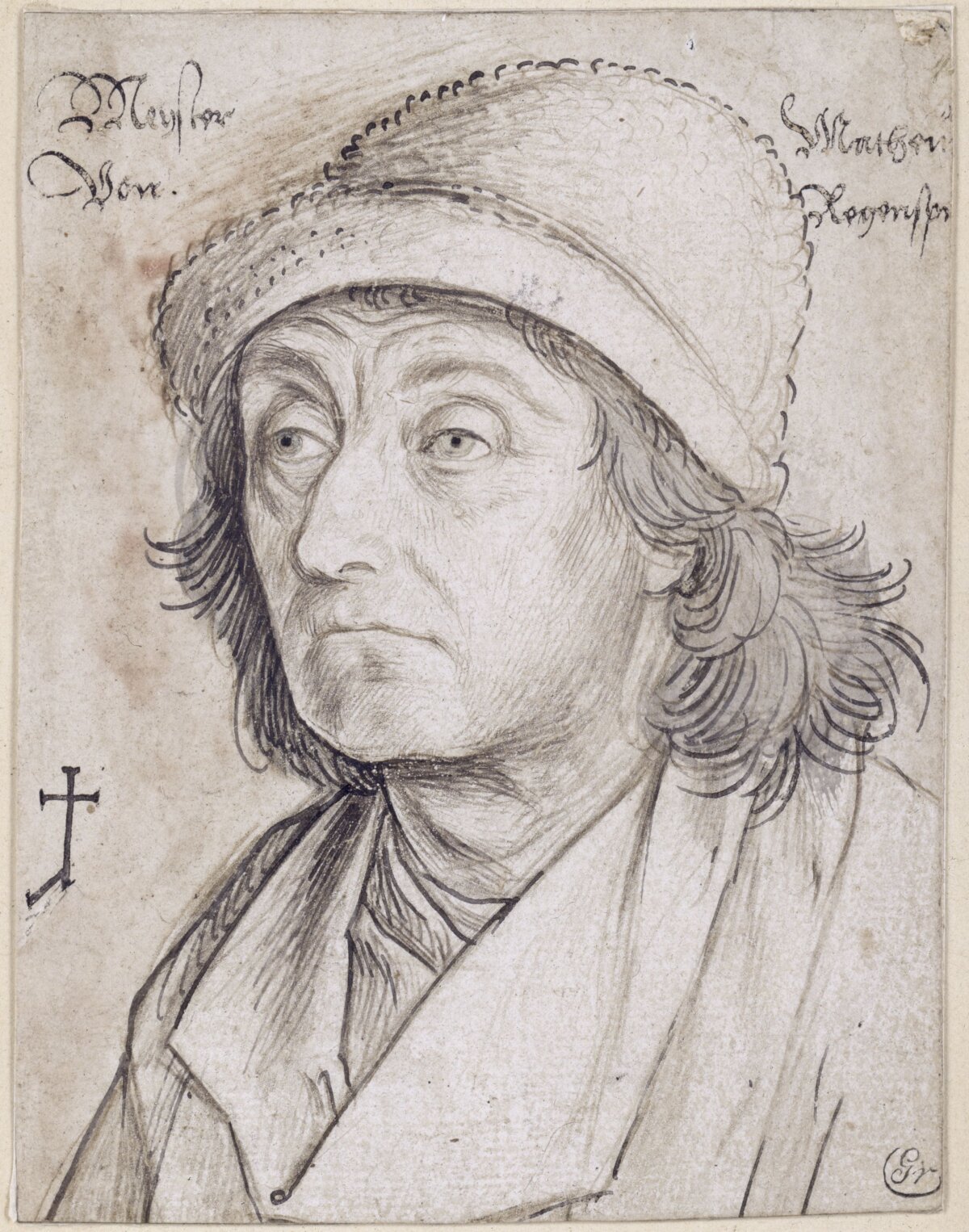
The exhibit begins with a more familiar looking object, a portrait drawn by Hans Holbein the Elder (father of the famous Tudor portraitist) of the master mason Mathes Roriczer, from circa 1490 to 1493. Roriczer descended from an architecture dynasty and worked on some of southern Germany’s most prominent building sites. In addition, he made valuable educational contributions, writing several books in the field that were the first to be published in German rather than Latin. They were also the first of their kind to be illustrated. The inclusion of his portrait is a homage to the hundreds of Gothic architects whose work is beloved and studied today but whose names are virtually unknown.
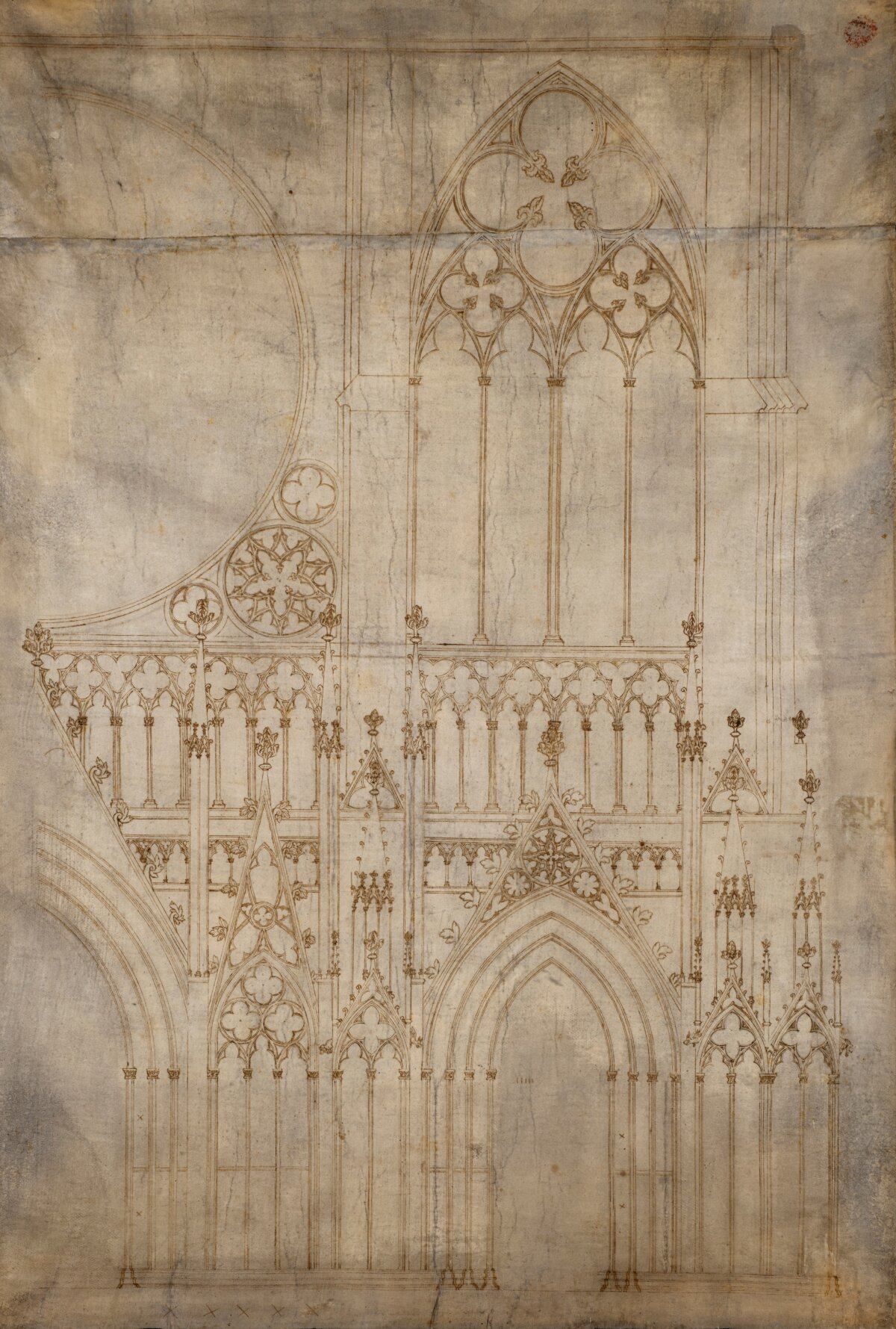
As was typical with monumental medieval ecclesiastical architecture, construction spanned centuries. Architects saw only a portion of their design built in their lifetime. Subsequent architects often altered plans due to changes in fashion, budgets, as well as leadership. The exhibition includes the 13th-century “Partial Elevation of the Façade of Strasbourg Cathedral (Drawing A’),” one of 16 extant drawings for the cathedral’s façade. (An elevation drawing is a representation of one side of a building, either an interior or exterior, from a straight-on viewpoint.).
This pen and brown ink on parchment drawing of the façade rises to the level of the rose window (an elaborately decorated circular window). It reflects the vision of Master Rudolph the Elder, an architect of whom little is known. He worked on the cathedral’s interior but died before construction began on the façade. He was succeeded by Erwin von Steinbach who made major changes to the design.
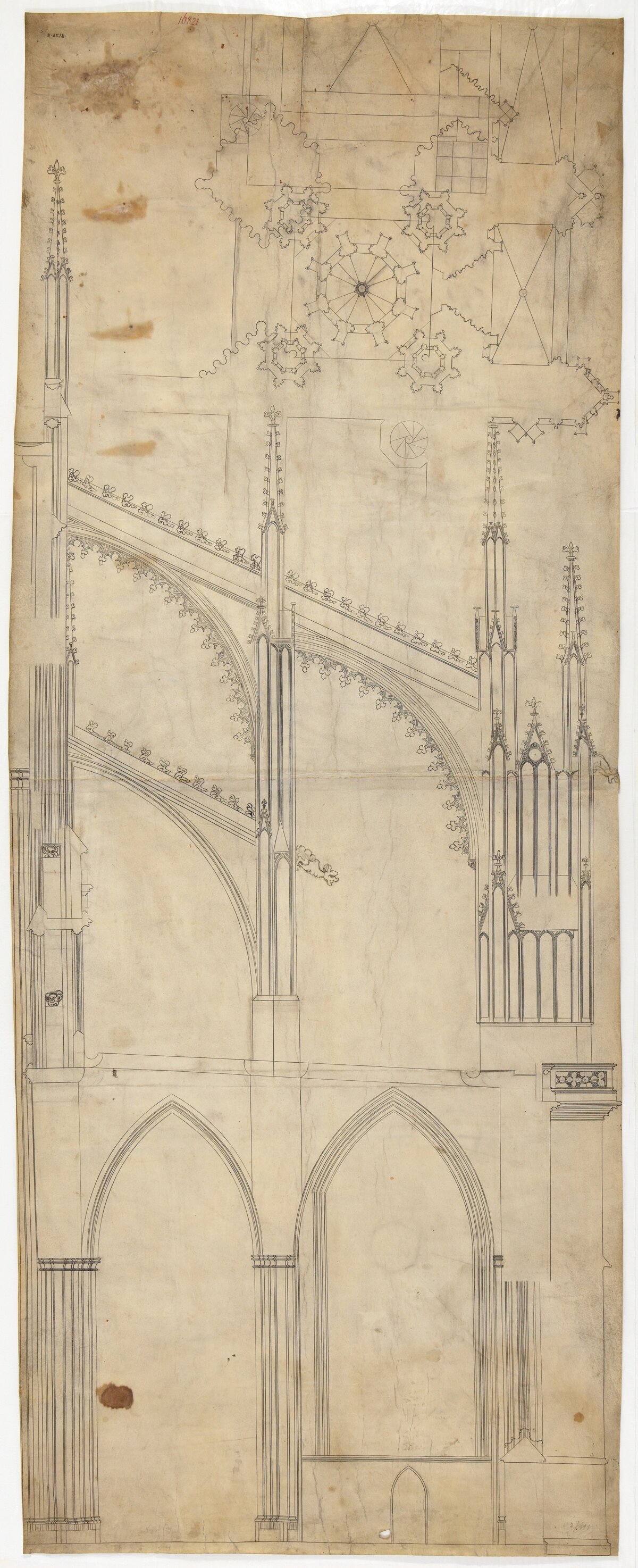
Drawing was a means then, as it is now, for architects to think through stages and elements of a design separate from when being on a building site. Gothic architects made creative and technical advances through their drawing practice in both engineering and decorative details. A circa 1410–1415 work on paper by German architect Madern Gerthener shows the use of geometry and proportion for stylizing tracery. This type of adornment is decorative openwork.
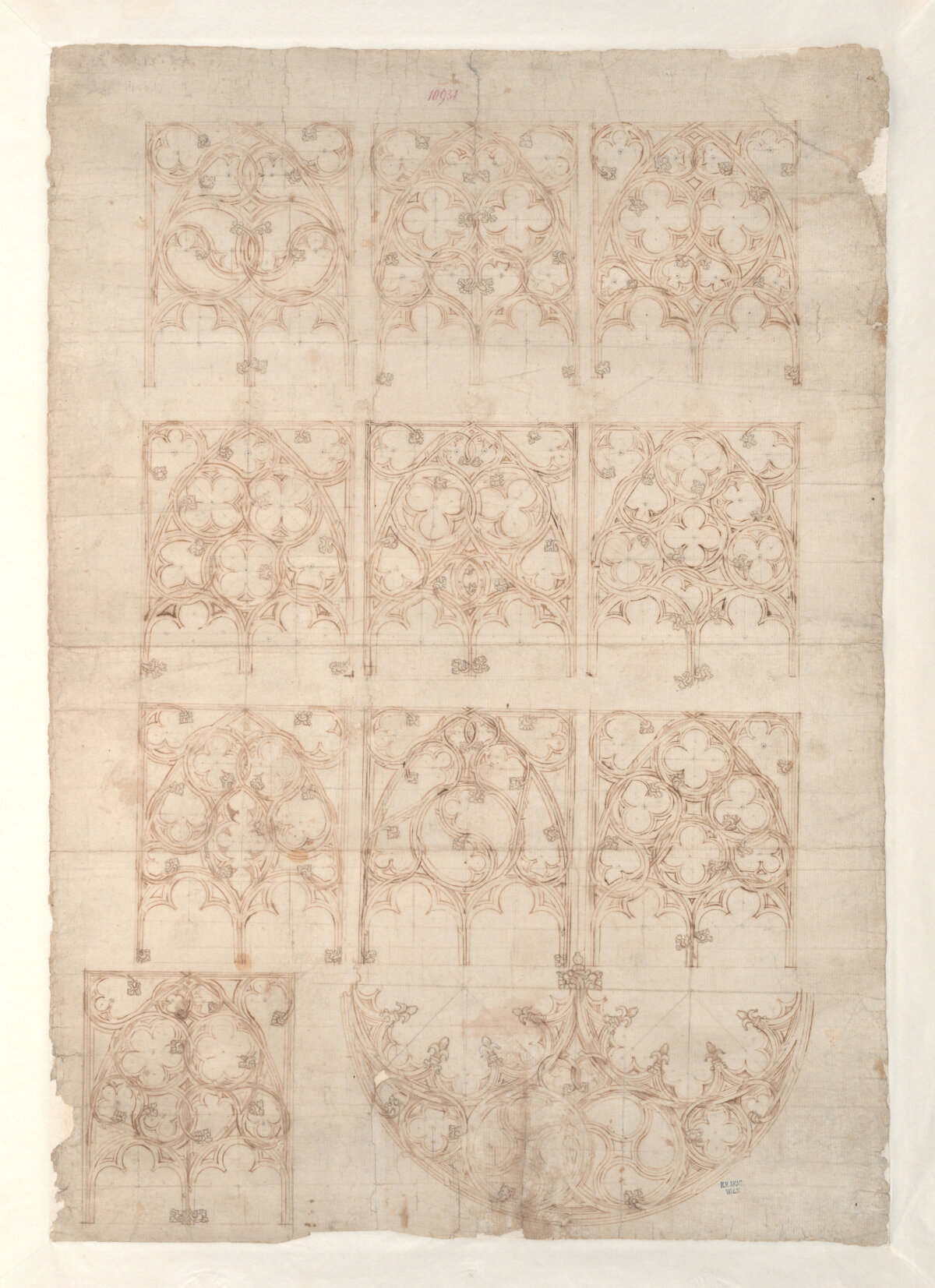
“Studies of Tracery Variations,” circa 1410–1415, attributed to Madern Gerthener. Pen and brown ink, over blind ruling with stylus, guided by compass and straightedge, on paper; 23 7/16 inches by 16 7/16 inches. Academy of Fine Arts Vienna. (Courtesy of the Metropolitan Museum of Art, New York City)
Architecture and Decorative Arts
This stimulating exhibition traverses different disciplines, exploring the interplay of art and science, engineering, and mathematics. One subtopic focuses on the dialogue between architecture and the decorative arts, specifically ecclesiastical metal objects. Another misconception is that goldsmiths rarely drew, instead having painters or sculptors create designs for them. The Met asserts that there is evidence that goldsmiths drew themselves and were even commissioned to design monumental architecture.
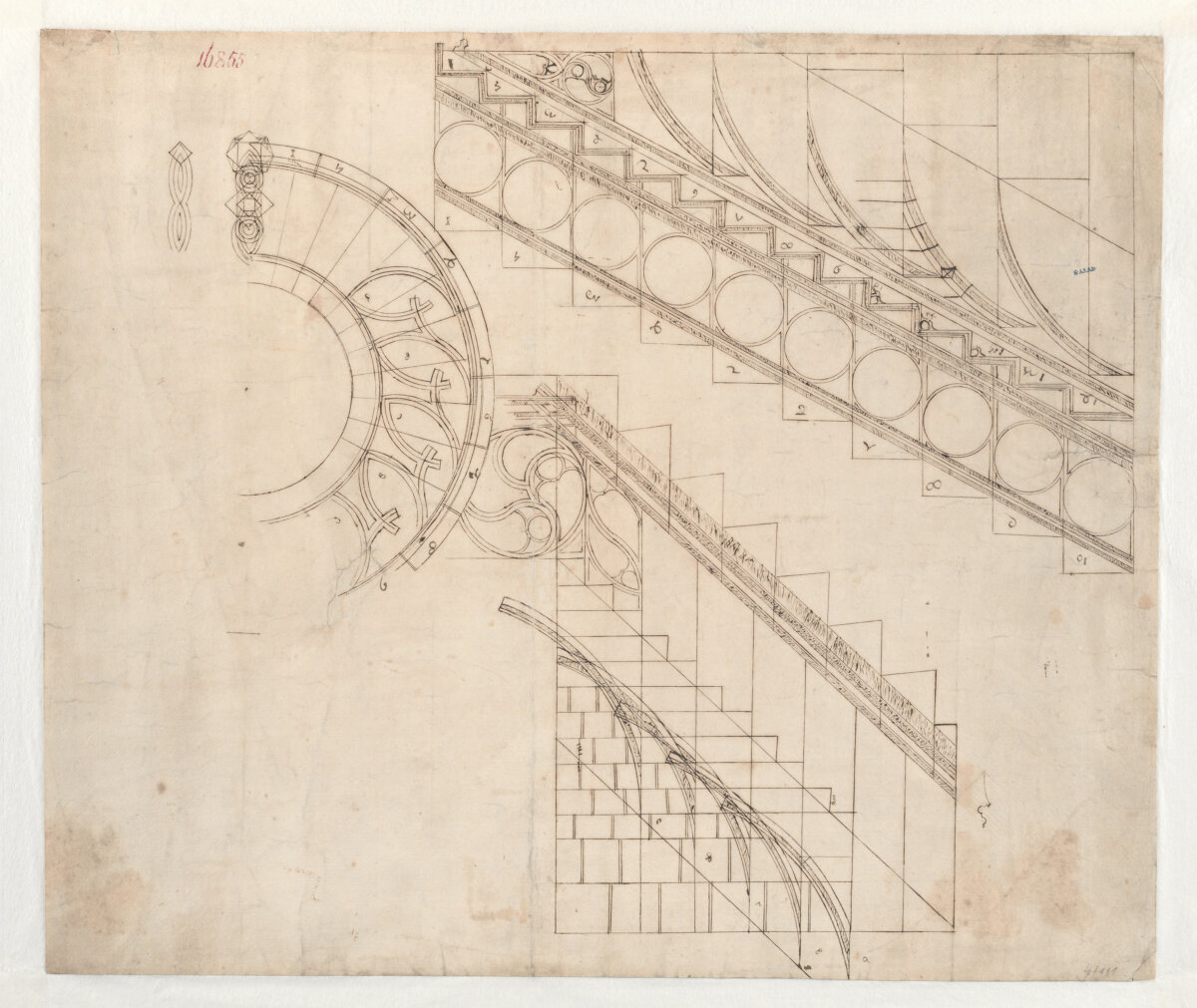
Architects, in turn, crossed into goldsmith work, along with designing smaller structures such as pulpits and baptismal fonts. Unlike monumental buildings, these projects could be realized in the designer’s lifetime. An example of this in the exhibition is a rare sheet with three technical studies for Czech architect Anton Pilgram’s famous pulpit at Vienna’s Stephansdom (Saint Stephen’s Cathedral).
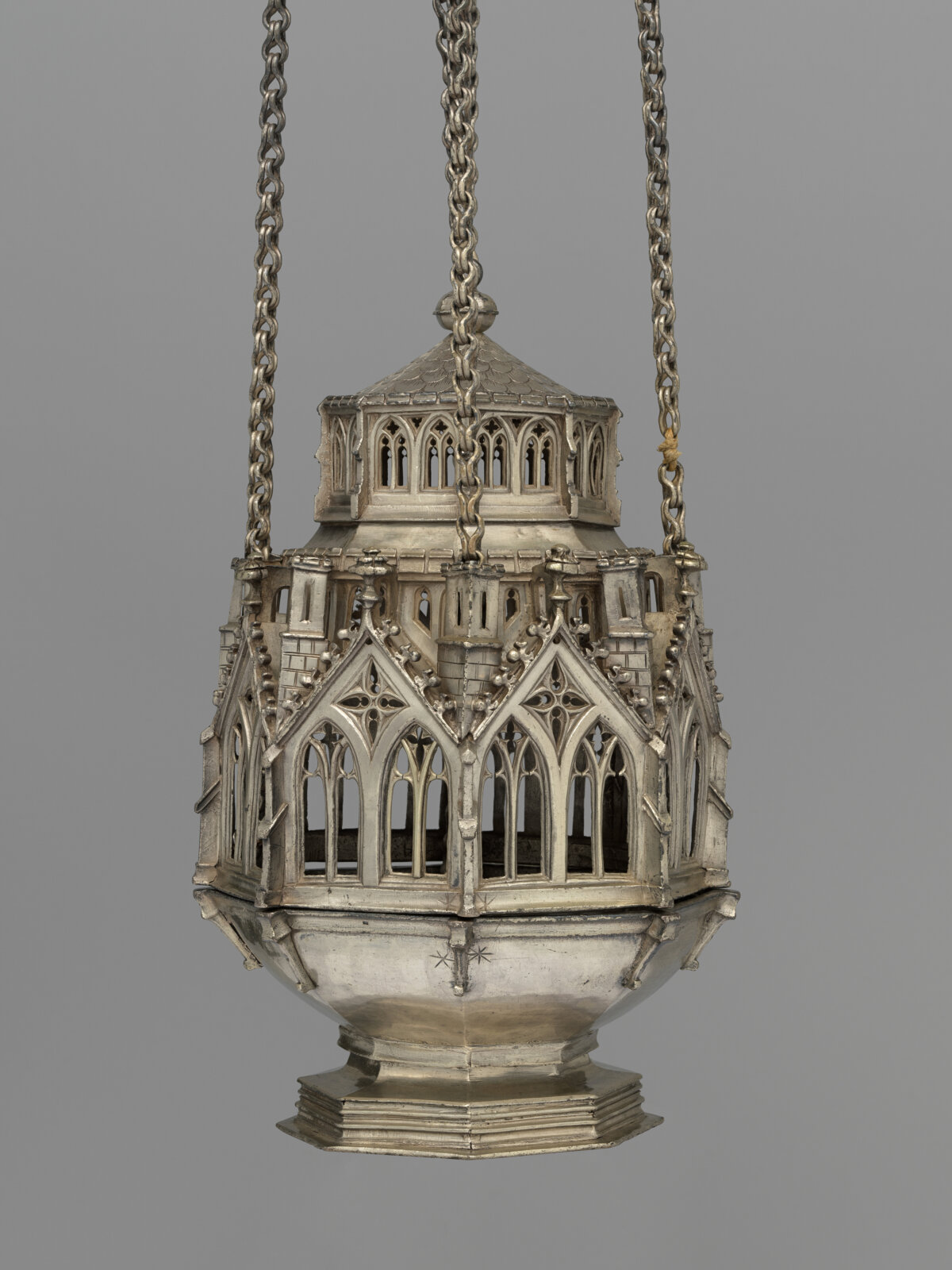
Stylistic elements of Gothic architecture were often translated into other art forms, including statuary, stained glass, and precious objects. An example in the exhibition is a pre-1477 Swiss-made censer, an ornamented vessel suspended by chains used for burning incense. The Met notes that it was “a perfect marriage of form and function, their openwork windows and tracery decorations facilitate air circulation to keep the coals lit and allow scented smoke to escape.”
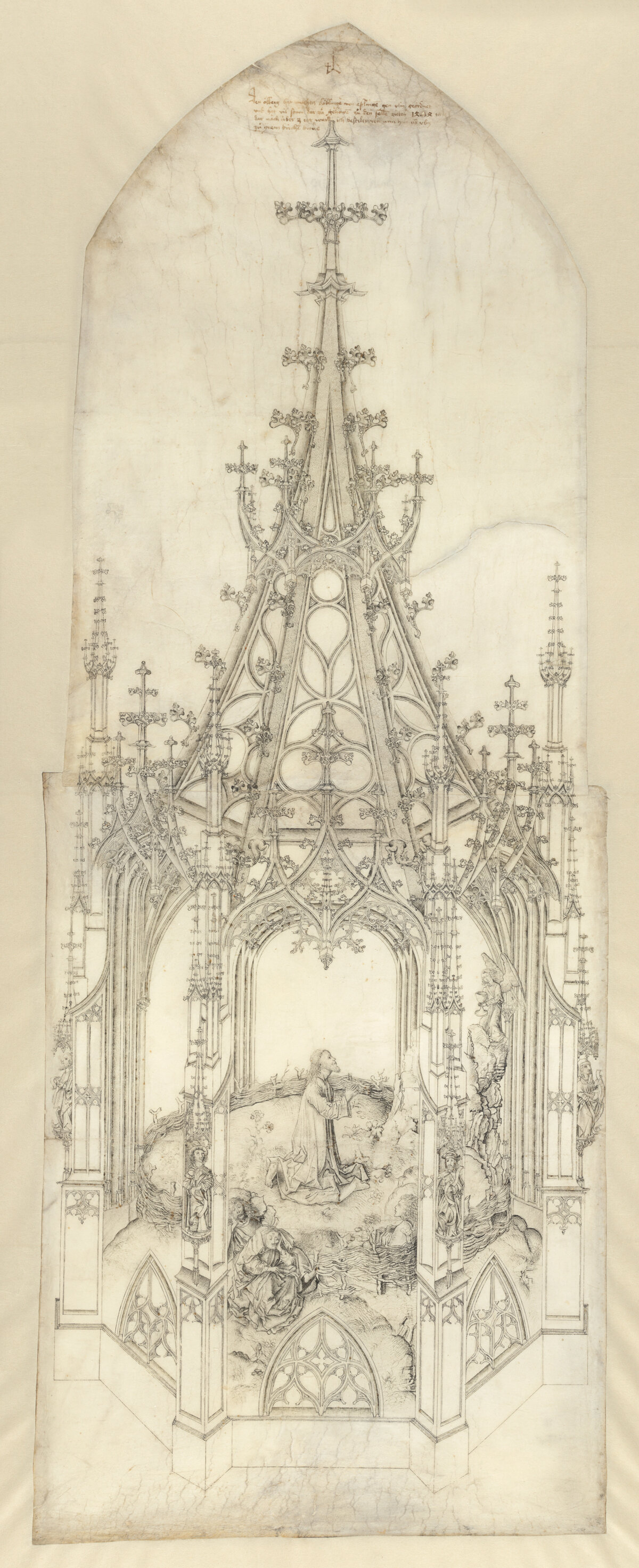
This exhibition offers a behind-the-scenes look at the intricate, meticulous, collaborative, and innovative design practices of Gothic architecture. Juxtaposing architectural drawings with prints and objects allows viewers to tangibly engage with the period’s artistic development without a trip to Europe.
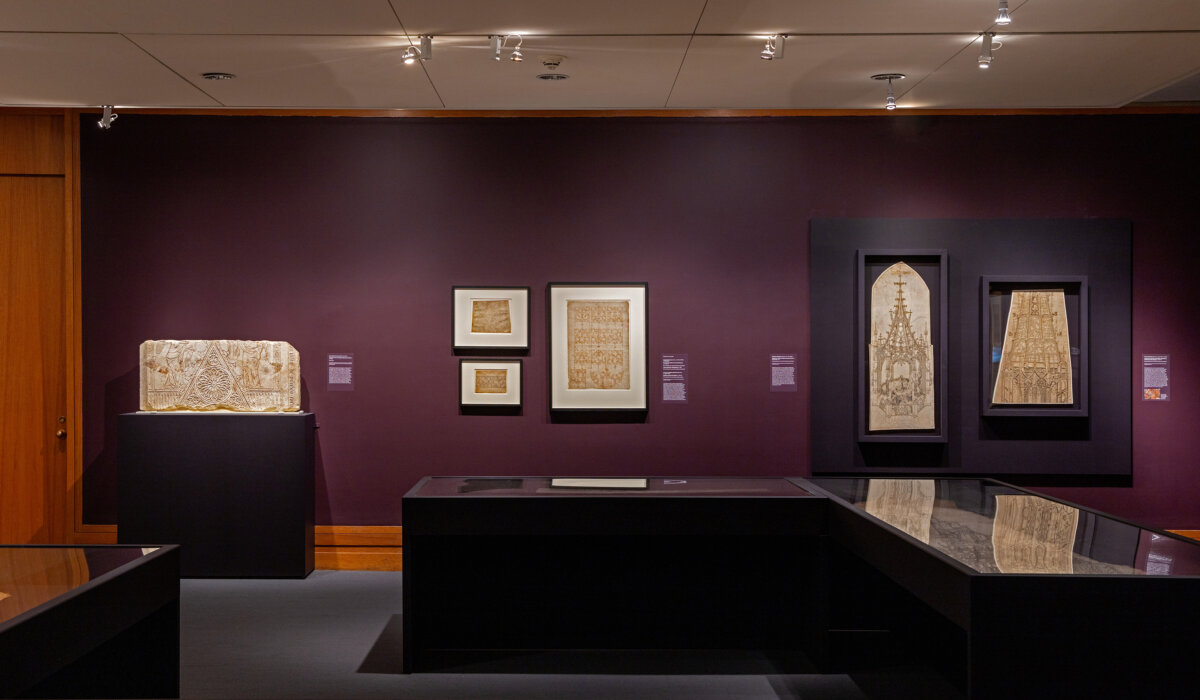
“Gothic by Design: The Dawn of Architectural Draftsmanship” runs through July 19, 2026, at the Metropolitan Museum of Art in New York City. To learn more, visit metmuseum.org.
What arts and culture topics would you like us to cover? Please email ideas or feedback to features@epochtimes.nyc