The painting “American Gothic” depicts a farm couple in front of their simple dwelling. During the almost 100 years since this work was painted, the imagery of the man’s overall and pitchfork have invited imitation, parody, and reference to everything from musical numbers in plays to décor in breweries.
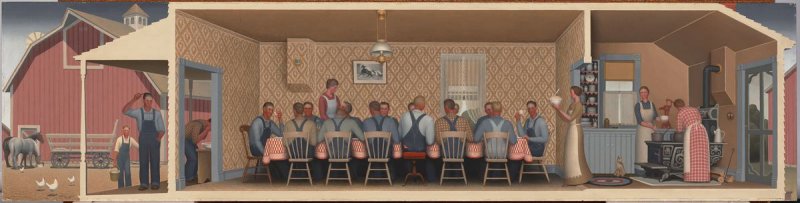
The painting was a minor painting of an artist who, with other painters, worked during a time of national suffering in the 1930s. A trio of artists known as the Regionalist Triumvirate—Grant Wood, Thomas Hart Benton, and John Steuart Curry—painted people and local scenes during the Great Depression.
Wood (1891–1942) remains the best-known proponent of this artistic genre. His painting technique is simpler than that of the great European masters, but it reflects the independent Americanism he pioneered in art.

The Iowa Artist
Wood was born, lived most of his life, and died in Iowa. He was born in a rural farmhouse in 1891, one of four children. His father died when he was 10 years old, prompting his mother to move with her children to Cedar Rapids, Iowa, to be near her parents.
Although young Grant already had experience doing just about every job around the family farm, he now pitched in to help his mother make ends meet by taking odd jobs. Meanwhile, he apprenticed in a local metal shop.
During high school, Wood primarily studied art. After graduating in 1910, he completed two summer terms at the Minneapolis School of Design, Handicraft, and Normal Art. He later enrolled in a Minneapolis art school called The Handicraft Guild.
From 1913 to 1916, he studied at the School of the Art Institute of Chicago. Around this time, he worked as a designer in a silversmith shop before unsuccessfully trying to start a jewelry store of his own.
In 1917, Wood returned to Cedar Rapids to care for his mother and sister after the family home was foreclosed on. He built a house where they could live together. Shortly thereafter, his life was interrupted when the United States entered World War I.
Wood joined the army near the end of the war. He used his artistic talents to serve his country, designing artillery camouflage in the nation’s capital. After the war, he returned to Cedar Rapids, where he first taught art at the local junior high school and then at the high school.
Teaching supplied Wood with an income to support himself and his female relatives while he continued to paint. He also pursued other artistic crafts like woodworking and metalworking. He studied art abroad whenever he got the chance, learning in Paris, Italy, and Germany.
American Regionalism
In 1935, Wood wrote a pamphlet called “Revolt Against the City.” It was the first in a series of four pamphlets published by renowned journalism professor Frank Luther Mott.
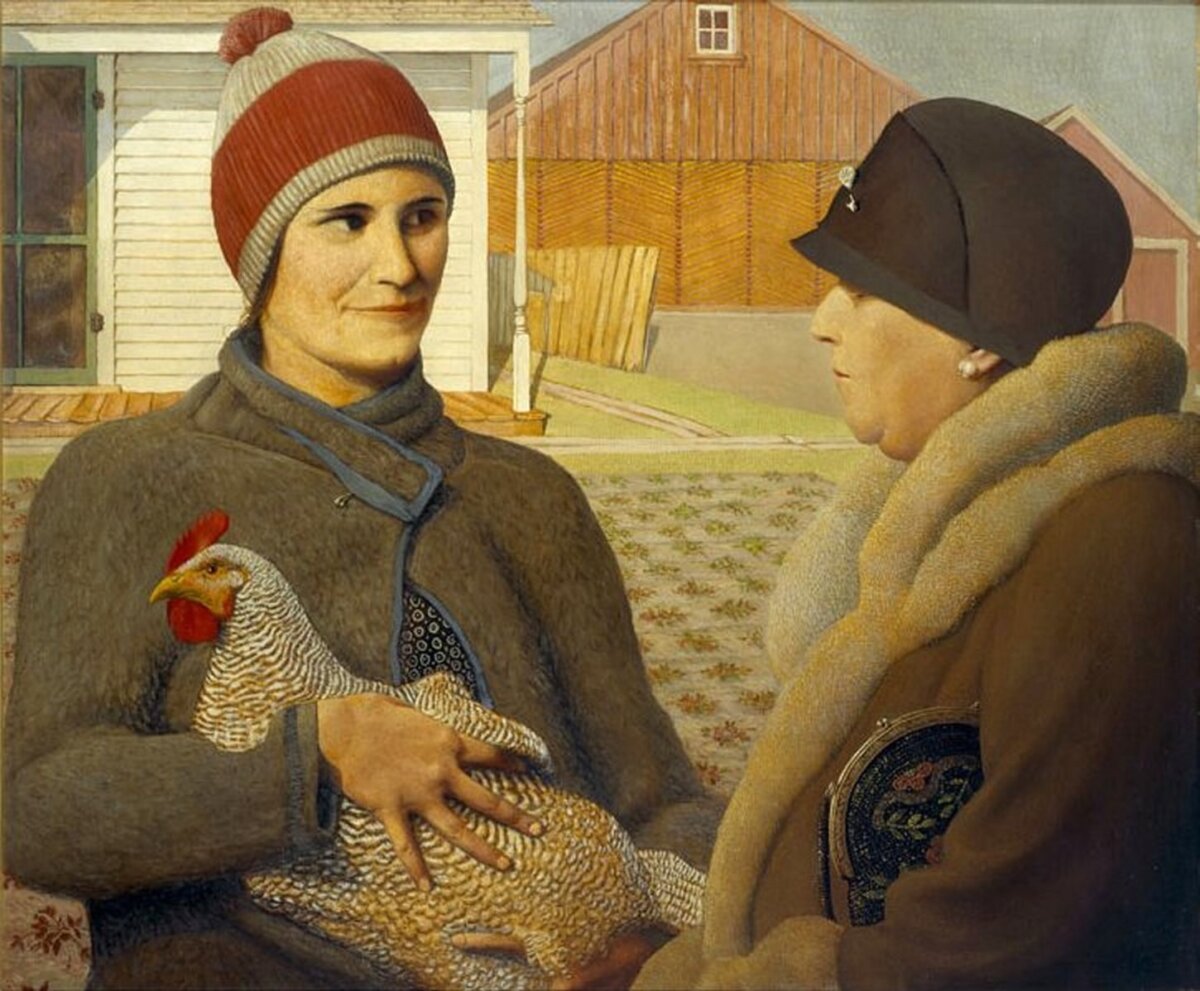
In this essay, Wood observed that it was only in recent years that regional American artists rejected the radical modernist art styles becoming popular in Europe and began to show an individualist style.
He said American artists needed to focus on the characteristics of their particular regions of the country, highlighting what made them special. At this time, he became part of the Regionalist Triumvirate alongside fellow artists and friends Benton and Curry.
He made four trips to Europe in the 1920s to study art, spending most of that time in Paris. On his fourth trip, he went to Munich, Germany, in 1928 to supervise the execution of a stained-glass window he had designed for the Veterans’ Memorial Coliseum in Cedar Rapids.
True American Artistry
Wood was neither a Bohemian artist in Paris nor a country bumpkin who never left his Iowa farm. He had a wealth of experiences, all of which shaped his art and legacy. He is best known for his paintings, but his artwork was richer because his creativity stretched beyond the canvas.
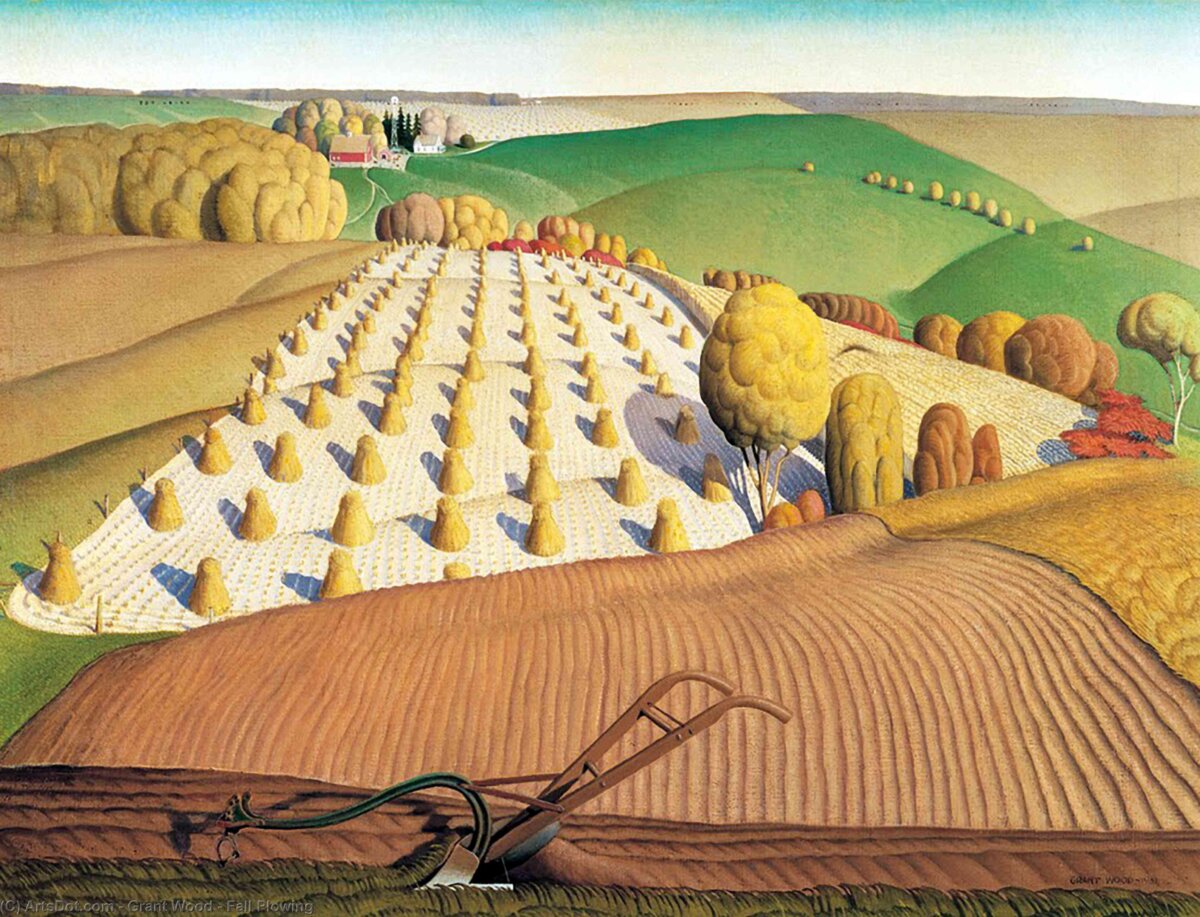
He crafted works of art out of wood, metal, and interior decorating materials. Perhaps the even greater depth and authenticity of his artwork, however, comes from the jobs that were anything but artistic. His whimsical, brightly colored landscapes, such as “Fall Plowing,” reflect the happy experiences he enjoyed while living and working in the Iowa farmland.
A 1935 article, “Grant Wood and little sister Nan” states that Wood had worked as a “gardener, farmhand, carpenter, builder, and night watchman in a morgue in Minneapolis. At one time he was a jeweler’s assistant; at another in Chicago, he owned a shop in which he designed, executed, and sold metal ornaments of all kinds. He has been a country schoolmaster, a teacher of art in high schools, and at present is teaching art at the University of Iowa.”
Although Wood produced a vast output of work before 1930, he achieved fame and success only when he later embraced his personal style.
This success was part of a growing interest among Americans in the art of their own land. In “Revolt Against the City,” Wood noted, “The American public, which used to be interested solely in foreign and imitative work, has readily acquired a strong interest in the distinctly indigenous art of its own land.” He went on to explain his patriotic view on art:
“This is no mere chauvinism. If it is patriotic, it is so because a feeling for one’s own milieu and for the validity of one’s own life and its surroundings is patriotic. Certainly I prefer to think of it, not in terms of sentiment at all, but rather as a common-sense utilization for art of native materials—an honest reliance by the artist upon subject matter which he can best interpret because he knows it best.”
In his short life, Wood depicted what he knew best—the simple, honest lives of common folks in Iowa. His paintings colorfully reflect the lives of ordinary people of his day.
What arts and culture topics would you like us to cover? Please email ideas or feedback to features@epochtimes.nyc