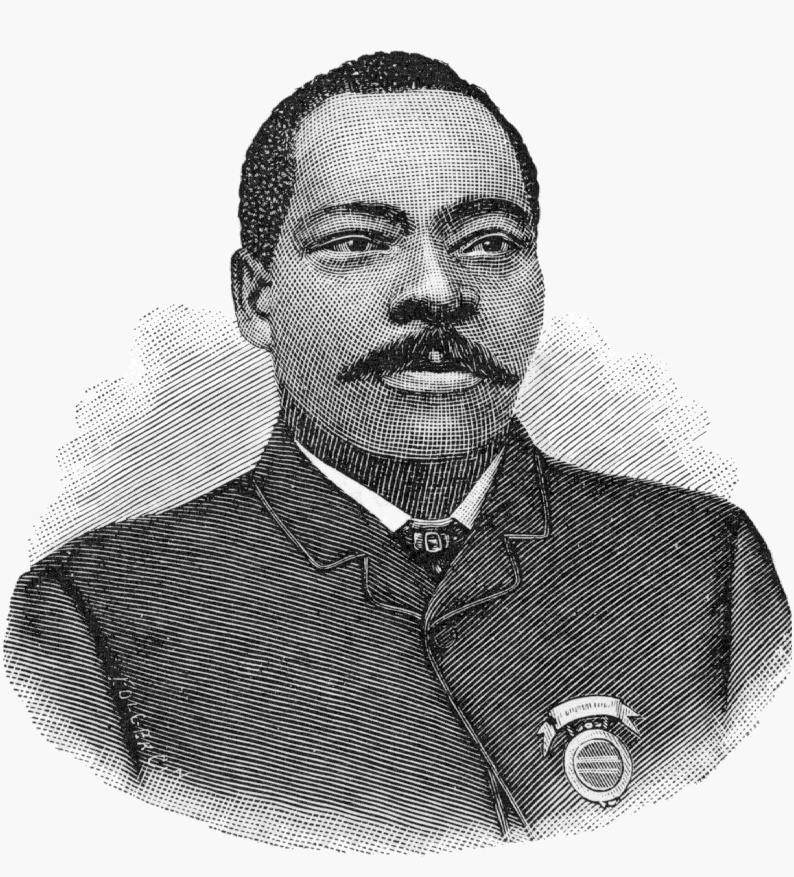
Granville Tailer Woods was born on April 23, 1856, in Columbus, Ohio, to a working-class family. Little is known about his early schooling, although it’s believed he left formal education around age 10 to help support his family.
Fascinated by mechanics and electricity, he apprenticed in machine shops, where he learned the fundamentals of metalwork, rail systems, and electrical engineering. By the time he reached adulthood, Woods had transformed himself into a capable technician and innovator in various transportation fields.
In November 1872, Woods left Ohio for Missouri and Illinois, where he obtained work as an engineer on the Iron Mountain Railroad, gaining valuable hands-on experience with locomotives and rail operations.
Though the timeline of his whereabouts is often unclear, at one point, Woods worked as a railroad fireman and later as an engineer on the Danville and Southern Railroad. There, he became even more familiar with locomotives and railway operations. The years aboard the rails not only shaped his understanding of mechanics and safety but also sparked ideas for devices that could prevent accidents and improve communication.
In 1876, he moved east to pursue formal studies, receiving two years of specialized training in electrical and mechanical engineering at a college. The Cleveland Gazette reported that on Feb. 6, 1878, Woods went to sea as chief engineer aboard the British steamer Ironsides, further expanding his technical knowledge and exposure to engineering concepts.
These experiences—on railroads, in formal study, and at sea—equipped Woods with the diverse skills that would fuel his inventive career in electrical systems and railway innovations. Ultimately, he moved to Cincinnati, where he began a prolific period of inventing that would mark his legacy.
In 1885, Woods displayed a model of a signaling system for railroad trains that he was about to patent. The Sept. 2, issue of the Cincinnati Commercial Gazette hailed it as “the work of an inventive genius,” confirming that Woods attracted contemporary attention for his demonstrations of railway telegraphy and signaling innovations.

The model operated as the foundation of one of his most important patents: an “Induction Telegraph Systems” that allowed messages to be sent between moving trains and stationary stations using electromagnetic induction.
The device, formally patented in 1887, enabled continuous communication between conductors and dispatchers—an extraordinary advancement in railway safety. Previously, train engineers had to rely on written orders or stationary telegraph lines, so moving trains could not communicate with other trains or to a station if there were incidents that needed to be relayed. The inability to relay communication from a moving train made collisions on busy tracks a constant danger.
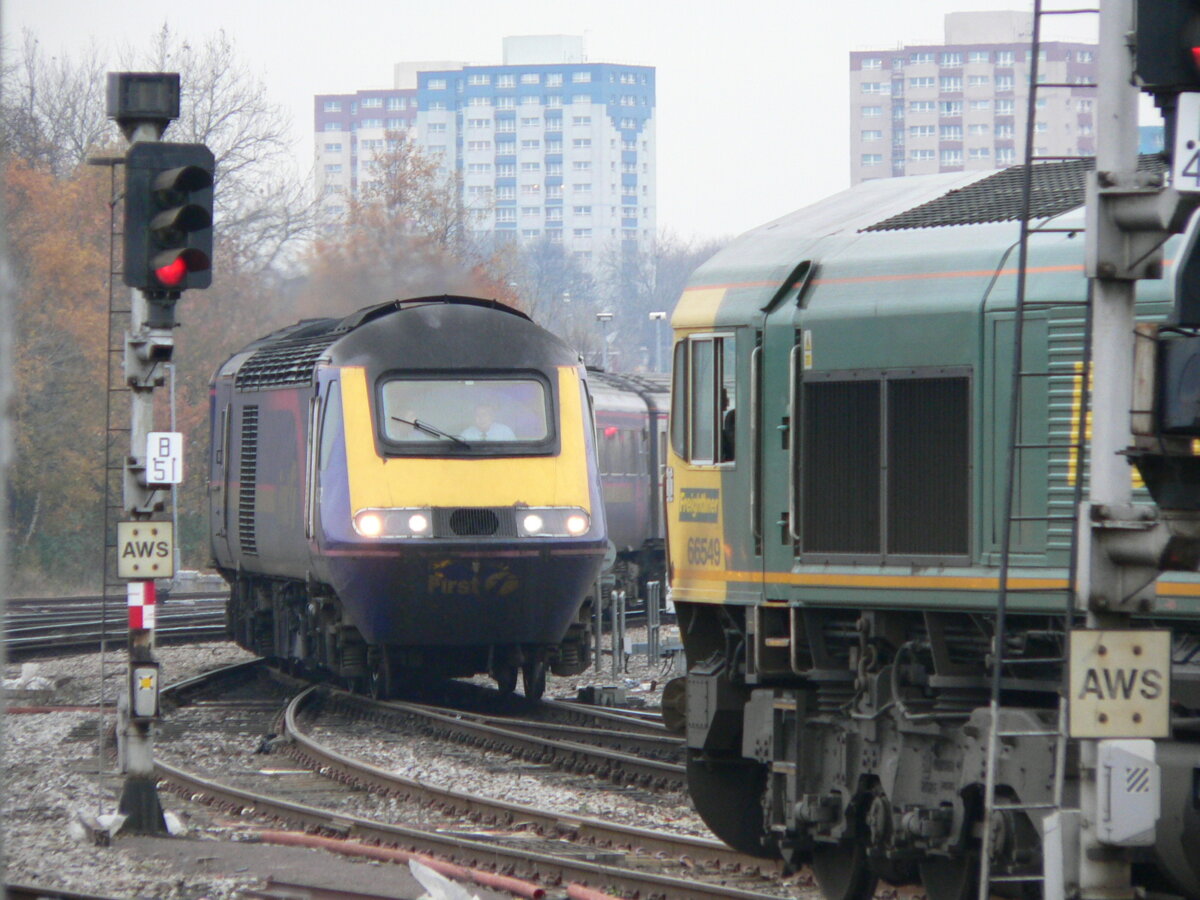
Woods’s system used the existing telegraph lines and surrounding air as conductors for electrical signals, allowing telegraphic messages to be transmitted wirelessly while trains were in motion. It was an early step toward the later concept of wireless communication.
When Woods demonstrated his invention, industry observers immediately recognized its potential. It was widely reported as a marvel. The railway press in the late 1880s was said to have taken note of its importance and its potential to completely change railroad operations.
His design proved so influential that Thomas Edison’s company later contested the patent in court, claiming prior invention. Woods successfully defended his patent, establishing his reputation as both a capable engineer and a determined advocate for his own work.
By the end of the decade, Woods had earned a national reputation as one of the most original minds working in applied electricity. His induction telegraph became known as one of the first systems to demonstrate how electromagnetic waves could transmit information over distance without wires—years before radio technology reached maturity.
Growth of Modern Transit
By the 1890s, Woods had expanded his focus beyond telegraphy to the wider realm of electrical transmission and transportation. He established the Woods Electric Company in Cincinnati and, later, in New York. It designed systems for electric railways, overhead conductors, and automatic air brakes. His inventions often dealt with integrating electric power into public transportation safely and efficiently—problems that cities and industries were only beginning to solve.
One of Woods’s key areas of innovation concerned the third-rail system, which became a central feature of modern subways and electric trains. It is important to clarify that Woods did not invent the third rail itself; the idea of using a separate electrified rail to power trains dates back to the 1880s in Europe and early American experiments. However, Woods made crucial refinements that improved the way electric current could be transferred from a power source to a moving train.
In his 1901 U.S. Patent No. 687098, titled “Electric Railway,” Woods described a method of supplying electricity to railway cars through a third rail or overhead conductor while minimizing power loss and improving safety through its design.
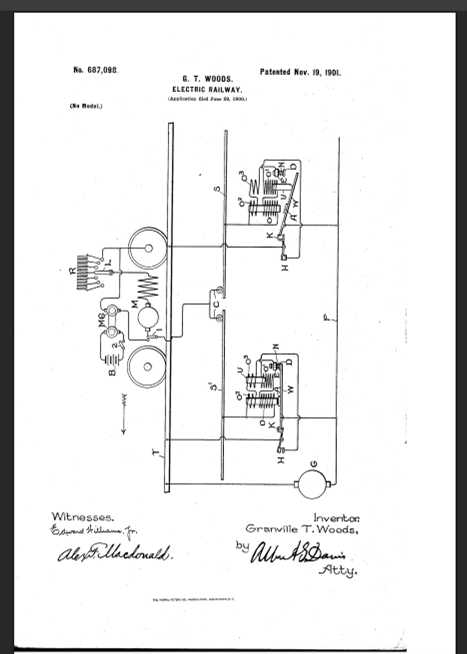
His design addressed the technical challenge of maintaining consistent contact between a moving vehicle and a live rail. By refining the pickup mechanism—the part that connects the train to the electricity source—Woods contributed to a safer, more reliable third rail system.
These improvements helped advance the electrification of railways at a time when major cities, including New York, were transitioning from steam to electric traction. Engineers and historians credit Woods with helping to bridge the gap between experimental electric trolleys and the fully electrified urban subway systems that emerged in the early 20th century. His work represented the practical ingenuity that made the rapid growth of mass transit possible.
Woods also patented an automatic air brake (similar in purpose to an earlier design by George Westinghouse) and a telegraphony system that combined telegraph and telephone functions. He consistently sought ways to make communication and transportation more synchronized, safe, and efficient. In all, he was awarded nearly 60 patents, many dealing with electrical control and power distribution.
Legacy of a Relentless Innovator
Despite his achievements, Woods faced constant financial and social challenges. His access to capital and industrial partnerships was limited. Although he occasionally consulted with major companies, such as the American Bell Telephone Company and General Electric, he often struggled to profit from his inventions. Some patents were sold outright for modest sums; others languished without development. Yet Woods persisted, continually filing new designs and testing fresh ideas.
By the turn of the century, newspapers sometimes referred to him as the “Black Edison.” It’s not known whether he encouraged or discouraged the comparison. The nickname, though perhaps belittling by modern standards, reflected public recognition of his creative output in an age when African-American inventors rarely received acknowledgment.
Woods died on Jan. 30, 1910, in New York City, at the age of 53. In the years since, his name has become emblematic of ingenuity under adversity. And his contributions to railway telegraphy, electrical control systems, and third-rail refinement laid essential groundwork for modern mass transit and communication.
Today, engineers remember Woods not as an isolated figure but as a vital link in the evolution of American transportation technology—a man whose self-education and perseverance electrified the rails and helped move a nation forward.
What arts and culture topics would you like us to cover? Please email ideas or feedback to features@epochtimes.nyc