




Tired of ducking under a waterfall at the door every time it rains?
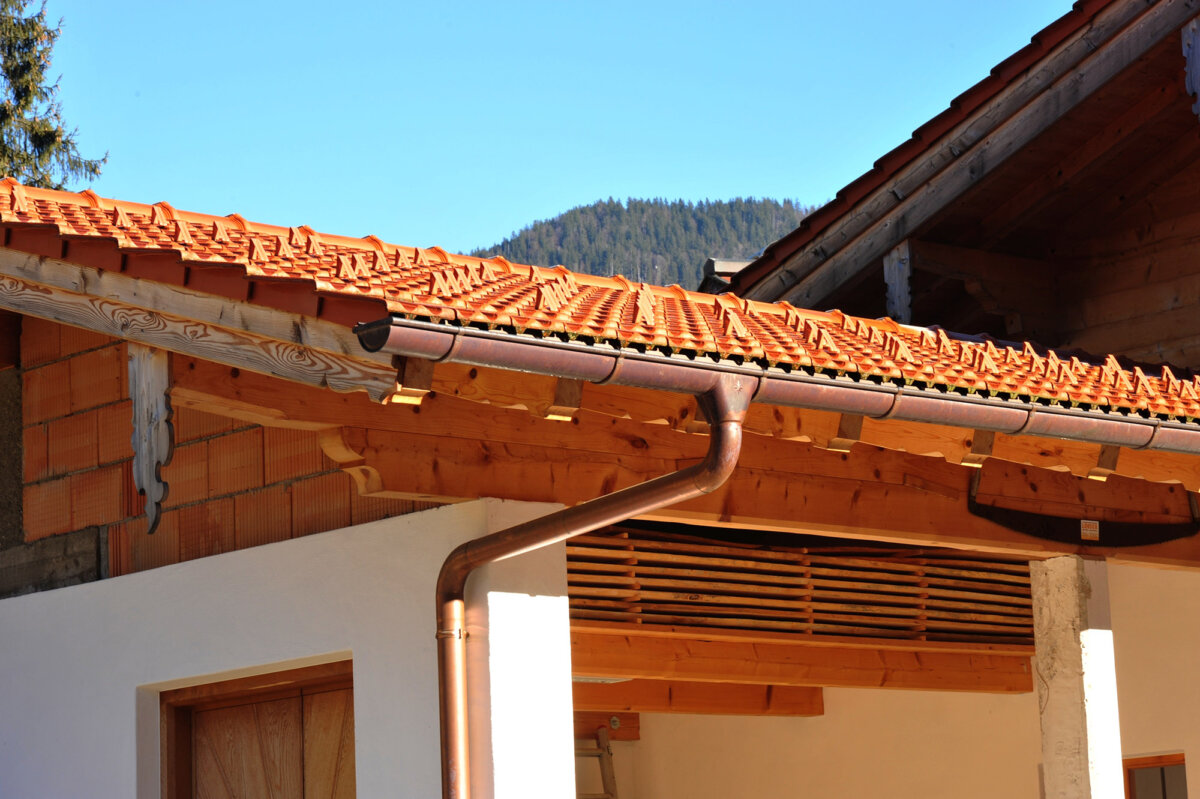
Gutters can also help extend a roof’s lifespan by channeling water away quickly; reducing exterior mold and mildew that thrive in damp environments; and giving the home an elegant, finished look. They’re available in a variety of colors and styles, including elegant copper that develops a posh patina. Best of all, they’re an attainable DIY install for anyone with patience, a moderate level of skill, and ideally a friend or two.
The Educated Consumer
Gutters come with a list of cons as well as pros. They require regular cleaning and maintenance, because clogged gutters can be worse than none at all, particularly if they force water back toward the fascia and roof.
They may also contribute to damage caused by ice dams. And although there are many styles to choose from, they interrupt architectural lines and might not work well with some historic homes and minimalist designs.
One easy alternative to traditional gutters is a louver system that breaks roof runoff into droplets for better dispersal on the ground. The open louvered system is mounted beneath the roof slope so that snow and ice won’t back up on it.
You can also install ground gutters (French drains) around the perimeter of the home, grade the yard to flow water away from the house, or surround it with decorative rock beds that will break up the water on impact.

The 1st Consideration
As Hamlet didn’t say (but might have, if he had been a homeowner), “To go seamed or to go seamless, that is the question.”
Seamed gutters—sectional or traditional—are typically the gutter of choice for a DIYer. They are readily available, cost-efficient, and easy to install, particularly if you’re doing the job alone or with just one friend. However, they are more prone to leakage over time, increasing future maintenance and the potential for water-damaged fascia. Cleaning as needed will help reduce stress on the joints.
Seamless gutters remove the downside of seams but must be fabricated in long lengths on-site. They’re usually professionally installed, but some companies will fabricate precisely measured lengths on-site for DIY installation.
Style Selection
K-gutters are popular because they’re the least expensive option. Their flat backs mean that they can be installed directly to fascia without brackets, and their fronts look like crown molding. They handle heavy rains very well.
However, the shape means that they can trap debris, especially at corners and internal angles. To counter that, you can budget for a gutter guard to keep out debris, opting for one designed to handle downpours.
Rustic-looking half-round gutters are low-profile, move water well, and are easy to clean (a good thing, as they do get clogged). They require bracket installation (precise measuring, drilling, and hanging) to support the gutters, making them a moderate to experienced DIYer project, and they can overflow in heavy rains. European gutters are half-rounds with a decorative lip. Victorian ogee—old gothic—gutters work well on classic homes in areas with moderate rain.
Materials
Rustproof, easy-to-install aluminum gutters come in several colors and are paintable. A thicker gauge is better to handle heavy rainfall or snow and is less likely to dent.
Galvanized and stainless steel are both extremely strong. They’re also heavy, which means that they may not be the best choice for a homeowner installation.
Gorgeous copper is an artistic statement. It’s also the most expensive option, but can last 50 years or more. What about zinc? Although it’s extremely long-lasting, it needs to be welded or soldered together.
Vinyl is not just for siding. Lightweight, easy-to-install vinyl gutters won’t dent, bend, or rust, but may only last eight to 15 years in extreme weather locations.
Proper Sizing and Design
Although five-inch K-style and six-inch half/European round and Victorian ogee are sufficient for most temperate locales, homes with steeply pitched roofs or in heavy rainfall areas will require wider gutters and perhaps even extra downspouts.
Start by calculating the square footage of the roof (or combination of roof lines) draining to each gutter. Then calculate the roof pitch (the inches of vertical “rise” over 12 inches of horizontal “run”). Check with the National Weather Service or local water management district for the maximum rainfall intensity. Input all into an online gutter calculator, such as the free one from A2Z Calculators, to eliminate the guesswork. The standard is usually one downspout for every 30 to 35 feet for five-inch and one every 40 to 45 feet for six-inch.
The Runoff
Make sure that downspouts direct the water a minimum of three to four feet away from the home’s foundation, or better yet, to a French drain or other underground drainage system.
________________________________
Gutter Maintenance
Plastic trowels and scoops are effective gutter clean-out tools that won’t scratch the metal or painted surfaces. Trim back any trees while the ladder is out to keep leaves out of your new gutters.
Keep ’Em Pristine
Fifty- to 275-micron micro-mesh gutter guards are pricey but block 95 percent of debris. Solid hood reverse curve designs feature a narrow slot for water and 80 percent to 90 percent debris protection. Less expensive metal and plastic screens filter 50 percent to 70 percent of debris and are easy to remove for twice-yearly clean-out.
Budget Conscious
Low-cost foam inserts work by keeping debris on top (out of the gutter itself), but they can impede water flow. Dense bristle brush guards catch debris but can reduce water flow when they are wet or dirty. Both are best cleaned out three to four times per year.
Gutter Doctor
Hose down the gutters after every clean-out to check for downspout clogs. Then inspect the entire system. Apply a gutter sealant designed for the specific gutter material to small holes and cracks. Use a gutter patch kit for bigger jobs. Allow to dry thoroughly before water testing.
