



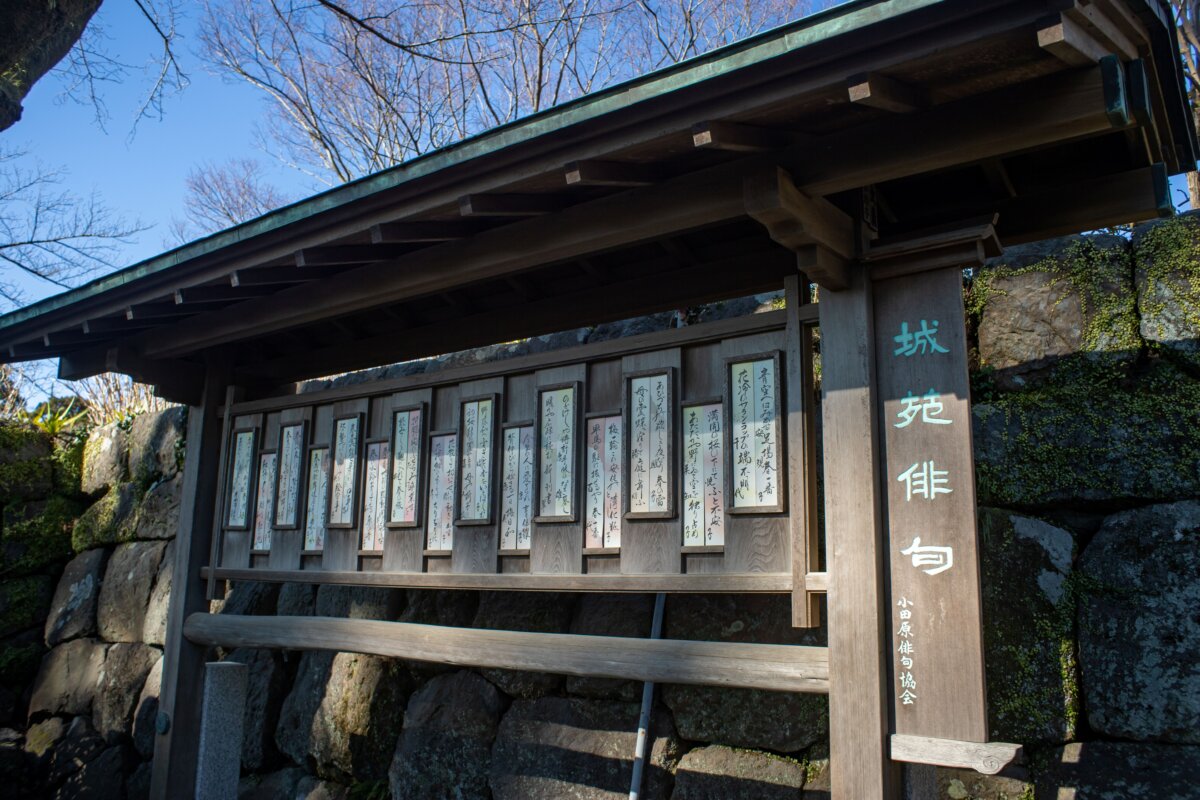
In many languages and countries around the world today, millions of people are writing haiku. But what is a haiku, really? How did it develop from its obscure origins in Japan to have a global reach? What makes writing haiku in Japanese different from, say, English?
Thomas Rimer, a retired professor of Japanese literature, sat down to answer some of these questions for The Epoch Times. He has published a number of books on various aspects of Japanese literature, including fiction, poetry, and modern drama. He is also one of the judges in the Society of Classical Poets 2025 Haiku Competition, going on now until Aug. 15, 2025.
The Epoch Times: Why do you think writing haiku is so popular today, compared to other forms of poetry?
Thomas Rimer: There are many things that can be said about haiku, a verse form which began in late medieval times in Japan and has now spread all over the world, but perhaps the most obvious is its democratic nature. Anyone can easily learn to write a haiku. Even our local weekly newspaper here in Claremont, California, where I live, reserves a space for haiku contributions in every issue. And indeed, everyone should be encouraged to try.
The Epoch Times: Can you explain the original meaning of the word “haiku?”
Rimer: The word “haiku” itself is a combination of two characters “hai” (playful) land “ku” (verse). The meaning of the name itself indicates a desire on the part of many Japanese poets of that period to break away from the then standard form of Japanese Court poetry, the “waka,” which contains 31 syllables, [and] which had been in use for so many centuries before. By [then] the waka, loaded with rules and learned traditions, was thought by some to be too staid, and many sought a form that was lighter, more free, and less constrained by so many precedents.
The Epoch Times: How is haiku especially suited to the Japanese language?
Rimer: Poetry in any language is more intimately tied to the realities of that language than any other literary art form, and it has often been said that the haiku form is so short because the Japanese language itself offers fewer of the linguistic possibilities found in many other languages. The simple and repetitive sounds of spoken Japanese preclude the effective use of rhyme, consonant clusters, and alliteration.
You might wonder if, under these circumstances, there were any long poems written in traditional Japan. The answer is “yes,” but they were usually written in classical Chinese, in somewhat the fashion that Latin was long used in the West. (Remember, Milton debated whether to write “Paradise Lost” in Latin or English.) And, in a like manner, just as fewer young people study Latin today in this country, few Japanese learn to read classical Chinese. In both cases, a great tradition is lost.
The Epoch Times: Could you talk a bit about the history of how haiku evolved as an art form?
Rimer: During the Tokugawa period (1603–1868), haiku rose to its greatest artistic height as a poetic form through the work and influence of Matsuo Basho (1644–1694). This brilliant poet developed an ingenious method of providing a prose background for his striking poetic images by combining both prose and poetry in his remarkable poetic travel sketches.
For those who might enjoy reading some of his best work in this genre, I would recommend a favorite book of my students over the years, the Penguin Classic entitled “The Narrow Road to the Deep North,” translated by Nobuyuki Yuasa.
The Epoch Times: How did Japanese culture, including haiku, begin to influence Western countries?
Rimer: Japan was closed off to Western countries during the Tokugawa period, but after its government began to permit foreign contacts in 1868, there came a rush of European and American influences that profoundly changed Japanese culture. In the area of literature, for example, translations of Western fiction, plays, and poetry began to appear, and by the first decades of the 20th century, Shakespeare, Verlaine, and Goethe were often as well-known and appreciated in Japan as in their home countries.
And the reverse happened as well: Japanese culture now began to be admired around the world. Woodblock prints became widely collected, and, after some shaky starts, Japanese haiku in translation began to be widely read and imitated. These translations in turn spurred on the composition of original haiku in English.
In this country, these efforts were aided by the development of Imagist poetry in the period of World War I. These experiments themselves, in fact, were perhaps influenced by the availability of traditional Japanese poetry in English translation. This well-known poem written in 1913 by Ezra Pound, for example, comes close to having the effect of a Japanese classic haiku.
“In a Station of the Metro”
The apparition of those faces in the crowd;
Petals on a wet, black bough.
The Epoch Times: How has modern Japanese haiku evolved since its classical roots?
Rimer: Haiku composed in modern Japan also received many inspirations and influences from abroad. A wider range of vocabulary and subject matter now became acceptable, and sometimes even foreign words were inserted. But on the whole, the great traditions of haiku have continued on, because admiration for the verse form itself, and the possibilities provided by the nature of the Japanese language remain as strong as ever.
The Epoch Times: What distinguishes English-language haiku from its Japanese counterpart?
Rimer: American haiku has taken on the rich possibilities inherent in the English language, including the use of consonant clusters, and alliteration, among others. Reading through the many excellent examples of English-language haiku provided by Margaret Coats in her essay “How to Write Haiku” on the Society of Classical Poets’s website reveal at once the rich array of possibilities that our language affords. And indeed, well-known American poets and writers ranging from Amy Lowell to Jack Kerouac, Richard Wright, and Gary Snyder have written haiku of considerable humor, power, and grace.
The Epoch Times: How has haiku spread and evolved in non-Japanese cultures around the world?
Rimer: Haiku is now a worldwide phenomenon. Spain, France, Britian, and German have made the form popular in their literary cultures, and the first Chinese-language haiku began to be composed in the early years of the 20th century.
So in every way, it seems to me, the haiku has become a “classical” form not only in Japan but around the world as well, and thoroughly suitable to be included in the canon of the Society of Classical Poets. So let us hope that more and more of its members will give both the reading and the writing of haiku a try.
What arts and culture topics would you like us to cover? Please email ideas or feedback to features@epochtimes.nyc
