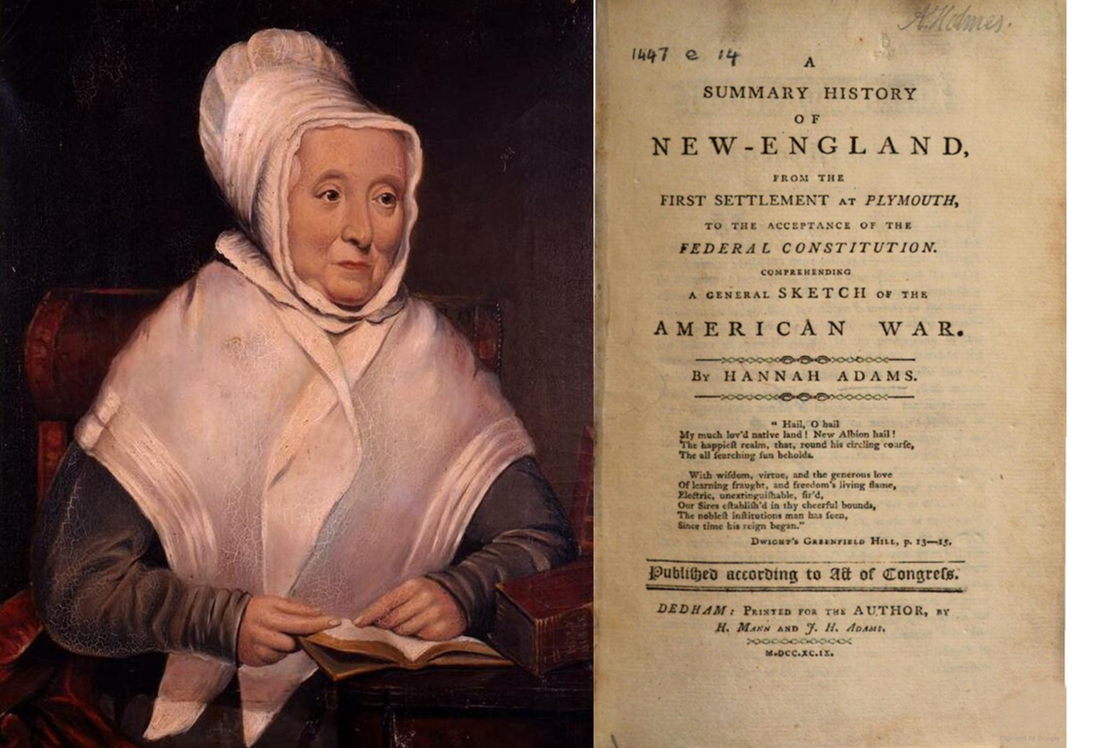
Hannah Adams was born on Oct. 2, 1755, in Medfield, Massachusetts, a small New England town shaped by Congregational tradition, village schooling, and domestic learning. Her family’s circumstances were modest but intellectually engaged.
Her father, Thomas “Book” Adams, kept a small collection of books and boarded students preparing for the ministry. These boarders, and the texts they brought with them, gave Adams early access to religious, classical, and historical works at a time when formal education was limited. Her nuanced upbringing would one day push her to become a historian of merit.
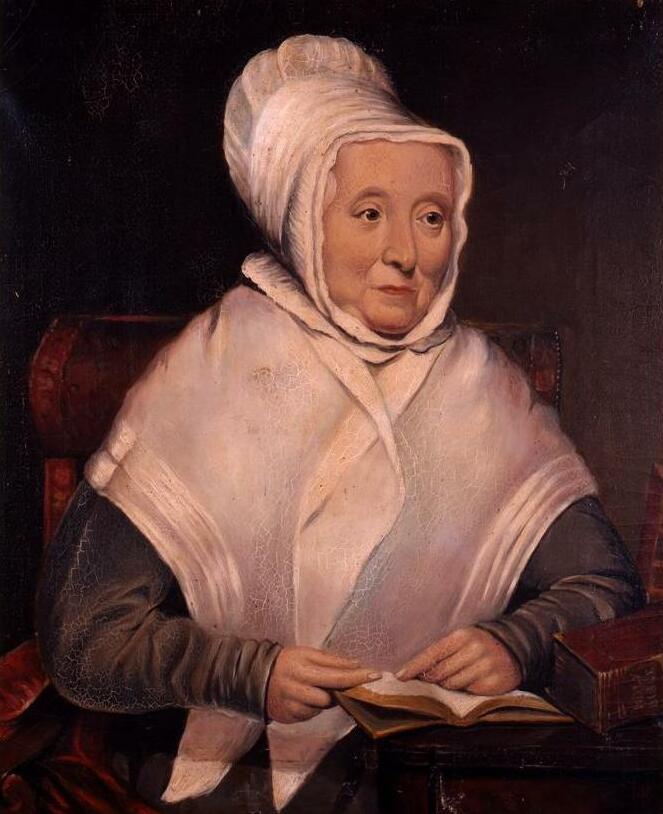
Adams’s education was informal and largely self-directed. She learned Latin and some Greek through instruction from visiting students and local tutors, and she read widely in theology and history.
This pattern of study was common in late-colonial New England, where private reading often substituted for institutional training. What distinguished Adams was the sustained way she transformed reading into methodical research. In fact, it became a disciplined habit that defined her working life.
Her writing career began in the early 1780s after she encountered several English reference works on religion. These books often treated dissenting groups briefly or sketchily. Adams responded not by writing a rebuttal, but by assembling her own survey. Drawing from a broad range of sources, she compiled short descriptions of religious sects based largely on their stated beliefs.
‘View of Religions’
The result was “An Alphabetical Compendium of the Various Sects Which Have Appeared From the Beginning of the Christian Era to the Present Day,” published in Boston in 1784. Organized for reference use and written in plain prose, the book avoided extensive argument.
Later editions appeared under the title “A View of Religions.” The work circulated in both the United States and Britain and brought Adams steady recognition as a careful compiler of religious history rather than a theological controversialist.
Her early publications appeared during a period of significant intellectual change. In the years following the American Revolution, American readers showed growing interest in works that organized knowledge—religious, historical, and political—for a national audience.
Adams’s books met that demand by offering structure and comparison rather than interpretation or advocacy, and they suited readers seeking clarity in a period of institutional uncertainty.
In the 1790s, Adams turned her attention to regional history. “A Summary History of New-England,” published in 1799, traced the development of the region from early settlement through the American Revolution and the adoption of the federal Constitution. The book relied on colonial records, works from earlier historians, government documents, and contemporary accounts. It emphasized political events, institutional development, and public life.
The research required for this work placed considerable strain on Adams’s eyesight, eventually forcing her to dictate portions of the manuscript. Despite these difficulties, the book was published successfully and later adapted into an abridged version intended for younger readers. Its reception reflected the expanding market for American historical writing at the turn of the 19th century, particularly works suited for education and general reference.
Later Works
Adams continued to publish works on religious and historical subjects in the early 19th century. “The Truth and Excellence of the Christian Religion Exhibited” (1804) presented a reasoned account of Christian belief grounded in historical and moral argument rather than doctrinal dispute.
In 1812, she published “The History of the Jews, from the Destruction of Jerusalem to the Present Time,” a substantial survey covering centuries of Jewish history. The book drew on European historical scholarship and published sources and was later reprinted in London in 1818, extending her readership beyond the United States.
These later works followed the same pattern as her earlier publications. Adams positioned herself not as a philosophical academic, but as an interpreter and organizer of existing knowledge. Her books emphasized documentation, citation, and synthesis, reflecting Enlightenment habits of scholarship adapted to an American reading public, perhaps best understood as practical rather than speculative.
For much of her adult life, Adams lived in Boston and nearby towns, including Brookline. Boston’s libraries, booksellers, and publishing houses provided access to materials and audiences unavailable in smaller communities.
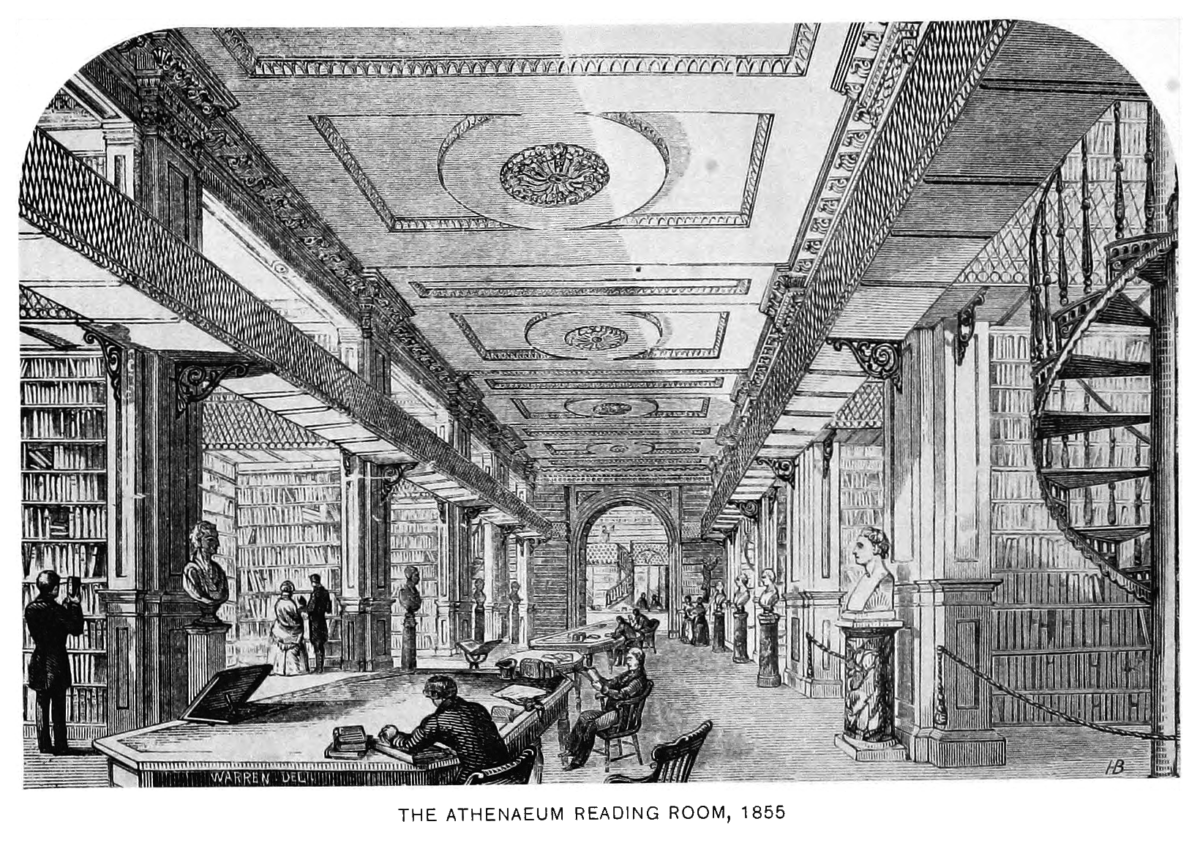
She was granted permission to use the Boston Athenaeum’s library, an important research resource, though she was not a formal member. Her circle seemingly included ministers, historians, and liberal religious thinkers, and she maintained correspondence with readers in the United States and abroad.
Much has been written in hindsight about Adams making a living as a professional writer and the unusual nature of an author in her time period turning literature into a profession. Financial security, however, remained tentative. Adams experienced disputes over copyright and unauthorized abridgments of her works, particularly with the clergyman and geographer Jedidiah Morse (1761–1826), the father of seminal inventor Samuel Morse (1791–1872).
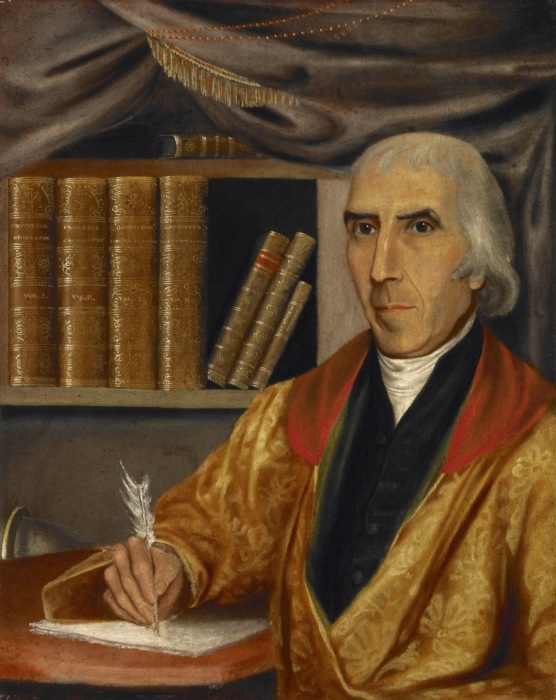
These conflicts limited her income and underscored the unstable nature of authorship in the early American publishing world. In her later years, her friends arranged a modest annuity that relieved immediate financial pressure and, as stated in the The Evening Post, allowed her to continue writing “popular and excellent works, compiled with great care and knowledge.”
Adams was distantly related to Founding Father John Adams (1735–1826), the second president of the United States, and visited him at Quincy on occasion. While the connection was socially meaningful, her literary merit rested on the quality of her publications rather than family association.
Her final major work, “Letters on the Gospels,” appeared in 1824 and took the form of reflective essays engaging with Christian texts. In her last years, Adams organized her papers and composed an autobiographical account of her life and work.
She died on Dec. 15, 1831, in Brookline, Massachusetts. One obituary noted this was a loss of “one of the most remarkable literary parsonages of this country.”
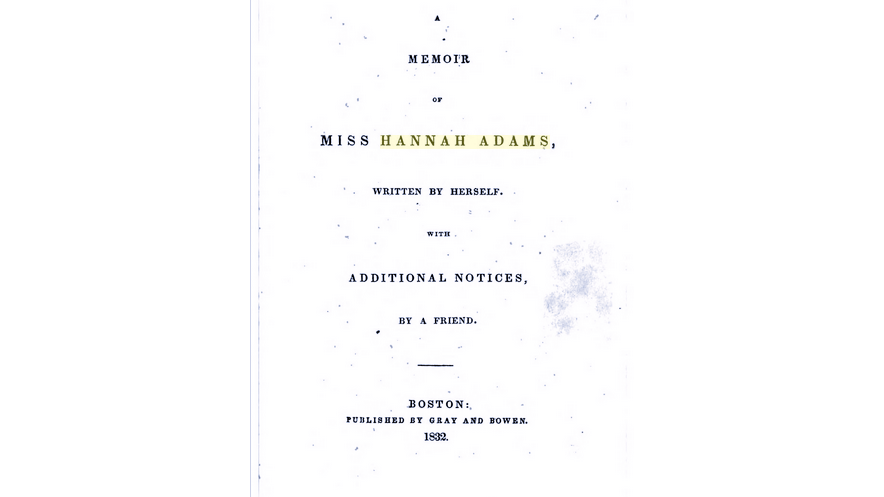
“A Memoir of Miss Hannah Adams,” published posthumously in 1832, offered a restrained account of a life shaped by reading, research, and publication. Taken together, Adams’s books document the steady development of American historical and religious scholarship during the early republic. This is a literary excursion of an author who made her name and work known in a raw, budding culture.
What arts and culture topics would you like us to cover? Please email ideas or feedback to features@epochtimes.nyc