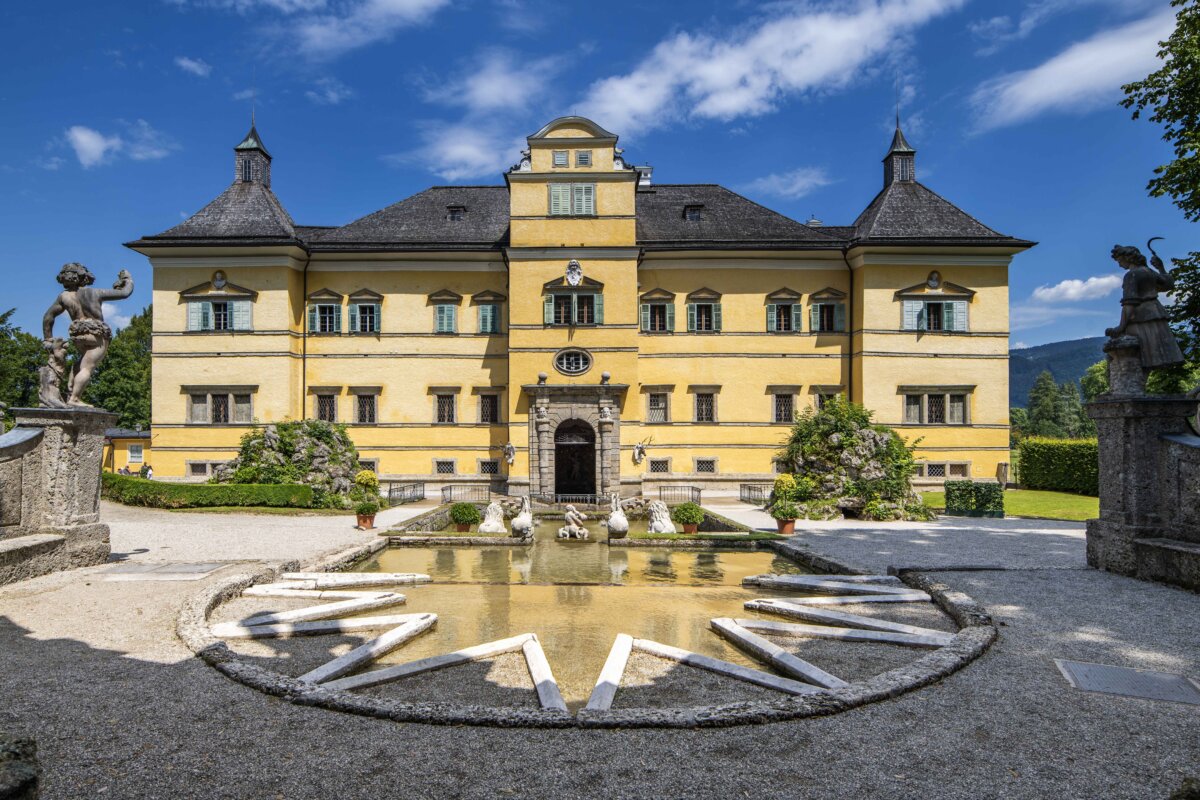
The posterior view of Hellbrunn Palace features a star pond that is surrounded by a semicircular fountain grotto, known as the Altemps Fountain. It feeds the entire fountain complex. The palace’s simple exterior hides exquisitely decorated ballrooms and halls. (Schloss Hellbrunn)
Hellbrunn Palace sits on a hilly perch about five miles outside Salzburg, Austria. Hellbrunn, which means “clear water” in German, is named for the several natural springs that feed the 148-acre landscape.
After Markus Sittikus (1574–1619) was elected Prince-Archbishop of Salzburg in 1612, he converted a hunting lodge in Hellbrunn into a baroque summer retreat. Inspired by Italian suburban villas, which were intended for leisure and relaxation, he hired Italian architect Santino Solari to build his pleasure palace. Construction began in June 1613.
Within three years, the palace was expanded to include five grottos, trick fountains, palace gardens, a park, the Monatsschlössl (meaning “one-month palace”) that houses the Salzburg Folklore Museum), and a stone-built theater.
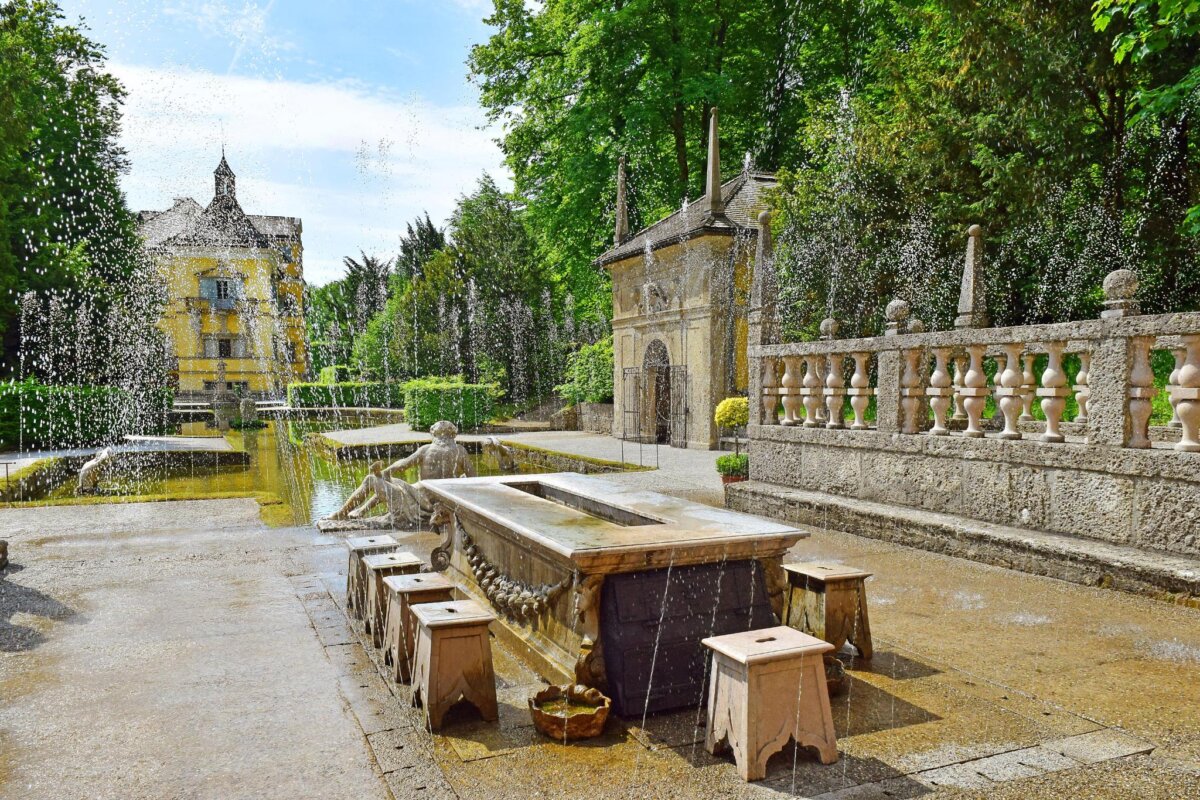
Among the most popular features at Hellbrunn are the jeux d’eau, or water games. Using hydropower, Sittikus impressed his visitors with trick fountains that incorporated such theatrics as hidden jets, moving figures, and artificial sounds. This 17th-century innovative feat showcased the archbishop’s wealth, power, and scholarship, and the fountains are among the best-preserved mannerist fountains worldwide.
Hellbrunn’s trick fountains aren’t the only feature that attracts over 300,000 visitors annually. The park boasts the gazebo from the 1965 movie version of the 1959 musical “The Sound of Music,” where Liesl von Trapp sang “Sixteen Going on Seventeen.”
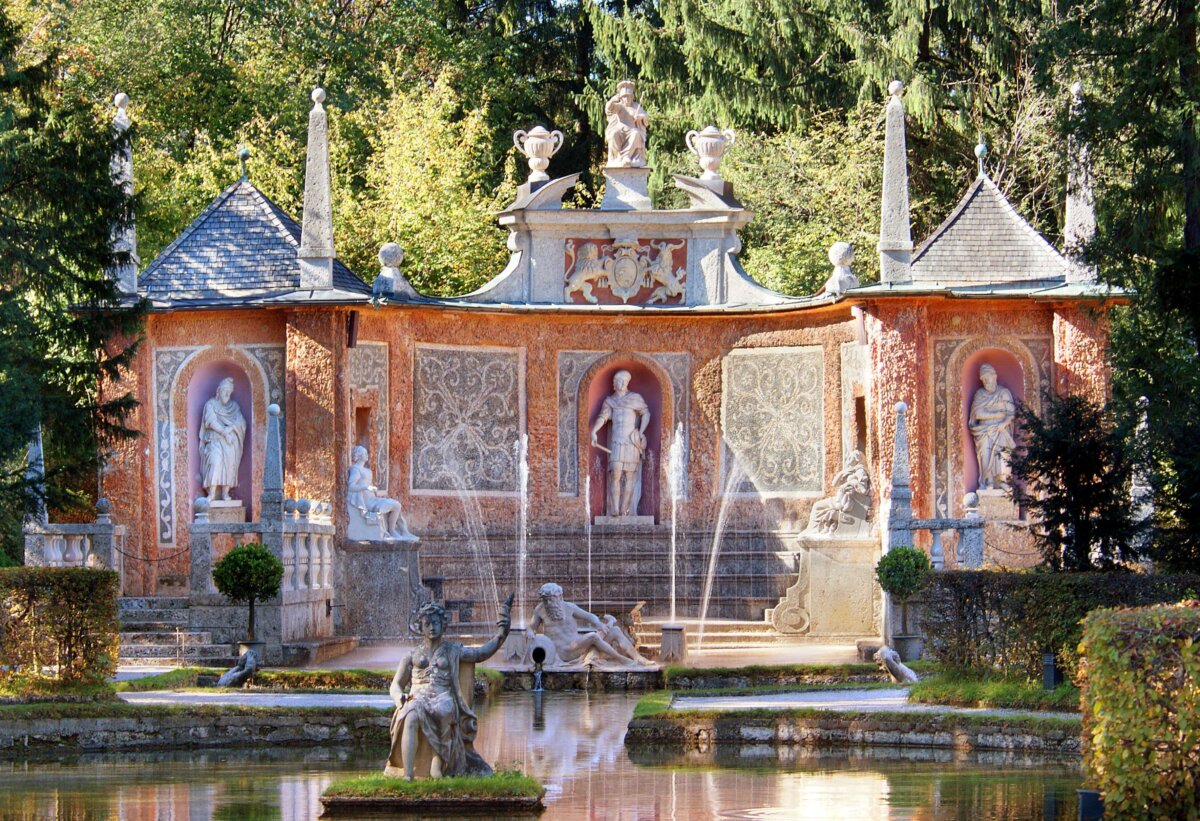
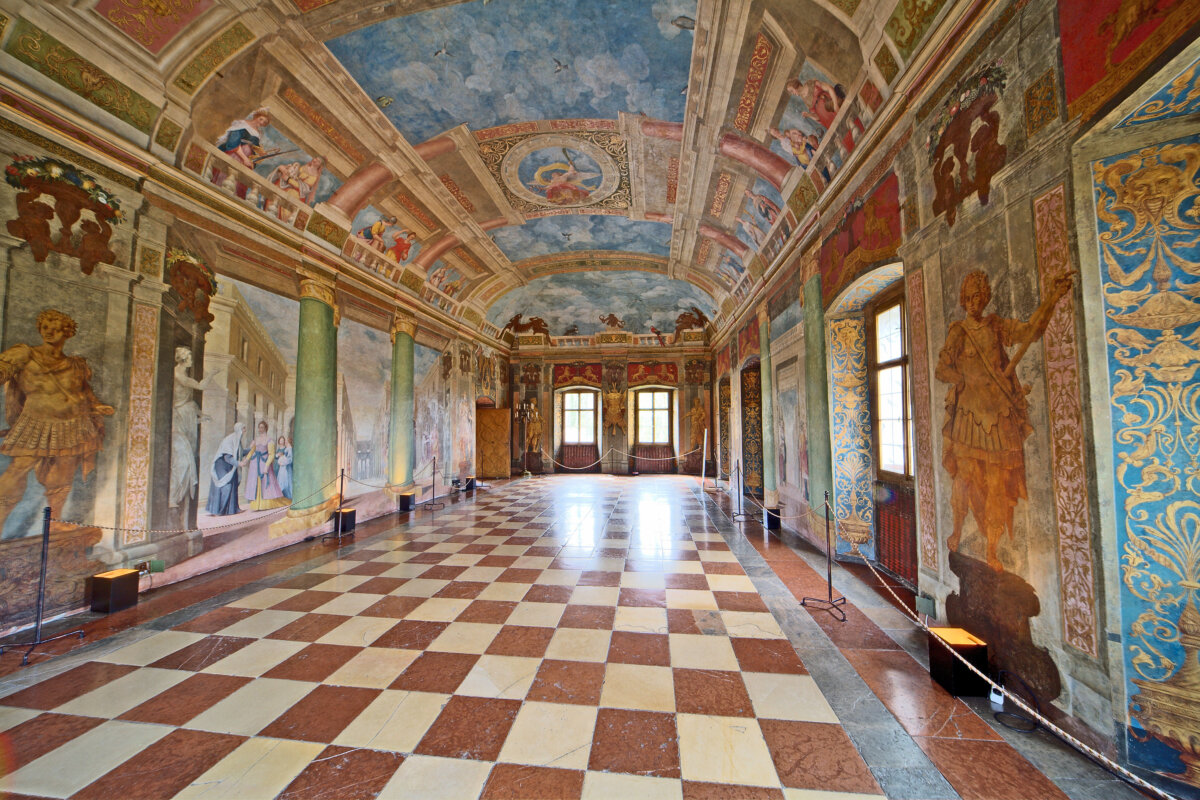
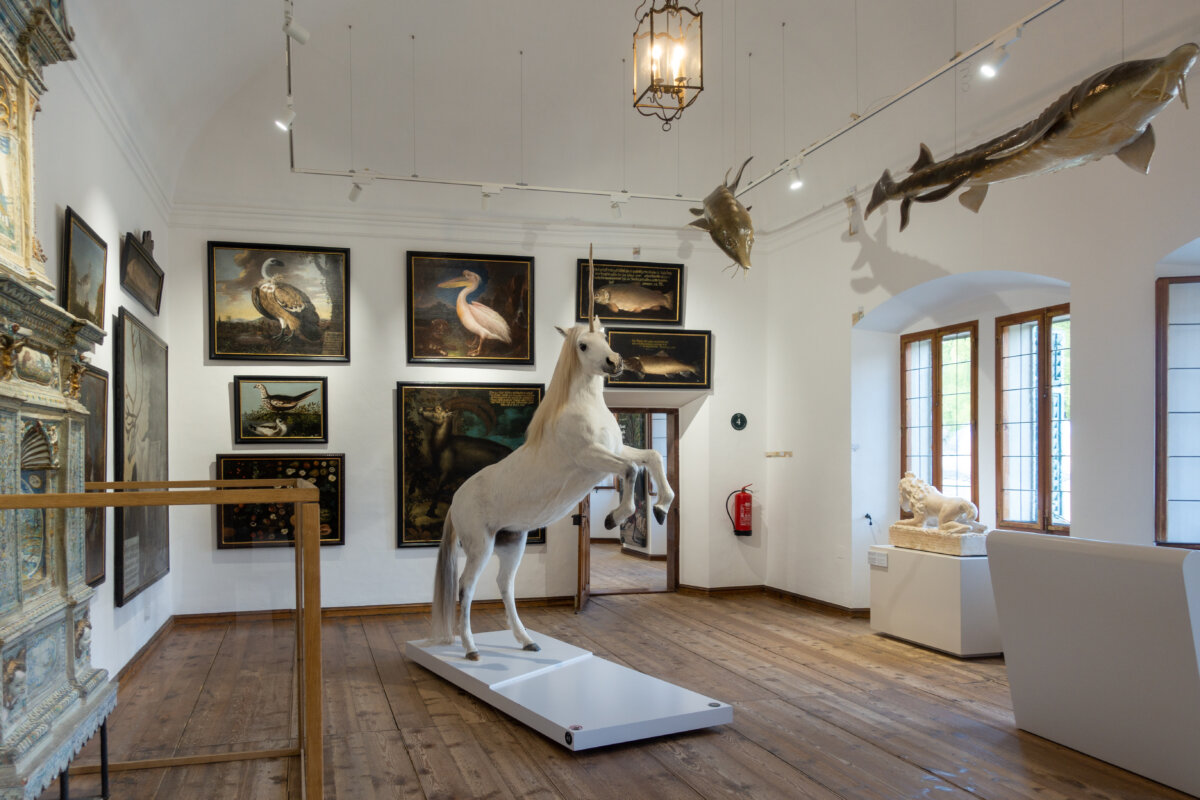
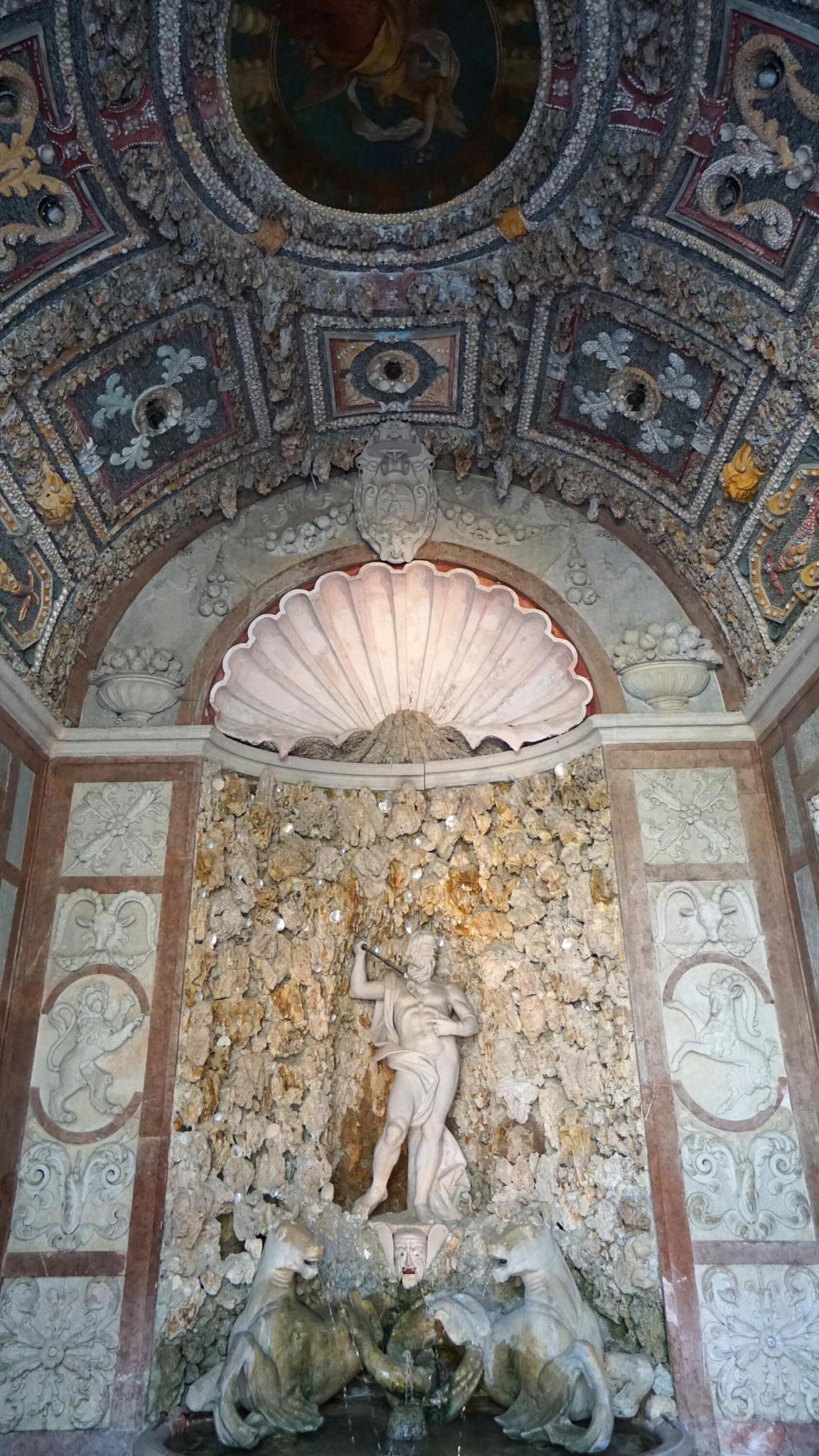
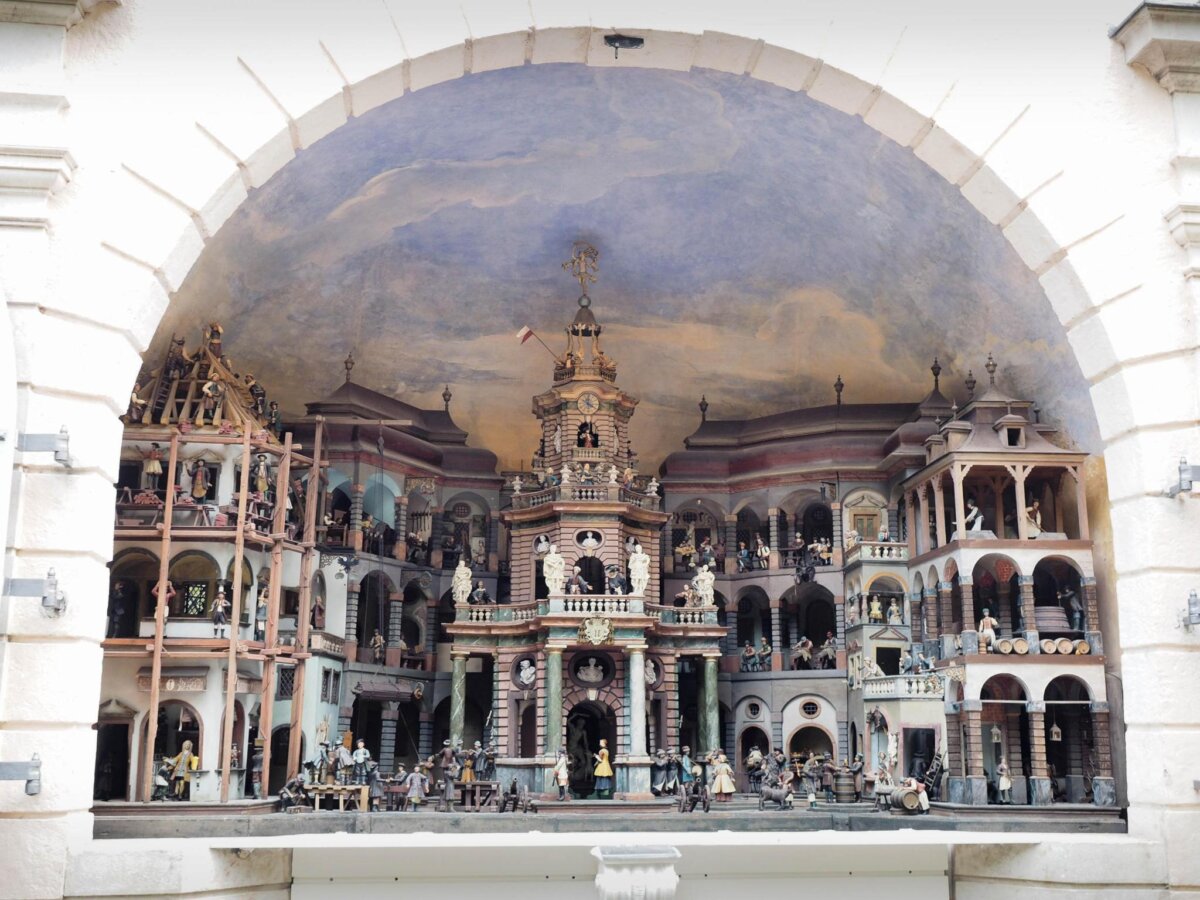
The Royal Table is one of Hellbrunn’s fountain showpieces. Made of marble, the table has a deep groove in the center where spring water once chilled wine for the archbishop and his guests. On the archbishop’s signal, a lever was pressed to send water jets up from his guests’ stone stools. Due to strict court customs, guests weren’t allowed to stand up without permission, making this an amusing test of endurance. Hellbrunn notes that “the water is never felt as a torrent or a gush.” (irisphoto1/Shutterstock) The Roman theater’s display wall is decorated with pebble mosaics and accommodates guests with steps and benches. Emperor Augustus is featured in the center niche and carved above is Markus Sittikus’s coat of arms, which displays the heraldic Alpine ibex and Salzburg lion. (Schloss Hellbrunn) The Ceremony Hall is the heart of the palace and features 17th-century frescoes painted by Florentine priest and artist Donato Arsenio Mascagni. The artist’s use of perspective makes the room appear larger than it is. Mascagni depicted scenes of Florence and Venice on the long walls with personifications of the virtues featured above on the painted balustrade. (MatthiasKabel/CC BY-SA 3.0) The former Hellbrunn dining hall is now converted into a “cabinet of curiosities” that features animal and plant paintings, taxidermy, and mythical beasts. During the 17th century, Europeans became increasingly interested in scientific study, folklore, and fantasy. A rearing taxidermy “unicorn” is featured alongside incredible nature paintings from the Salzburg court. (Kent Wang/CC BY-SA 2.0) The middle and largest grotto is dedicated to Neptune, the Roman god of the sea. The walls and ceiling are covered with marble, tuff stone, and pebble and shell mosaics. The grotto’s hidden water tubes can create an artificial downpour of rain, as well as a rainbow. (Attapola/Shutterstock) The Mechanical Theatre was added in 1752 by Lorenz Rosenegger. The five sections feature 163 water-driven marionettes—142 mobile and 21 immobile figurines—that depict alternating scenes of working craftsmen and tales from classical antiquity. The waterwheels, copper wiring, and cogwheels are hidden behind the theater and muffled by music from the organ, which is also water-powered. (Jakapong Paoprapat/Shutterstock)
What arts and culture topics would you like us to cover? Please email ideas or feedback to features@epochtimes.nyc
Jennifer Schneider is a classically trained artist who specializes in 19th century art and architecture. She has a Bachelor’s degree in Studio Arts and studied Imaginative Realism full-time at Georgetown Atelier in Seattle. She is a freelance photographer and an arts editor for The Epoch Times and American Essence (AE) magazine.