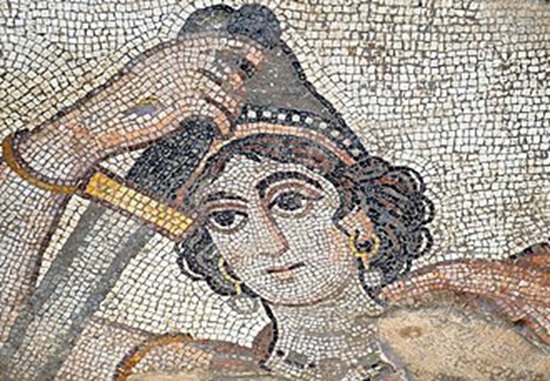
By the time Herakles reaches his ninth labor, the nature of his challenges has shifted decisively. The earlier labors demanded courage, ingenuity, restraint, and the governance of power. The middle sequence confronted corruption and its consequences. Now, however, Herakles enters a realm where neither brute force nor even disciplined strength is sufficient. The problem he faces is not a monster or a corrupted appetite, but something far more fragile and elusive: trust.
The task is to obtain the girdle of Hippolyta, queen of the Amazons—a warrior society beyond the familiar Greek world, admired for their strength yet unsettling in their inversion of conventional roles. The women exhibit relentless martial strength but are less admirable in their hostility to males—breaking the arms and legs of infant boys so that they could never fight. They even disfigured their own bodies—cutting off their right breasts—to improve their archery skills.
Before going further, it is worth noting that this labor originates not only from Eurystheus, the king whom Herakles is bound by divine command to serve, but from his daughter Admete, who desires the girdle as a wedding gift. The impulse is revealing. What for Hippolyta is a symbol of authority and identity becomes for Admete an object of adornment—something to be possessed rather than respected. The request itself contains the seeds of discord.
The chain of events that follows is shaped as much by female agency as by male command: A young woman’s desire sets the task in motion, but it is Hera, the queen of the gods, who ultimately transforms a peaceful encounter into violence.
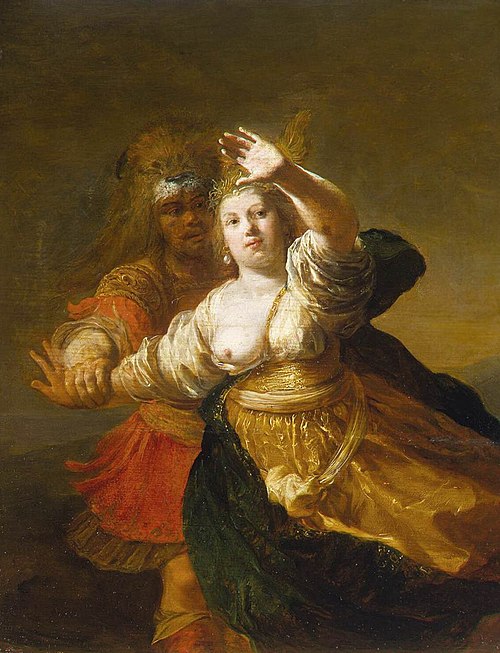
A Labor Gone Astray
The girdle itself is no ordinary ornament. It is a symbol of Hippolyta’s authority, a gift from Ares, the god of war, signifying both martial prowess and legitimate rule. Herakles arrives not as an invader but as an emissary, and in some versions of the myth, Hippolyta is willing to give it freely, recognizing in him a kindred strength.
At this moment, the labor stands on a knife’s edge. It could be completed without bloodshed, an encounter shaped by mutual respect rather than force. But the myth does not allow harmony to endure.
Hera, disguised as an Amazon, spreads suspicion among the warriors. She convinces them that Herakles intends to abduct their queen. Trust collapses. What had been a peaceful meeting turns into conflict. In the ensuing battle, Hippolyta is killed, and the girdle is taken by force.
Symbolically, this labor aligns with Libra, the sign of balance, justice, and relationship. Libra governs the delicate space between self and other, where harmony depends on reciprocity and mutual recognition. When that balance fails, misunderstanding quickly gives way to conflict.
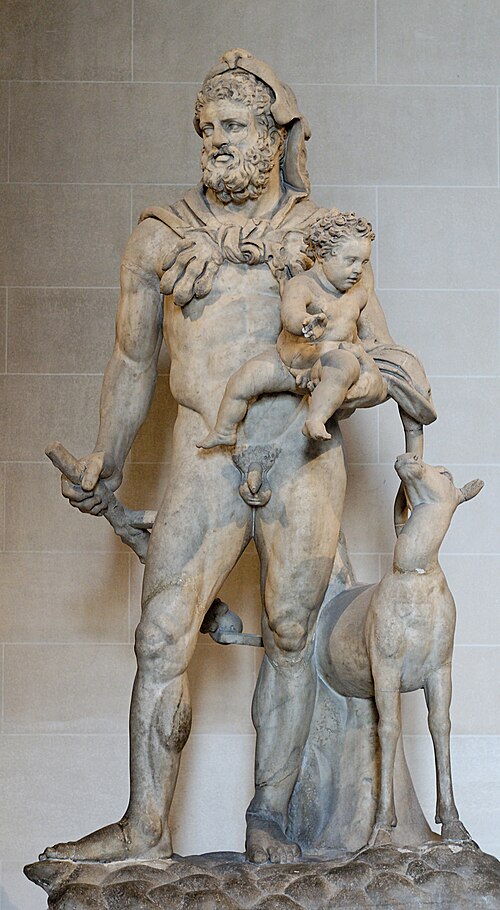
Victory at a Cost
In taking the girdle by force, Herakles achieves the outward goal of the labor, but at a moral cost. This is not a simple victory. Something has been lost—not only Hippolyta’s life, but the possibility of a different kind of resolution.
The episode reveals how quickly distrust accelerates events beyond control. Suspicion breeds fear; fear provokes defensive action; and defense appears as aggression. What begins as misunderstanding becomes a self-fulfilling prophecy.
The presence of Hera is crucial. She does not wield a weapon; she introduces doubt. And doubt, once planted, proves more destructive than force. It alters perception, reshapes intention, and transforms allies into enemies. In this sense, we are reminded of an earlier and more primal event found in the Book of Genesis. The serpent invites Eve to question what has been given as truth until trust gives way to suspicion; from that moment, Paradise is lost.
In this way, the labor marks another stage in Herakles’s education. He has learned how to master himself and govern power; now he encounters the fragile domain of human relationship.
For modern readers, the relevance is clear. Many serious conflicts arise not from deliberate aggression, but from a breakdown in trust. Diplomatic efforts falter when intentions are misread; communities fracture when suspicion replaces goodwill. Once trust is undermined, the path toward conflict becomes difficult to reverse.
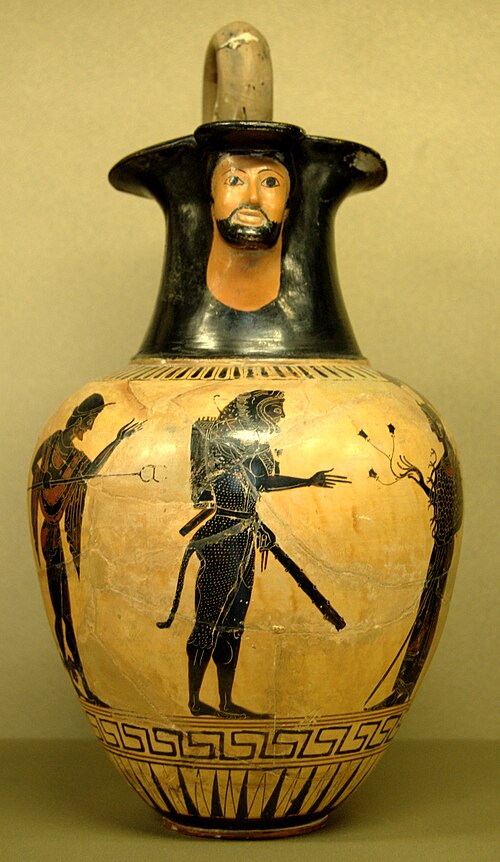
The Limits of Force
And yet the myth offers guidance. Trust cannot be restored by force once broken; it must be protected before it collapses.
If the earlier labor, the Mares of Diomedes, showed that corrupted appetite devours itself, the girdle of Hippolyta shows that distrust destroys what might otherwise have flourished. Herakles leaves with the girdle, but the cost lingers—a reminder that success without harmony is a diminished kind of victory.
That sense of loss deepens when we consider the girdle’s final fate. Having been taken at such cost, it passes quietly into Admete’s possession, its deeper significance all but forgotten. The symbol of authority is reduced to an ornament. Here, the irony is unmistakable. The girdle is not only taken; it is misunderstood. The true loss is not merely political or personal, but relational. A moment in which two worlds might have met in balance instead passes into imbalance.
This issue matters because, if we consider the role of Herakles in Greek myth as the son of Zeus, his greater task is to continue his father’s work. He must restore the true order to the cosmos. In this labor, he achieves the small task but falls short of higher harmony.
And that, perhaps, is the enduring and more difficult lesson of the tale: The most delicate forms of order—trust, balance, and mutual respect—are also the most easily broken and the hardest to restore.
What arts and culture topics would you like us to cover? Please email ideas or feedback to features@epochtimes.nyc