



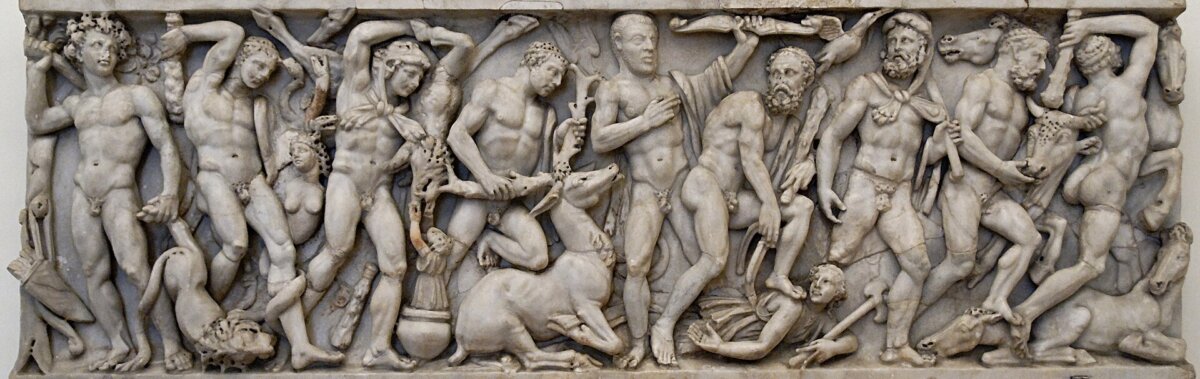
Herakles’s Labors, taken together, form something like a moral education—not merely a sequence of adventures, but a progressive testing of the hero’s character. In the earliest tasks, he confronted dangers that threatened the natural order: the Nemean Lion demanded courage; the Hydra ingenuity. Later labors refined that education. The Ceryneian Hind taught reverence for the sacred; the Erymanthian Boar required that explosive force be contained rather than unleashed; the Cretan Bull revealed that power, once mastered, must be borne responsibly rather than destroyed.
Seen in this light, the labors form a kind of ethical curriculum. The hero learns first how to face fear, then how to outwit chaos, then how to restrain himself before the sacred, and finally how to carry strength without abusing it.
But in the eighth labor Herakles confronts something darker still. Up to this point, the threats he faced were largely external: beasts, monsters, or forces of nature run wild. Now he encounters a corruption that is unmistakably human. The problem is no longer merely strength or chaos, but appetite deliberately turned toward cruelty. It is this descent into moral distortion that gives the story of the Mares of Diomedes its unsettling power.
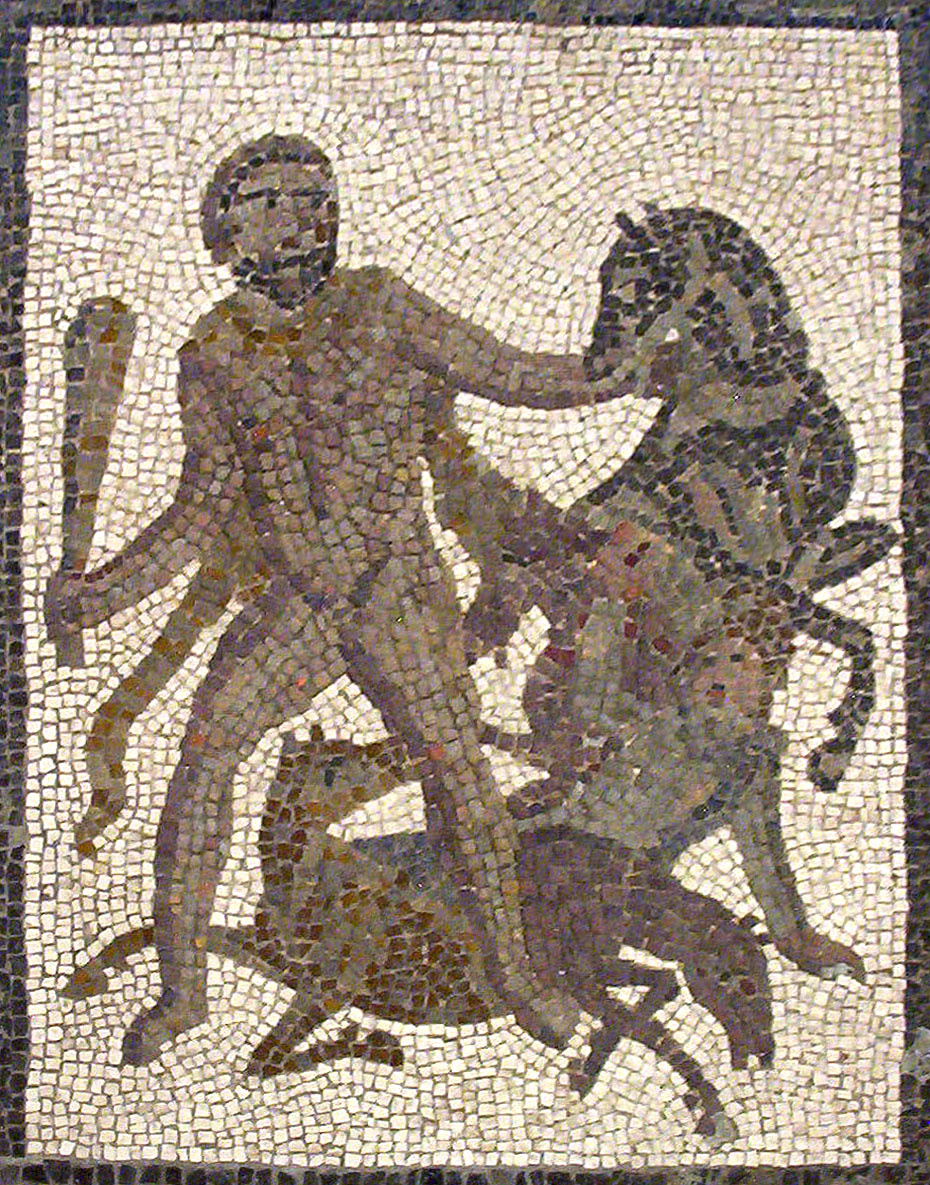
From Beasts to Human Corruption
The target of this labor is not a dragon or beast of mythic origin but four extraordinary horses belonging to Diomedes—a son of Ares, the god of war—and a brutal king whose rule has descended into barbarity. The mares are no ordinary animals. They have been trained, or rather corrupted, to feed on human flesh. Their names vary in different traditions, but their character is consistent: They are wild, uncontrollable, and terrifyingly hungry.
At first glance the labor appears straightforward. Herakles must seize the mares and bring them back alive to King Eurystheus. Yet, as so often in the labors, the deeper significance lies not merely in the task itself but in the moral world that produced the problem: The mares are monstrous not because horses are naturally dangerous, but because human cruelty has turned them into predators. Diomedes feeds them human victims—strangers, prisoners, and travelers—until their taste for blood becomes habitual. Violence has been normalized; appetite has been trained toward destruction. In this sense, the mares are not simply animals but embodiments of a ruler’s moral disorder.
At this point, it is worth noting that there are four mares—surely no accident. The number four has long symbolized the structure of the earthly world: the four elements, the four cardinal directions, the four seasons. The image therefore suggests corruption spreading outward across the whole field of human life. These destructive appetites are not localized; they run in every direction.
Appetite Without Conscience
Horses normally symbolize vitality, movement, and the energies that drive civilization forward. But when those energies are deliberately perverted, they become dangerous forces that devour rather than sustain life.
Symbolically, the labor resonates with Scorpio, the eighth sign of the zodiac, associated with intensity, the taboo, and transformation (and 8 is twice 4, so doubly intense in terms of its potential for corruption). Scorpio probes the shadow side of human experience—power, desire, obsession, and the forces that lie beneath civilization’s surface. When guided wisely, these energies can lead to renewal, but when corrupted they become destructive.
The Mares of Diomedes represent this darker possibility: appetite unrestrained by conscience.
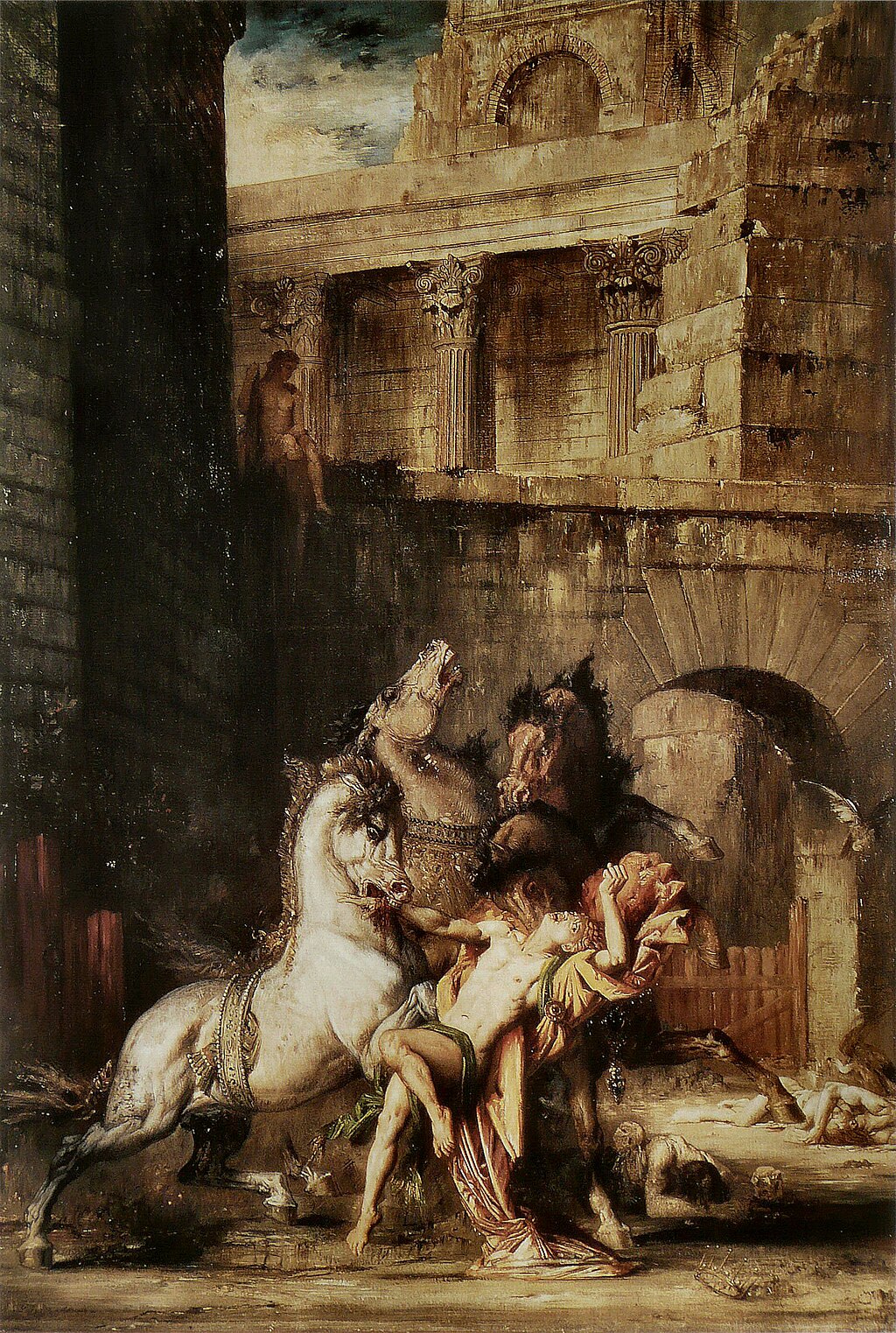
In the unfolding education of Herakles, this labor reveals yet another dimension of heroism. The hero is no longer simply confronting chaos or governing his own strength; he is confronting the consequences of human corruption itself. Herakles therefore first tackles the guards who protect Diomedes—evil, as so often in history, being surrounded by loyal enforcers—and overpowers them before seizing the king himself.
Justice Turned Inward
What follows is one of the starkest moments in all the labors. Herakles throws Diomedes to his own horses. Here the story offers a brutal but unmistakable form of justice. The destructive system collapses upon its source. The appetite that devoured others turns inward. Violence consumes the authority that nourished it. Eating their own master—which proves distasteful to them—cures the mares of their savage habit.
The Book of Proverbs expresses the principle succinctly: “He who digs a pit will fall into it” (Proverbs 26:27). Shakespeare expresses the same truth through perhaps his most evil character, Macbeth: “This even-handed justice/ Commends the ingredients of our poisoned chalice/ To our own lips” Macbeth, (Act 1, Scene 7).
History offers many examples of the same pattern. The French Revolution, born in the name of justice and liberation, soon devoured many of its own architects as the Terror turned inward. The appetite once unleashed could not easily be restrained, and the revolution began consuming those who had helped create it. It is a grim lesson, but an enduring one.
Societies sometimes cultivate forces that promise strength or advantage—economic appetites, political hostilities, technological powers—only to discover that these forces acquire a momentum of their own. Once trained toward exploitation rather than responsibility, they begin to feed upon the very communities they were meant to serve.
The Mares of Diomedes remind us that appetite without moral restraint is never satisfied. It grows, spreads, and eventually devours what sustains it. I am reminded in saying this of the American critic Mark William Roche’s comment in his “Why Literature Matters in the 21st Century”: “Morality is not one sub-system among others, such as that there is art, science, religion, business, politics, and so forth, alongside morality. Instead, morality is the guiding principle for all human endeavors.” If we try to do without it–or invent our own moralities–we are doomed to consume ourselves.
For Herakles, this labor deepens the hero’s understanding of power. Strength alone is not enough; wisdom must guide it. Energy alone is not enough; purpose must direct it. And appetites—whether personal or political—must remain servants of life, not its masters. Herakles is continuing the work of his father, Zeus, in ensuring that the cosmos is a moral one. Only then can power become creative rather than destructive.
What arts and culture topics would you like us to cover? Please email ideas or feedback to features@epochtimes.nyc

_08.jpg)