



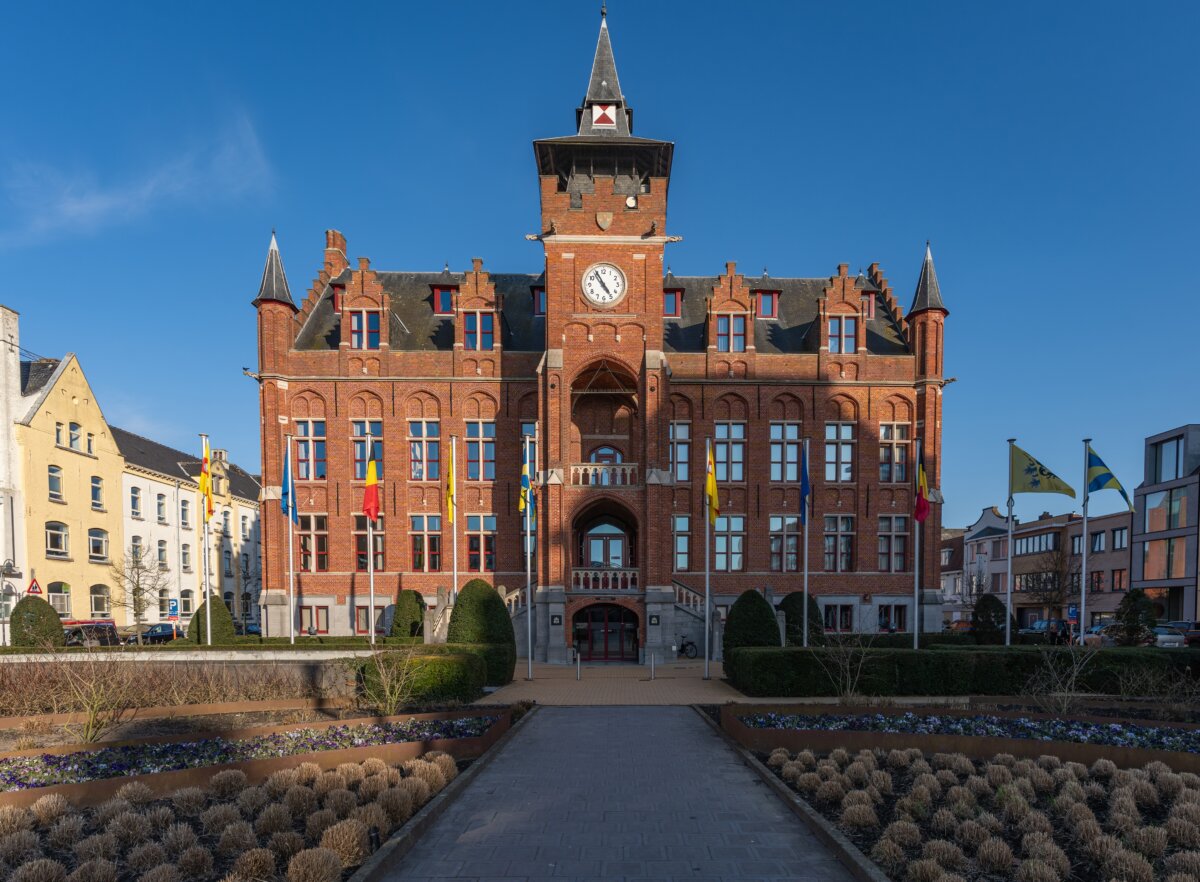
For over a century, Knokke-Heist has been Belgium’s most popular and, probably, most beautiful, seaside resort town. It was a small fishing village when Belgium became independent from the Netherlands in 1830. Rapid transformation soon introduced grand mansions and hotels in the French Second Empire style.
Two neighborhoods in the town have revived traditional Flemish architecture: Heulebrug and Duinbergen. The most extensive achievement of the Flemish Revival was Duinbergen’s 125-acre section of homes, businesses, and public buildings. The Heulebrug section is a more recent revival of the historical Flemish style.
A Determined Classicist
The driving force behind Knokke-Heist’s Heulebrug section was Count Leopold Lippens, who served continuously as Knokke-Heist’s mayor from 1979 until his death in 2021.
Determined that further development be beautiful as well as practical, he turned to New Classicism (a return to traditional architectural styles) and New Urbanism (an adaptation of traditional principles of city planning to modern conditions).
When formal planning was launched in 1998, few Belgian architects were open to these movements, and almost none were experienced in them. A core team hired by Lippens was required to work under the guidance of the leading figures of these movements: Cuban American Andres Duany and Luxembourg’s Leon Krier.
Preparation included visits to Duany’s Seaside in Florida and Krier’s Poundbury in England’s Dorsetshire. The core team attended on-site assessments by both men and lectures on New Classicist and New Urbanist principles.
Duany’s firm, DPZ CoDesign, drew up a set of guidelines covering everything from the height and width of buildings to decorative features to materials.
Flemish Tradition
Originally conceived as social, or public, housing, the Heulebrug project was altered to include privately owned homes. In order to attract businesses in accord with New Urbanism’s mixed-used principles, a vernacular style was called for. Belgium has two distinct cultural and linguistic regional groups, each with its own traditions of vernacular architecture—the “French” Walloons and the “Dutch” Flemish.
While sometimes using lighter colors or having a less sober aesthetic than its Dutch counterparts, Flemish style shares the defining French characteristics of the Walloons.
Gables most noticeably differentiate these two styles. One is the stepped gable, which resembles a staircase as its name suggests. Another is known as the Dutch gable, characterized by curving lines and sometimes taking the more specific form known as the clock gable—resembling the church bell design, long popular for clocks.
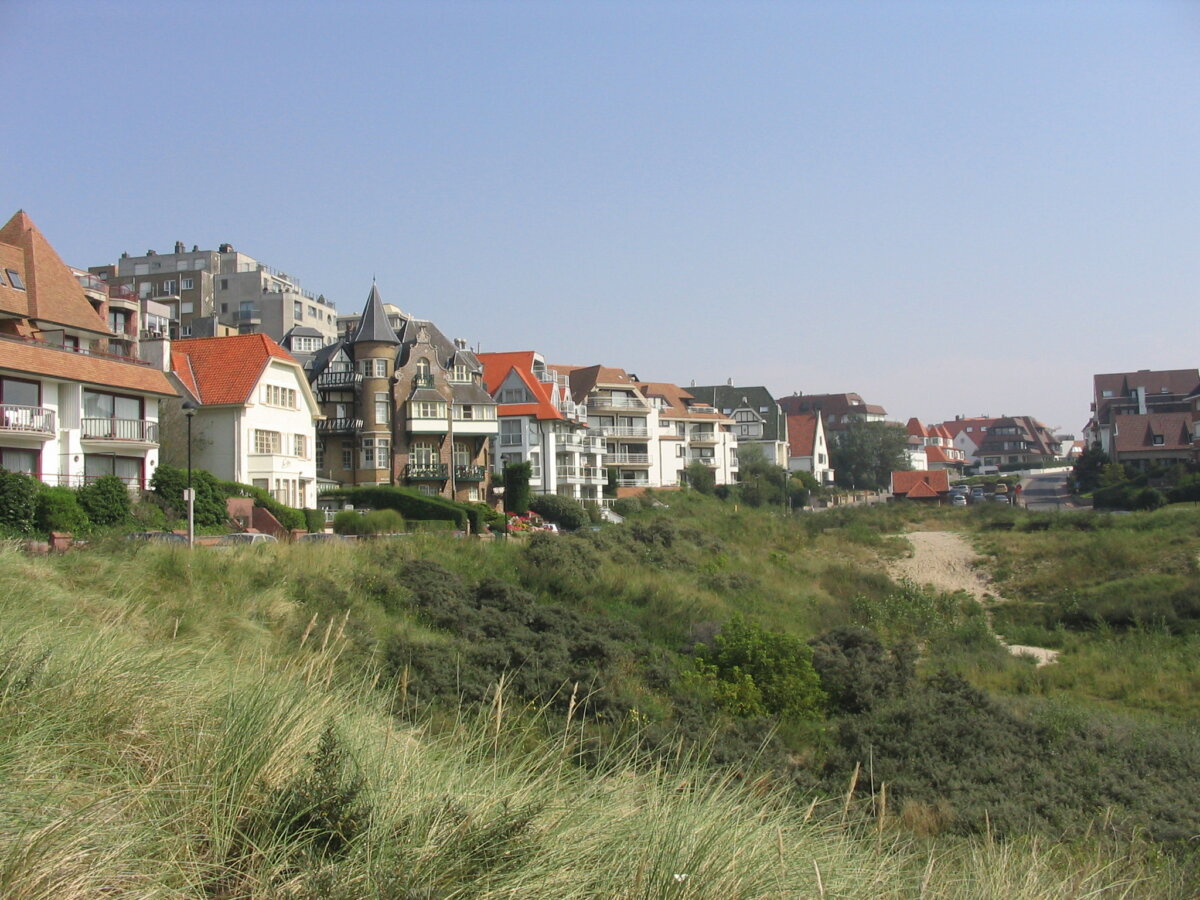
Curving roofs are similarly popular. The gently sloping roof lines are typically combined with classicist symmetry and proportions. This was the local interpretation of high Baroque architecture with its flowing and classical lines.
Brick is the most common material for exterior walls, the ubiquitous red of Dutch brickwork being common in the Flemish tradition but joined by various shades of tan.
The nearby city of Bruges includes one of the largest urban areas dominated by historical architectural works in the Flemish style and served as an important model for extending Flemish Heulebrug.
Extending Dutch Tradition
Official guidelines require all construction and renovation at Heulebrug to conform to Dutch tradition. Officials encourage broad parameters using variety in detail and adaptation to modern conditions.
Central planning has focused on the layout of roads and plots of land. The goal, not yet realized, is for Heulebrug to become a mixed-usage community. The planning includes stores, professional offices, and public buildings all within walking distance of residences as was typical prior to modern transportation.
A particularly interesting feature of the design is reimagining traditional mews, or garages in rows, for modern transportation. Rather than have a large number of cars lining the streets, alleys reminiscent of the mews once used to stable and carriage houses have been constructed as an alternative.
With some exceptions, however, few buildings have been designed by the architects chosen to oversee Heulebrug. Most plots of land are purchased by developers or people who wish to live on them; they hire their own architects to design particular structures. The role of Knokke-Heist’s “official team” is to assure that the designs are in accord with the official stylistic guidelines.
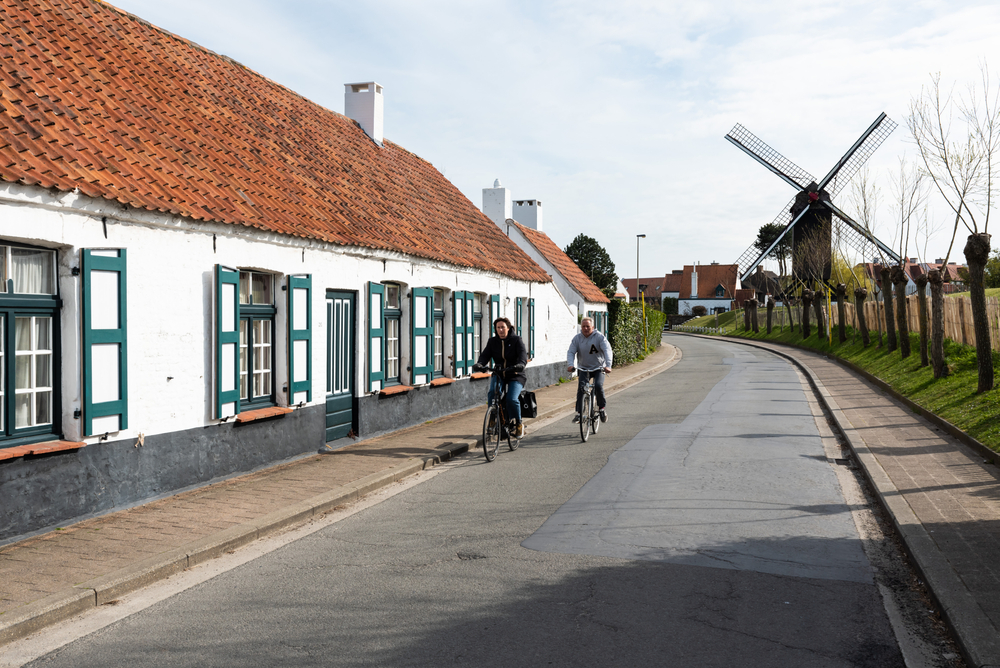
This is not just a matter of reducing the need for government funding. Belgians buying newly constructed houses often prefer to have input in their home’s design rather than finding ones that have been prebuilt. The result is a more natural, less planned aesthetic.
Tradition Spreads
Only time will tell whether Heulebrug will evolve into the envisaged mix-usage community. However, it quickly became popular as a residential community and has already become an important local influence on adjacent communities.
This is most clearly seen at Duinenbergen. Located just over two miles away, Duinenbergen has more successfully implemented the New Urbanist mixed-usage model, including a substantial shopping complex and a water park, alongside many residential buildings.
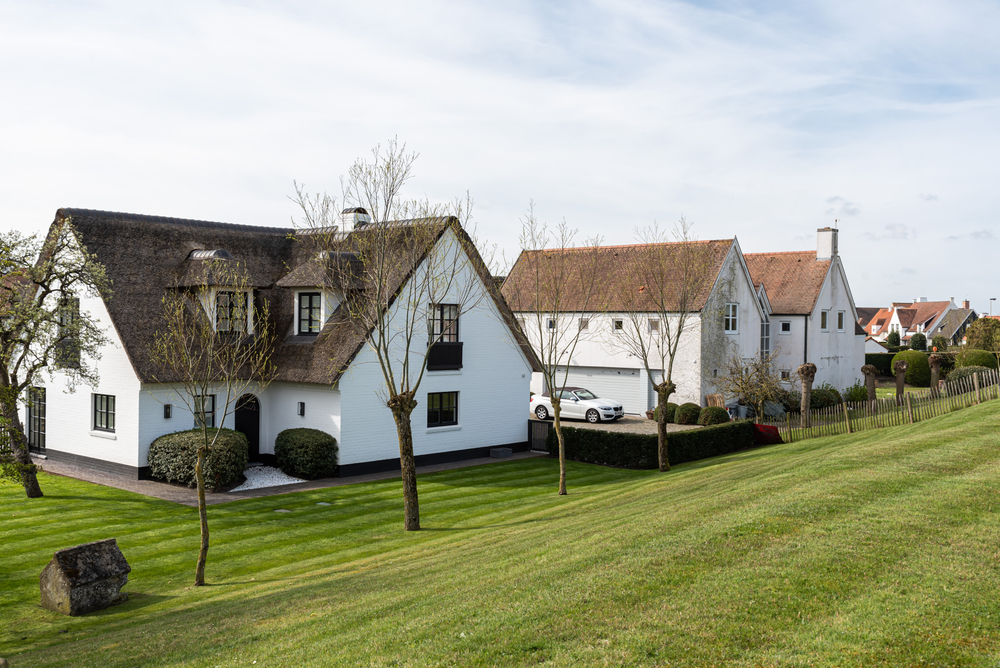
In terms of the basic outlines and colors of buildings, much of Duinenbergen shares the Flemish aesthetic. Details can be more modern, though often in ways that harmoniously blend with the older tradition.
Smooth exterior walls made with modern methods of construction have a beauty of their own. Their structures are interspersed with buildings using traditional brick. Another fascinating innovation is using the traditional Flemish aesthetic—particularly gables with their fluid lines and colors—for modern large-scale apartment complexes.
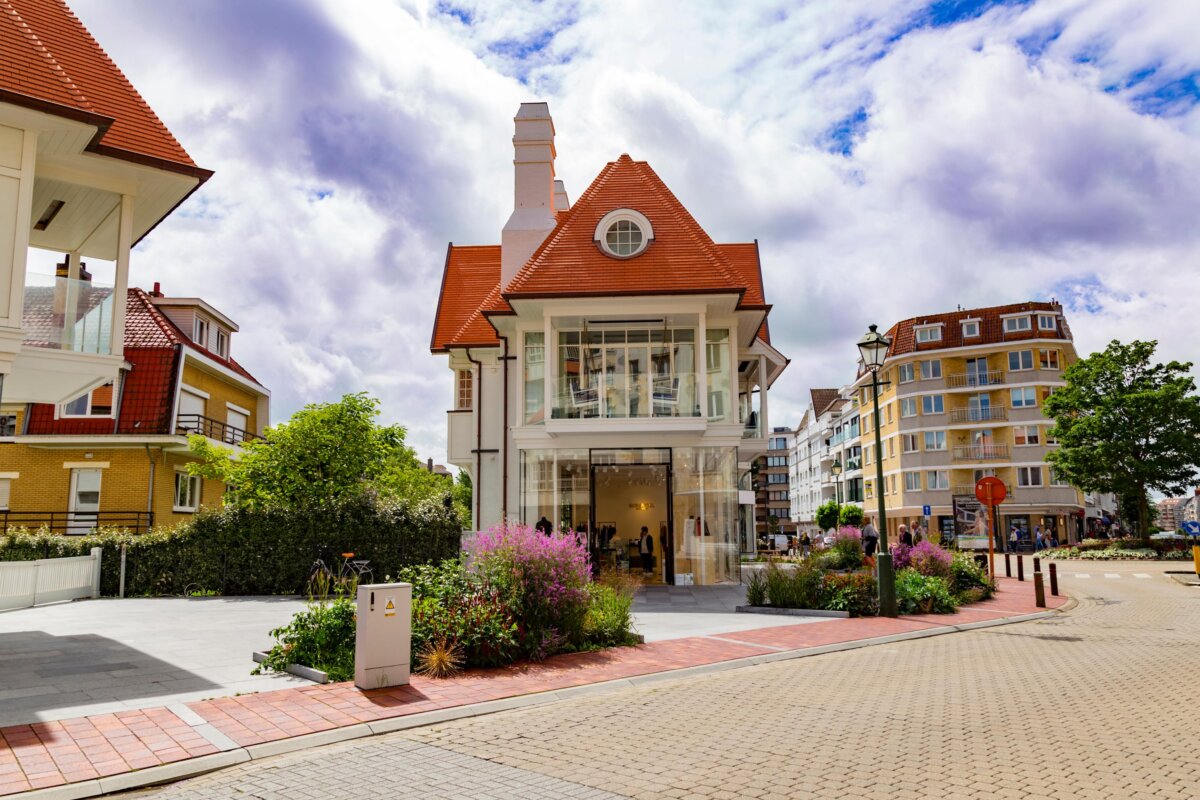
In other cases, limited elements of contemporary styles have been introduced. Black metal doorframes, window frames, and balconies are the most notable external features.
While these modern additions may not be as aesthetically pleasing as Heulebrug’s more traditional alternatives, the overall effect can still be attractive. Duinenwater’s architecture shows how fashionable touches benefit from being incorporated into a timeless stylistic foundation. Most importantly, it caters to more fashionable tastes while avoiding discordance with historic Knokke-Heist’s traditional Flemish aesthetic.
Both developments have revived architecture based in Flemish heritage. The modern interpretation of this style limits traffic to allow more freedom to children, incorporates recreation areas alongside homes, and provides for contemporary needs.
Heulebrug and Duinenbergen are renewing a centuries’ old architectural style as a living tradition.
What arts and culture topics would you like us to cover? Please email ideas or feedback to features@epochtimes.nyc
