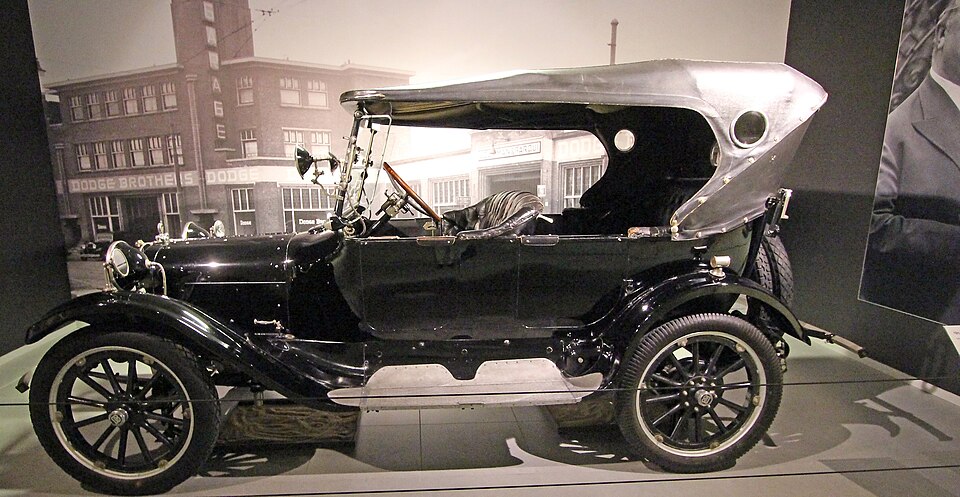
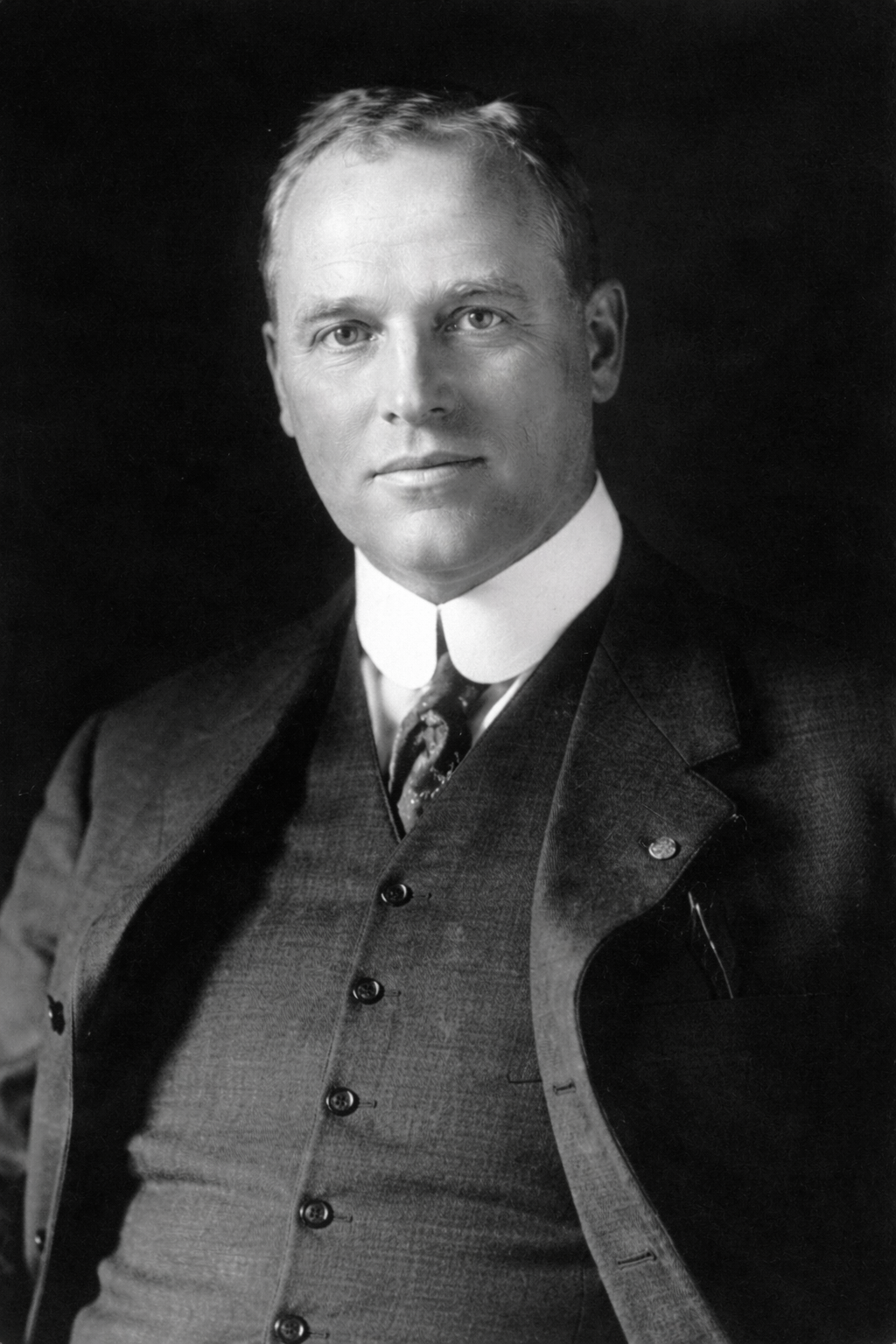
In the formative years of the American automobile, innovation demanded equal parts risk and resolve, and few figures embodied mechanical smarts more completely than Horace Elgin Dodge (1868–1920). Invariably paired in history with his more outwardly business-minded brother, John Francis Dodge (1864–1920), Horace was the essential craftsman—the steady, disciplined mind whose precision helped shape not only a company, but an enduring designation in American engineering: Dodge.
Born on May 17, 1868, in Niles, Michigan, Horace Dodge was raised in a world governed by tools and motion. His father, Daniel Rugg Dodge (1819–1897), operated a machine shop, and from an early age Horace absorbed the sequences of metalwork and problem-solving. He was not trained in lecture halls, but at the lathe and forge, learning by doing—taking machines apart and reassembling them with greater efficiency and care.
Practical intelligence defined him. Where others saw complication, Horace saw opportunity for refinement. That instinct followed him and his brother to Detroit in the late 19th century, as the city emerged as a center of American industry.
After early work in the bicycle trade, the brothers established the Dodge Brothers Machine Shop in 1900. At a time when the automobile remained an uncertain venture, they became indispensable suppliers, producing engines, transmissions, and critical components for emerging manufacturers—most notably the Ford Motor Co. Their partnership with Henry Ford proved especially significant; in addition to supplying key mechanical systems, the Dodges received a substantial share of company stock.
In this, Horace’s character comes most clearly into focus. He was not merely a mechanic, but a meticulous, unwavering dreamer who polished manufacturing processes, strengthened durability in essential components, and insisted on precision at a time when many competitors favored speed over consistency. His work, including the design of the first dirt-proof ball bearing, helped make early automobiles not just functional, but dependable.
Engineering Excellence That Built a Lasting Legacy
By 1913, the brothers began stepping out from behind the scenes. In November 1914, they introduced their first automobile—a car defined less by ornament than by strength and consistency. The rollout was a grand success.
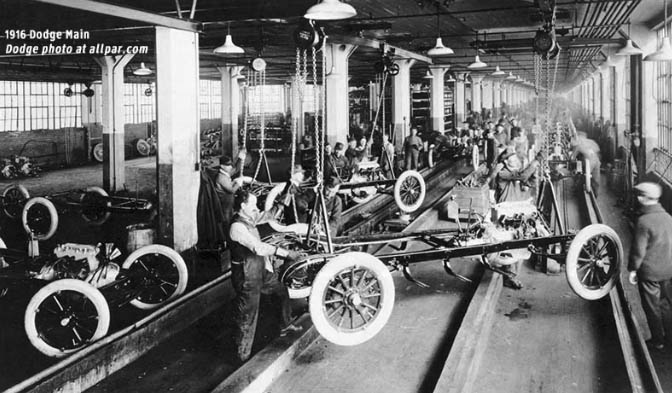
Horace’s influence was evident throughout. The Dodge automobile featured one of the earliest widely mass-produced all-steel bodies, produced in partnership with the Budd Co., at a time when many vehicles still depended on wood framing. The result was improved structural integrity and longevity. He also contributed to advances in finishing and production techniques, enhancing both durability and appearance.
The car, in many ways, mirrored its maker: solid, efficient, and ahead of its time.
By the end of the 1910s, Dodge had become one of the largest automobile manufacturers in the United States. During World War I, Dodge vehicles and components were widely used for military purposes, reinforcing the company’s reputation for rugged dependability. The brand’s identity—practical innovation over display—reflected Horace himself.
Behind it all was a man defined by restraint. Horace avoided the spotlight, preferring work to recognition, and was known for his loyalty, particularly to his brother. Together, the Dodges supported civic and cultural life in Detroit, including institutions such as the Detroit Symphony Orchestra, reflecting a belief that industry should serve the community as well as the marketplace.
Their partnership was both professional and deeply personal. John managed the business strategy; Horace ensured engineering excellence. When John died suddenly in January 1920, the loss struck hard. Horace, already weakened by illness, died later that year on Dec. 10, 1920.
Their passing marked the close of a defining chapter, but not the end of what they built. In 1928, Dodge was acquired by the Chrysler Corp., securing its place among America’s major automotive institutions.
A Name Representing an Ideal
Today, the Dodge name is often associated with power and performance. But beneath that identity lies an understated foundation—one built by a man who valued exactness over acclaim and function over flourish. Horace Dodge did not solicit notice. Awed by concept and thrilled with tinkering, he never deviated from the objective to build machines that worked—reliably, efficiently, and well.
In the larger sweep of industry, figures like Henry Ford (1863–1947) often dominate the narrative. But it was entrepreneurs like Horace who made such progress possible. His insistence on quality, his mechanical insight, and his steady discipline helped define what the automobile could become.
Indeed, Horace Dodge represents a distinct ideal—the builder whose legacy resides not only in what he created, but in how he created it. Every Dodge vehicle, in some measure, still carries that imprint: a commitment to durability, a respect for engineering, and a belief in the perseverance and adaptation of product. More than 100 years after his death, tens of thousands of Dodge vehicles still roll off the assembly lines.
And that, perhaps, remains the truest measure of the man behind the name.
What arts and culture topics would you like us to cover? Please email ideas or feedback to features@epochtimes.nyc