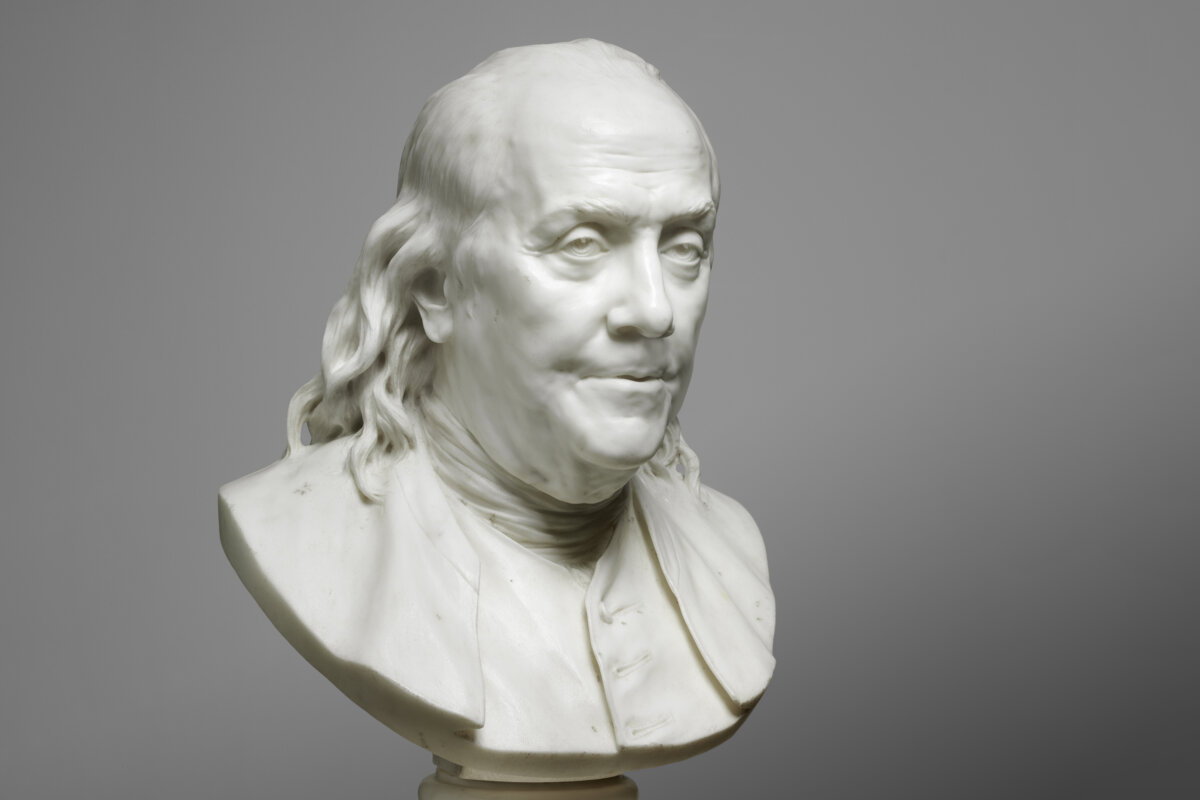
Benjamin Franklin (1706–1790)—statesman, scientist, patriot, and philosopher—was a celebrity in his lifetime. He was so popular that many people, both in America and abroad, wanted to own likenesses of him. His portraits were realized as sculptures, paintings, prints, and miniatures.
The Philadelphia Museum of Art owns a marble bust of this Founding Father by French neoclassical sculptor Jean-Antoine Houdon that it cites as “the most powerful and fully realized version of the best-known portrait of Franklin.” Indeed, Houdon, who carved exquisite portraits of leading European figures from royals such as Catherine II of Russia to intellectuals including Voltaire, created a series of portrait busts of early American leaders that are part of the country’s national consciousness.
Portraits of American Legends
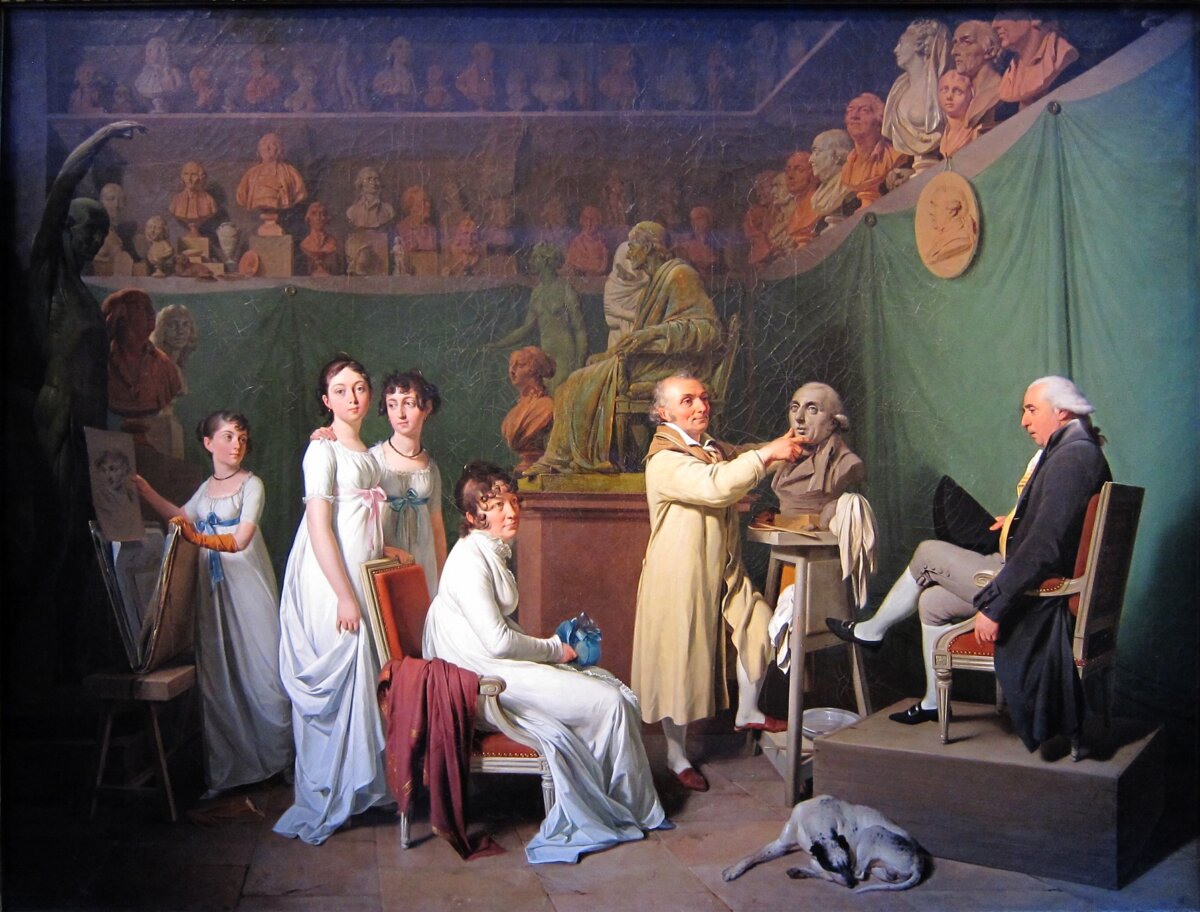
Houdon (1741–1828) was the preeminent portrait sculptor of the French Enlightenment. He was adept in bronze, clay, marble, and plaster, and his work is known for perfect technicality and honest, lively realism that communicate a sitter’s essence. Trained in Paris, Houdon won the esteemed Prix de Rome, which allowed him to live in Rome for several years studying sculptures from antiquity, the Renaissance, and the baroque periods. In 1771, he was made a member of the Académie Royale, and he was appointed professor seven years later.
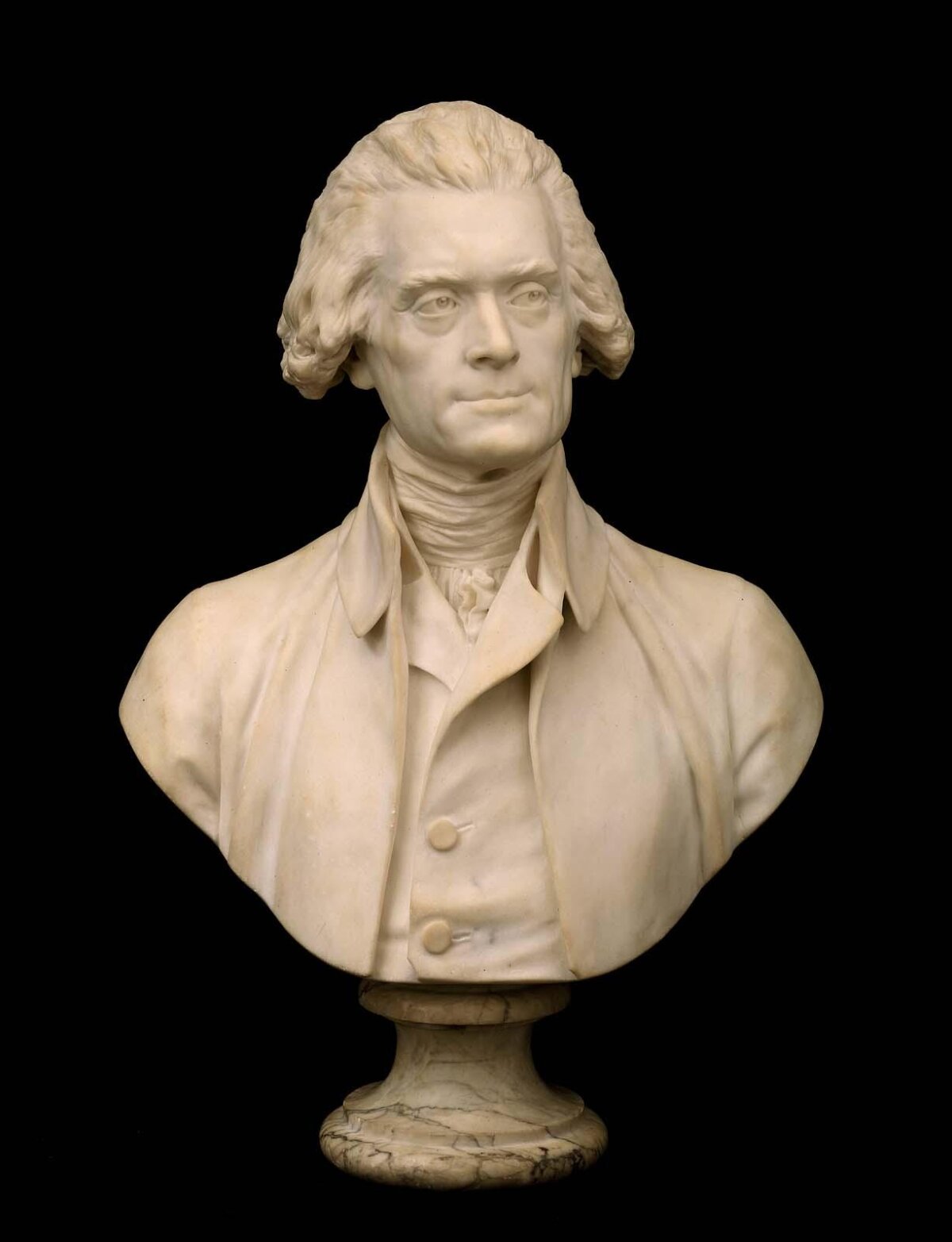
The artist became acquainted with Americans living in Paris during and after the American Revolution. Houdon made a superb, and later much-copied, bust of Thomas Jefferson (1743–1826) that captures his profound intellect. In September 1789, Jefferson, who had been serving as the U.S. minister to France since 1785, was preparing to return to America to become secretary of state. He sat for a portrait by Houdon, whom he referred to as “perhaps the foremost artist in the world.” The original marble bust descended in a French family and is now in the collection of the Museum of Fine Arts, Boston.
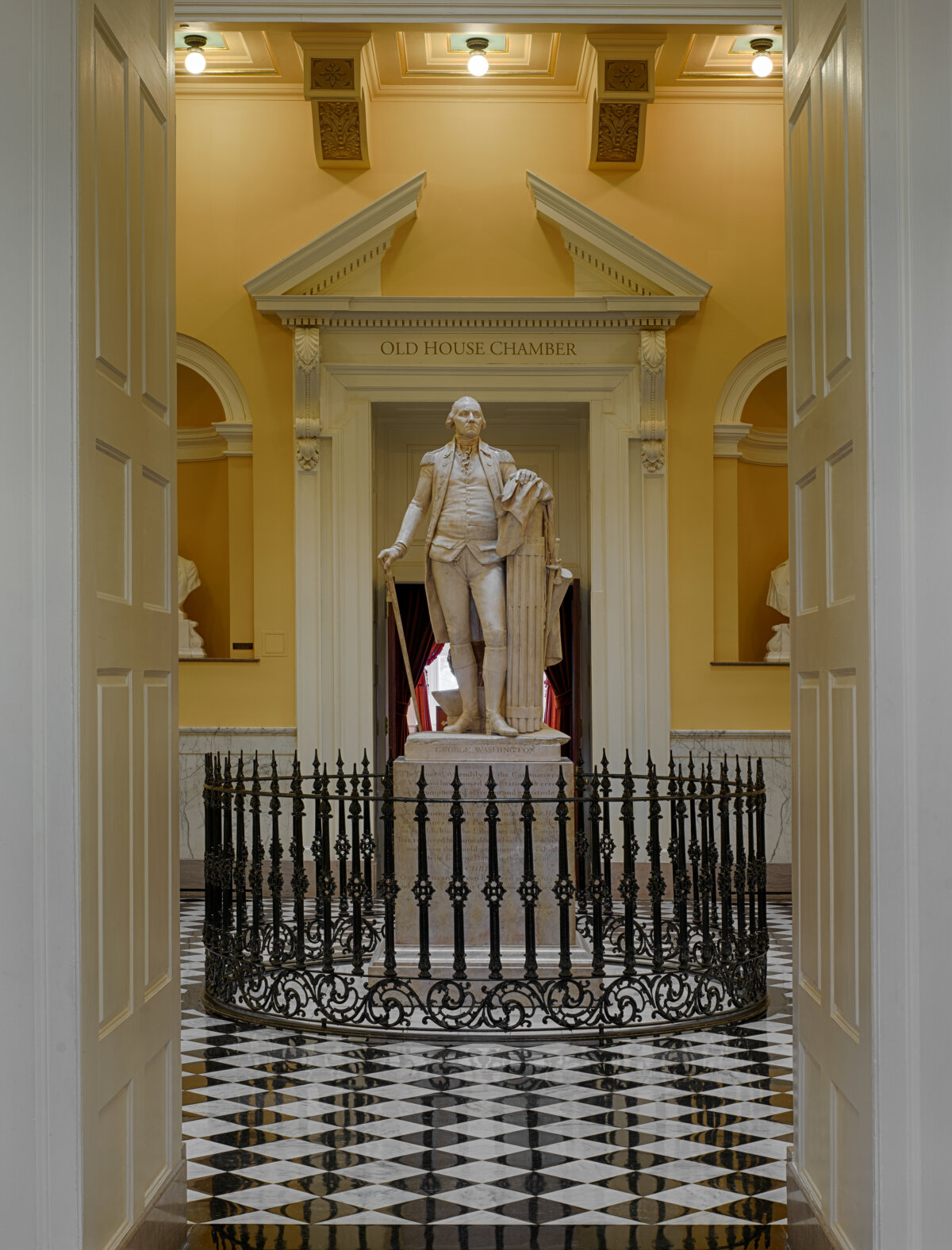
In 1785, Houdon visited America on a special assignment. Jefferson and Franklin had asked that he travel to make a full-scale portrait of George Washington (1732–1799). Houdon spent two weeks working at Mount Vernon. The resulting monumental sculpture, which shows the leader—as he insisted—in modern dress instead of antique attire, is on display at the Virginia Capitol in Richmond. While staying with Washington, Houdon made a life mask of him. This was to serve as the basis for several copies in plaster and terra-cotta. Making numerous replicas of a popular work using molds was typical of Houdon’s practice, and the sculptor would add distinctive touches to subsequent examples.
Franklin was Jefferson’s ministerial predecessor, serving as commissioner of the American Continental Congress to France for nine years. He arrived in Paris in 1776 with a mission to secure the country’s military and financial aid for the Revolutionary War. The cause was popular among the French, and the famous Franklin was much admired, from his simplicity of dress to his manner. He was known for wit and lack of pretension, and his list of accomplishments was lengthy by the time that Houdon began sculpting his portrait. The list included electrical experiments, inventions, publishing, and the founding of institutions.
Franklin’s Visage
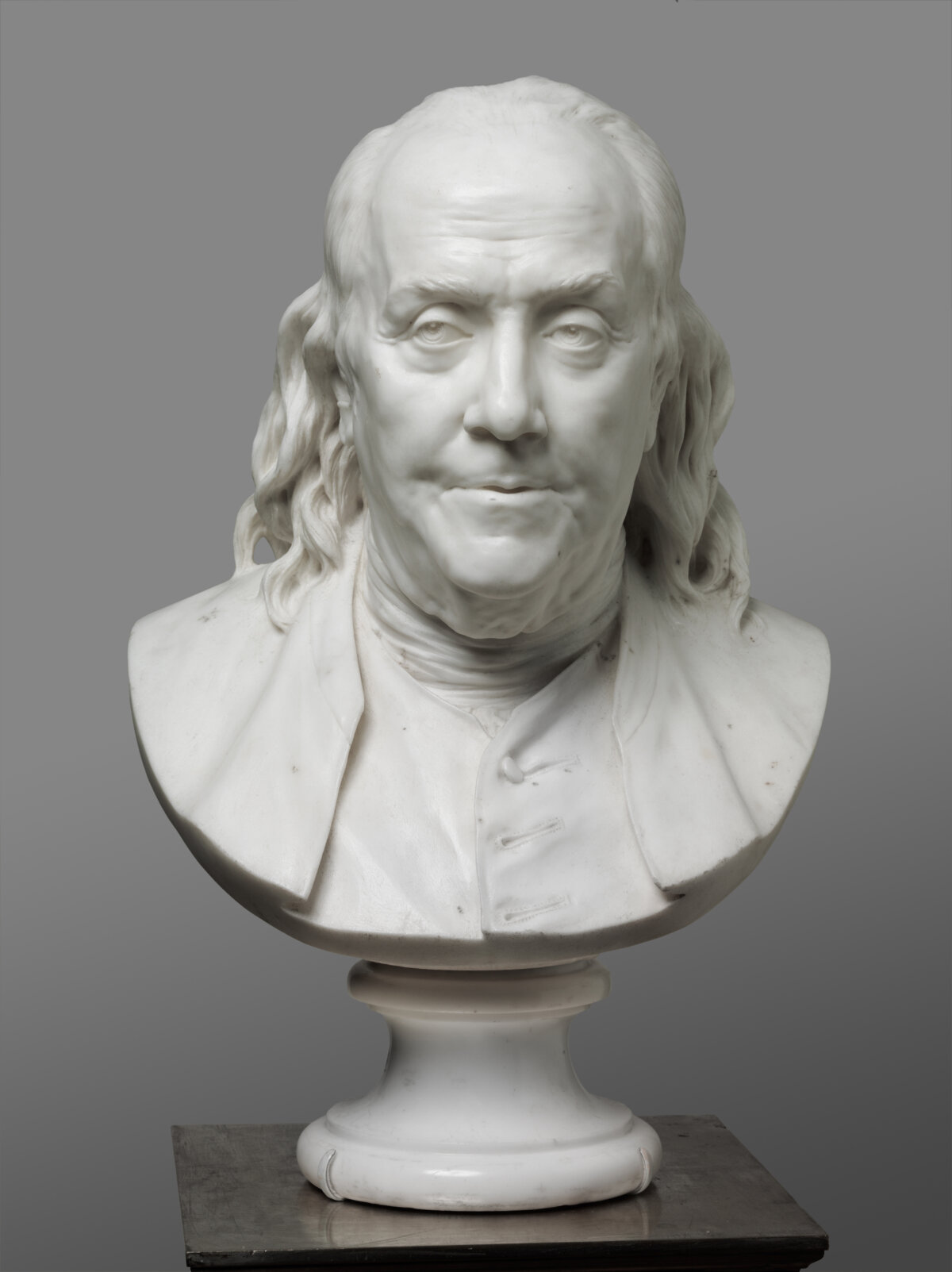
Originally done in terra-cotta, Houdon’s bust of Franklin was the first of his canonical portraits of legendary people in American history. It was exhibited in the French Royal Academy Salon of 1779. Of the many reproductions made in plaster, Jefferson himself purchased one, and Franklin received four of them from Houdon. Incredibly, according to the Philadelphia Museum of Art, Franklin never sat formally for this portrait, and Houdon never took measurements of his face. In fact, the museum writes that the artist and diplomat did not meet formally until 1783. However, Houdon would have been able to create this work by observation of Franklin at mutually attended events, such as meetings of the Masonic lodge of which they were both members.
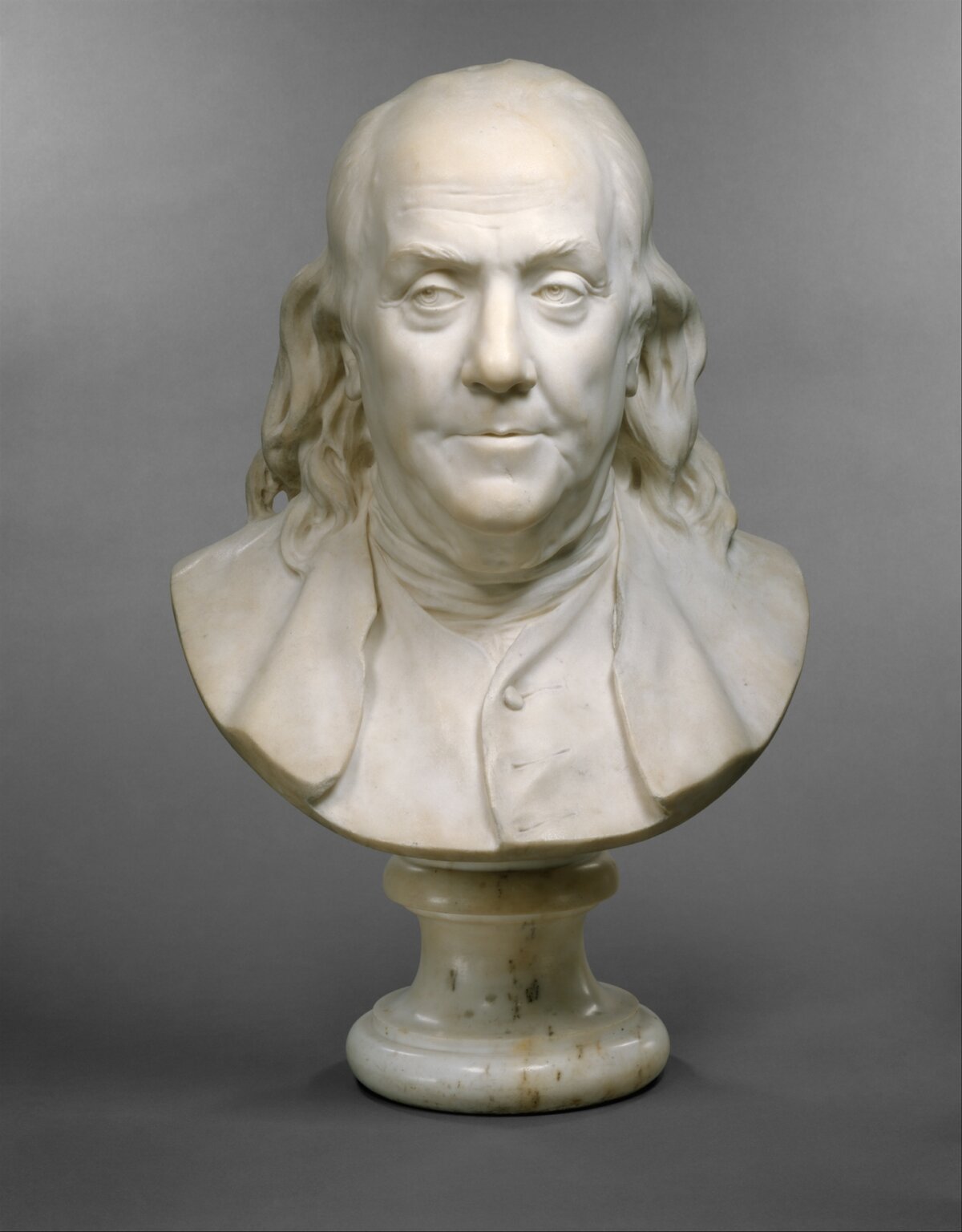
Houdon carved only two Franklin busts in the expensive and prestigious medium of marble. In addition to the virtuosic 1779 version at the Philadelphia Museum of Art, there is one in New York City at The Metropolitan Museum of Art dated to the year before. The commissioner of the Philadelphia bust is unidentified, but the museum supposes that the patron would have first seen the terra-cotta in the salon or in the artist’s studio. The reason the Philadelphia Museum of Art version is more carefully carved than The Met’s remains unknown, but that greater care could signal Houdon’s growing knowledge of Franklin’s visage.
In the Philadelphia Museum of Art’s portrait, Franklin’s aged features are realistically presented without filter. He is shown in a speaking likeness; his slightly parted lips and subtle head tilt give the impression that he is about to start talking. Houdon encapsulates his figure’s renowned stealthy intelligence through this, along with the highlights and shadows of Franklin’s eyes. The artist was astonishing in his ability to carve eyes. It is said that even though he sculpted in monochrome materials, Houdon could convey a sitter’s eye color. His technique was to either increase or decrease the depth of carving of the ring of an iris, which would affect light reflection and sparkle.
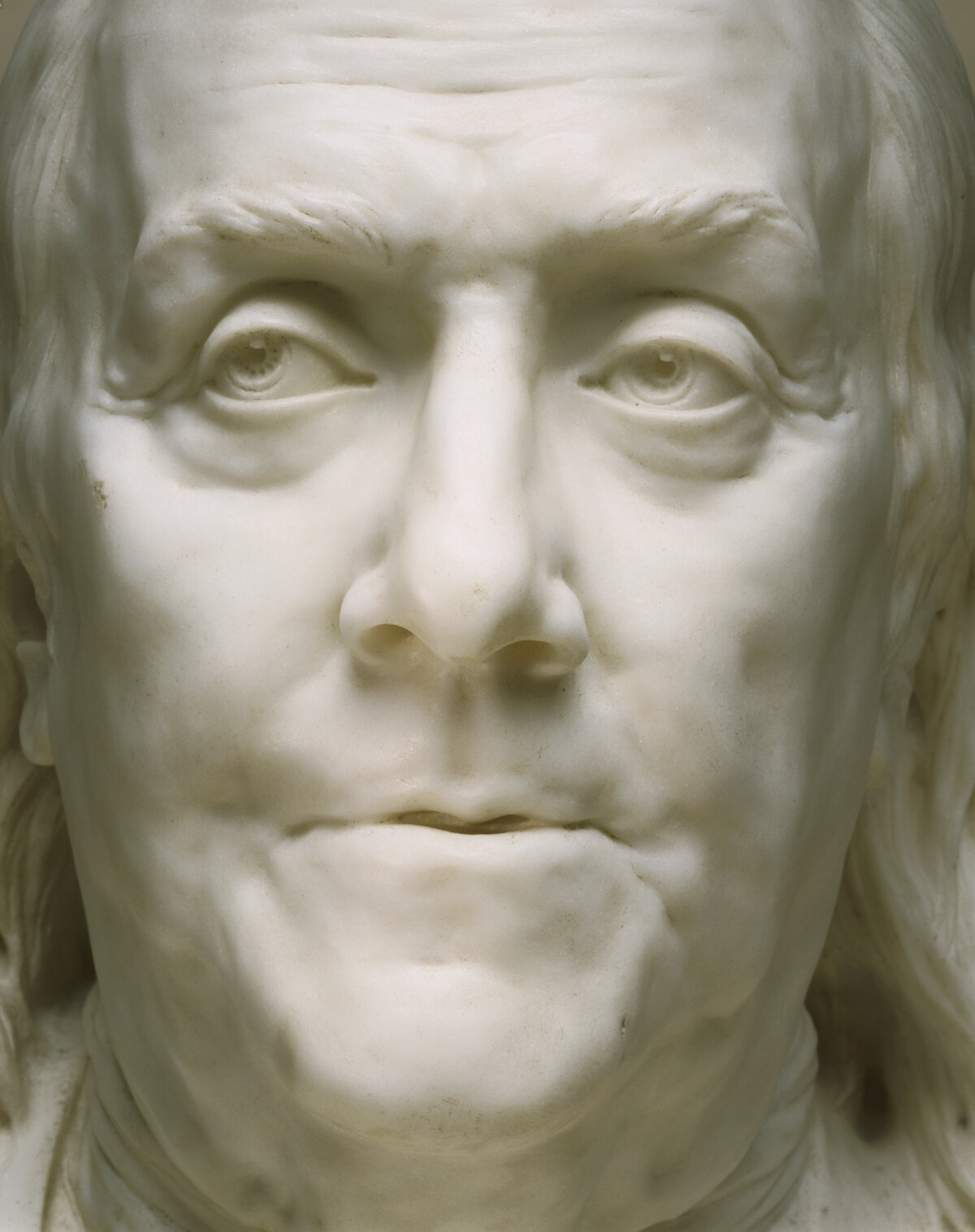
Although he was not a Quaker, Franklin dressed in their simple style of suits. In addition, he skirted convention and did not follow the fashion of wearing a powdered wing. These details are incorporated into Houdon’s portrayal. Franklin’s unusual attire for a diplomat made him stand out and all the more fascinating to the French.
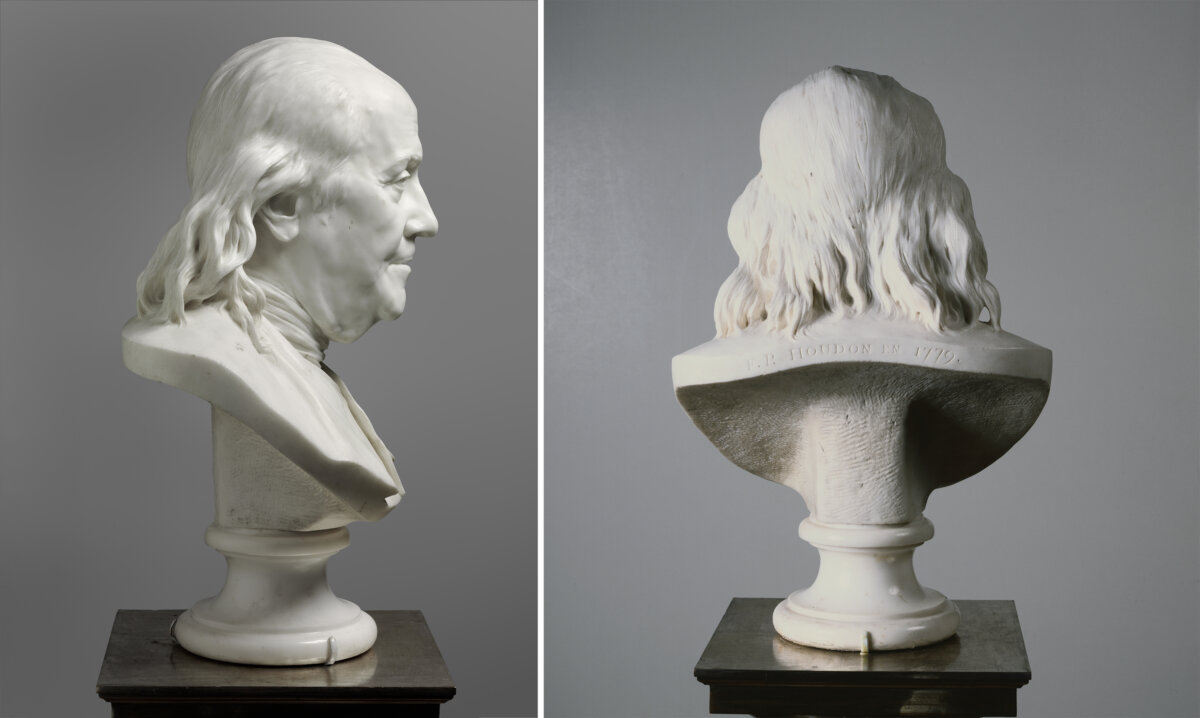
It is felicitous that the Philadelphia Museum of Art owns Houdon’s greatest depiction of Franklin, as he is Philadelphia’s most famous citizen. The museum, which stands at the end of the Benjamin Franklin Parkway, acquired it in 1996, the year of the institution’s 125th anniversary.
What arts and culture topics would you like us to cover? Please email ideas or feedback to features@epochtimes.nyc