



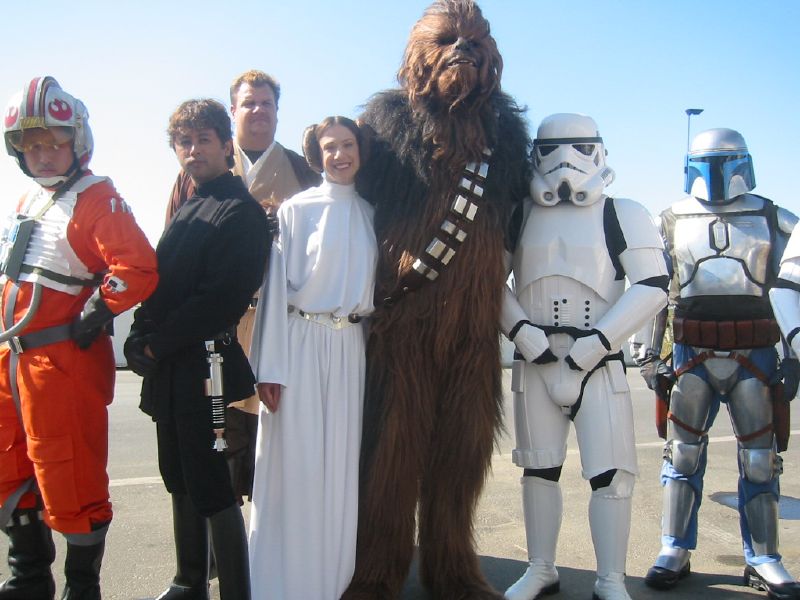
Profound ideas are often hidden in what’s dismissed as mere popular entertainment. Such an idea is found in the last half of the “Star Wars” film, “Return of the Jedi.”
Through the art of cinema—the combination of action, special effects, and music—the viewer can meditate on the virtue of fortitude and the willingness to risk one’s life for a good cause. The movie offers three perspectives on fortitude and how to embrace it. These perspectives are valid even for those who can’t summon their lightsabers by mere concentration.
While the entire film is exciting, the movie’s first half is a prelude to the main adventure. It’s an assembling of the characters for the Rebel Alliance’s attempt to attack and destroy the immense battle station of the Galactic Empire.
The attack is two-pronged; first, a secret initiative aims to take down the battle station’s protective force shield by destroying the shield generators on a nearby moon called Endor. The beloved characters of “Star Wars”—Luke Skywalker, Princess Leia, Han Solo, Chewbacca, and R2-D2—undertake this mission. This part accomplished, the Rebel star fleet hopes to penetrate the battle station’s defenses and destroy it from within.
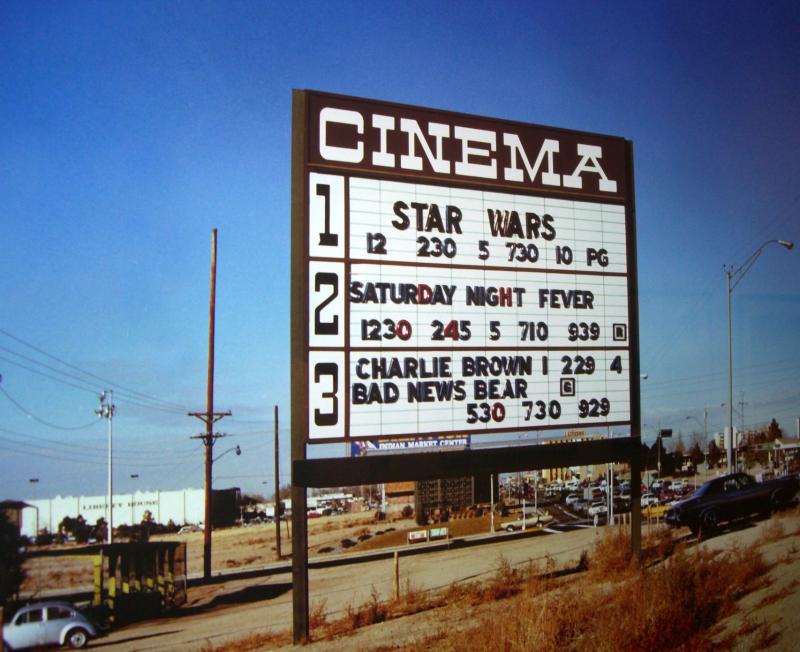 A 1977 cinema billboard announces an earlier installment in the “Star Wars” franchise. (Cnbrb/CC BY-SA 2.0)
Luke’s Dilemma
Early in their mission to Endor, Luke comes to believe that his presence is a risk to the enterprise. His father, the evil Darth Vader, can sense him through the Force, an energy that allows sensitive individuals to perform telekinesis. Luke also believes that he might be able to convert his father to good. With these two motives—saving the Rebels and saving his father—he gives himself up to the enemy.
This sacrifice is a textbook example of fortitude. It involves all the marks of fortitude, for instance, described by Aristotle in the third book of “Nicomachean Ethics.” Fortitude isn’t mere rashness, but facing real fear for a worthy goal, and ultimately, risking one’s life for the good.
However, Luke gets more than he bargained for. Not only does he have to meet Vader, but the Emperor himself, an embodiment of evil. He comes face-to-face with despair. Vader seems completely deaf to his appeals, and the Emperor reveals that he has set a trap for the Rebels. The mission to Endor will fail because he’s planned an ambush: The battle station will be impregnable to attack. And its weapon, a giant laser, will be fully operational and ready to pulverize an entire space cruiser with one strike.
Luke now faces not just the simple sacrifice of his life, but an even greater evil: the loss of his friends, companions, possibly the whole Rebel cause, and what would seem to be the meaning of his life. Additionally, an even greater danger threatens him. When Luke uses his Force abilities against the Emperor and Vader, he risks turning to the “dark side of the Force” like them.
This moment is applicable to anyone, especially those with a great deal of fortitude, people of great bravery. Great soldiers may become so angered by their enemies’ atrocities that they are tempted to retaliate with atrocities. Skilled athletes, outraged over unfair refereeing, may be tempted to let their emotions rule them, commit a penalty, and ruin the chances of their team winning.
Luke faces a complex situation. In despair, he may give in to the dark side without a fight. Or, if he fights, he may give in to rage and lose his virtue and thus his soul.
Fortitude as Daring
At the very moment that Luke faces this challenge, his friends face less morally dangerous but the same high stakes. His friends on Endor must practice fortitude as endurance, while the star fleet must attack without hesitation, but with prudence.
The starfighters of the Rebel fleet launch their attack only to discover that the force shield is still on, thwarting their plans. A Rebel star fleet admiral suggests retreat, but the leader of the starfighters, Lando Calrissian, argues against it. He trusts that their friends will disable the shield soon.
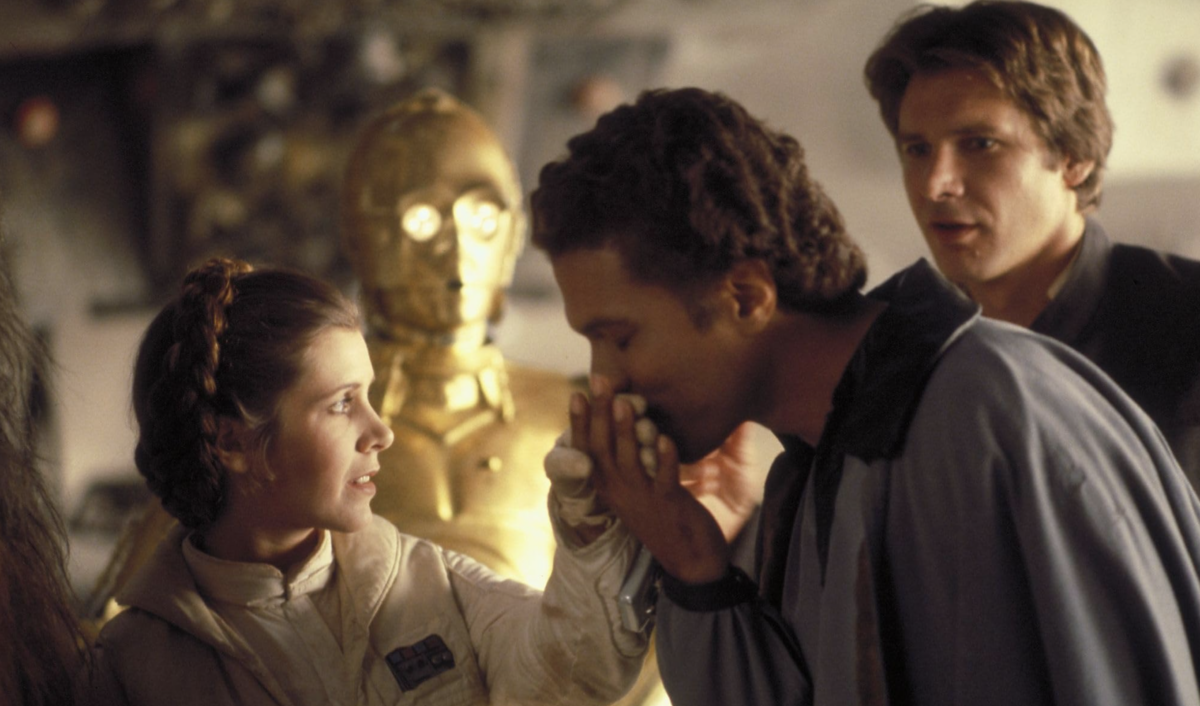 Lando Calrissian (Billy Dee Williams) kisses Leia’s (Carrie Fisher) hand, in “Star Wars: Return of the Jedi.” (20th Century Fox)
Fortitude, also known as bravery or courage, must place itself in the hands of prudence. Prudence is making a wise decision about practical matters, and it’s particularly necessary here. If the Rebel fleet is going to stall for time and continue fighting the unequal battle, it needs to choose the right course to be effective. The exploits of the starfighter pilots reveal one of the most critical aspects of fortitude; it does not remove fear, but moderates it with reason. Lando realizes they must attack the Imperial fleet stationed close by. Even though vastly outgunned with this option, at least they can avoid the battle station’s super weapon.
Fortitude as Endurance
Deactivating the shields is due primarily to the Rebels being willing to persevere through several setbacks on Endor. It’s a matter of endurance, the willingness to suffer. The Emperor’s ambush seems to work at first, and the Rebels give themselves up instead of rashly fighting impossible numbers. But the Rebels keep their nerve and are rewarded when Endor natives join the fight. The battle continues to hang in the balance, and the Rebels suffer several more reverses of fortune before the shield generator is finally destroyed.
While it is not often thought of as part of fortitude, patient endurance, according to some philosophers, is in fact its most essential characteristic. The medieval philosopher and theologian St. Thomas Aquinas, facing the argument that such passivity could not be part of an active virtue like fortitude, countered that it is a “strong activity of the soul,” rather than the body. While endurance might not look like hard work, it’s actually an arduous “clinging to the good.”
The power of someone who is placed in what seems to be a completely passive situation, who can only act with his will, can be seen in the following example. Consider a special forces soldier, captured and tortured for information after fighting bravely for hours. In one scenario, he reveals the information the enemy seeks. In the other, he remains firm and silent. We instinctively know which example reveals more fortitude, although in both cases, the soldier is subject to the actions of others.
Endurance and Daring Combined
While the prudent attack of the Rebel star fleet and the patient endurance of the Rebel mission to Endor reveal much about the separate components of fortitude, Luke’s dilemma shows us both combined in a particularly dramatic way.
Luke first chooses daring action, taking up his lightsaber to attack the Emperor. When Vader intervenes, the ensuing fight distracts both of them and the Emperor from the battle outside. Luke appeals to his father to leave the dark side for the sake of love and in doing so risks his concentration on the fight at several potentially fatal moments. Finally, Darth Vader taunts Luke, saying that he will turn his sister, Leia, to the dark side. Filled with righteous anger, Luke proceeds to force his father into submission, only to throw his lightsaber away after he has done so. He will not commit the sin of slaying his father, who is beaten and unarmed.
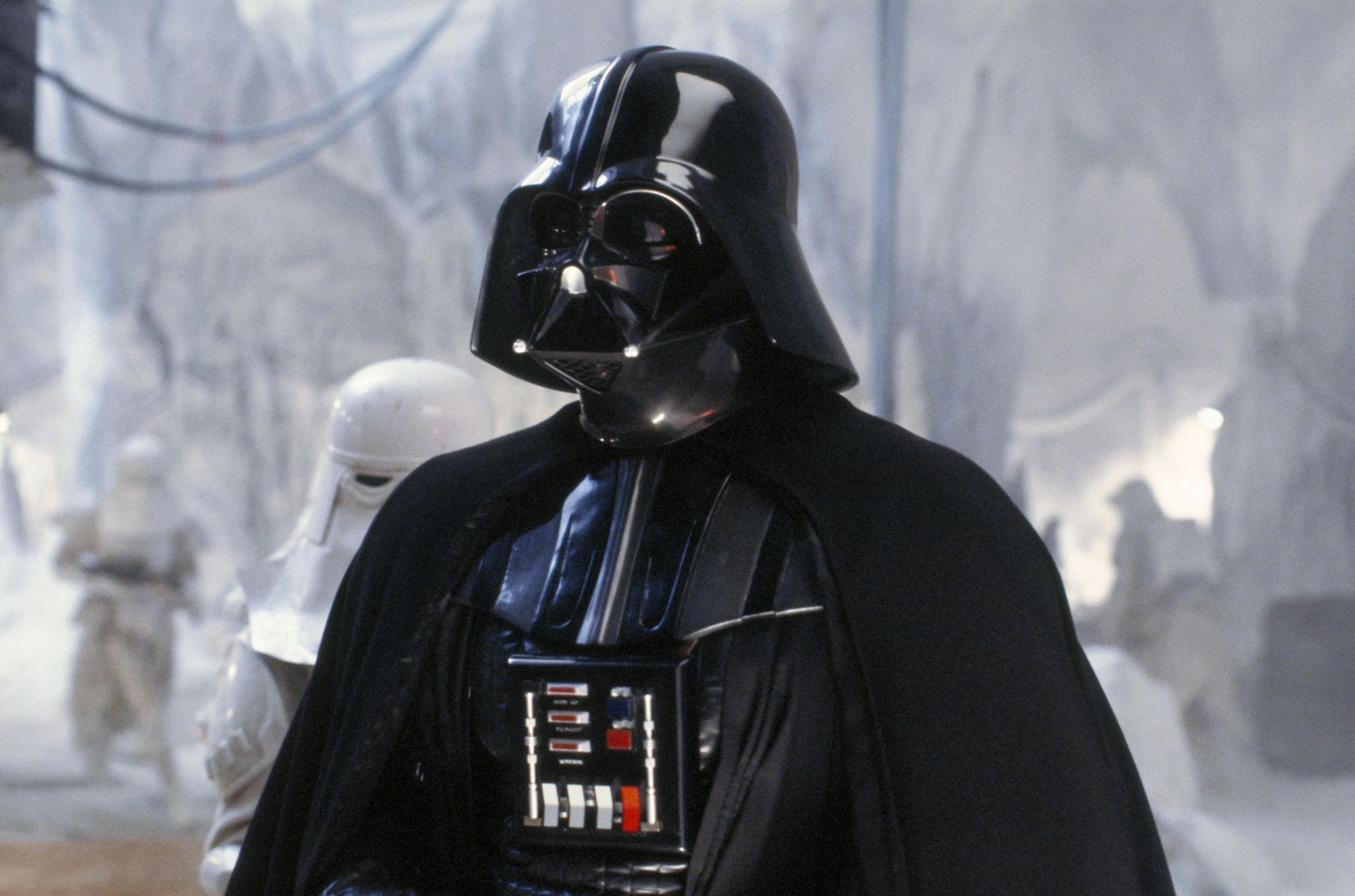 Darth Vader in “Star Wars: Episode Four—A New Hope” (Lucasfilm Ltd.)
Here, with nothing between him and the Emperor, Luke embraces endurance. Tired from his fight and less trained in the use of the Force than the Emperor, he writhes in agony when the Emperor attacks him with bolts of electricity. His endurance is rewarded when Vader kills the Emperor in defense of his son. From here the movie proceeds to its conclusion: Vader’s conversion and the victory of the Rebels assured.
These noble goals, the destruction of the Imperial battle station and the reclaiming of a lost father, are only possible because of an even nobler action that occurs within Luke and his friends: fortitude. In this way, the “Return of the Jedi” is about virtue, the highest part of human nature.
When art is good, it appeals to the nobler part of our nature. As an imitation of beauty, goodness, and truth in the world, art elicits and encourages imitation. In human beings, the practice of virtue produces beauty and goodness. The “Return of the Jedi” is both an impetus to practice fortitude and a lesson about the virtue. While not as sublime a work of art as those of Homer or Shakespeare, it’s good, and it shows us how to be so.
What arts and culture topics would you like us to cover? Please email ideas or feedback to features@epochtimes.nyc
