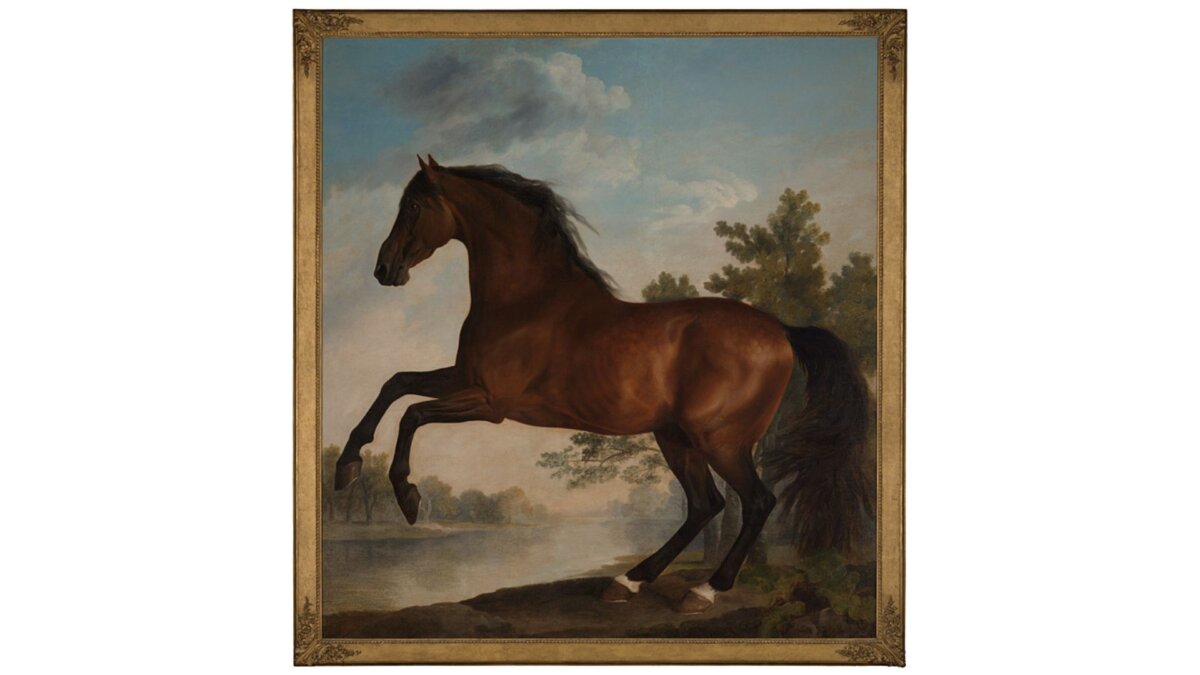
In 1762, British animal painter George Stubbs and an Arabian racehorse accidently and forever changed equine art.
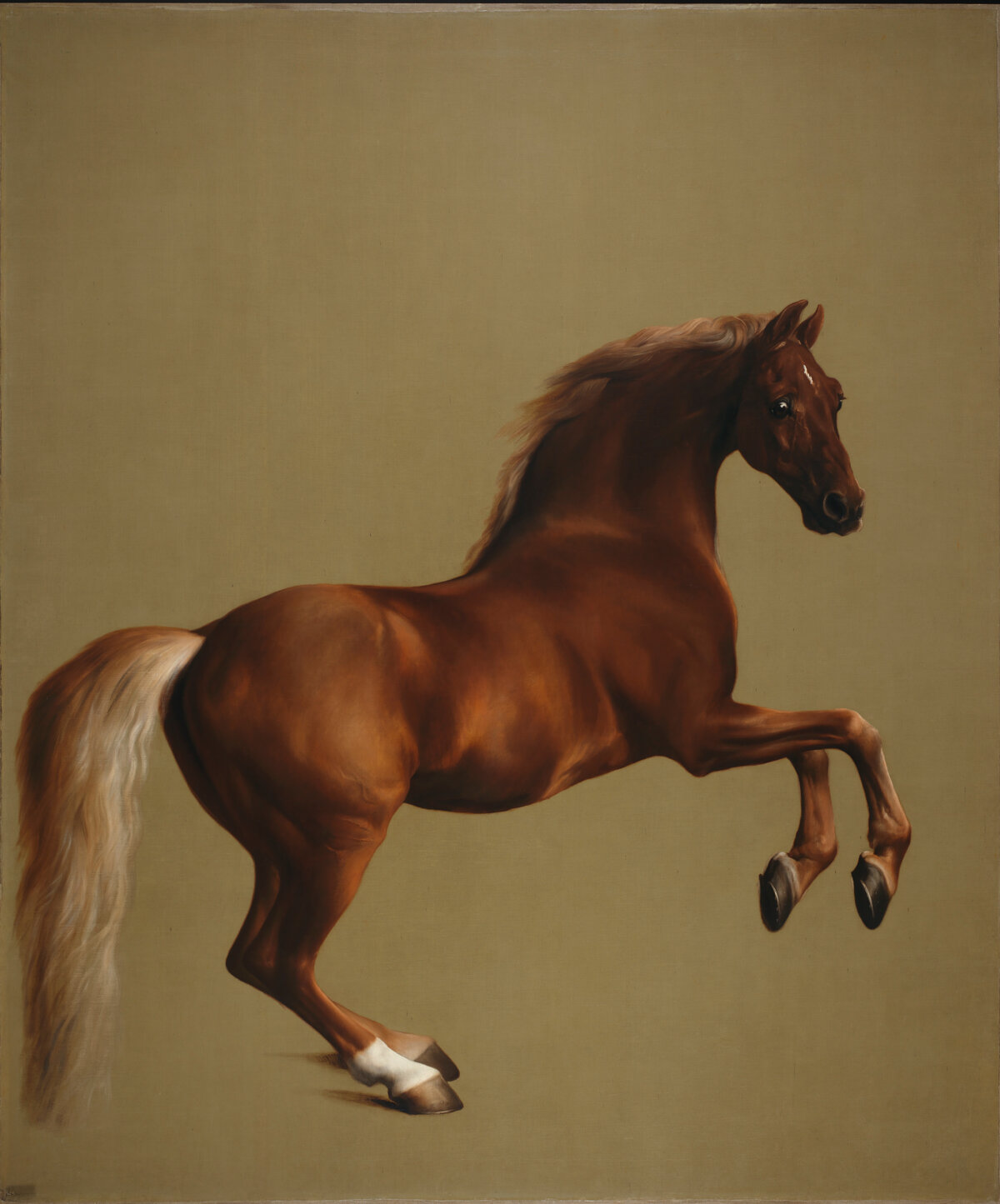
Stubbs (1724–1806) presented Charles Watson-Wentworth, the second Marquess of Rockingham, with a near-life-size, rearing portrait of his retired racehorse Whistlejacket.
Whistlejacket fills the canvas as it rears and tosses its mane. The stallion’s nostrils flare and its eyes bulge as it pulls its head back full of fear, or perhaps in a display of dominance. It’s a wild and beautiful moment.
Stubbs captured each detail of Whistlejacket from its silky mane and velvet chestnut coat to the tiny veins on its flank that show just how much the stallion’s hind muscles have contracted.
Watson-Wentworth was so enamored with the painting that he decided, perhaps with the artist’s advice, that “Whistlejacket” should remain riderless, with no background.
This proved unprecedented—and problematic.
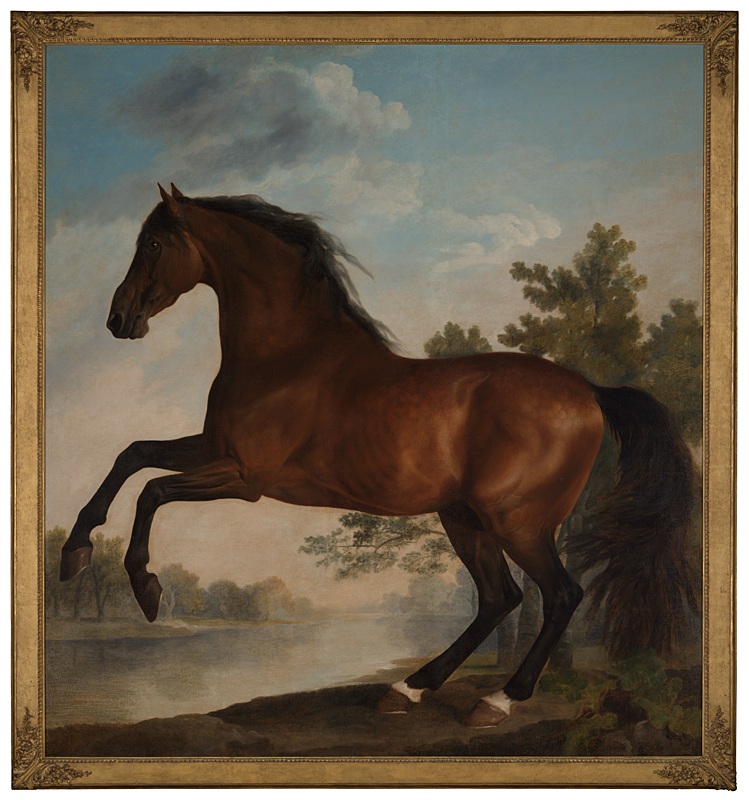
The marquess commissioned the work as part of an equestrian portrait of George III, who had recently succeeded to the throne. As per tradition, such portraits need a spirited steed to show the rider’s skill, strength, and virility at taming nature. He still wanted the painting to accompany an equestrian portrait of George II in the great hall of his country home, Wentworth Woodhouse, so he asked Stubbs to paint another retired racehorse, a bay horse called Scrub.
In a twist of fate, “Scrub” remained riderless, too, and the two paintings became Britain’s first larger-than-life depictions of horses without figures.
‘Stubbs: Portrait of a Horse’
In a rare treat, Stubbs’s portraits of the two retired racehorses will be temporarily united at London’s National Gallery. As one of the gallery’s collection highlights, “Whistlejacket” is on permanent display; and “Scrub” will star in a new exhibition, “Stubbs: Portrait of a Horse,” from March 12 through May 31.
The exhibition marks the second public appearance of “Scrub.” As the only life-size horse portrait by Stubbs in a private collection, the painting is seldom exhibited.
Focusing on “Scrub,” the exhibition demonstrates how Stubbs painted true to nature, learned anatomy, and created striking horse studies and portraits. It also explores The Turf Project, an ambitious commission immortalizing 50 years of Britain’s champion racehorses.
Mastering the Horse
As Britain’s preeminent animal painter, Stubbs elevated horse art from stock farm and racing images to real character portraits. In his book “Five Centuries of British Painting: From Holbein to Hodgkin,” author and museum curator Andrew Wilton calls Stubbs the “Sporting Raphael,” due to how sensitively he rendered multiple figures in harmonious compositions.
Like Raphael, Stubbs painted each subject—be it horse or human—with care, attention, and character. But he didn’t idealize his horses; he painted them true to nature, without sentiment.
Like Leonardo da Vinci, Stubbs studied anatomy in depth from cadavers. Between about 1745 and 1751, Stubbs first studied cadavers, including those of pregnant women, at York County Hospital. He even privately studied the body of a woman who died in childbirth. A doctor later commissioned Stubbs to draw and etch a series of fetuses in the womb for a paper on midwifery.
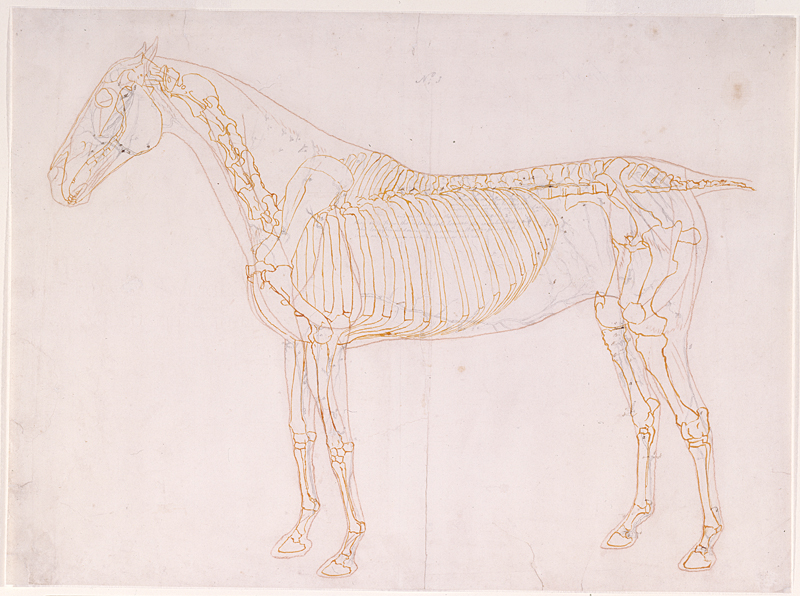
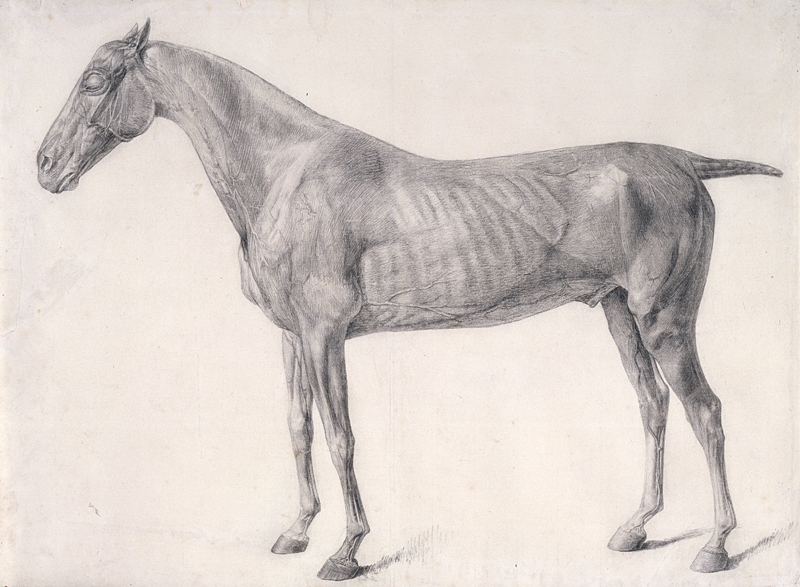
Stubbs’s horse paintings epitomize his nature studies. He spent 18 months studying horse cadavers in a remote barn in Horkstow, Lincolnshire. He first arranged each cadaver as if it were alive. He then hoisted it on a series of pulleys and then dissected it in stages from the skin, to the muscle and tendons, and then right down to the bone, drawing as he went. Each cadaver lasted 11 weeks.
Stubbs studied horse anatomy to understand how to portray horses properly and to leave a guide for other artists, horse handlers, and the like. Those working drawings and finished studies led to his comprehensive 1766 treatise, “The Anatomy of the Horse.” Its full title is “The Anatomy of the Horse, (Including A particular Description of the Bones, Cartilages, Muscles, Fascias, Ligaments, Nerves, Arteries, Veins, and Glands. In Eighteen Tables, All Done From Nature).”
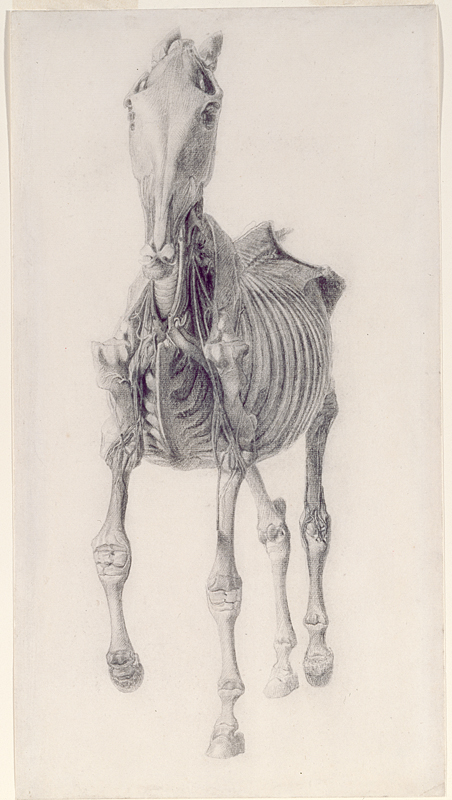
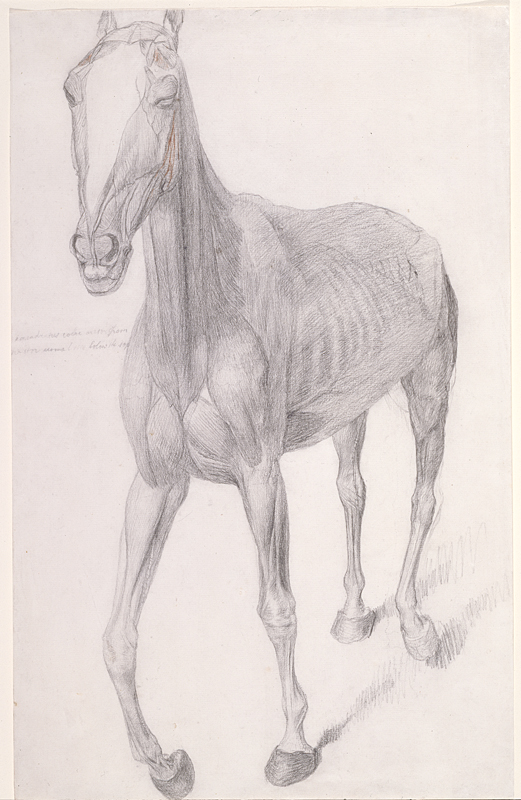
The treatise was a labor of love in the truest sense. Stubbs taught himself how to engrave the plates over six or seven years after failing to find a willing engraver.
The treatise proved so popular that it was translated into French and gained worldwide acclaim unrivaled in its field. Veterinarians and animal artists alike treasure it even today.
A copy of the treatise, along with six working drawings and finished studies, loaned from London’s Royal Academy of Arts, will be displayed in the exhibition.
Britain’s Champion Racehorses
Around 1790, Stubbs accepted an anonymous commission for a series of portraits commemorating 50 years of Britain’s thoroughbred racehorses.
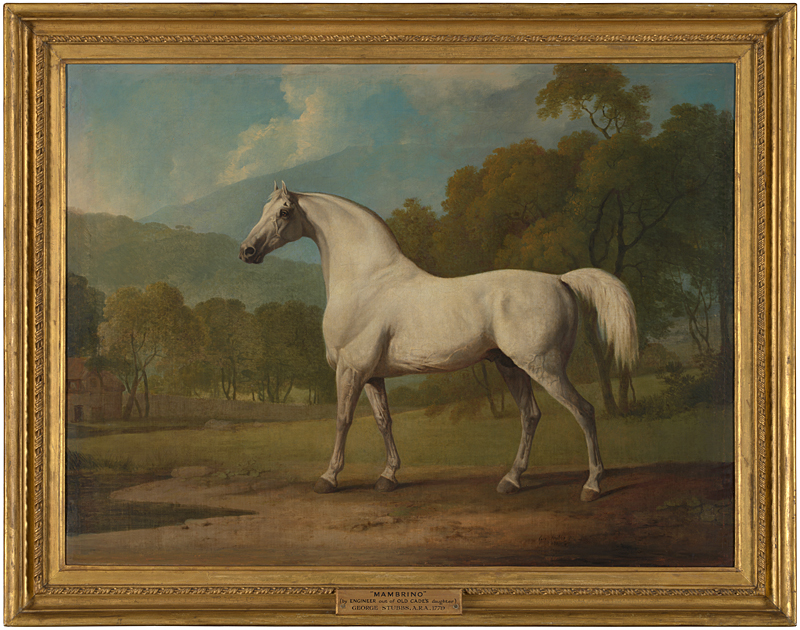
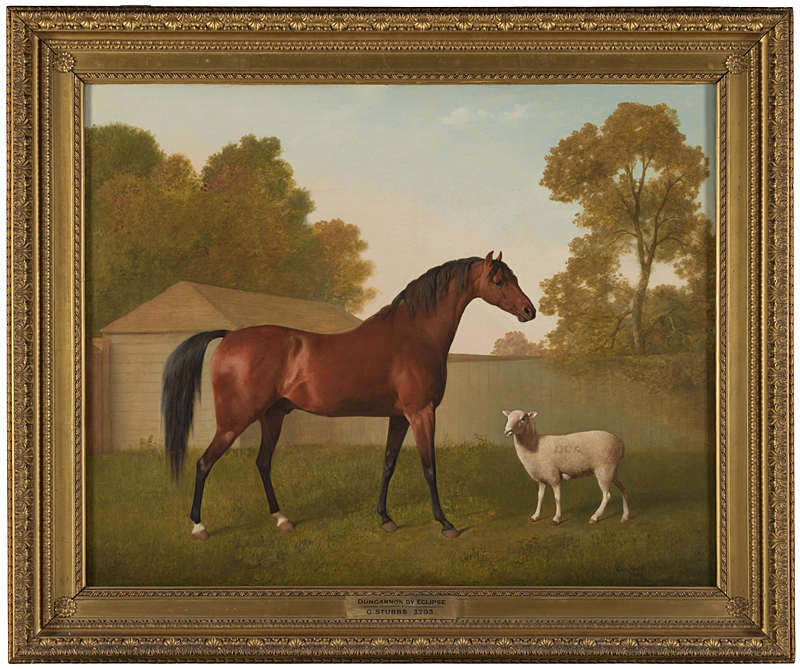
On Jan. 20, 1794, the Turf Gallery opened on London’s Conduit Street, with 16 champion racehorse portraits on display, including “Mambrino” and “Dungannon With a Lamb.” Both show the strength of each animal and its distinct character.
Stubbs included the striking stallion Mambrino in the series because of “his being so beautiful and animated a subject for the painting.” He first painted the portrait in 1779 and replicated it for the Turf Gallery. The elegant profile portrait of the muscular stallion fittingly marks its successful racing and stud career. As an ancestor of the American Standardbred horse, Mambrino became a successful stallion after retiring from racing.
In “Dungannon With a Lamb,” Stubbs rendered the champion in retirement with a stray lamb that broke into the paddock and became its companion. The Turf Gallery catalog described Dungannon as “esteemed amongst the most famous, if not the very best son of Eclipse [the era’s greatest racehorse].” The painting demonstrates the artist’s interest in comparative anatomy between the species. At the end of his life, he worked on a comparative anatomy treatise.
A Master of All
Stubbs loved nature. He studied creatures inside and out, successfully rendering man and beast on canvas. The National Gallery exhibition focuses on his anatomy studies and his winning racehorse portraiture, yet Stubbs also excelled at painting portraits, all manner of animals, and genre scenes of English country life.
In his heyday, Stubbs commanded higher prices for his paintings than his contemporary Sir Joshua Reynolds did from the same clientele. These included the second Marquess of Rockingham, who, not long after commissioning “Whistlejacket” and “Scrub,” became British Prime Minister.
In 1766, an anonymous commenter wrote of Stubbs:
“The wide Creation waits upon his call,
He paints each species and excels in all,
Whilst wondering Nature asks with jealous tone,
Which Stubbs’s labours are and which her own.”
The exhibition “Stubbs: Portrait of a Horse,” at the National Gallery, London, runs from March 12 through May 31, 2026. To find out more, visit NationalGallery.org.uk
What arts and culture topics would you like us to cover? Please email ideas or feedback to features@epochtimes.nyc