Pull a one-dollar bill from your wallet, look at the back, and you’ll find two circular images depicting the Great Seal of the United States. Here you’ll find “Annuit Coeptis” (He favors our undertakings), “Novus Ordo Seclorum” (a new order of the ages), and “E Pluribus Unum” (out of the many, one). At the base of the pyramid are the Roman numerals for 1776, MDCCLXXVI.
That eagle clutching an olive branch with 13 leaves and a sheaf of 13 arrows dates back to the “aquila,” the standard carried by Roman legions into battle. In a 1784 letter to his daughter Sarah, two years after the Continental Congress authorized the Great Seal, Benjamin Franklin bemoaned the adoption of the eagle as a symbol of American power, writing that it was “by no means a proper emblem for the brave and honest Cincinnati of America,” referring to a Roman hero, Cincinnatus, who by his deeds became a symbol for self-sacrifice and patriotism.
So, what’s up with all these references to a language, time, and place buried long ago in the annals of history?
It Began in the Classroom
With input from the likes of Franklin, Thomas Jefferson, and John Adams, and with some finishing touches provided by William Barton, a specialist in heraldry, Charles Thomson designed the Great Seal adopted by the Continental Congress in 1782. Thomson was secretary of that body, but first and foremost, he was a student and teacher of Greek and Roman classics. Among his many other accomplishments, he was responsible for the Latin phrases on the Seal.
While historians rightly credit Enlightenment figures such as John Locke for their influence on America’s Founders, many of them assign an equal share of those honors to writers such as Sallust, Plutarch, Livy, and other ancients. In the 18th century, and for decades afterward, an education beyond the elementary arts of reading and writing meant immersion in these Latin and often Greek authors as well. Of our first six presidents, for example, five of them—Adams, Jefferson, Madison, Monroe, and John Quincy Adams—were steeped in the classics. Only George Washington missed out on this education, a circumstance he regretted his entire life.
Consequently, Ancient Rome deeply impacted U.S. law and government. Because so many of the Founders had studied the Roman Republic, the United States is a constitutional republic rather than a direct democracy, a form of government detested and feared by the Romans as leading to mob rule. Parts of our Constitution, such as the separation of powers, can be traced to Rome, and our Senate takes its name directly from the Romans. Our legal system, right down to the use of certain Latin phrases such as “habeas corpus” and “pro bono,” bears the imprint of the Eternal City.
Outside of government and law, U.S. culture is also festooned with Roman ornaments.
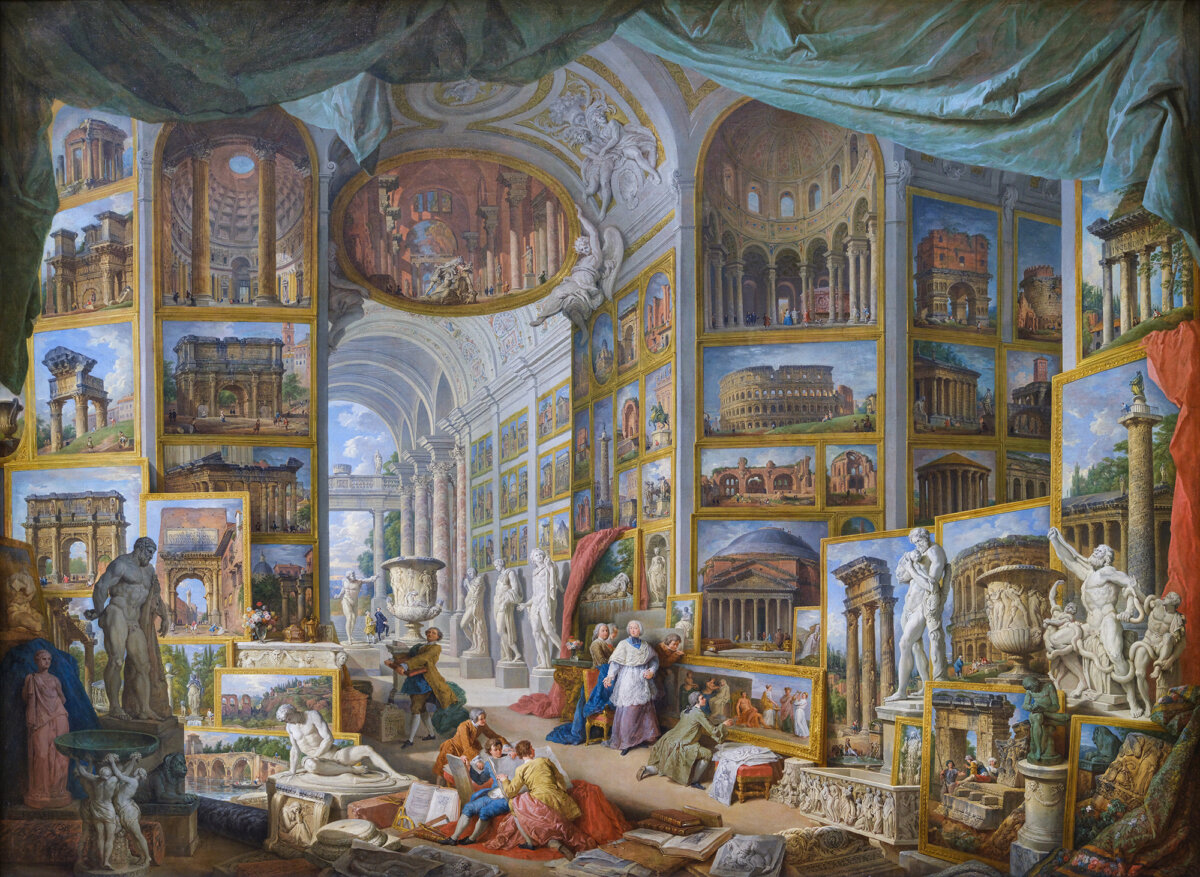
Palladio in America
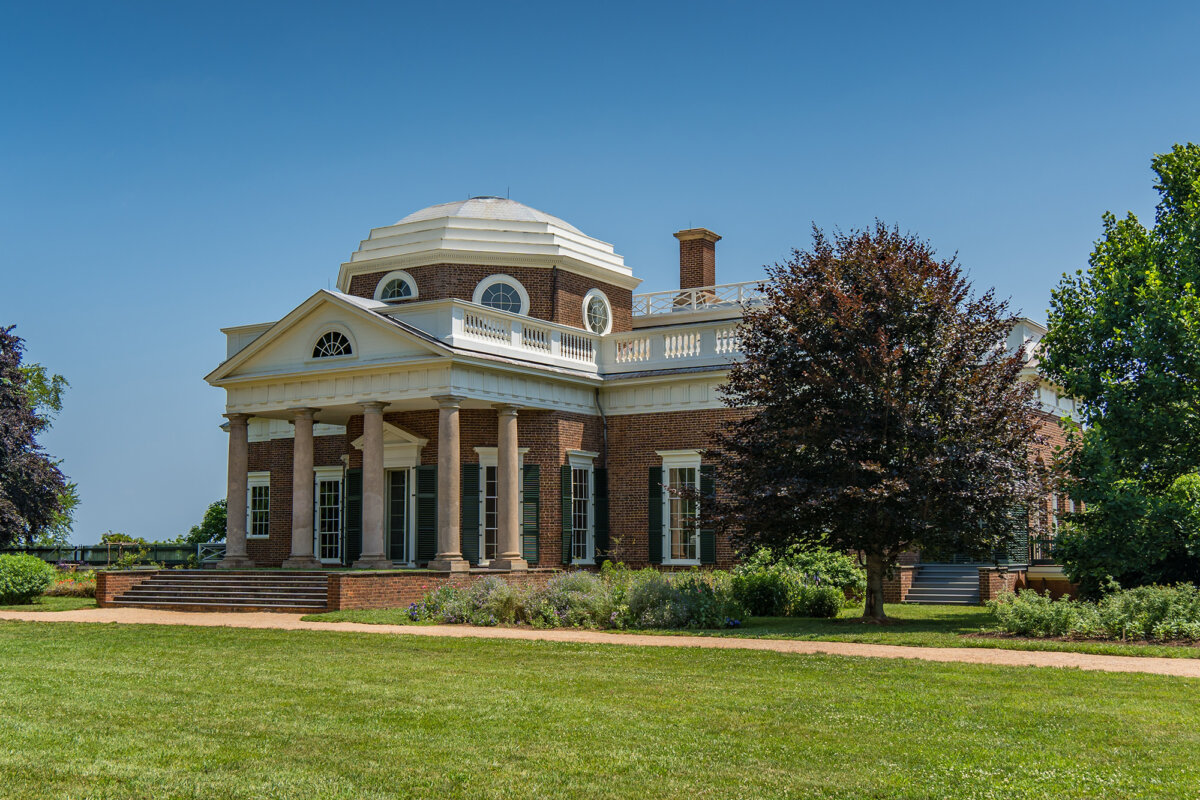
Fascinated by ancient Roman ruins, architect Andrea Palladio (1508–1580) revived those classical forms during the Renaissance, deeply influencing Western architecture. One of those drawn to this master was Jefferson, who referred to Palladio’s designs as his own “architectural bible.” While U.S. minister to France from 1784 to 1789, Jefferson visited some of the sites that had inspired Palladio. He carried the knowledge and impressions he gained back to his homeland. Thanks to his influence and designs, the U.S. Capitol, the Virginia Capitol, Monticello, and the University of Virginia’s Rotunda all reach back to the Romans for their majesty and beauty.
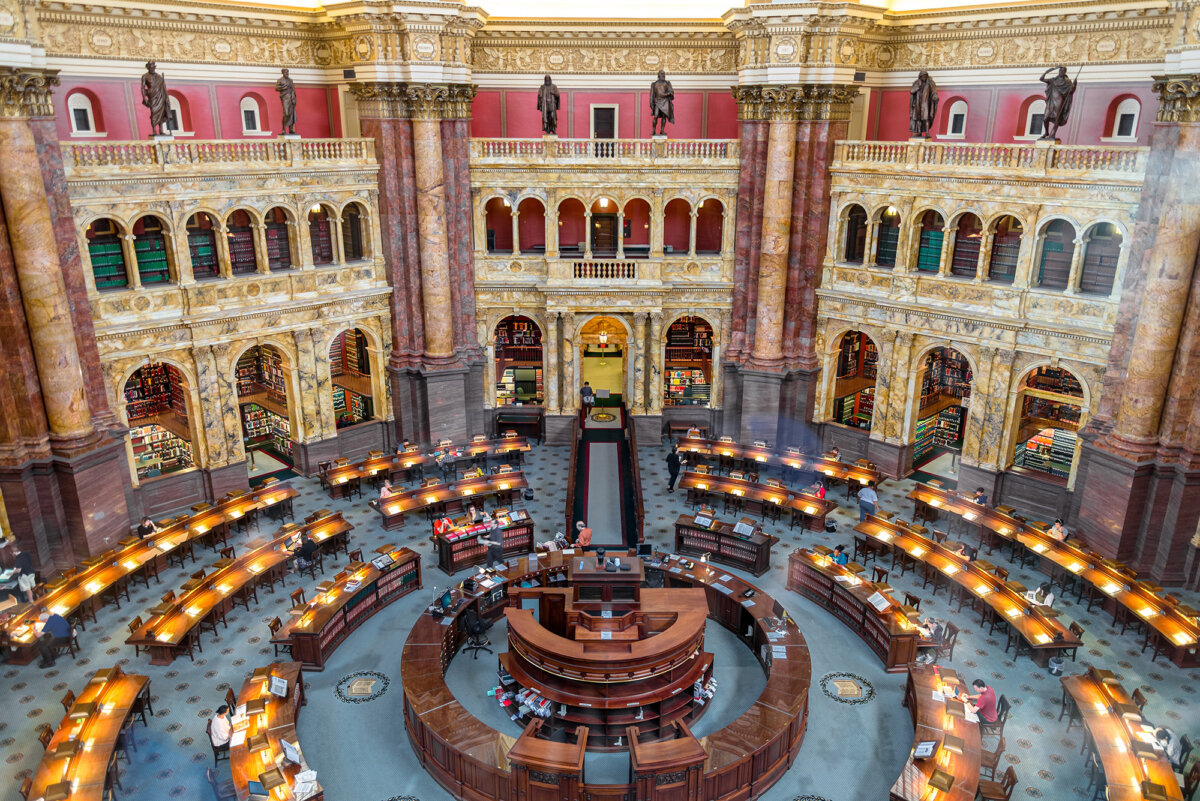
Known as neoclassicism, which included Greek as well as Roman influences, this trend in architecture and in sculpture continued into the 20th century. Opened in 1910 and torn down in 1963, New York City’s Penn Station, for instance, was inspired by Rome’s Baths of Caracalla. Older statehouses and courthouses reflect the glories and the republicanism of Rome. Sculptures such as the Statue of Liberty and Jean-Antoine Houdon’s “Washington as Cincinnatus” connect viewers to the American past via a Roman pathway.

Inspiration and Imitation
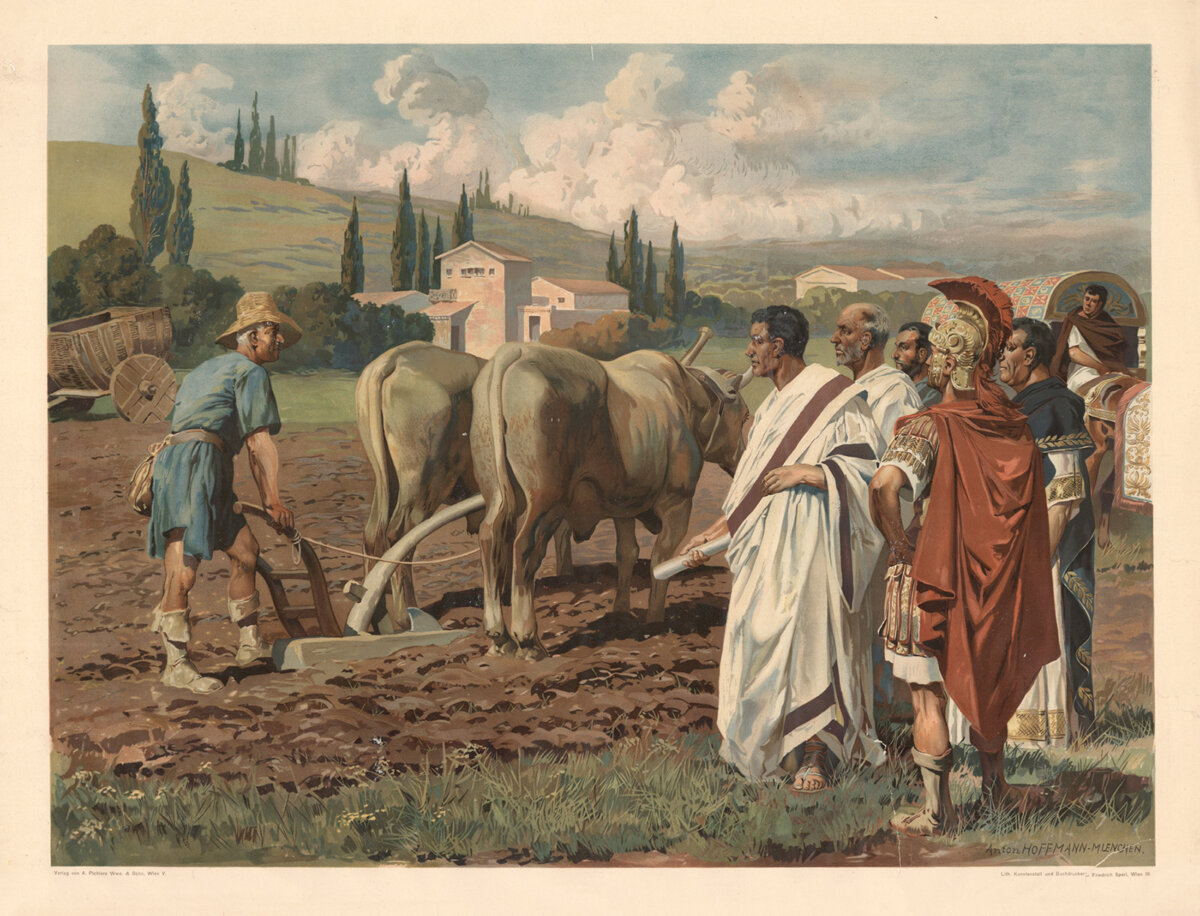
Though he lacked the formal education of so many of his fellow patriots, Washington knew his classical heroes. He was familiar with the story of Cincinnatus, the Roman who was granted dictatorial power to defeat an enemy and who then returned, as did Washington, to his fields once the conflict was won. One favorite play of that era, Joseph Addison’s “Cato,” so appealed to Washington’s spirit of republican virtue that he ordered it performed for some of his men at Valley Forge. He knew many of the lines by heart and frequently quoted them.
Jeffrey Rosen’s bold title “The Pursuit of Happiness: How Classical Writers on Virtue Inspired the Lives of the Founders and Defined America” might rouse debate, but as he demonstrates, the Founders, whose emulation and advocacy of these writers trickled down to the American public, affected both their contemporaries and subsequent generations. Having extensively read the histories of Rome and the thoughts of its philosophers and statesmen, these first patriots were inspired to pursue the virtues they found in ancient literature.
As Rosen tells us, for example, Alexander Hamilton took notes from “Plutarch’s Lives” while campaigning during the Revolution. This effort came on top of his classical education at King’s College, today’s Columbia University, where he read Virgil, Ovid, Cicero, Horace, and more, along with writers such as Locke, Thomas Hobbes, and David Hume.

Controlling the passions, which today we might call moods, was important to these men and women. During a long-running spat between his mother and father, for instance, the 23-year-old John Adams turned repeatedly to Cicero both for that writer’s calming effect and for his sage advice on mastering the passions with reason.
To the men and women of the Revolutionary period, happiness was, Rosen writes, “the pursuit of virtue—as being good, rather than feeling good.”
Stiff Upper Lip
A friend, Rosen reports, asked Jefferson for a list of recommended books. Of the list Jefferson sent to him, three of the 10 books—four, if we wish to include Cicero—were written by Stoics. For those Founders who had received a classical education, they not only encountered Stoic writers such as Marcus Aurelius, Epictetus, and Seneca, but most of them tried, in one fashion or another, to model their behavior on their examples and teachings.
This Stoicism was, in some ways, a philosophy practiced out of necessity by most Americans at that time. The frontier, for instance, demanded of its pioneers a toughness of spirit, what many so picturesquely described as a “root, hog, or die” philosophy.
Today Stoic philosophy is back in favor. People such as Ryan Holiday of “Daily Stoic” or Stephanie Poppins of “The Female Stoic” have attracted large audiences interested in living virtuously and with self-control.
On a Lighter Note
If we wind up these heavy courses of our Roman banquet with some “dulcia domestica” (homemade sweets), we discover other connections. Our practice of giving children three names goes back to Ancient Rome. We long ago left off turning thumbs up or down on gladiators, but we still go to sports events in a coliseum. Two years ago, when women posted videos online showing the frequency with which men in their lives thought about the Roman Empire, these attracted hundreds of millions of views.
Today’s weddings are also heirs to many Roman practices. It’s old-fashioned, but the expression “to take someone’s hand in marriage” was born on the Tiber. The Romans required witnesses for the marriage, just as we do. The ceremony included a matron of honor, usually a married woman from the household. The Romans split bread; we cut cake. The groom who carries his bride across a threshold is honoring yet another Roman custom.
In 1723, Christopher Wren was buried in St. Paul’s, the beautiful London cathedral he had designed. On a stone plaque, his son inscribed the words: “Lector, si monumentum requiris, circumspice.”
These same words apply to the influence of Ancient Rome on America and its history: “Reader, if you seek a monument, look around.”