In 1822, a local Bostonian landowner sought to sell two acres of his land for development. Several patriotic Bostonians convened to discuss the sale proposition. The land was in Charlestown, Boston’s oldest neighborhood, and had been part of the Battle of Bunker Hill, the first major battle of the Revolutionary War. The group wondered what would be best to protect those acres for posterity.
“If any spot in this country should be consecrated as holy ground on which to erect the temple of liberty, that spot surely is Bunker Hill,” claimed Henry Dearborn, a son of a Bunker Hill veteran.
John C. Warren, a wealthy doctor and member of the patriotic group, decided to purchase the two acres himself. Now, what to do with it and the rest of the battle site’s acreage?
With the 50th anniversary of the start of the American Revolution fast approaching, the initial collection of Bostonians invited 25 other prominent locals to gather at the Exchange Coffee House for a meeting. Together, they formed the Bunker Hill Monument Association (BHMA). In 1824, the BHMA received a $25,000 bank loan to purchase the surrounding 15 acres. The following year, the BHMA hired local architect Solomon Willard to design and build a monument.
The Revolution’s French Hero
It was not just the Bostonians preparing to celebrate the Battle of Bunker Hill and the 50th anniversary of the American Revolution. Americans everywhere were anticipating the milestone celebration. President James Monroe hoped to add to the celebration by requesting one of the Revolution’s greatest heroes return to participate in it.
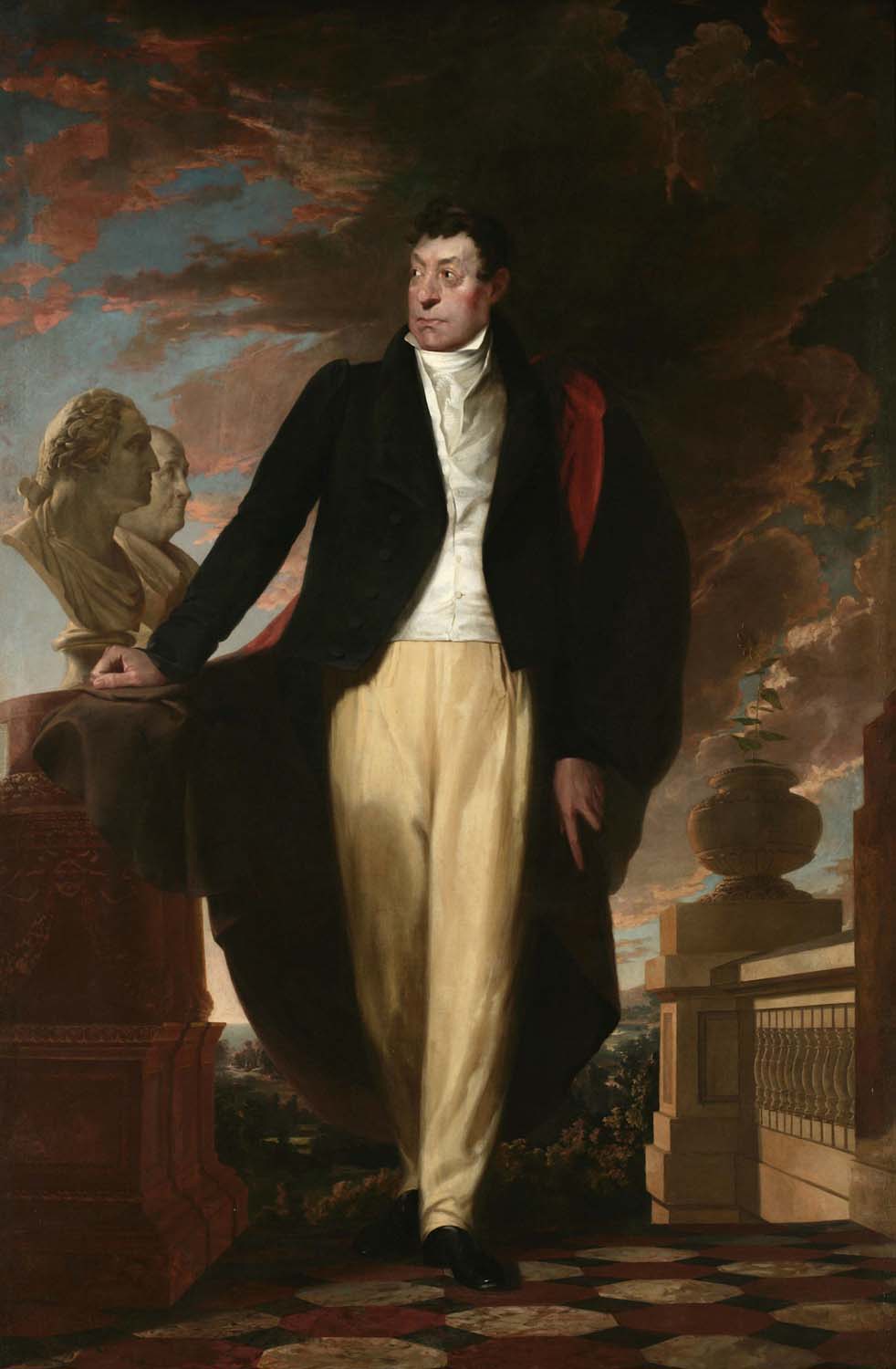
On Feb. 7, 1824, Monroe sent a letter to Paris, addressed to the Marquis de Lafayette. Lafayette had volunteered his services to the Americans during their fight for independence, and in the process, developed a close friendship with George Washington. Proving his affinity for the Father of America, he named his son George Washington de Lafayette. Monroe’s letter invited the Frenchman to return to America and join the semicentennial celebration.
“The summer will not be over before I enjoy the delight to find myself, under an American flag,” Lafayette wrote back in May.
Lafayette was true to his word. On July 13, he, along with his son, set sail for America and arrived at the New York harbor on Aug. 14. During his approximate 13-month visit to America, he traveled approximately 6,000 miles and visited all 24 states. The French hero of the American Revolution was the toast of the country wherever he went.
Lafayette Lays the Cornerstone
Meanwhile, the BHMA was working to solicit support for the Bunker Hill Monument. Their efforts resulted in official support from the Massachusetts State Legislature. Additionally, they informed numerous heroes of the American Revolution, including Thomas Jefferson, James Madison, Monroe, and Lafayette, that they had been elected as honorary members of the BHMA.
In Boston, Lafayette met with some of the founders of the BHMA and promised to return for the laying of the cornerstone. BHMA hoped to perform it on June 17, 1825—the 50th anniversary of the Battle of Bunker Hill. On March 25, Edward Everett, one of the BHMA founders, wrote to the “Nation’s Guest,” a nickname of the Frenchman, reminding him of his promise.
While in Wheeling, Virginia, Lafayette responded on May 24, stating, “I will write again as soon as I can ascertain the calculation of my progressing days but feel myself assured I shall not miss one of the highest gratifications I can ever enjoy.”
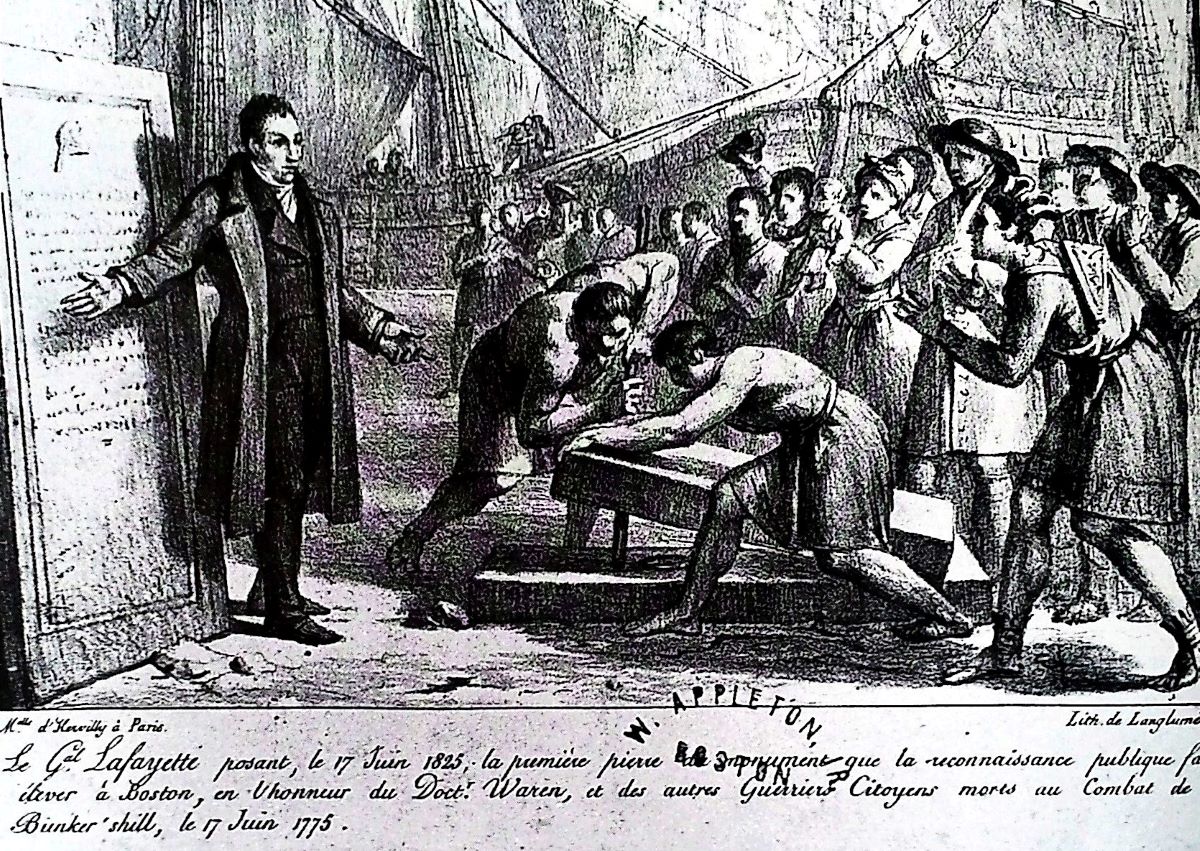
On June 17, 1825, Lafayette joined the BHMA members, numerous other veterans of the war, and thousands of spectators in Charlestown. Not only was Lafayette witness to the ceremony, but he was given the honor of laying the cornerstone. The ceremony was followed by a speech from Rep. Daniel Webster.
The Problem of Transport
The cornerstone was laid. Now, it came down to building the monument. BHMA members and their architect, Willard, believed it would cost about $100,000 and take two years to complete. The central focus of the proposed Bunker Hill Monument would be a 221-foot-tall granite column, requiring about 3,000 large and small hewn sections of stone. The BHMA launched a design contest for the column. Young Horatio Greenough, who went on to become one of the country’s most respected sculptors, submitted the idea of an obelisk. His submission was accepted.
Dr. Warren then purchased a stone quarry in Quincy to supply the granite. To help streamline the stone-cutting process, Willard moved to Quincy. Quincy, however, was about 12 miles from Charlestown. The problem was less about cutting the stone and more about transporting the thousands of hefty blocks of granite. The first leg of the journey—a four-mile stretch to the Neponset River—would be the most arduous, as almost the entire rest of the journey could be conducted over water.
To address the problem, the BHMA and Willard relied on Gridley Bryant, a construction engineer who had already played a significant role in the designing the monument, as well as having a hand in the ceremony. Bryant’s idea for transporting the stone was unconventional for the period. The four-mile stretch was on an incline and Bryant believed it would be more efficient to utilize the geography.
America’s First Railroad
Bryant suggested creating a railway system. According to Bryant, the idea was criticized. During the winter legislative session of 1825, there were contentious debates over the proposed system. But on March 4, 1826, the Massachusetts State Legislature approved the charter for the Granite Railway Company by a small majority.
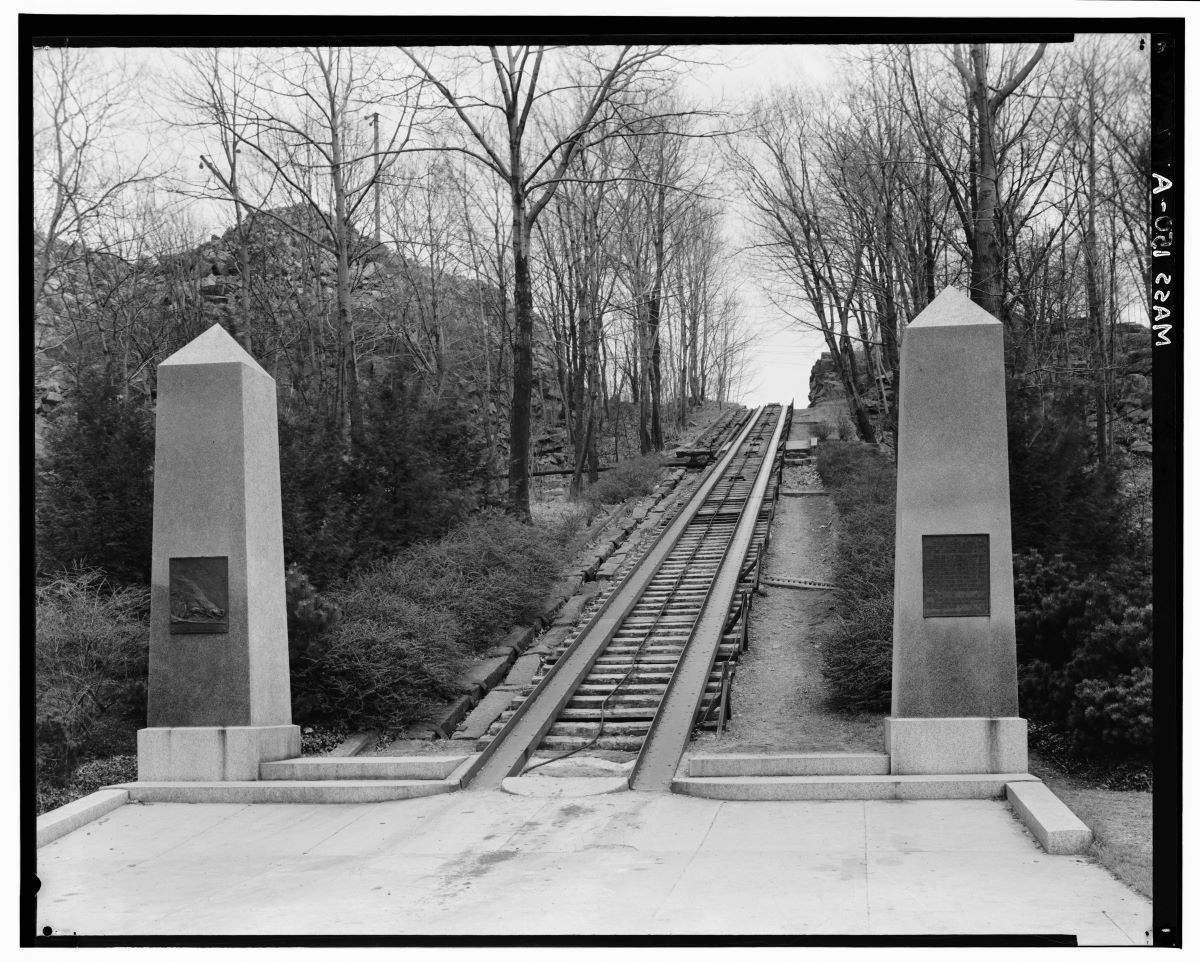
On April 1, construction for the railway began. The route would run from West Quincy to a wharf in Milton. The newly chartered company built the rail line, platforms, and the rail cars, capable of carrying about 6 tons and with machinery that could pick up and place the stone at the wharf. Instead of steam, the train would be powered by horses.
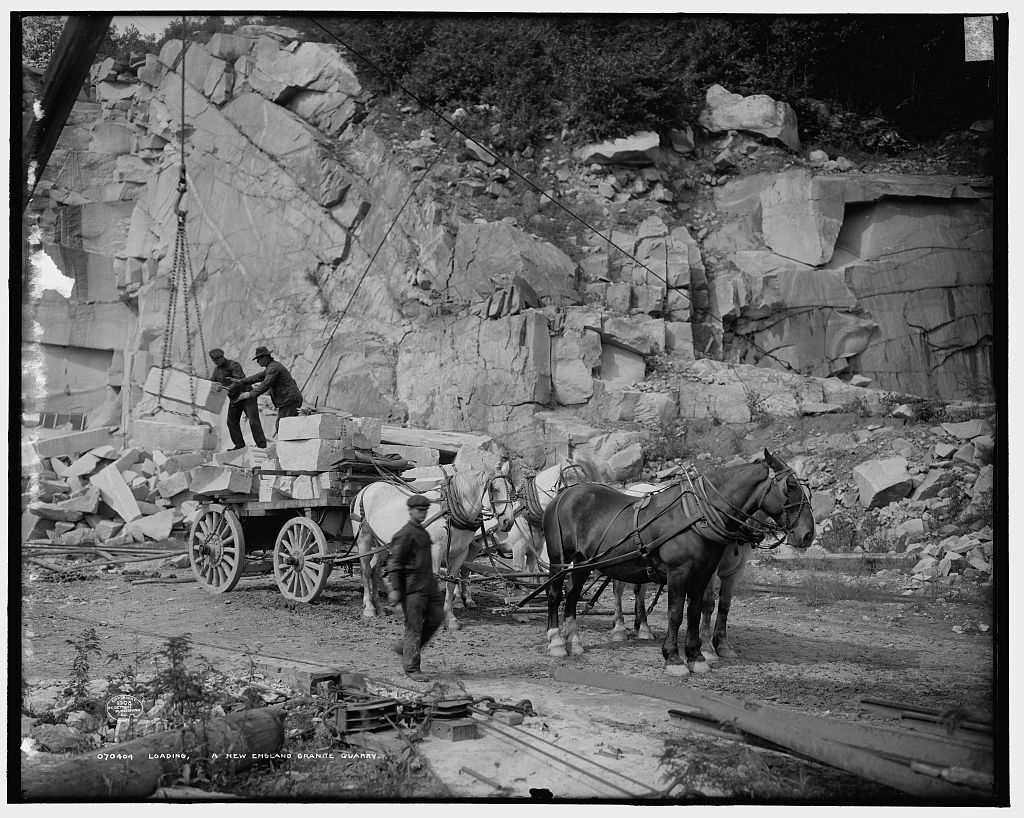
It was during this week in history, on Oct. 7, 1826, that the Bryant’s Granite Railway Company opened, becoming America’s first commercial railroad. The rail system, at least portions of it, remained in operation until the 1970s.
The Long Haul
Unfortunately, the BHMA continued to run into money shortages, which significantly delayed the completion of the obelisk monument. What was scheduled to take two years, ended up taking 18 from the date of the cornerstone ceremony.
Construction of the obelisk began in May 1827, but, over the years, construction stopped at the height of 37 feet in December 1828 and then at 85 feet in November 1835, both due to financial constraints. The BHMA continued to raise funds through various means, even accepting very small donations from women, children, and workers associations.
Thankfully, Sarah Josepha Hale, one of the most influential magazine editors of the era, began announcing the need for funds. Her recommendation of a week-long Ladies’ Fair in Boston during the fall of 1840 resulted in raising $30,000. The success of the Fair inspired two wealthy men to donate $20,000. The $50,000 proved enough to complete the desired height of 221-feet.
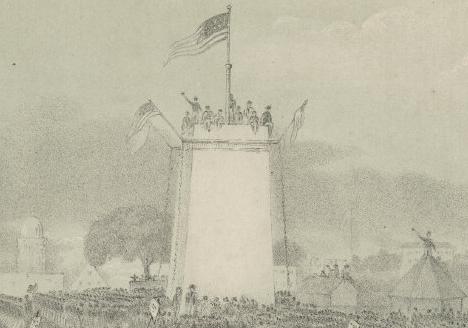
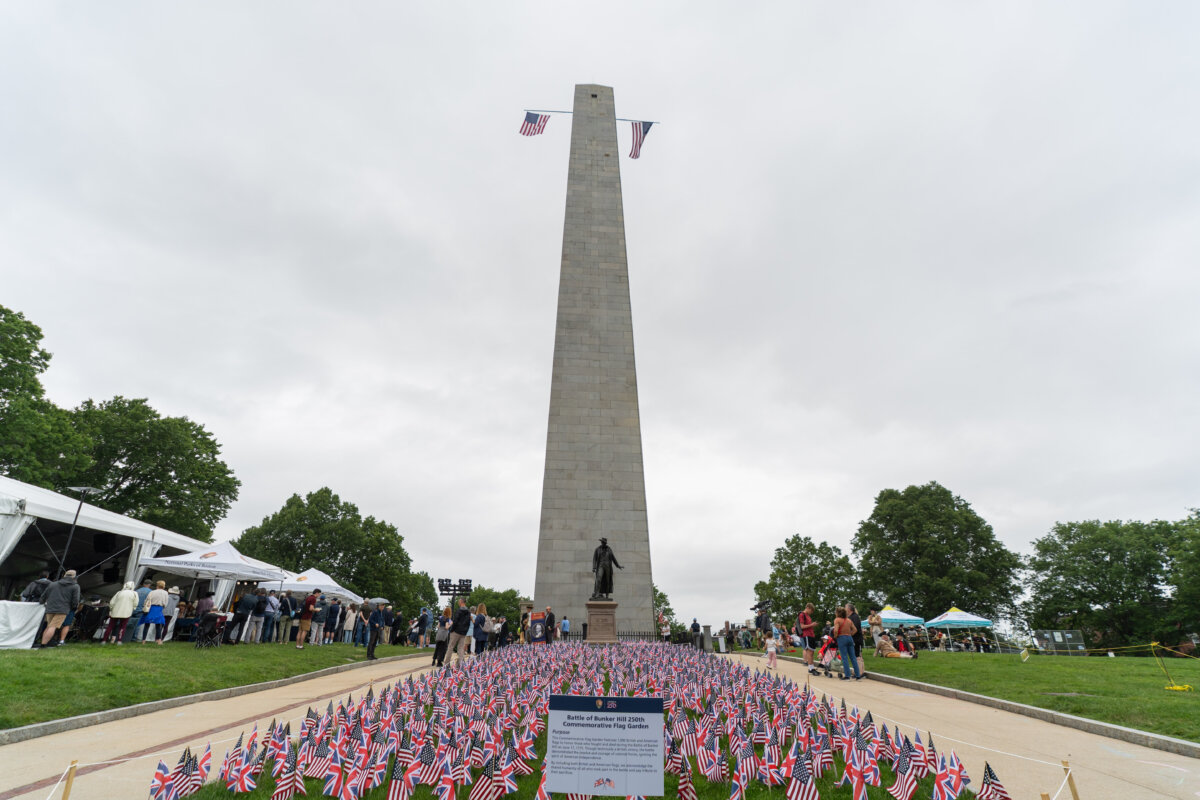
The obelisk was completed in July 1842, but it was almost another year before the opening ceremony was held. On June 17, 1843, on the anniversary of the Battle of Bunker Hill, approximately 100,000 people gathered to celebrate the dedication of the massive monument. Among the crowd were members of the BHMA and 13 of the few remaining veterans of the Revolutionary War.
Webster, who had become one of America’s most influential statesmen, again, gave the ceremonial speech. He stood before the massive crowd and proclaimed in his opening,
“A duty has been performed. A work of gratitude and patriotism is completed. This structure, having its foundations in soil which drank deep of early Revolutionary blood, has at length reached its destined height, and now lifts its summit to the skies.”
Never miss a This Week in History story! Sign up for the American History newsletter here.
What arts and culture topics would you like us to cover? Please email ideas or feedback to features@epochtimes.nyc.