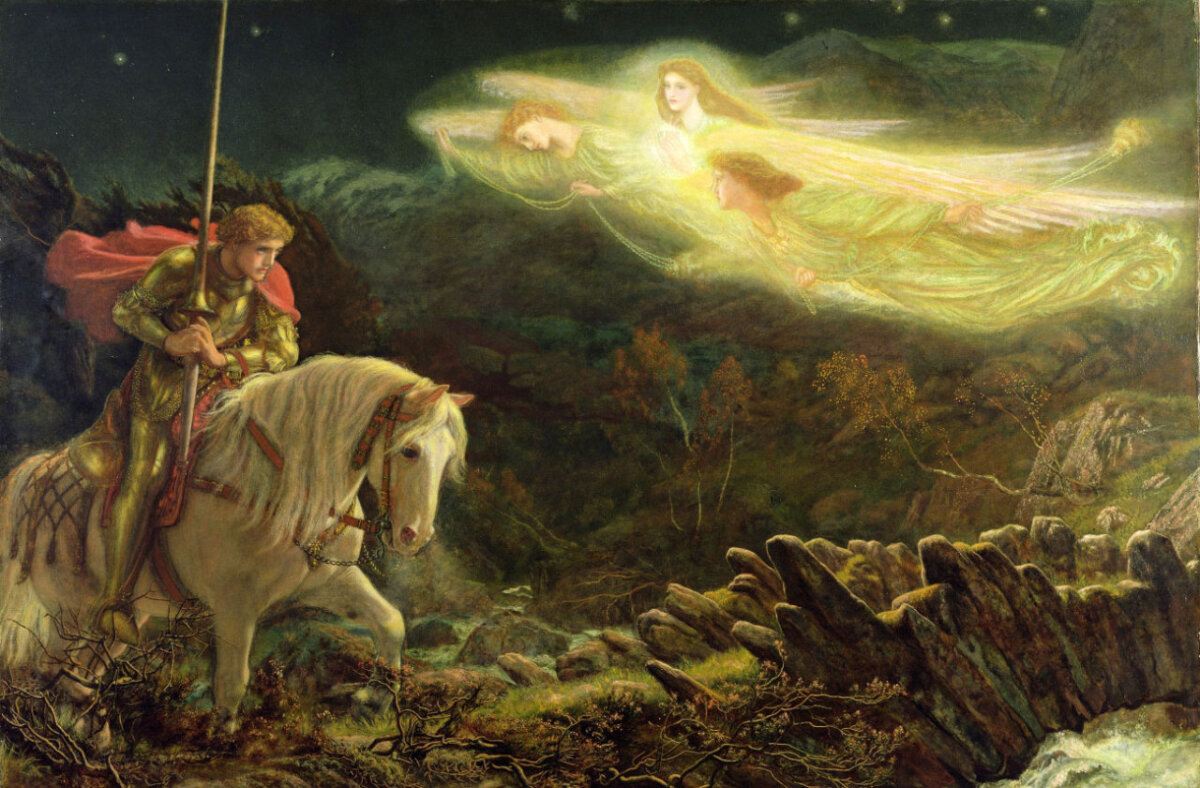
In the anonymous medieval work “The Quest of the Holy Grail,” King Arthur weeps upon learning that his knights intend to search for the Holy Grail, a mystical chalice said to be the one Jesus used at the Last Supper. Why does he do so? Shouldn’t he be overjoyed that, at last, ancient prophecies are being fulfilled, and the final and greatest quest of all is beginning?
The Fall of Camelot
Sometimes the heart knows things the mind cannot rationally explain. With an intuition born of age and experience, Arthur knows that this quest marks both the culmination of Camelot and also its demise. Great-hearted Arthur cannot miss the importance of this hour. Most of the knights who set out on the quest will never return. The final catastrophes of Camelot will follow hard on its heels. The brotherhood will be broken. The lyres will fall silent, and the mirth and flowing wine around the roaring fire in the great hall, the friendly rivalry for honor in the pursuit of great deeds, the dances and tournaments and tales of heroism will be no more.
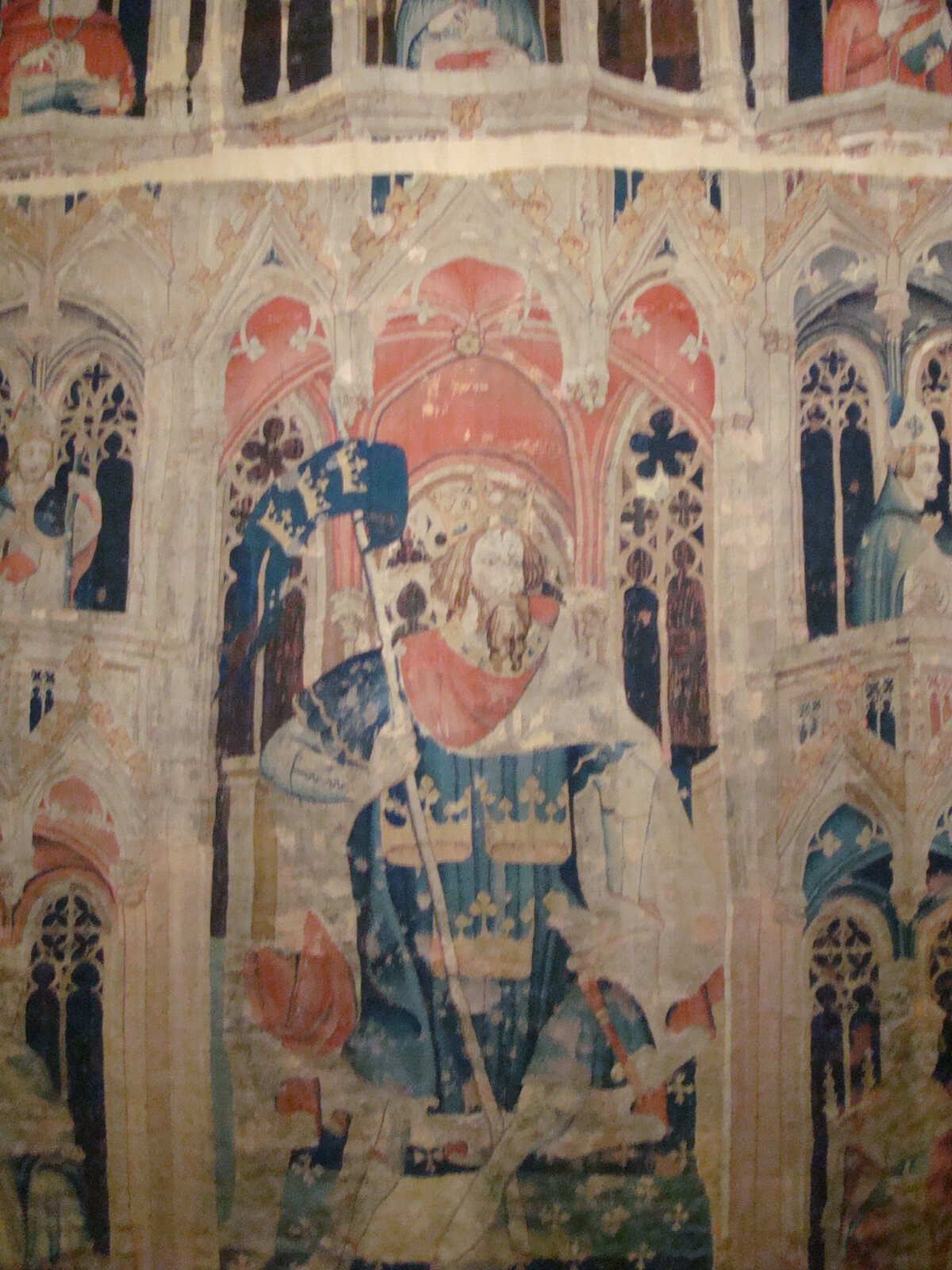
As French medieval literature scholar Norris J. Lacy put it, once the Grail quest is completed, “there [will be] no more adventures to seek and no more challenges to face, except the challenge of somehow keeping Camelot alive, if only by artificial means such as serial tournaments. Arthur’s ideal is a largely useless relic of the past; his is a culture whose glory, whose time, is gone.”
At the same time, this final quest marks the apogee of Camelot’s greatness, for from among its brotherhood of knights, three are chosen to experience the greatest adventure of them all, an adventure that takes them beyond the walls of this world, into contact with the transcendent realm embodied in the Grail.
Inverting the Courtly Ideal
The narrative thus begins on a bittersweet note as Arthur’s court enters into its shadow phase. Yet, at the same time, a few of Arthur’s knights rise to a hitherto unknown level of greatness.
Herein lies the central maneuver of the unnamed author. He takes the Arthurian legends and draws them up into a grander narrative, the story of Christian salvation history and the spiritual journey of every soul. In the process, we see where the courtly ideal of Arthuriana falls short, and where it also contained the seeds of something greater.
The author of “The Quest of the Holy Grail” reinterpreted and corrected the body of Arthurian literature that preceded him. He seized upon its notes of brilliance and glory, identified its deepest aspirations, pruned its deviations, and showed his readers what all that it really pointed to, in a Christian context—while condemning the worldly excesses into which much of that literature had fallen.
To understand the significance of what the Grail author did, we first need to understand something of the medieval romance literature that he inherited. In her introduction to her translation of “The Quest of the Holy Grail,” Pauline Matarasso explains,
“Arthurian literature celebrates that cult of the lady which was first hymned in the poetry of the early troubadours. The courtly ethos was based upon a conception of love to which marriage was largely extraneous, in which the lover was wholly subordinated to his lady who provided the inspiration which enabled him to excel in knightly skills.”
This is the famous “courtly love” motif—passionate love, often at a distance, often directed at a married woman, the idealization and idolization of a lady as a kind of demigoddess for whom the dedicated knight will do anything, and who spurs on his battlefield exploits as well as his courtly manners. In this (sometimes adulterous and unchaste) love lies the genesis of much of the knight’s adventures against monsters, evil barons, and the like. This and the unfettered desire for worldly glory.
But the author of “The Quest” considered all this a misdirection of energy, an ideal that ultimately fell short. In Matarasso’s words, “Here we have, if one may be permitted the term, an anti-romance. The stage is the same and so are the players, but all the accepted values are inverted. The ‘Quest’ sets out to reveal the inadequacies and the dangers of the courtly ideal.” Thus, this story extolls virginity and chastity in place of ritualized passion, strength of soul in place of strength of arms.
Gallahad and the Allegory of Salvation
The inversion (or correction?) that takes place is made immediately clear when the knight who gallops through other Arthurian stories as the uncontested champion and hero is cast to the side. Lancelot is found unworthy to behold the Holy Grail precisely because of his adulterous relationship with Guinevere, the epitome of “courtly romance.” The values that matter in this quest are not primarily courtliness and favor with the ladies, nor even swordsmanship and horseback riding prowess, but rather the strength of character that can resist sin and temptation.
A similar reversal occurs with Sir Gawain. Matarasso comments, “Throughout Arthurian literature Gawain is seen as the paragon of knighthood. He epitomizes the courtly ideal: brave, magnanimous, unmatched in courtesy and ‘savior-faire,’ the staunchest and most discreet of friends. The ‘Quest’ credits him with all these qualities and then sets out to show their bankruptcy in the spiritual order.”
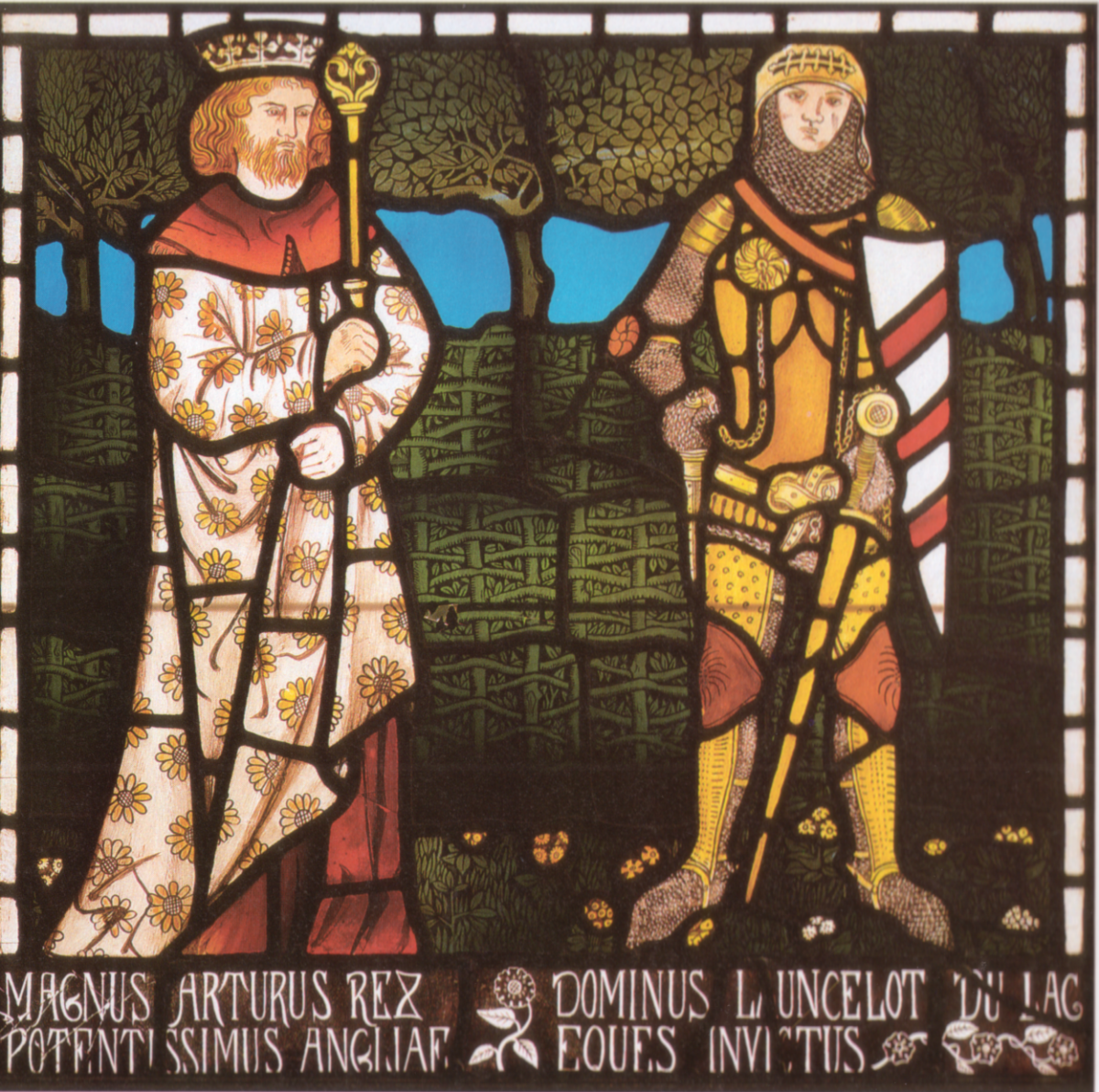
In a very real sense—and much to their surprise and chagrin—Lancelot and Gawain find themselves quickly out of their depth when it comes to the pursuit of the Holy Grail, which symbolizes all that is celestial and holy, God’s grace, perhaps Christ Himself. They set off expecting a physical, this-worldly quest, only to realize it is a quest of an entirely different order, one in which they are adrift and ineffective.
There’s a beautiful and moving passage from the tale that expresses this unexpected reversal of values that has taken place, a moment in which Lancelot’s eyes are opened, and he sees the vanity of all he has pursued in his life compared with the quest for the eternal:
“Thus did Lancelot pass the night in lamentation and in bitter self-reproach. And when the day dawned fair and bright, and the birds broke into song throughout the forest, and the sun’s rays filtered through the trees, and when he saw the beauty of the day and heard the birdsong that had often gladdened his heart, and saw himself stripped of arms and horse and all he had, and knew the sharpness of Our Lord’s displeasure, then he thought the time would never come when anything on earth would yield him joy again. For there where he had thought to find all joy and honour and worldly acclaim, in the adventures of the Holy Grail, he had reaped only failure and its bitter gall.”
Yet something of Lancelot’s greatness still shines through in that he has the courage to admit and repent of his sin. He eventually commits himself to a life of penance to make up for the wrong he had done. He begins to learn what true nobility means.
It is Lancelot’s son, Galahad, who will succeed where his father fell short. In this telling, Galahad is the greatest knight, not only because of his skill with arms, which matches if not excels that of Lancelot, but more importantly because of his purity and holiness. His coming has long been prophesied; he is the one who will sit in the seat that no one else can sit in, take up the sword that no one else can touch, and heal the wounds that no one else can heal. Early on in the story, the signs point to Galahad as “the one who shall bring the adventures of Britain to their close and restore the Maimed King to health.”
The Maimed King has suffered for a long time from a mysterious wound that only Galahad can heal. And herein is just one of the many ways that Galahad stands for Christ. The Maimed King, like humanity, received an ancient wound (sin) that only the prophesied savior could repair. Drawing from scripture and legend, the author of “The Quest” weaves an intricate backstory and a rich pattern of symbolism that identifies Galahad with Jesus and the restoration of Britain with the restoration of fallen humanity. “The Quest of the Holy Grail” becomes the story of salvation history in miniature.
From Earthly Glory to Divine Romance
Indeed, Christian patterns, or, rather, the Christian Pattern (which is Christ), repeat again and again throughout the knights’ adventures. The opponents and trials the knights face always have a deeper meaning, one that is generally revealed by a hermit or monk who shows up conveniently afterward to unwind the riddle. As one of them says, “I will unfold to you the meaning of the tournament you saw; for, depend upon it, whatever you saw was but as it were a figuration of Jesus Christ. The jousting, however, without any question or deception, took place between mortal knights, who themselves were far from realizing its full significance.”
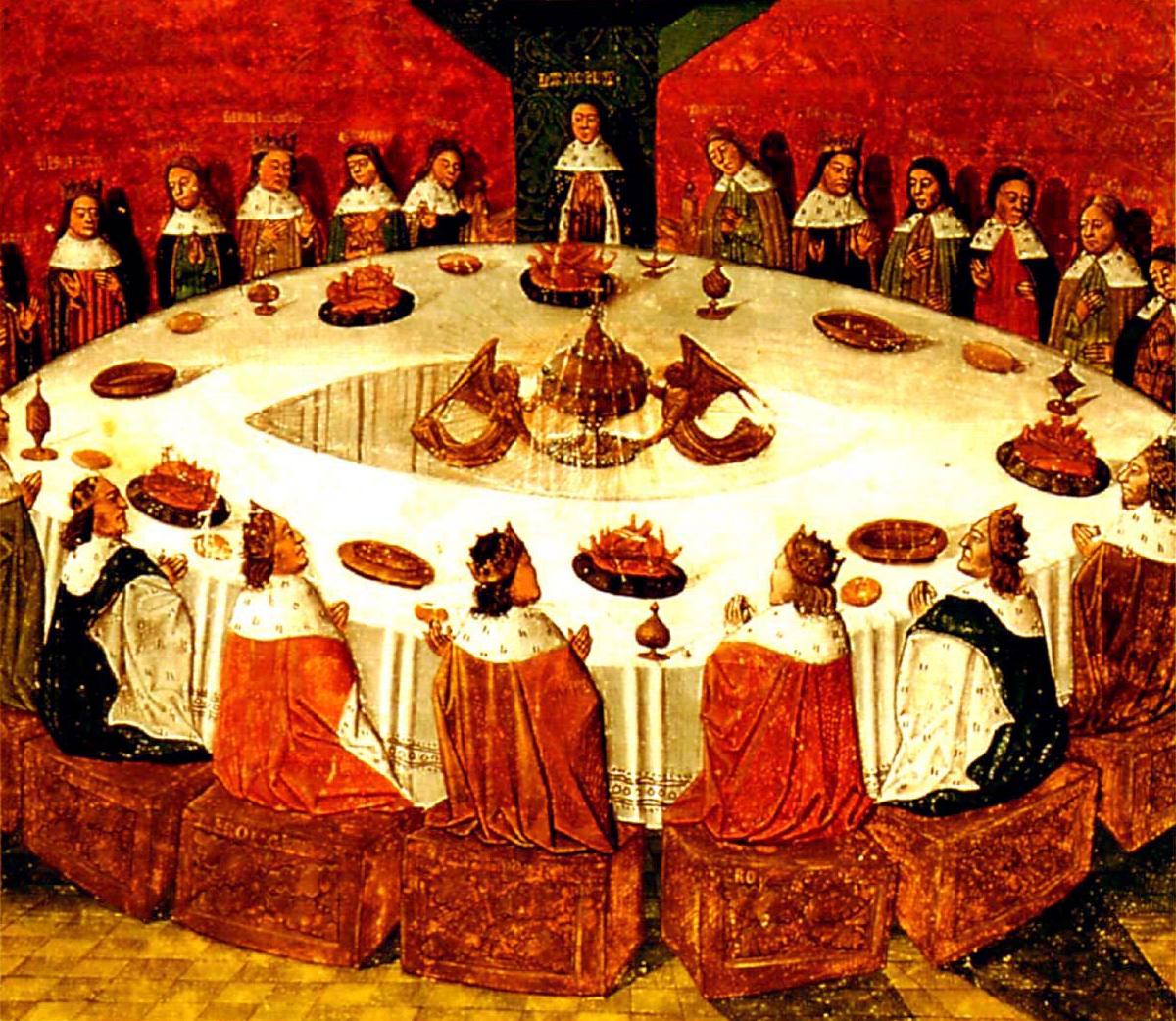
In these words, we see not only the story’s essential focus—Christ—but also the whole of the medieval worldview at play. For the medieval mind, nothing that occurs in this material realm lacks spiritual significance. This is a world redolent of meaning, even when we, the observers, are unaware of it. And humanity itself enacts events that carry intrinsic symbolic weight regardless of our cognizance or lack thereof. We are living symbols.
If Galahad is a symbol of Christ, the only other two knights who succeed in the quest and come to a vision of the Grail, Sir Perceval and Sir Bors, also carry symbolic meaning. Perceval is young, a bit naïve, a little foolish, impulsive, but profoundly good-hearted. Bors is an older, experienced knight, who had sinned in his youth but repented and done penance and lived a holy life since then. Here, then, are the images of innocence and repentance, of one who has known no evil and of one who has known evil, yet rejected it in the end. These are the two types of souls who are capable of being companions of Christ and achieving the vision of the holiest things.
For these knights, the romance is the romance of divine things, not fair ladies with their deadly beauty. The one for whom they fight is God Himself, and not merely another earthly creature. That disposition takes them, eventually, beyond the sight of mortal eyes. First, they endure trials of strength, endurance, humility, purity, fidelity, and the like. But eventually they seem to pass almost into another world by the end, with only Bors returning to tell the tale.
And a moving tale it is. In fact, the description of Galahad, Perceval, and Bors’s response to an ancient tale they are told is similar to the experience of the attentive reader of “The Quest” itself: “As they stood listening, there was not one who did not shed abundant tears, for they were put in mind of solemn deeds and men of high descent.”
Indeed, the whole effort of the writer has been to lift the gaze of his readers to “solemn deeds” and to the transcendent. To a large extent, I think he succeeds.
What arts and culture topics would you like us to cover? Please email ideas or feedback to features@epochtimes.nyc.